

Did you know over 3 million coffee lovers worldwide use the Aeropress? This simple brewing method has become very popular. And for a good reason.
I became interested in the Aeropress because it brings out coffee’s full flavor. I started experimenting with different roasts and brewing techniques.
The Aeropress is now a key part of my daily coffee. It makes a rich, smooth cup of coffee. It’s hard to find a better cup with other methods.
Key Takeaways
- Discover the benefits of using an Aeropress for coffee brewing.
- Learn how to unlock the full flavor of your coffee.
- Explore the versatility of Aeropress brewing techniques.
- Understand why Aeropress is a favorite among coffee lovers.
- Get started with your own Aeropress brewing journey.
Introduction to Aeropress Brewing Methods
As a coffee lover, I’ve found the Aeropress to be a game-changer. It combines air pressure and immersion brewing for a rich coffee experience. I’ll share why I adore my Aeropress and its versatility in brewing coffee.
Why I Love My Aeropress
I love my Aeropress for its simplicity and the quality of coffee it makes. It’s easy to use, clean, and portable. This makes it great for brewing at home or on the go. The Aeropress brews a smooth, full-bodied coffee with a rich flavor.
Aeropress Technique is key to a great brew. You can adjust brewing time, coffee-to-water ratio, and grind size to your liking. For example, a finer grind makes a stronger coffee, while a coarser grind makes it smoother.
The Versatility of Aeropress
The Aeropress is very versatile, letting you try different aeropress tips and tricks to find your favorite coffee. Whether you like a strong espresso or a milder brew, the Aeropress can do it. You can also try different coffee beans, roast levels, and brewing methods to find new flavors.
Some popular aeropress techniques include the standard method and the inverted method. Each method gives a unique flavor, letting you explore different tastes.
- Experiment with different coffee-to-water ratios to find your ideal balance.
- Adjust the grind size to suit your brewing method and desired flavor intensity.
- Try various roast levels to discover new flavor profiles.
By exploring the Aeropress’s versatility and trying different techniques, you can discover a world of coffee flavors and brewing possibilities.
Understanding the Aeropress
My journey with Aeropress started with learning about its parts and how they work together. To make great coffee, it’s not just about following a recipe. It’s about knowing your equipment well.
Key Components of the Aeropress
The Aeropress has a few main parts: the chamber, the plunger, and the filter cap. Each part is important for brewing coffee. The chamber is where coffee grounds and water mix, extracting flavors. The plunger separates the coffee grounds from the liquid. The filter cap keeps the filter in place, making the coffee smooth and clean.
How the Aeropress Works
The Aeropress combines French press and pour-over brewing. Coffee grounds and hot water mix in the chamber. Then, the mixture steeps for a bit.
After steeping, the plunger is pressed down. This forces the coffee through the filter, making it smooth and full-bodied. This method is called air pressure brewing. It’s what makes the Aeropress unique.
Knowing how the Aeropress works is key to mastering it. By understanding each part’s role, you can try different techniques. This helps you find your ideal cup of coffee.
Choosing the Right Coffee Beans
For a great Aeropress coffee, the right coffee beans are key. Trying different beans can really improve your coffee.
Best Coffee Types for Aeropress
The Aeropress can make many types of coffee. But, single-origin Arabica beans are best for a rich taste. Look for beans with bright acidity and flavor notes you like.
Some top choices for Aeropress are:
- Ethiopian Yirgacheffe, known for its floral and citrus notes
- Colombian Supremo, with balanced acidity and caramel sweetness
- Kenyan AA, for its bright acidity and complex flavors
Roast Levels: What to Consider
The roast level changes the flavor of your Aeropress coffee. Light roasts keep the coffee’s natural taste, while dark roasts are bolder and sweeter.
Think about what you like and how long you brew. A medium roast is a good start, balancing taste and body. But, try different roasts to find your favorite.
To make great Aeropress coffee, follow a aeropress step by step guide. This helps get the best flavor from your beans. Whether you’re new or experienced, knowing about coffee beans and roast levels can make your Aeropress coffee better.
Mastering the Coffee Grind
The grind size of your coffee beans is key to a great Aeropress brew. I’ve spent many mornings perfecting my Aeropress technique. The right grind is essential for a delicious cup.
To get the perfect grind, consider a few important factors. First, the grind size matters a lot. The texture of your grind can significantly affect the flavor of your coffee. If it’s too fine, your coffee might taste bitter. If it’s too coarse, it could be sour.
Grind Size: Finding the Perfect Texture
So, what’s the ideal grind size for Aeropress brewing? A medium to fine grind is usually best. This balance allows for the right flavor extraction. Here’s a simple comparison to help you understand:
| Grind Size | Flavor Profile |
|---|---|
| Too Fine | Bitter, over-extracted |
| Medium to Fine | Balanced, rich |
| Too Coarse | Sour, under-extracted |
As you can see, getting the grind size right is essential for a great-tasting cup. You might need a good coffee grinder. Burr grinders are best because they offer more control. Brands like Baratza and Breville make great Aeropress brewing accessories.
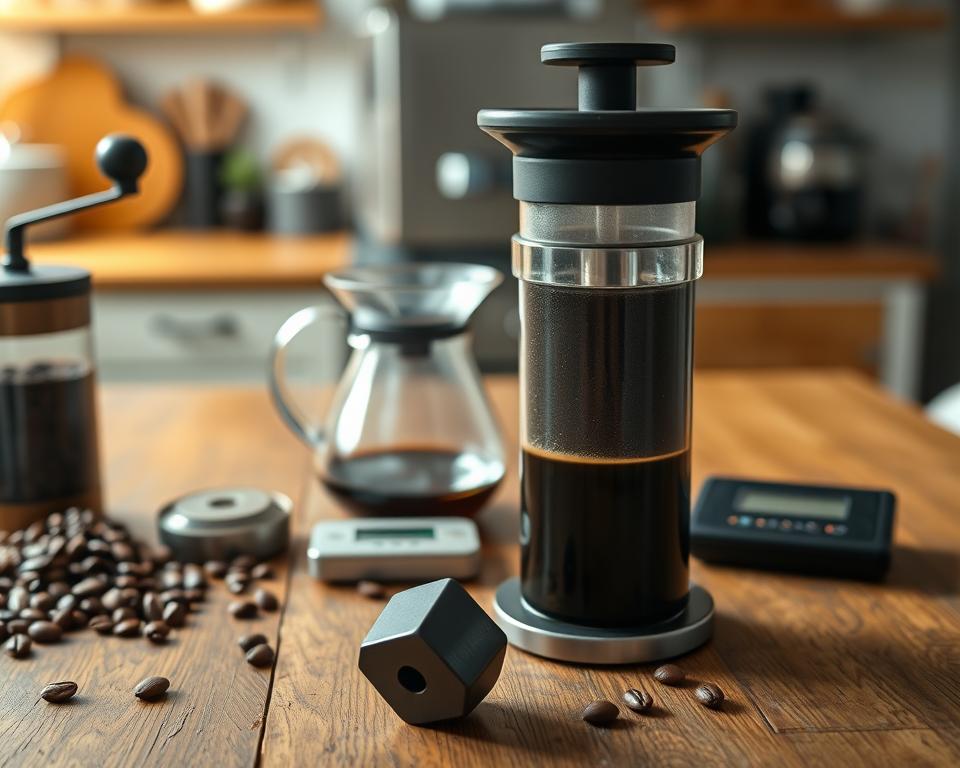
How Grind Affects Flavor
The grind size affects how fast the coffee extracts during brewing. A grind that’s too fine can cause channeling, leading to uneven extraction. On the other hand, a grind that’s too coarse can prevent proper water flow, causing under-extraction.
Scott Rao, a coffee expert, says, “The grind is the most important variable in brewing coffee.”
“A good grinder is essential for achieving a consistent grind size, which is critical for optimal extraction.”
By adjusting your grind size, you can fine-tune your Aeropress brew to suit your taste preferences.
In conclusion, mastering the coffee grind is a key step in achieving the perfect Aeropress brew. By understanding how grind size affects flavor and using the right Aeropress brewing accessories, you can elevate your coffee game and enjoy a more satisfying cup.
Essential Aeropress Brewing Techniques
To get the most out of your Aeropress, you need to master its brewing techniques. The Aeropress is a versatile brewing device that allows for a variety of methods. Two techniques stand out: the standard method and the inverted method.
Standard Method: My Go-To Approach
The standard method is the most straightforward way to brew coffee with an Aeropress. It involves adding coffee grounds to the chamber, pouring hot water over them, and then pressing the mixture through the filter into a cup. This method is quick and easy, making it perfect for busy mornings.
I prefer the standard method for its simplicity and the clean flavor it produces. It’s a great way to enjoy a smooth cup of coffee without much fuss.
Inverted Method: A Game-Changer
The inverted method, on the other hand, involves turning the Aeropress upside down and adding coffee grounds and water to the chamber before stirring and then placing the filter cap on top. Once the brewing time is complete, the Aeropress is flipped over onto a cup, and the coffee is pressed through the filter.
This method allows for a longer steeping time, which can result in a richer, more full-bodied coffee. It’s a game-changer for those who prefer a stronger brew or want to experiment with different flavors.
Both methods have their advantages, and the choice between them ultimately comes down to personal preference. By mastering both the standard and inverted methods, you can tailor your Aeropress brewing to suit your taste.
Exploring Brew Ratios
One of the most critical factors in Aeropress brewing is the coffee-to-water ratio. Finding the right balance can elevate your coffee experience, making it richer and more flavorful.
When it comes to brewing with an Aeropress, the ratio of coffee to water plays a significant role in the taste of your coffee. Too much coffee can make it bitter, while too little can make it weak. The key is to experiment and find what works best for you.
Finding Your Perfect Coffee-to-Water Ratio
To start, I recommend using a 1:15 to 1:17 coffee-to-water ratio. This is a good starting point, but feel free to adjust based on your taste preferences. For example, if you prefer a stronger coffee, you might try a 1:12 ratio.
- Start with a ratio and adjust in small increments.
- Keep a coffee journal to track your experiments.
- Consider the roast level of your coffee beans when adjusting ratios.
Experimenting with different ratios can help you discover new flavors. For instance, a lighter ratio might bring out more acidity, while a heavier ratio could enhance body and richness.
Adjusting Ratios for Different Flavors
Different roast levels and coffee bean origins can significantly impact the flavor profile of your Aeropress coffee. Adjusting the brew ratio is one way to tailor the taste to your liking.
- For lighter roasts, try a slightly higher coffee-to-water ratio to balance the flavors.
- For darker roasts, a slightly lower ratio can help mitigate bitterness.
- Experiment with ratios when trying new coffee beans to find the optimal balance.
By fine-tuning your brew ratio, you can unlock the full aeropress coffee guide and enjoy a more personalized coffee experience. Whether you’re following an best aeropress recipes, mastering the brew ratio is a key step.
As you continue to experiment with your Aeropress, remember that the journey to the perfect cup is just as important as the destination. Enjoy the process, and don’t be afraid to try new things!
Experimenting with Brew Time
Trying out different brew times is key to getting better at Aeropress brewing. Changing the brew time can greatly change how your coffee tastes. We’ll look at the best brew times for Aeropress and how to adjust them to your liking.
Optimal Brew Times for Aeropress
The best brew time for Aeropress coffee is usually between 1 to 2 minutes. But, it can change based on what you like, the coffee beans, and the grind. I’ve found that brewing for about 1 minute and 30 seconds makes a great cup.
Adjusting Time for Flavor Profiles
Changing the brew time can really change your coffee’s taste. Longer times make it stronger and more bitter. Shorter times make it smoother and more acidic. Here’s a table showing how different brew times affect taste:
| Brew Time (seconds) | Flavor Profile |
|---|---|
| 60 | Bright, acidic, and light |
| 90 | Balanced, smooth, and rich |
| 120 | Strong, bold, and slightly bitter |
By trying different brew times and seeing how they change the taste, you can make your Aeropress coffee just right. Remember, the secret to getting good at Aeropress is to keep trying and be patient.
Adding Flavor: Enhancements and Variations
Aeropress coffee is a blank canvas for your creativity. You can add spices, flavorings, or creamy textures. We’ve covered the basics of brewing Aeropress coffee before. Now, let’s explore new flavors and enhancements to elevate your coffee experience.
Spices and Flavorings I Recommend
Adding spices and flavorings can transform your Aeropress coffee. I love adding a pinch of cinnamon or nutmeg for a warm, aromatic taste. Vanilla extract is great for a touch of sweetness without sugar. Start with a quarter teaspoon per cup and adjust to your liking.
Trying different spices can uncover unique flavors. Cardamom adds a sweet, spicy taste, while cayenne pepper brings a bold kick. Remember, start small and adjust to your taste.

Milk and Cream Options for Aeropress Coffee
If you like your coffee with milk or cream, Aeropress is perfect. You can use dairy or non-dairy options like almond milk or coconut cream. A 1:1 coffee to milk ratio is a good starting point.
Think about the flavor you want. Vanilla-flavored almond milk sweetens your coffee, while coconut cream adds richness. Try different combinations to find your perfect cup.
Exploring these enhancements and variations lets you customize your Aeropress coffee. Whether you prefer something spicy, sweet, or creamy, the Aeropress offers endless possibilities for creativity in coffee extraction.
Troubleshooting Common Issues
I’ve dealt with bitter, sour, and leaky Aeropress brewing problems. Understanding the causes and adjusting our methods helps solve these issues.
Bitter or Sour Coffee: What Am I Doing Wrong?
Brewing coffee that’s too bitter or sour can be frustrating. Adjusting the grind size and brew time are key. A too-fine grind can make coffee bitter, while a coarse grind can make it sour.
For more help, check out this resource for detailed Aeropress brewing tips.
Aeropress Leaking: Solutions I’ve Found
Leaking is another common problem. It can be caused by wrong assembly or a bad seal. Make sure your Aeropress is put together right and check the seal. Regular maintenance helps avoid leaks and ensures smooth brewing.
By tackling these common issues and using some aeropress tips and tricks, you can improve your brewing. Adjusting grind size, brew time, and keeping your Aeropress in good shape can greatly enhance your coffee’s quality.
Tips for Cleaning and Maintenance
A clean Aeropress is key for great-tasting coffee. It ensures every cup is rich and flavorful. Here, I’ll explain why cleaning your Aeropress is important and how to do it right.
Why I Keep My Aeropress Clean
Keeping my Aeropress clean is a habit I’ve developed. It’s important for several reasons. First, it prevents coffee oils and particles from affecting the taste of your next brew. Second, it stops old coffee residue from building up, which can harbor bacteria. Lastly, it helps my Aeropress last longer and work better.
Regular maintenance keeps my Aeropress in top shape. It’s a simple task that only takes a few minutes after each use.
How to Properly Maintain Your Aeropress
Maintaining your Aeropress is easy. After each use, I rinse all parts with warm water to get rid of coffee grounds and oils. Then, I take it apart and wash it with mild soap and warm water. It’s important to rinse well to remove any soap that could affect the taste of your coffee.
Deep cleaning is needed every few weeks. I soak the parts in a water and vinegar mix to get rid of tough residue. After soaking, I rinse everything well and let it dry before putting it back together.
Here’s a simple routine to follow:
- Rinse the Aeropress with warm water after each use.
- Wash it with mild soap and warm water.
- Rinse thoroughly to remove soap residue.
- Deep clean every few weeks by soaking in a water and vinegar solution.
By following these steps, you can keep your Aeropress in top shape. This ensures your coffee always tastes its best. Whether you’re experienced or new to Aeropress, proper maintenance is essential for the perfect cup every time.
Conclusion: My Aeropress Journey
My journey with the Aeropress has been rewarding. I’ve tried many brewing methods and improved my technique. This has helped me find the perfect flavor and appreciate coffee making more.
Learning has been key in my Aeropress adventure. I’ve tried different beans, grind sizes, and brew times. This has sharpened my skills and made me want to try even more.
Sharing the Passion
I’m excited to share my love for Aeropress coffee with others. Whether you’re new to coffee or a seasoned lover, the Aeropress is full of possibilities. I invite you to explore with me and find your perfect cup.