

As a coffee lover, I’ve always focused on the taste and quality of my coffee. Did you know that the water you use can greatly affect your coffee’s flavor? In fact, up to 80% of your coffee’s taste comes from the water.
I tried different brewing methods, but the big change came when I used filtered water. The taste became smoother and richer, making my coffee experience better.
In this article, I’ll talk about why water quality matters in coffee brewing. I’ll also help you pick the best water filtration system to make your coffee taste even better.
Key Takeaways
- Water quality significantly impacts the taste of your coffee.
- Using filtered water can improve the flavor of your brew.
- Choosing the right water filtration system is key.
- Filtered water can make your coffee experience better.
- Trying different brewing methods is also important.
Why Water Quality Matters for Coffee
Water quality is key to making the perfect cup of coffee. Water makes up about 98% of the coffee we drink. The quality of the water can greatly affect the coffee’s flavor, aroma, and overall quality.
The Connection Between Water and Flavor
Water and flavor in coffee are closely linked. Water extracts flavors and oils from coffee beans during brewing. Poor water quality can introduce unwanted tastes or contaminants, changing the coffee’s flavor. For example, water with too much chlorine can make coffee taste bitter.
Using best water filters for coffee can solve these problems. They remove impurities, improving the coffee’s taste.
Common Water Contaminants
Contaminants in water can harm coffee quality. Common ones include:
- Chlorine and chloramines, which can make coffee taste bad
- Heavy metals like lead and mercury, which are harmful
- Particulates and sediments, which can change coffee’s texture and look
Knowing about these contaminants helps choose the right water filtration system for brewing coffee.
Understanding Water Hardness
Water hardness is also important for coffee. Hard water has minerals like calcium and magnesium. These can affect how coffee is extracted and can cause scaling in machines. Soft water can lead to under-extraction and a sour taste.
The ideal water hardness for coffee is between 50-100 ppm. Here’s how different water hardness levels affect coffee brewing:
| Water Hardness (ppm) | Effect on Coffee Brewing |
|---|---|
| 0-50 | Under-extraction, sour taste |
| 50-100 | Ideal for coffee brewing, balanced flavor |
| 100+ | Over-extraction, bitter taste, scaling in machines |
Understanding water hardness and using the right water filtration systems can lead to a better-tasting cup of coffee.
The Benefits of Water Filtration
Using filtered water for coffee has many benefits. It improves taste and makes brewing healthier. Water filters remove bad stuff, making coffee better.
Improved Taste and Aroma
Filtered water improves the taste and aroma of coffee. It gets rid of chlorine and heavy metals. This makes the coffee taste cleaner and more natural.
Healthier Coffee Brewing
Filtered water makes coffee brewing healthier. It cuts down on harmful substances. So, your coffee is tasty and safe to drink.
Longevity of Equipment
Filtered water also helps your coffee gear last longer. It stops scale buildup and corrosion. This saves you money on fixing and replacing your coffee machines.
| Benefits | Description | Impact |
|---|---|---|
| Improved Taste | Removal of impurities and contaminants | Enhanced flavor profile |
| Healthier Brewing | Elimination of harmful substances | Safer coffee consumption |
| Equipment Longevity | Reduced scale buildup and corrosion | Lower maintenance costs |
Types of Water Filtration Systems
For coffee lovers, knowing about water filtration systems is important. The right one can make your coffee taste better. It can also improve the quality of your brew.
Reverse Osmosis Systems
Reverse osmosis systems are great at cleaning water. They remove dissolved solids that can change your coffee’s taste. Water goes through a special membrane, making it very pure.
Benefits: Highly effective in removing impurities, improves taste.
Considerations: Can remove beneficial minerals, may need extra minerals added.
Activated Carbon Filters
Activated carbon filters are also popular. They catch and hold onto chemicals and impurities. This makes the water taste and smell better.
Advantages: Improves taste and odor, relatively inexpensive.
Limitations: May not catch all impurities, needs to be replaced often.
Water Softeners
Water softeners remove minerals that make water hard. Hard water can cause scale buildup in coffee machines. This can shorten their life.
| Filtration System | Primary Function | Benefits for Coffee |
|---|---|---|
| Reverse Osmosis | Removes impurities and dissolved solids | Improves taste, removes contaminants |
| Activated Carbon | Improves taste and odor | Enhances flavor, relatively affordable |
| Water Softeners | Removes hard minerals | Prevents scale buildup, extends machine life |
How to Choose the Right Filter
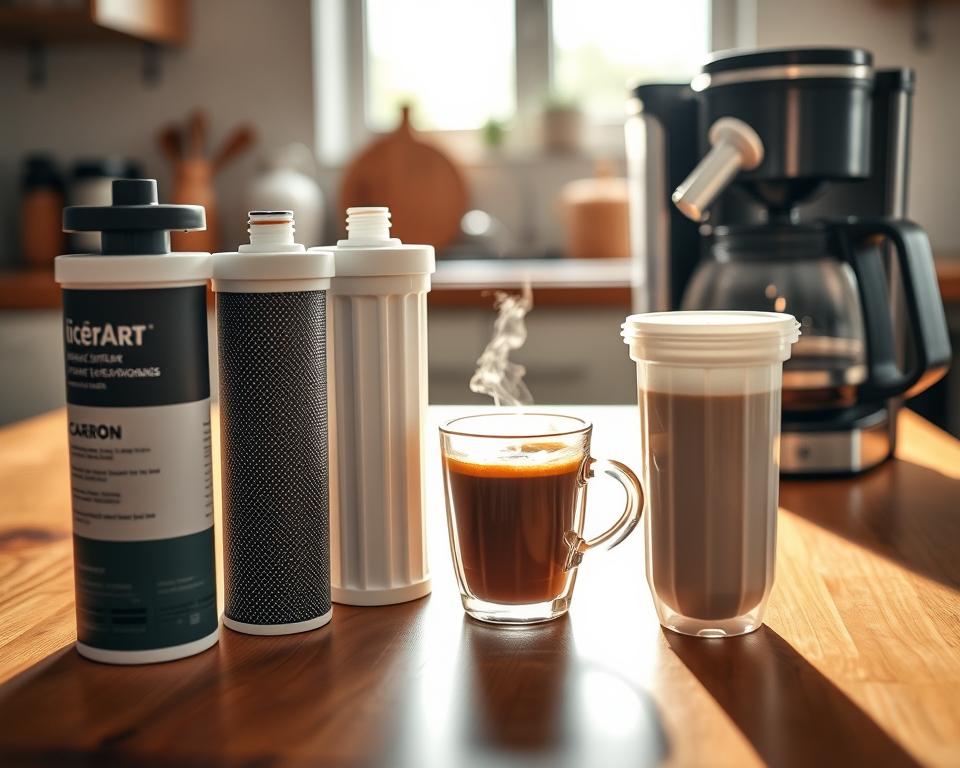
Finding the best water filter for coffee is about knowing your water quality, coffee taste, and budget. With many choices, picking the right one can be tough.
Assessing Your Water Quality
Start by checking your water quality. Test it for chlorine, lead, and minerals that can change your coffee’s taste.
- Look for chlorine and chloramines, which can make coffee taste bitter.
- Check for lead and other metals that are bad for your health.
- Find out your water’s hardness, as it can affect coffee flavor.
For more info on water quality and coffee, visit Pentair’s blog on commercial water filtration for coffee.
Considering Coffee Preferences
Your coffee taste matters when picking a filter. Whether you like it strong, weak, or just right, the filter should match your brewing style.
- If you want strong coffee, choose a filter that removes impurities but keeps minerals.
- For smoother coffee, a filter that softens water might be good.
Budget and Maintenance Factors
Think about your budget and how much upkeep the filter needs. Different filters cost and require different care, so pick one that’s right for you.
- Look at the filter’s initial cost and replacement cartridge prices.
- Consider how often you’ll need to replace the filter and clean the system.
By weighing these points, you can find a water filter that enhances your coffee’s taste. It should also match your budget and maintenance habits.
Setting Up Your Water Filtration System
After picking the right water filtration system, it’s time to set it up. Installing it correctly is key for it to work well and give you great-tasting coffee.
As Maxwell House once said, “Good to the last drop,” and getting that perfect drop starts with a well-installed water filtration system. The installation process can differ based on the system type, like reverse osmosis, activated carbon, or water softeners.
DIY Installation Tips
If you like doing things yourself, DIY installation can save you money and be fun. Here are some tips for a successful installation:
- Read the manufacturer’s instructions carefully before starting.
- Make sure you have all the tools and parts you need.
- Turn off the main water supply before starting to avoid mess or damage.
As 3M advises, “Proper preparation prevents poor performance.” Being ready will make the installation easier and faster.
| DIY Installation Checklist | Yes/No |
|---|---|
| Have you read the manufacturer’s instructions? | |
| Are all necessary tools and parts available? | |
| Is the main water supply turned off? |
Professional Installation Services
If DIY installation seems daunting or the system is complex, think about getting professional help. Experts can make sure the system is set up right and works as it should.
“The right installation is key to getting the most out of your water filtration system. Professionals can save you time and ensure the job is done right.”
When choosing between DIY and professional installation, think about the system’s complexity, your DIY comfort, and the cost savings of doing it yourself versus the peace of mind from a pro.
Best Practices for Using Filtrated Water
Filtered water is just the start. To really improve your coffee, you need to follow some key steps. Using filtered water helps bring out the best in your coffee. But there’s more to do to get the most from your beans.
Proper Water Temperature
The water’s temperature is key for brewing coffee. It should be between 195°F and 205°F for the best flavor. Water that’s too hot can burn the coffee. And water that’s too cold makes it weak.
Ideal Brew Ratios
The coffee-to-water ratio is also very important. Use 1 gram of coffee for every 15-17 grams of water. This lets you adjust the strength of your coffee to your liking.
Cleaning Your Equipment
Cleaning your coffee gear regularly is a must. This keeps the taste clean and your equipment working well. Make sure to descale your machines and wash any parts that touch coffee and water.
By following these tips—keeping the water right, using the right coffee-to-water ratio, and cleaning your gear—you’ll make your coffee taste better. The benefits of using filtered water for coffee are even greater when you do these things. You’ll enjoy your coffee more than ever.
Popular Water Filtration Brands
Choosing the right water filtration brand is key for coffee lovers. There are many options, and knowing the good and bad of top brands helps you decide.
Overview of Leading Brands
Many brands are known for their quality. Brita, Pur, and ZeroWater are leaders in water filtration. Britta is famous for its activated carbon filters. ZeroWater is known for its advanced reverse osmosis tech.
Customer Reviews and Performance
Customers love these brands for better water taste and quality. ZeroWater filters get high praise for removing almost all solids, making water very pure. Brita filters are loved for being easy to use and affordable.
Performance can change with different models and tech. It’s smart to read reviews and compare to find the right fit for your coffee.
Comparing Costs and Features
Cost is a big deal when picking a brand. Some may be cheaper upfront, but others might cost more but save money in the long run or perform better.
- Initial Cost: Look at the buy price of different models.
- Maintenance Cost: Think about the cost of new filters and upkeep needs.
- Features: Check for extra features like filter life alerts, easy setup, and compatibility with your coffee gear.
By looking at these points, you can pick a brand that makes your coffee taste better, fits your budget, and suits your lifestyle.
Troubleshooting Common Issues
Fixing common problems with your water filter is key for great coffee. Even with regular care, issues can pop up that mess with your system’s performance.
Understanding Filter Lifespan
The life of a water filter varies based on several things. These include the filter type, water quality, and how much you use it. Usually, a filter lasts from 1 to 6 months.
- Follow the maker’s advice on when to replace it.
- Watch for changes in water pressure and flow rate.
- Swap out the filter if your water tastes or smells off.
Identifying Poor Water Quality
Bad water quality can ruin your coffee’s taste. Look out for:
- Unpleasant smells or tastes.
- Visible dirt or particles.
- Scaling or mineral buildup.
If you spot these signs, it’s time to test your water or change your filter.
Solutions for Filtration Problems
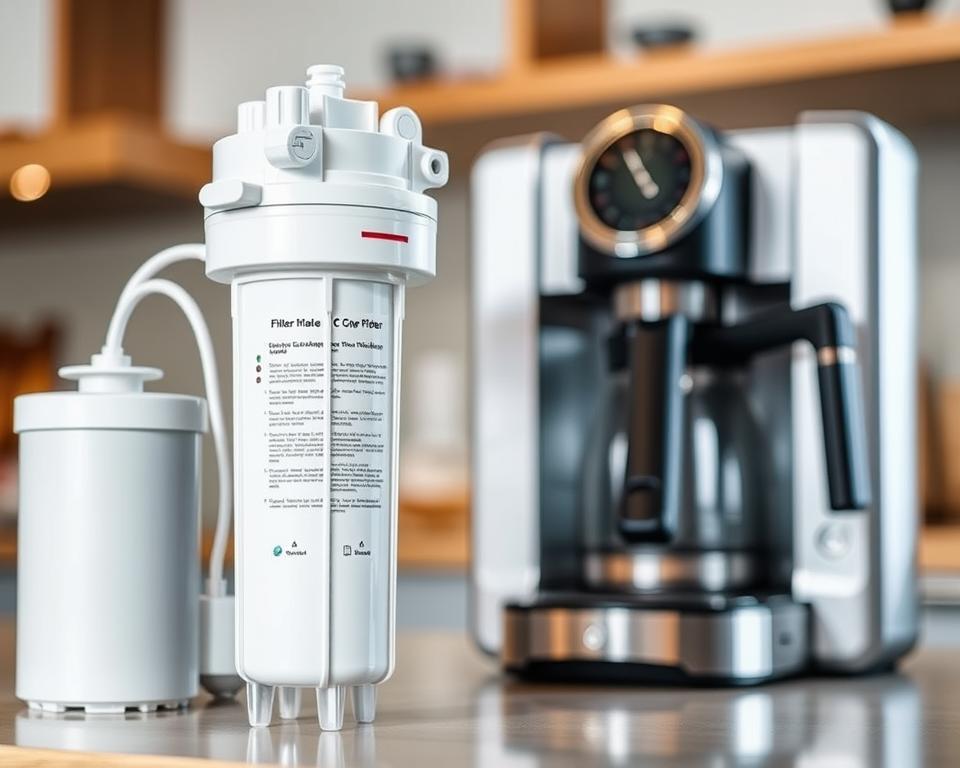
Problems like clogged filters, low water pressure, and poor filtering are common. Here’s how to fix them:
| Problem | Solution |
|---|---|
| Clogged Filter | Swap it out for a new one. |
| Low Water Pressure | Look for kinks or blockages in the tubing. |
| Poor Filtration Performance | Make sure the filter is installed right and well-maintained. |
By tackling these common problems, you can keep your water filter working well. This ensures your coffee stays top-notch.
Making the Most of Your Filtration System
Having a water filtration system can greatly enhance your coffee’s taste. But, it only works if you take care of it. A well-kept system makes sure the water is clean and free from things that can mess with the flavor.
Regular Maintenance Tips
Keeping your water filtration system in top shape is key. Here are some tips to help you:
- Replace filters as the maker says to avoid clogs.
- Regularly clean the system to get rid of dirt or debris.
- Check how well it’s working from time to time.
By sticking to these tips, your system will keep giving you clean water for coffee.
Testing Water Quality Periodically
It’s important to test your water quality often. This makes sure your system is working right. You can use kits to check things like pH, TDS, and contaminants.
Key parameters to test:
- pH levels: Make sure the water isn’t too alkaline or acidic.
- TDS levels: Check if the water is not too hard or too soft.
- Contaminant presence: Make sure there are no harmful substances.
Testing your water regularly helps you spot any problems with your system. This way, you can fix them and keep your system working well.
“The quality of the water is just as important as the quality of the coffee beans when it comes to brewing the perfect cup of coffee.”
Conclusion: Elevate Your Coffee Experience
Quality water is key to great-tasting coffee. By using a water filtration system, you can make your coffee better. This improves both the taste and smell of your coffee.
Key Takeaways
Water filtration makes your coffee taste better and smell fresher. It also keeps your coffee maker in good shape. With the right system, you’ll always have a great cup of coffee.
Investing in a Better Brew
Think about getting a water filtration system for better coffee. It lets you enjoy your coffee’s full flavor and aroma. Aquasana and Brita have options for every need and budget.