

A perfectly brewed espresso shot is the dream for coffee enthusiasts. But getting there can be tough. The secret is in mastering the art of tamping, a key part of making espresso.
Did you know bad tamping can mess up your coffee’s taste? It can also waste your espresso beans. Getting better at tamping can make your espresso shots much better.
Key Takeaways
- Understand the importance of proper tamping for espresso extraction
- Learn the tools needed for effective tamping
- Discover a step-by-step guide to mastering the tamping technique
- Improve the consistency and quality of your espresso shots
- Elevate your home brewing experience with cafe-quality results
What is Coffee Tamping?
Coffee tamping is key in making espresso. It involves pressing the coffee grounds in the portafilter basket to make a smooth surface. This step is vital for getting the best flavor out of your coffee.
The role of tamping in coffee brewing is huge. Proper tamping pressure stops channeling, which happens when water flows unevenly. This can make your espresso too weak or too strong. Tamping right ensures water flows well, giving you a richer taste.
Importance of Tamping in Coffee Brewing
Tamping is essential for many coffee brewing methods, like espresso machines. It makes sure the coffee grounds are spread out evenly. This way, every shot tastes the same. Without good tamping, even the best coffee beans can’t make a great espresso.
How Tamping Affects Extraction
The way you tamp your coffee changes how it’s extracted. Proper tamping pressure makes sure the coffee grounds are pressed down right. This lets water flow through the grounds perfectly, bringing out the coffee’s full flavor. Bad tamping can ruin the taste of your espresso.
Learning to tamp correctly and using the right pressure can make a big difference. It’s what turns a good espresso into an amazing one.
Tools Needed for Effective Tamping
Getting the right tools is key to mastering tamping. As a coffee lover, I’ve found that the right barista tools are vital for a perfect espresso shot.
Types of Tampers
There are many types of tampers, each with special features. The main types are:
- Flat Tampers: These are the classic choice, simple yet effective.
- Convex Tampers: They help spread coffee grounds evenly.
- Adjustable Tampers: These let you adjust the tamp’s depth and pressure.
Choosing the right tamper depends on your preference and your espresso machine’s needs.
Choosing the Right Tamper Size
Your tamper must match your portafilter’s size. A tamper that’s too small or too large can mess up your tamping. Most portafilters are 58mm or 53mm, so pick a tamper that fits.
Additional Tamping Accessories
There are more tools to help with tamping. These include:
- Tamping Mats: They give a stable surface and protect your countertop.
- Tamper Calibrators: They help you apply even pressure.
Getting these best coffee tampers and accessories can really boost your tamping skills and espresso quality.
The Perfect Grind Size for Tamping
To master the coffee tamping technique, knowing the right grind size is key. The grind size of your coffee beans greatly affects the tamping process. This, in turn, impacts the quality of your espresso shot preparation.
A consistent grind size ensures the coffee grounds are evenly compressed. This leads to better extraction and a balanced flavor. If the grind sizes are not consistent, water may flow unevenly through the coffee. This can affect the taste.
Understanding Grind Consistency
Grind consistency means the uniformity of the coffee particle sizes. It’s important to have a consistent grind for even extraction. When the grind is consistent, water flows through the coffee evenly, extracting the right flavors and oils.
But, if the grind sizes are not consistent, you might get under-extraction or over-extraction. Too fine a grind can make the coffee bitter, while too coarse can make it weak.
Impact of Grind Size on Tamping
The grind size affects the tamping process a lot. A grind that’s too fine can make tamping hard, causing channeling. On the other hand, a grind that’s too coarse can lead to a loose tamp, resulting in under-extraction.
The best grind size for tamping is usually medium to fine. It depends on the espresso machine and the coffee’s roast level. Try different grind sizes to find what works best for you.
Preparing Your Espresso Machine for Tamping
To get the perfect espresso shot, your machine must be ready. Start by making sure it’s clean and pre-heated. This is key for the best espresso extraction. A well-kept machine also makes your espresso taste better and lasts longer.
Steps to Clean Your Espresso Machine
Cleaning your espresso machine often is important. It stops old coffee oils and residue from affecting your espresso’s taste. Here’s how to do it:
- Remove and clean the portafilter after each use.
- Backflush the machine weekly to remove any coffee oils.
- Wipe down the machine’s exterior daily.
- Descale the machine every 3-6 months to prevent mineral buildup.
For more cleaning tips, check out Breville’s guide on tamping espresso. It also has maintenance advice.
| Cleaning Task | Frequency |
|---|---|
| Clean Portafilter | After each use |
| Backflush Machine | Weekly |
| Wipe Down Exterior | Daily |
| Descale Machine | Every 3-6 months |
Pre-Heating Your Portafilter
Pre-heating your portafilter is a simple but important step. It makes sure your espresso is brewed at the right temperature. This is key for the best coffee brewing methods. Just run hot water through the portafilter before adding coffee grounds.
“Pre-heating the portafilter is essential for maintaining the temperature of the espresso machine, which directly impacts the extraction process.”
By following these steps, you’ll be ready to prepare your espresso machine for tamping. This ensures every shot is top-notch. Remember, a clean and pre-heated machine is the base of great espresso extraction.
The Step-by-Step Tamping Technique
To improve your coffee, learning the tamping technique is key. Tamping is a vital step in making espresso. It involves a few steps to get a balanced shot.
Distributing Coffee Grounds Evenly
The first step is to spread the coffee grounds evenly in the portafilter. This makes sure the water flows well through the coffee. To do this, pour the coffee into the portafilter and use a tool or your fingers to spread it.
Applying Consistent Pressure
After spreading the grounds, apply consistent pressure with your tamper. Proper tamping pressure is key for the right water flow. Press down firmly but evenly. The pressure should be about 30 pounds, but it can change based on your equipment and coffee.
The Right Angle for Tamping
The angle of your tamper is also important. Hold it at a 90-degree angle to the coffee bed. This prevents uneven extraction and ensures a balanced espresso. Practice to get it right.
Mastering these steps will greatly improve your coffee tamping technique. With practice, you’ll get a perfectly tamped espresso puck. This will make your espresso experience even better.
Common Tamping Mistakes to Avoid
Making the perfect tamp is a skill that takes practice. It’s important to know the common mistakes that can ruin your espresso. Tamping is a key step in espresso shot preparation and needs careful attention to avoid errors.
Over-Tamping vs. Under-Tamping
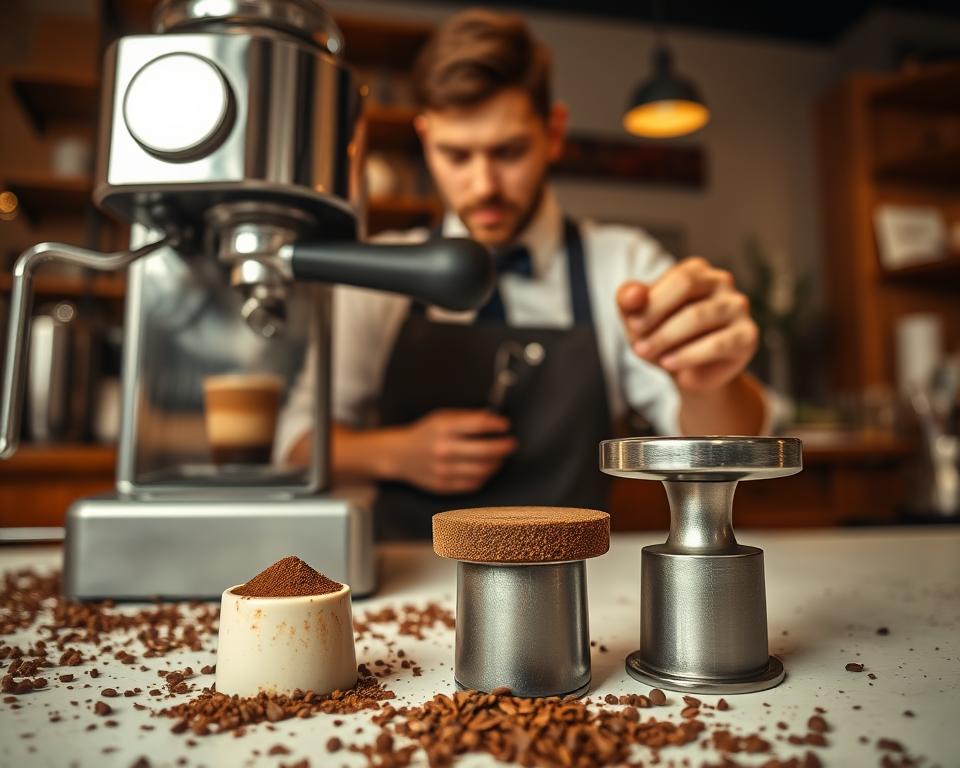
Two big mistakes in tamping are over-tamping and under-tamping. Over-tamping means too much pressure, which can cause channeling and a bitter shot. Under-tamping means not enough pressure, leading to a weak or sour taste.
| Tamping Technique | Result | Impact on Espresso |
|---|---|---|
| Over-Tamping | Channeling, over-extraction | Bitterness, unpleasant taste |
| Under-Tamping | Under-extraction | Weak, sour taste |
| Proper Tamping | Even extraction | Balanced flavor, rich aroma |
Distributing Unevenly
Another mistake is not spreading the coffee grounds evenly in the portafilter. Using the right barista tools, like a distribution tool, helps spread the grounds evenly. This leads to a better tamp and extraction.
By avoiding these common tamping mistakes, you can improve your espresso-making skills. You’ll enjoy a perfectly balanced shot every time.
Tips for Improving Your Tamping Skills
Improving your tamping skills takes time and effort. It’s key to practice often and learn from your mistakes.
Practicing at Home
Practicing at home is a great way to get better at tamping. Start with a good quality tamper that fits your portafilter well. Look for the best coffee tampers for a flat base and easy grip.
Try tamping with different coffee methods to see how grind size and distribution change flavor. For example, try espresso and then pour-over or French press.
Getting Feedback from Baristas
Feedback from baristas can really help your tamping. Visit local coffee shops and ask for their opinion. They can tell you how to improve your coffee brewing methods.
Many coffee shops offer tamping classes. These are great chances to learn from experts and get better at tamping.
Keeping a Log of Your Techniques
Keeping a log of your tamping can help you see how you’re doing. Write down the date, coffee beans, grind size, and tamping pressure for each brew. This will help you spot what you need to work on.
By keeping a log, you can improve your tamping skills over time. Remember, the most important thing is to keep practicing and be open to learning.
The Science Behind Tamping Pressure
Understanding tamping pressure is key to making great espresso. It greatly affects how your espresso tastes and feels.
Ideal Pressure for Tamping
The best tamping pressure is about 30 pounds (13.6 kg). But, it can change based on your espresso machine and coffee type. Consistency is key; the same pressure each time means better results.
For more on tamping pressure and its impact on espresso, check out this guide on tamping pressure and espresso.
How Pressure Affects Flavor Profiles
The tamping pressure changes your espresso’s taste. Under-tamping makes it sour or weak. Over-tamping makes it bitter.
Getting the right tamping pressure is vital for a balanced taste. Try different pressures and see how they change your espresso’s flavor. This will help you improve your technique.
Experimenting with Different Coffee Beans
Different coffee beans react differently to tamping. This makes experimenting key to mastering the technique. The beans’ origin and roast level greatly impact their tamping behavior and coffee flavor.
The Role of Bean Origin on Tamping
The coffee bean’s origin is vital in tamping. Beans from various places have unique traits that influence tamping. For example, South American beans are denser and need a firmer tamp. East African beans are lighter and require a softer touch.
Bean Origin Characteristics:
| Region | Bean Density | Tamping Requirement |
|---|---|---|
| South America | High | Firm |
| East Africa | Low | Gentle |
| Sumatra | Medium | Moderate |
Taste Testing Different Blends
Taste testing is key to finding your favorite coffee flavor. By trying different blends and roasts, you can discover what you like best. Keep a log of your taste tests to track your preferences and make changes.
Tips for Taste Testing:
- Start with a variety of blends and roasts.
- Take notes on the flavor profiles.
- Compare the results to identify your preferences.
Advanced Tamping Techniques
To improve your coffee, learn advanced tamping methods like the Weiss Distribution Technique. These methods make your coffee grounds even, leading to a better-tasting espresso.
The WDT (Weiss Distribution Technique)
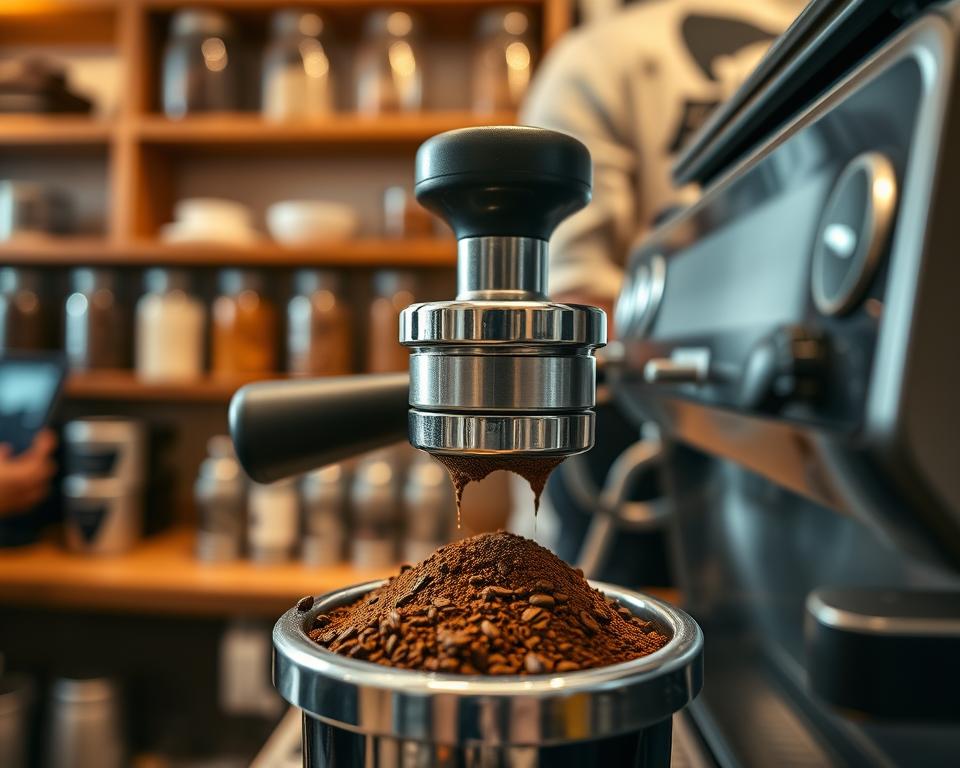
The Weiss Distribution Technique uses a special tool to spread coffee grounds evenly in the portafilter. It prevents channeling and ensures water flows through the grounds well.
To use the WDT, you need a Weiss Distribution Tool, a key barista tool. Just put the tool in the portafilter, stir the grounds, and then take it out before tamping. This step makes your espresso shot preparation more consistent.
Using Tap Technique for Uniformity
Another way to get uniformity is the tap technique. It involves tapping the portafilter on a hard surface after adding coffee grounds. This settles the grounds and removes air pockets for even extraction.
To tap effectively, hold the portafilter up and tap it lightly on the counter. This spreads the grounds evenly and gets them ready for tamping. Using the tap technique with proper tamping makes your espresso shot preparation more consistent.
Adding these advanced tamping techniques to your routine can make your coffee better. Whether you’re brewing at home or aiming to be a barista, mastering these methods will impress coffee lovers.
Cleaning and Maintenance of Tampers
Keeping your tamper in top shape is key for great coffee. A clean tamper means better espresso shots every time. We’ll show you how to clean it right and check for wear.
Best Practices for Keeping Your Tamper Clean
It’s important to clean your tamper often. This stops old coffee oils and residue from building up. Here’s how to do it:
- Wipe your tamper with a damp cloth after each use to get rid of coffee grounds.
- For a deeper clean, use mild soap and warm water. Stay away from harsh chemicals that can harm the material.
- Make sure to dry your tamper well after cleaning to avoid water spots.
Tip: Stainless steel tampers can shine and stay clean with a mix of water and white vinegar every now and then.
How to Check Your Tamper for Wear and Tear
As time goes by, your tamper might show signs of wear. This can hurt its performance. Here’s how to check:
- Look at the tamper base for any unevenness or wear. Uneven bases can cause uneven tamping.
- Check the handle for damage or looseness. A tight handle is important for even pressure.
- Watch out for corrosion or rust, if your tamper is metal.
Regular checks and care can make your tamper last longer and work better.
By cleaning and checking your tamper regularly, you’ll keep it in great shape. This helps you get consistent, top-notch espresso shots.
Mastering Tamping Through Consistency
Consistency is key to perfecting the coffee tamping technique. By establishing a routine and monitoring my progress, I can continually improve my skills. This helps me achieve the best possible results in my coffee brewing methods.
Developing a Routine
To develop a personal tamping routine, I focus on distributing coffee grounds evenly. I also apply consistent pressure. This ensures a balanced extraction, which is vital for optimal espresso extraction.
Tracking Progress
Tracking my brew results allows me to identify areas for improvement. By keeping a log of my techniques and outcomes, I can refine my tamping skills. This leads to a more satisfying cup of coffee.
By combining a consistent tamping routine with careful tracking of my brew results, I can master the art of tamping. This elevates my coffee game.