

Did you know we make over 200 food choices every day? We often use our senses to make these decisions. If you’re looking to improve your sensory evaluation skills, you’re on the right path. This skill is key in product development, quality control, and understanding what consumers want.
Getting better at sensing and describing what we taste, smell, and feel can really help your career. With sensory training, you can learn to notice and describe these details better. This will make you a better decision-maker.
Key Takeaways
- Understand the importance of sensory evaluation in various industries.
- Learn how to improve your sensory evaluation skills through training.
- Discover the role of sensory characteristics in product development.
- Enhance your ability to make informed decisions in quality control.
- Apply sensory evaluation skills effectively in consumer research.
What is Sensory Evaluation?
To understand sensory evaluation, we need to know what it is and why it matters. It’s a science that studies how products look, smell, taste, feel, and sound. Dr. Herbert Stone, a top expert in sensory evaluation, said, “It’s key to knowing what people like and what makes a product good.”
Definition and Importance
Sensory evaluation is about carefully checking how a product feels and tastes. It’s very important in the food world for making new products and checking their quality. By knowing how people see and enjoy a product, companies can make better choices.
The value of sensory evaluation is huge. It gives real facts about what people like. This info helps spot trends, fine-tune recipes, and keep quality high.
Key Components of Sensory Evaluation
The main parts of sensory evaluation are understanding a product’s qualities and how they affect people. These qualities include looks, smells, tastes, and feels. They also include how these qualities make us feel and how much we like the product.
- Sensory traits like looks, smells, tastes, and feels.
- The feelings and thoughts these traits bring up.
- How much we like the product overall.
By looking at these parts, companies can really get to know how their products are seen by people. This helps them make smart choices to make their products better.
“The sensory qualities of a product are very important for its appeal and what people like.”
Types of Sensory Evaluation Methods
To improve my sensory skills, I must learn about different testing methods. Sensory evaluation uses various techniques to check product qualities, what consumers like, and how products differ.
Discrimination Tests
Discrimination tests help find out if products are different. They are key in ensuring quality and improving products. They show if changes in ingredients, how products are made, or packaging affect taste or feel.
Examples of discrimination tests include the triangle test and the duo-trio test. In the triangle test, people try three samples to find the odd one. In the duo-trio test, a person is given a sample and then tries to match it from two more samples.
Descriptive Analysis
Descriptive analysis gives a detailed look at a product’s sensory qualities. A trained panel describes the intensity of things like flavor, texture, and look. This info is key for making and improving products.
The process involves several steps, like picking attributes, making scales, and training panels. The end result is a detailed description. This helps compare products or guide product development.
Affective Testing
Affective testing checks how much people like a product. It’s important for understanding consumer reactions to different products. Tests can use hedonic scales to measure liking or preference tests to see which product is preferred.
Affective testing is consumer-centric, focusing on how products make people feel. It helps understand consumer behavior and preferences. This guides product development and marketing.
The Role of Sensory Evaluation in Food Industry
Sensory evaluation is key in the food industry. It affects product quality, how much people like it, and business success. The food world uses sensory evaluation to check if products meet quality and taste standards.
Quality Control
A sensory panel is important for quality control. They check the taste, texture, and smell of food. This ensures products are consistent and of high quality.
They spot any issues with taste or smell. This helps makers fix problems and keep products top-notch. It’s vital for keeping customers happy and loyal.
Product Development
Sensory evaluation is also key in making new products or improving old ones. It helps makers understand what consumers like and expect. This way, they can create products that will likely do well in the market.
For example, when making a new drink, sensory tests help find the right mix of flavors and textures. This is important for reaching the right audience.
Consumer Research
In studying consumers, sensory evaluation is used to learn about their tastes and behaviors. It looks at how people react to different food qualities.
For instance, wine sensory evaluation is a special field. Experts here check the smell, taste, and feel of wines. This info is very useful for winemakers who want to make products that appeal to certain groups.
Essential Sensory Evaluation Skills
Effective sensory evaluation needs a mix of key skills. Every sensory pro should know these to do good evaluations. These skills help make sure assessments are accurate and useful.
Observation Skills
Observation is key in sensory work. It’s about seeing and feeling what a product is like, like its look, feel, taste, and smell. Trained panelists must spot small changes and explain them well. For example, they can tell the difference in texture and taste between different chocolates.
Critical Thinking
Critical thinking is also very important. It lets pros understand and use sensory data well. This means knowing stats and making smart conclusions from the data. Critical thinking finds patterns and odd points, helping make better product choices.
Communication Skills
Good communication is also key. Pros need to share their findings clearly, both in speech and writing. They must use the right words to describe what they sense and make complex data easy to get. Strong communication skills make sure findings lead to real product improvements.
| Skill | Description | Importance in Sensory Evaluation |
|---|---|---|
| Observation Skills | Accurately perceiving sensory attributes | High |
| Critical Thinking | Analyzing and interpreting data | High |
| Communication Skills | Reporting findings clearly | High |
By getting better at these skills, sensory experts can make their work better and more reliable. Whether through training or practice, honing observation, critical thinking, and communication skills is essential for success in sensory science.
Training and Development Techniques
To get better at sensory evaluation, I need to try different training methods. Sensory training is an ongoing process to keep improving.
Good sensory training mixes theory and practice. You can learn through workshops, courses, and online tools.
Workshops and Courses
Workshops and courses give you real experience and deep knowledge. They are led by experts and cover many topics, from basics to advanced methods.
Attending these can be very beneficial. You learn from experts, get practical experience, and meet other professionals.
For example, a workshop on descriptive analysis might have you taste and describe products. This helps you improve your descriptive skills.
“The best way to get started is to quit talking and begin doing.”
Online Learning Resources
Online resources are flexible and easy to access. They let professionals improve their skills without going to workshops or classes.
Some top online tools include:
| Resource Type | Description | Benefits |
|---|---|---|
| Webinars | Live or recorded online sessions | Flexibility, accessibility |
| E-learning Modules | Interactive online courses | Self-paced learning, thorough coverage |
| Online Forums | Discussion platforms for professionals | Networking, sharing knowledge |
These tools are great for those who like learning at their own pace or have busy schedules.
By using these training methods, I can greatly enhance my sensory evaluation skills. I’ll also keep up with the latest in the field.
Tools and Techniques for Sensory Evaluation
To improve sensory analysis, knowing the different tools and techniques is key. These tools help in accurately checking product features. They make sure evaluations are both trustworthy and detailed.
Flavor Wheel
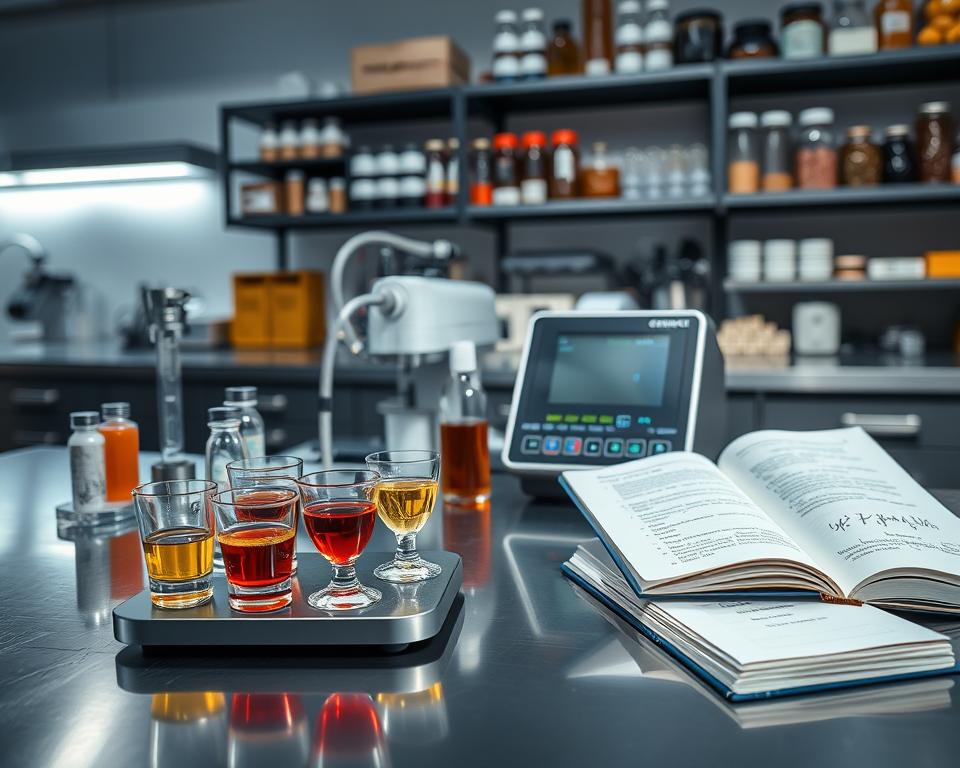
The flavor wheel is a great tool for sensory evaluation. It offers a structured way to describe a product’s complex flavors. By categorizing flavors, it makes assessments more precise and consistent.
This is very helpful in the food industry. Even small flavor differences can greatly affect what people like.
Aroma Kits
Aroma kits are also vital for sensory evaluation. They provide a set of standard aromas for checking smell perception. These kits help identify and describe the different smells in a product.
Using aroma kits, evaluators can better understand how smells add to the overall taste experience. This makes sensory evaluations more accurate.
Using tools like the flavor wheel and aroma kits makes sensory evaluations more reliable and effective. These tools help professionals in the field do better work. They contribute to better product development and quality control.
Building a Sensory Evaluation Team
To do effective sensory evaluations, it’s key to have a diverse and skilled team. A good sensory panel makes testing more accurate and reliable.
Team Composition
The makeup of a sensory team is very important. A team with different backgrounds and skills is essential for thorough testing.
- Diverse Skill Sets: Include members with various expertise to cover different aspects of sensory evaluation.
- Background Checks: Make sure team members don’t have allergies or sensitivities that could affect their work.
- Recruitment Strategies: Use many ways to find candidates to make the team diverse.
Training Your Team
Good training is key for a sensory panel to work well. Training should cover both the theory and practice of sensory evaluation.
| Training Module | Description | Duration |
|---|---|---|
| Sensory Evaluation Fundamentals | Introduction to sensory evaluation principles and methods. | 2 hours |
| Descriptive Analysis | Training on descriptive analysis techniques and terminology. | 4 hours |
| Product Sampling | Practical training on evaluating various products. | 3 hours |
By focusing on team composition and training, I can build a reliable and efficient sensory panel. This helps improve my product development process.
Common Challenges in Sensory Evaluation
The process of sensory evaluation is key but comes with many challenges. These can affect how reliable the results are. As we explore sensory testing, we see many factors that can change the outcomes.
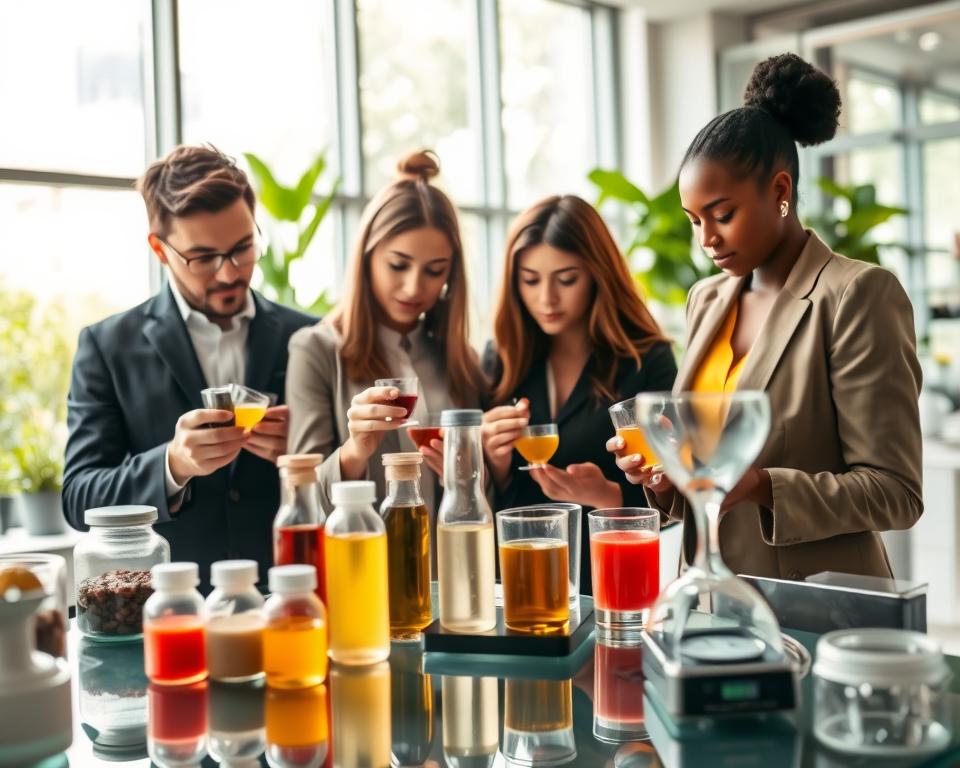
One big issue is subjectivity in tasting. People’s tastes can vary a lot. This is because of genetics, personal taste, and culture. For example, how sweet or bitter something tastes can be different for everyone. To fix this, we need to train and calibrate the people doing the tasting. This makes their opinions as fair as possible.
Subjectivity in Tasting
Subjectivity in tasting is a big problem because it makes the data less consistent. To solve this, we should:
- Pick people who are really good at sensing tastes.
- Teach them well on how to notice and talk about tastes.
- Use standard samples to make sure everyone is on the same page.
Environmental Influences
Things like lighting, noise, and temperature can also change how we taste things. For example, too much noise can make it hard for people to focus. And bad lighting can make products look different, which can change how we see them.
To deal with these issues, we need to test in places that are controlled. This means using:
- Special booths that are quiet and free from distractions.
- Lighting that shows the product as it really is.
- A comfortable temperature that doesn’t mess with how people taste things.
As
“The art of sensory evaluation lies not just in the technique, but in understanding the subtleties that influence our perceptions.”
By tackling these problems, we can make sensory testing more accurate and reliable.
In short, sensory evaluation has its challenges like subjectivity and environmental factors. But we can manage these with the right training, controlled settings, and understanding of the factors involved. This way, sensory testing can give us important insights into what people like and how products are.
Future Trends in Sensory Evaluation
The world of sensory evaluation is changing fast. New tech and what people want are leading the way. Sensory science will be key in shaping the food world.
Advancements in Technology
Technology is making sensory tests better and faster. Methods like flash profiling and temporal dominance of sensation are getting used more. They help us understand what people like better. For more on the latest in sensory science, check out this resource.
Sustainability and Health Focus
The food industry is focusing more on being green and healthy. Sensory evaluation is important in making products that fit these needs. As people get pickier, they want food that’s good for them and the planet.
Keeping up with these trends in sensory evaluation helps professionals in the field. They can keep making new and exciting products.