
Did you know most people can only taste a few flavors in their coffee? This fact shows how much our senses can improve. As someone who loves coffee, I’m here to help you improve your taste and enjoy your coffee more.
Exploring coffee tasting opens up a world of new flavors. This guide will teach you how to become a coffee expert. You’ll learn to appreciate coffee in a whole new way.
Key Takeaways
- Discover the art of sensory evaluation in coffee tasting.
- Learn how to identify distinct flavors and notes in your coffee.
- Understand the importance of brewing techniques on flavor.
- Explore the role of aroma in enriching your coffee experience.
- Develop your palate with practical coffee tasting tips.
What is Blind Coffee Tasting?
Blind coffee tasting is a special way to taste coffee. It focuses on taste, smell, and feel, without knowing where the coffee comes from. This method helps judge coffee quality without knowing its background.
This method removes bias by not knowing the coffee’s history. As one expert says,
“The true essence of coffee lies in its ability to surprise and delight our senses.”
This way of tasting coffee makes us appreciate it more. It also helps us get better at tasting.
Understanding the Concept
Blind coffee tasting is about tasting coffee based on what we sense. Tasters must use their senses to figure out the coffee’s taste, smell, and feel.
Key aspects of blind coffee tasting include:
- Evaluating coffee without prior knowledge of its origin or roast level
- Focusing on the sensory experience, including taste, aroma, and texture
- Removing bias and preconceived notions about the coffee
Benefits of Blind Tasting
Blind coffee tasting has many benefits. It helps us get better at tasting coffee and enjoy it more. Regular blind tasting improves our skill in noticing coffee’s flavors and subtleties.
The benefits of blind tasting are multifaceted:
- Enhanced sensory awareness
- Improved ability to detect flavor profiles
- Reduced bias in coffee evaluation
How It Differs from Regular Tasting
Blind coffee tasting is different from regular tasting. It removes the impact of where the coffee comes from or how it’s roasted. This lets tasters focus on the coffee itself.
Blind tasting gives a fairer look at coffee. It helps us see the coffee’s real qualities. This way, we can better understand and enjoy coffee.
Essential Tasting Equipment
Blind coffee tasting needs the right tools to judge coffee’s qualities. I’ve learned that the right equipment is key to noticing coffee’s subtleties.
Let’s explore the basic gear for a great tasting session. For a detailed guide to sensory coffee evaluation, investing in quality is a must.
Coffee Grinders
A good coffee grinder is vital for a consistent grind. This ensures even extraction when brewing. I suggest using a burr grinder over blade grinders. Burr grinders give a consistent grind and don’t heat up the beans.
There are many burr grinders, manual and electric. For blind tastings, an electric grinder saves time. It lets you focus on tasting.
Tasting Cups
The right tasting cups are important. I like cups that are neutral in color and wide-mouthed. This makes swirling and smelling the coffee easy. They should be made of durable, non-reactive materials like glass or ceramic.
Good cups help you see the coffee’s color and smell. For top-notch tastings, use cups made for coffee tasting.
Scales and Thermometers
Measuring coffee and water accurately is essential. A digital scale lets you measure precisely. This ensures the perfect coffee-to-water ratio for your brew.
A thermometer is also key for water temperature. The best brewing temperature is between 195°F and 205°F.
With these essential tools, you’re ready for successful blind coffee tastings. You’ll improve your skills in sensory evaluation.
Selecting Coffee Beans for Tasting
To have a great blind tasting, picking the right coffee beans is key. The right beans can make the tasting better, challenging your taste and helping you understand coffee flavors.
Origin and Flavor Profiles
Coffee beans from different places have unique tastes. Ethiopian coffees are fruity and floral, while Brazilian ones are nutty and smooth. Choosing beans from various origins makes the tasting richer.
Also, think about how the beans were processed. Washed coffees are bright and clean, while natural coffees are sweeter and fruitier. This variety is important for a detailed blind tasting.
Choosing Roast Levels
The roast level of coffee beans changes the taste. Lighter roasts keep the coffee’s natural taste, while darker ones bring out richer flavors. Having both light and dark roasts in your tasting helps you notice the differences in coffee flavors.
For a blind tasting, include both light and dark roasts. This variety helps you understand coffee flavors better.
Seasonal Considerations
Coffee beans are available all year, but some seasons and places can change their taste. Freshly harvested coffees have brighter, more vibrant flavors. Thinking about the season can make your tasting even more interesting.
Also, different roasters release new coffee at different times. Watching for these releases can help you get the freshest beans for your tasting.
Preparing for Your Blind Tasting
A successful blind tasting starts with a well-prepared tasting station. You need to control the environment and tools used. This ensures your focus is on the coffee’s flavor without bias.
Setting Up Your Tasting Station
Setting up your tasting station is key. Make sure the room is well-lit and at a comfortable temperature. The area should be clean and free from strong smells that could affect your taste.
Key elements to consider:
- A table or countertop for tasting
- Comfortable seating for participants
- Adequate lighting, preferably natural light
Brewing Methods to Consider
The brewing method greatly affects coffee flavor. For a blind tasting, use the same method for all samples. This ensures fairness. Popular methods include pour-over, French press, and Aeropress, which highlight different flavors.
Tips for choosing a brewing method:
- Consider the equipment you have available
- Think about the flavor profiles you want to highlight
- Choose a method that allows for consistency across brews
Necessary Ingredients and Tools
To conduct a blind tasting, you’ll need a few essential items. These include coffee samples, a grinder, a scale, a thermometer, and tasting cups. The right tools will improve your coffee tasting experience and help develop your palate.
Essential tools and ingredients:
- Coffee beans for tasting
- A coffee grinder
- A brewing device
- Tasting cups and spoons
- Water for brewing
Conducting the Blind Tasting
To truly develop a coffee tasting palette, one must master the art of blind tasting. This starts with organizing the tasting. It involves several key steps for a fair and unbiased experience.
Organizing the Tasting
The first step is to organize the tasting event. You need to pick a variety of coffee samples. Also, prepare the necessary equipment and set up a tasting station that minimizes bias.
- Choose a diverse set of coffee beans with different flavor profiles.
- Use identical brewing methods for each sample.
- Label the samples in a way that conceals their identities.
Anonymizing Coffee Samples
Anonymizing the coffee samples is key to the blind tasting process. You can do this by using coded labels or wrapping the containers to hide their features.
Tips for Anonymizing Samples:
- Use a coding system that is not easily decipherable.
- Ensure the samples are presented in identical containers.
- Keep the identity of each sample hidden until the tasting is complete.
Tasting Etiquette and Best Practices
During the tasting, it’s important to follow certain etiquette and best practices. This ensures a productive and enjoyable experience.
| Best Practice | Description |
|---|---|
| Taste in a quiet, odor-free environment. | This helps to minimize external influences on your senses. |
| Use a clean cup for each sample. | This prevents any residual flavors from affecting your judgment. |
| Take your time to evaluate each sample thoroughly. | Rushing can lead to inaccurate assessments. |
By following these guidelines and best practices, you’ll be well on your way to developing a sophisticated coffee tasting palette. This will enhance your overall coffee appreciation.
Analyzing the Tasting Results
Understanding your blind coffee tasting results is key to enhancing coffee tasting skills. It involves analyzing flavors, acidity, and quality of the coffee samples.
Start by having a systematic way to evaluate coffees. The flavor wheel is a great tool for this.
Flavor Wheel and Descriptions
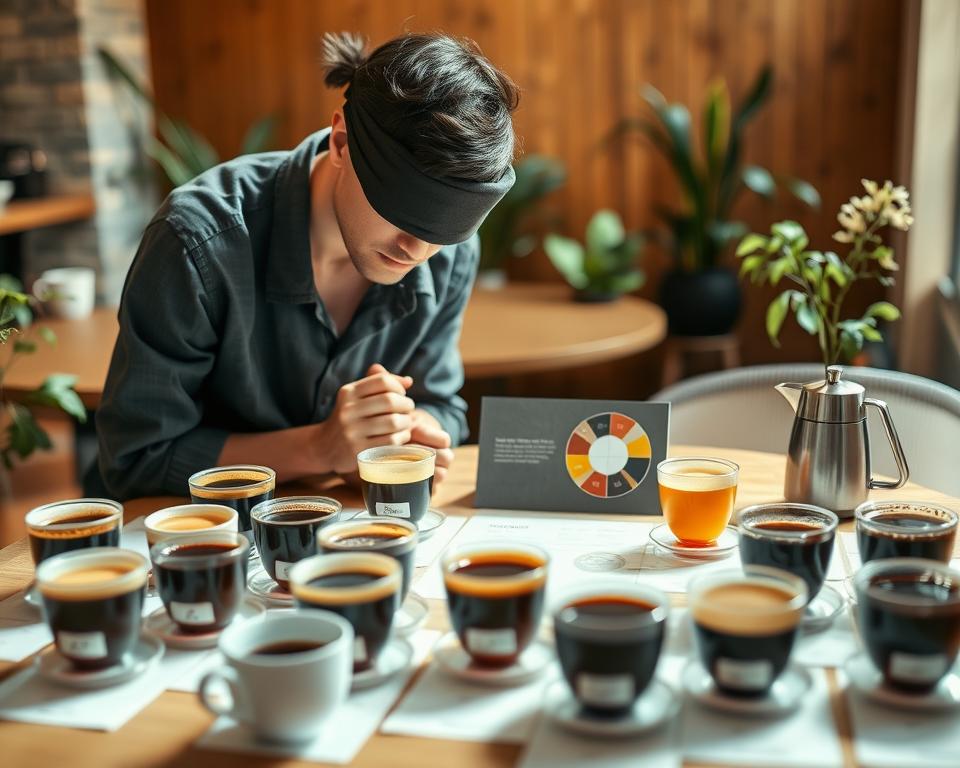
The flavor wheel is a circular diagram that helps identify coffee flavors. It groups flavors into categories like fruity, floral, and wine-like. More specific flavors are listed as you move outward.
When using the flavor wheel, be as detailed as you can. For example, say a coffee tastes like citrus or berry instead of just “fruity.” This helps create a detailed coffee profile.
Scoring Sheets and Feedback
Creating scoring sheets is important for analyzing tasting results. These sheets should cover flavor, acidity, body, and overall impression. By scoring each category, you can compare coffees.
| Coffee Sample | Flavor | Acidity | Body | Overall Impression |
|---|---|---|---|---|
| Sample 1 | 8/10 | 7/10 | 8/10 | 8/10 |
| Sample 2 | 7/10 | 8/10 | 7/10 | 7.5/10 |
| Sample 3 | 9/10 | 9/10 | 8/10 | 8.5/10 |
Discussion Tips for Participants
After tasting, discussing the results as a group is helpful. This way, everyone can share their thoughts and learn from each other.
- Ask each person to share their scoring sheets and why they chose those scores.
- Talk about any score differences and try to understand them.
- Use the flavor wheel to match your descriptions and agree on the coffee’s qualities.
By following these steps, you can make the analysis a valuable learning experience. It will enhance your coffee tasting skills and deepen your coffee knowledge.
Common Mistakes in Blind Tasting
To enjoy your blind coffee tasting, avoid common mistakes. Blind tasting sharpens your taste buds. Knowing the pitfalls helps you get the most out of it.
Skipping the Preparation Step
One big mistake is skipping preparation. Proper setup means brewing coffee right and controlling variables. Take the time to prepare your tasting area for accurate results. For more tips, check our section on preparing for your blind tasting.
Overthinking Flavors
Don’t overthink coffee flavors. It’s easy to get lost in complex notes. Instead, trust your first taste impressions. Trust your palate and note what you really taste, not what you think you should.
Comparing Too Many Samples
Comparing too many coffees at once is overwhelming. Stick to a few samples to focus on each one. This way, you can develop your tasting skills better.
By avoiding these mistakes, you’ll enjoy your blind coffee tasting more. You’ll also get better at telling different coffees apart. Happy tasting!
Enhancing Your Coffee Knowledge
Learning more about coffee is a journey. It involves exploring different resources and talking with other coffee lovers. There’s always something new to discover in the world of coffee.
Resources for Learning More
There are many ways to learn about coffee. Online tutorials and videos can teach you best coffee tasting practices. Websites focused on coffee education have articles, webinars, and podcasts on various topics.
Books on coffee history, production, and tasting are also great resources. They offer deep insights into the coffee world. For beginners and experts, there are books on roasting, brewing, and tasting coffee.
Joining Coffee Tasting Groups
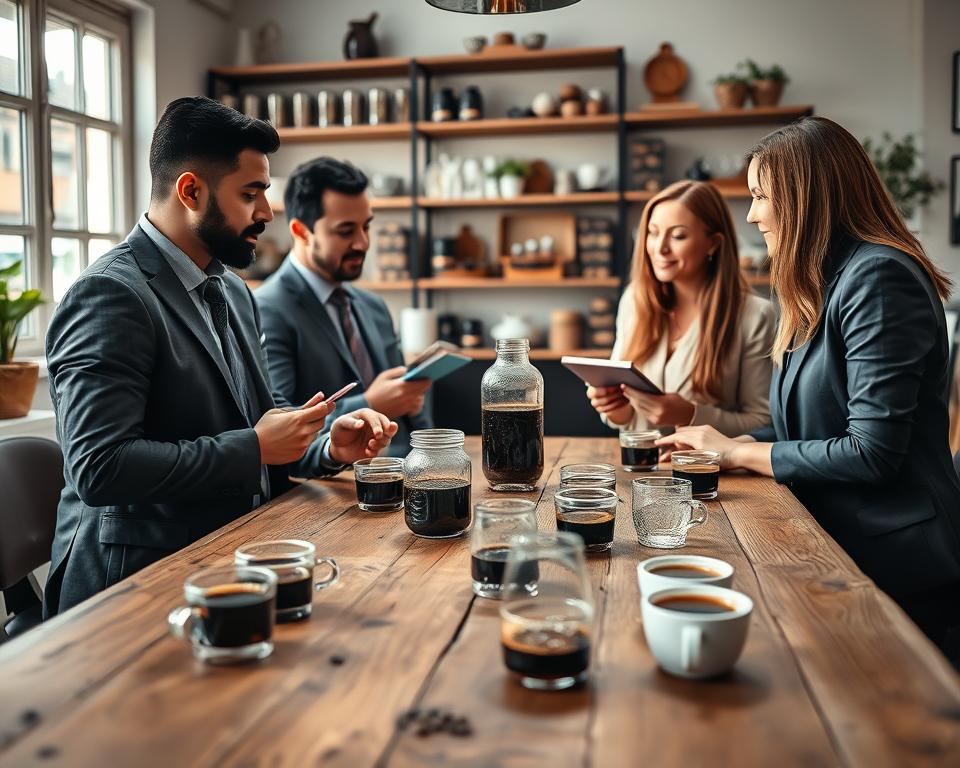
Joining a coffee tasting group is a great way to learn. These groups meet in local coffee shops or online. You get to taste different coffees and learn from others.
Being in a coffee tasting group keeps you up-to-date with coffee trends. Members talk about new coffee releases and brewing methods. This sharing of knowledge helps improve your taste.
Attending Workshops and Events
Workshops and events are also great for learning. They include cupping sessions and roasting classes. You’ll learn about coffee production and brewing techniques.
At these events, you can meet coffee experts and enthusiasts. Talking with baristas and roasters can give you tips for improving your coffee tasting. Following a guide to sensory coffee evaluation will help you understand different coffees better.
By using learning resources, joining groups, and attending events, you’ll grow your coffee knowledge. You’ll also get better at tasting coffee.
Final Thoughts on Blind Coffee Tasting
Blind coffee tasting is a great way to improve your coffee skills. It helps you understand coffee flavors better. You’ll learn to appreciate the complex tastes of coffee more.
The Power of Exploration
Blind tasting lets you discover coffee without knowing what it is. This way, you can find flavors and notes you might miss. It makes you more aware of coffee’s subtleties.
Sharing Your Discoveries
When you get better, share what you’ve learned. Join coffee tasting groups or workshops. This way, you can learn from others and share your own insights.
Keep exploring and learning. You’ll grow more confident in judging coffee. And you’ll be able to share your knowledge with others.