

Did you know that coffee made with a French press is incredibly rich and bold? It’s a favorite among coffee fans. With over 2.25 billion cups enjoyed every day, learning to use a French press can make your morning coffee better.
I’m excited to share the basics of using a French press with you. You’ll learn how to brew coffee like a pro. This guide is perfect for beginners or anyone wanting to improve their coffee-making skills. You’ll discover how to make cafe-quality coffee right at home.
Key Takeaways
- Understand the basics of a French press coffee maker
- Learn the step-by-step process of brewing coffee with a French press
- Discover tips for customizing your brewing techniques
- Explore common mistakes to avoid when using a French press
- Find out how to maintain and clean your French press for optimal performance
What is a French Press?
The French press, also known as a cafetière or coffee press, has a long history. It dates back to the mid-19th century. It’s a brewing device that has remained popular among coffee lovers.
A Brief History of the French Press
The French press originated in France in the 1850s. It was first made of tin and had a simple design. Over time, it evolved to use materials like glass and stainless steel.
Despite these changes, its basic principle has stayed the same. It involves steeping coarse coffee grounds in hot water. Then, you press the grounds to the bottom to separate them from the liquid.
“The French press is a symbol of traditional coffee culture, embodying the simplicity and richness that coffee lovers cherish.”
How It Works
The French press works by steeping coarse coffee grounds in hot water. You add the coffee grounds to the container, followed by hot water. The mixture steeps for a few minutes.
Then, you press the plunger down. This separates the coffee grounds from the liquid. This method allows the coffee to steep for a longer time, making it rich and full-bodied.
As James Hoffmann, a renowned coffee expert, notes, “The French press is all about control – controlling the ratio of coffee to water, the steeping time, and the temperature of the water.”
Features of a French Press
A French press has a cylindrical pot, a plunger with a fine mesh filter, and a lid. The pot is usually made of glass or stainless steel. This allows you to see the brewing process.
The plunger and filter separate the coffee grounds from the liquid. The mesh filter lets the coffee’s natural oils pass through. This adds to the coffee’s rich flavor.
- Cylindrical pot for brewing
- Plunger with a fine metal or nylon mesh filter
- Lid to keep the coffee warm
Understanding a French press’s features and workings helps coffee enthusiasts appreciate its craftsmanship. It’s a key part of brewing coffee.
Choosing the Right French Press
The world of French press coffee makers is vast. It offers many sizes and styles for different needs. Whether you drink coffee alone or with friends, there’s a French press for you.
Different Sizes and Styles
French presses vary in size, from 1-cup to 8-cup or more. Your choice depends on how much coffee you need. A small French press is perfect for one person, while a larger one is better for groups.
The style of your French press also varies. You can find sleek, modern designs or traditional looks. Choose one that brews great coffee and fits your kitchen.
Material Considerations
French presses are made from glass, stainless steel, and plastic. Each has its own benefits and drawbacks. Glass is non-reactive and lets you see the coffee, but it’s fragile. Stainless steel is durable and keeps coffee hot, but it’s heavier and pricier. Plastic is affordable and light but less durable.
Think about your lifestyle when choosing a material. Stainless steel is durable, while glass offers a traditional look. Be careful with glass, though.
Price Ranges
French presses range from under $10 to over $50, based on size, material, and brand. Basic models are affordable, while high-end ones have advanced features.
Set a budget based on how often you’ll use it and what features you need. A mid-range model is a good starting point for quality and price.
By considering size, material, and price, you can find the perfect French press. Follow step-by-step French press instructions for a delicious cup of coffee every time.
Selecting the Best Coffee Beans
Choosing the right coffee beans is key to making great French press coffee. The quality of your beans greatly affects the taste of your coffee. So, picking the best type and quality is very important.
Types of Coffee Beans
There are many types of coffee beans, but Arabica and Robusta are the most common. Arabica beans have a mild and complex flavor. On the other hand, Robusta beans taste bolder and more bitter. Arabica is often preferred for French press because of its rich taste.
Think about what you like when choosing between Arabica and Robusta. If you prefer a smoother coffee, Arabica is better. For a stronger taste, Robusta might be what you’re looking for.
The Importance of Freshness
Freshness is key when it comes to coffee beans. Freshly roasted and ground coffee tastes more vibrant and flavorful. Old coffee beans can taste flat and unappealing.
To keep your coffee fresh, store it in an airtight container away from light and heat. For more tips on choosing the best coffee beans for French press, check out this resource.
Grind Size Matters
The grind size of your coffee beans is very important for French press brewing. A coarse grind is best because it allows for the right amount of extraction. If the grind is too fine, it can make the coffee taste bitter.
Try different grind sizes to find what works best for you. It’s all about finding the perfect balance for your taste.
Water Quality and Temperature
Getting the perfect French Press coffee is more than just using good beans. It also needs quality water and the right temperature. Water makes up about 98% of your coffee, so its quality really matters.
Why Water Quality Matters
Good water quality is key because it affects your coffee’s taste. Impurities like chlorine or heavy metals can make your coffee taste bad. Filtered water is a good choice to keep your coffee tasting great. Make sure your water doesn’t have strong smells or tastes, as these can ruin your coffee.
Ideal Brewing Temperature
The best brewing temperature for coffee is between 195°F and 205°F. This temperature helps get the most flavor out of your coffee. If the water is too hot, it can burn the coffee. If it’s too cold, it won’t extract enough flavor. Use a thermometer or an electric kettle with a temperature control to get it just right.
Tips for Measuring
Measuring water and coffee accurately is important for a balanced brew. Use a ratio of 1:15 to 1:17 coffee to water. For example, use 15 to 17 grams of water for every gram of coffee. A digital scale is the best tool for this. It helps you brew consistently and get the perfect cup every time.
By focusing on water quality and temperature, and measuring right, you can improve your French Press brewing. Try different things to find your perfect cup. It will make your coffee time even better.
The Brewing Process Step-by-Step
Let’s explore how to make the perfect French press coffee. This guide will help you improve your coffee-making skills.
Preparing the French Press
First, heat your water to the ideal temperature, between 195°F and 205°F. While it heats, measure your coffee. Use 1 tablespoon of coffee for every 6 ounces of water. For a 32-ounce French press, you’ll need 5-6 tablespoons.
Then, grind your coffee beans to a coarse grind. This grind is key for the best flavor. Place the ground coffee into the French press and level the grounds evenly.
Blooming the Coffee Grounds
Blooming is a key step. It lets the coffee release its CO2. Pour a small amount of hot water over the grounds. Let it bloom for 45 seconds to 1 minute. This step boosts the flavor and aroma.
- Use hot water for blooming.
- Allow the coffee to bloom for 45 seconds to 1 minute.
- Stir gently after blooming to ensure all grounds are saturated.
Timing Your Brew
After blooming, pour the remaining water over the coffee grounds. Make sure the water is at the right temperature. Stir the mixture gently to ensure all grounds are saturated. Now, it’s time to wait. The total brewing time should be around 4 minutes.
- Pour the remaining water into the French press.
- Stir gently to saturate all grounds.
- Wait for 4 minutes before pressing.
By following these steps, you’ll make a rich and flavorful cup of coffee. Try different coffee to water ratios and brewing times to find your favorite.
Enhancing Your Brew Techniques
To truly master the French press, you need to experiment and refine your brewing techniques. As you become more comfortable with the basic brewing process, it’s time to take your coffee game to the next level.
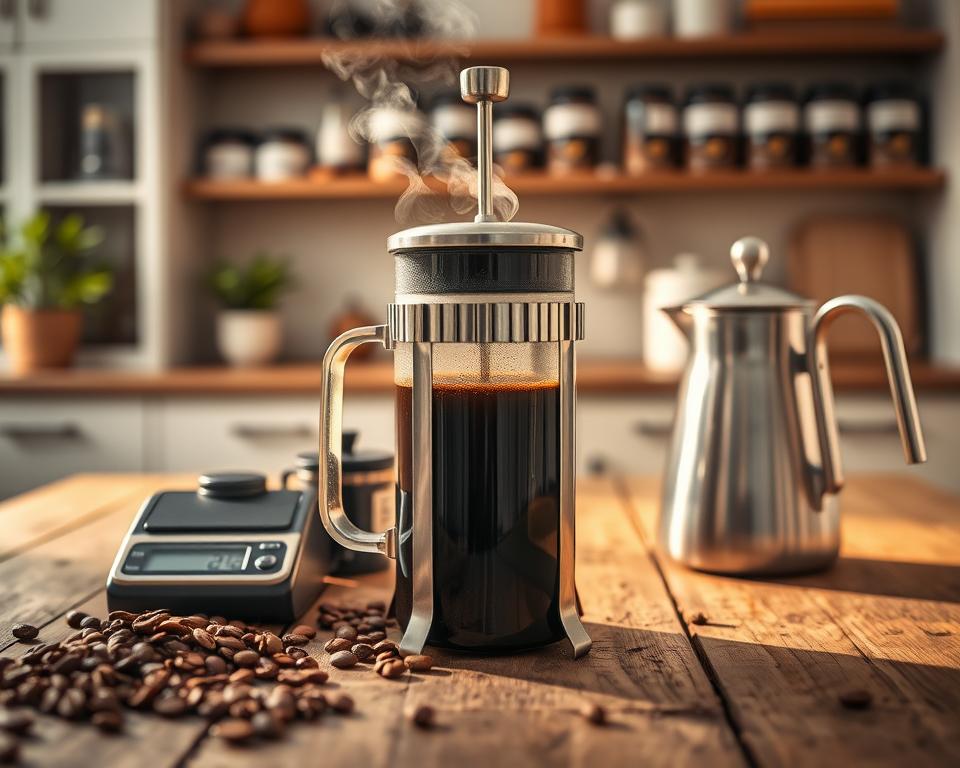
Experimenting with Brew Time
The brew time significantly impacts the flavor of your coffee. Adjusting the brew time can help you achieve the perfect balance of flavors. For example, a longer brew time can result in a stronger, more bitter taste, while a shorter brew time can produce a smoother, more acidic flavor.
To experiment with brew time, start by adjusting the time in small increments. You can begin by adding or subtracting 30 seconds to see how it affects the flavor. Keep track of your findings to determine the optimal brew time for your taste preferences.
Stirring vs. No Stirring
Whether to stir the coffee grounds or not is a matter of debate among coffee enthusiasts. Stirring can help to evenly distribute the water and ensure all grounds are saturated. On the other hand, not stirring can lead to a more nuanced flavor, as the coffee grounds may bloom more naturally.
I recommend trying both methods to see which one works best for you. You might be surprised at how much of a difference it can make in the flavor of your coffee.
Using Reverse Immersion
Reverse immersion is a technique that involves steeping the coffee grounds in water and then pressing the grounds to the top of the container instead of the bottom. This method can result in a cleaner, more balanced flavor.
To try reverse immersion, simply steep the coffee grounds as you normally would, then gently press the grounds to the top of the French press. This technique requires a bit of practice, but it can be a great way to mix things up and improve your brewing skills.
Cleaning and Maintenance of Your French Press
To keep your French press brewing great coffee, cleaning it regularly is key. Proper care extends its life and makes every cup taste as fresh as the first. Here, we’ll cover the best ways to keep your French press in perfect shape.
Daily Cleaning Tips
Keeping your French press clean daily is easy and prevents old coffee oils and residue from building up. After each use, throw away the coffee grounds and rinse the French press with warm water. For a deeper clean, use a mild detergent and a soft sponge on the carafe and plunger. Make sure to rinse well to avoid soap taste in your coffee.
Focus on the filter and where the plunger meets the carafe for residue buildup. Cleaning these spots regularly stops flavor changes and clogs.
Deep Cleaning Techniques
While daily cleaning is important, a deeper clean every few weeks is also needed. Mix equal parts water and white vinegar in the French press, let it sit, then plunge. This method descales and removes coffee oils. Rinse well to get rid of vinegar taste.
For an even deeper clean, take apart the French press (if possible) and clean each part. Check your model’s instructions to see if disassembly is recommended.
Common Maintenance Mistakes
Not drying the French press well after cleaning is a common error. It can cause water spots and bacterial growth. Always dry your French press thoroughly after rinsing. Avoid using harsh cleaners or scrubbers, as they can harm your French press. Use soft sponges and mild detergents instead.
Also, watch out for a clogged or old filter. A clogged or worn-out filter can greatly affect your coffee’s taste. Check and replace the filter regularly to keep your coffee tasting great.
Troubleshooting Common Issues
When you make French press coffee, you might run into some problems. But don’t worry, solving these issues is simple once you know what’s causing them.
Over-Extracted Coffee
Over-extracted coffee tastes bitter and too strong. This happens when the coffee grounds stay in water too long. To fix it, try brewing for a shorter time. For example, if you’re brewing for four minutes, try brewing for three and a half minutes instead.
Tips to avoid over-extraction:
- Use a coarser grind size to slow down the extraction process.
- Use water at the right temperature (between 195°F and 205°F).
- Stir the grounds gently after adding water to ensure all grounds are saturated.
Under-Extracted Coffee
Under-extracted coffee tastes weak and sour. This is because the coffee doesn’t get enough water. To fix this, try brewing for a longer time or use a finer grind size.
Key factors to consider:
- The ratio of coffee to water: Adjusting this can impact the flavor.
- The temperature of the water: Ensure it’s within the optimal range.
- The quality of your coffee beans: Freshness matters.
Issues with Filtration
Sometimes, coffee grounds can get into your coffee because of bad filtration. This makes your coffee gritty. To avoid this, press the plunger slowly and steadily. Also, make sure your French press is clean and free of old coffee oils.
Here’s a quick reference table to help you troubleshoot common French press issues:
| Issue | Cause | Solution |
|---|---|---|
| Over-extracted | Too long brewing time | Reduce brewing time |
| Under-extracted | Insufficient brewing time | Increase brewing time or use finer grind |
| Gritty coffee | Improper filtration | Press plunger slowly, clean French press regularly |
By understanding and addressing these common issues, you’ll be well on your way to brewing the perfect cup of French press coffee. Happy brewing!
Customizing Your French Press Experience
The French press is more than just a way to make coffee. It’s a chance to get creative with flavors and techniques. This lets you make coffee that perfectly matches your taste.
Adding Flavorings
Adding flavorings is a simple way to make your French press coffee special. You can use traditional cream and sugar or try syrups and spices. For example, cinnamon or nutmeg can add a warm, spicy taste.
Vanilla syrup or caramel can make your coffee sweeter. Start with a little flavor and adjust to taste. This way, you won’t overpower the coffee’s natural taste. Feel free to mix flavors for a unique taste.
Creating Different Coffee Ratios
Changing the coffee-to-water ratio is another way to customize your French press. The usual ratio is 1:12, but you can adjust it. For stronger coffee, try 1:10 or 1:8. For milder, go to 1:15.
Trying different ratios can help you find your perfect coffee. It also makes your coffee versatile. You can adjust the strength for different ways of enjoying it.
Mixing with Other Techniques
For those who like to try new things, mixing French press with other methods is exciting. You can make cold brew by steeping it in cold water for hours. Or, mix it with pour-over or Aeropress for a layered taste.
Blending brewing techniques can create complex, delicious flavors. It opens up new coffee experiences and lets you enjoy the differences in brewing methods.
Conclusion: Enjoying Your Perfect Cup
Now you know how to make great coffee with a French press. It’s time to share your coffee with others. Whether it’s for one person or a big group, enjoying coffee is special.
Sharing Your Brew
Host a coffee tasting with your friends. Use what you learned from this easy French press guide. Try different coffee mixes and flavors to wow your guests.
Coffee Culture
Get into coffee culture by learning its history and community. Go to local coffee shops, coffee festivals, and online forums. This way, you’ll meet other coffee lovers.
Continuing Your Coffee Journey
Keep exploring coffee by trying other ways to brew it. Start with pour-over or Aeropress. This French press guide is just the beginning of your coffee adventure.