


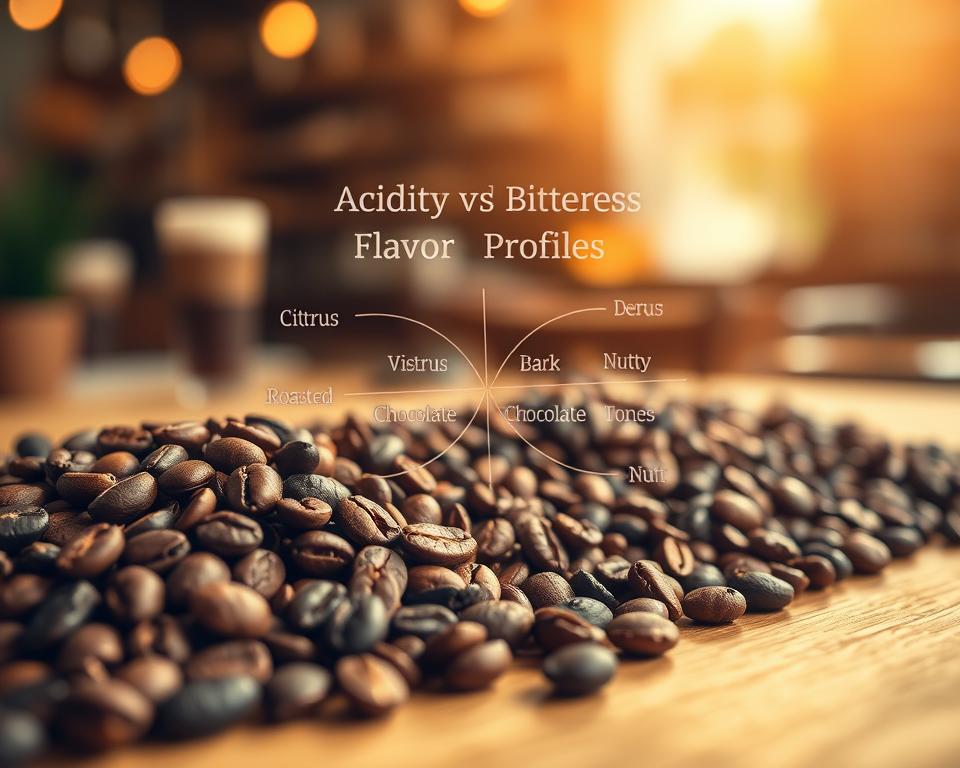
Did you know coffee’s flavor comes from over 1,000 compounds? As someone who loves coffee, knowing its flavors is key. The debate on acidity and bitterness is big, and getting it can make your coffee better.
Knowing what makes coffee taste good can change how you enjoy it. In this article, we’ll dive into coffee’s flavor, focusing on the balance between acidity and bitterness.
Key Takeaways
- Coffee flavor profiles are influenced by numerous compounds.
- Understanding acidity and bitterness is key to enjoying coffee’s complexity.
- Finding the right balance between acidity and bitterness can make your coffee better.
- Coffee’s flavor can change a lot based on roast level and brewing method.
- Knowing the details of coffee’s flavor can make it more enjoyable.
What is Acidity in Coffee?
Acidity in coffee is a key part of its taste that many don’t fully get. As someone who loves coffee, I know how important it is to understand acidity. It helps us enjoy coffee’s rich flavors.
Defining Acidity
Coffee acidity is the bright, snappy taste found in top-notch coffee. It feels dry in your mouth and brings lively flavors. The acidity levels in coffee change based on where the beans come from, how they’re processed, and their roast level.
Coffee from places like Ethiopia is known for its high acidity. It tastes fruity and floral. In contrast, coffee from Brazil has less acidity, with a smoother taste.
Importance of Acidity in Flavor
The importance of acidity in coffee is huge. It makes coffee more complex and interesting. It also balances out sweetness and bitterness.
When acidity matches the other flavors, it takes coffee to a new level. For example, a coffee with high acidity and sweetness is very refreshing. To learn more about acidity and bitterness, check out this article.
Common Misconceptions
Many think acidity in coffee means it’s bitter. But acidic coffee characteristics are different from bitterness. Acidity is a bright, lively taste that adds depth to coffee.
Some also think acidity is always good. But too much acidity can make coffee taste sour. The goal is to find the right balance between acidity and other flavors.
What is Bitterness in Coffee?
Understanding bitterness in coffee is key to enjoying its complex flavors. Bitterness is a basic taste, along with sweetness, sourness, saltiness, and umami. In coffee, it comes from compounds like caffeine and other alkaloids.
Defining Bitterness
Bitterness in coffee feels sharp and unpleasant. But, when balanced right, it adds depth and complexity. Bitterness is not inherently bad; it’s about balance. People perceive bitterness differently because of taste bud and preference variations.

Causes of Bitterness
Several things make coffee bitter, including:
- The type of coffee beans used (e.g., Robusta vs. Arabica)
- The roast level; darker roasts tend to be more bitter
- The brewing method; methods with longer extraction times can result in more bitter coffee
Knowing these factors helps adjust brewing to get the right bitterness level.
Impact on Taste
Bitterness greatly affects coffee’s taste. When balanced with acidity and sweetness, it creates a rich flavor. But, too much bitterness can ruin the taste. Finding the right balance is key.
To cut down bitterness, try different brewing methods, use lighter roasts, or adjust the coffee-to-water ratio. By experimenting, you can find a more balanced flavor.
The Science Behind Coffee Flavor
Coffee flavor is more than just taste. It’s the result of complex chemical processes. These processes shape our coffee experience. Various compounds create its unique flavor profile.
Flavor Compounds in Coffee
Coffee has over 1,000 chemical compounds, many affecting its flavor. These compounds fall into two main groups: those that add acidity and those that add bitterness. Acidity in coffee is often associated with bright, fruity, and floral notes. Bitterness comes from compounds like caffeine and polyphenols.
The balance between acidity and bitterness is key for a good coffee flavor. When they’re balanced, coffee tastes smooth and rich. But if one is too dominant, the flavor becomes off.
How Roast Level Affects Flavor
The roast level of coffee beans greatly impacts flavor. Lighter roasts keep more natural acidity, while darker roasts offer deeper flavors with less acidity. The roast level can either highlight or hide certain flavor compounds, changing the taste.
| Roast Level | Acidity | Bitterness | Flavor Profile |
|---|---|---|---|
| Light Roast | High | Low | Bright, fruity, floral |
| Medium Roast | Balanced | Moderate | Smooth, nuanced |
| Dark Roast | Low | High | Rich, bold, deep |
Knowing how roast levels impact flavor helps in balancing acidity and bitterness. By picking the right roast, you can enjoy a more balanced coffee experience.
Acidity vs. Bitterness: Key Differences
Acidity and bitterness are two different things in coffee. They both affect how we taste coffee, but in different ways.
Our brains see acidity and bitterness in different lights. Flavor perception is a mix of taste and smell. Acidity makes flavors pop, like fruitiness. Bitterness, on the other hand, adds depth and can feel harsh.
Flavor Perception
Acidity feels refreshing and snappy. Bitterness feels heavier and lingers longer. This is key for coffee lovers who want to get the balance right.
A coffee with lots of acidity tastes like a zesty, lively drink. But a coffee with a lot of bitterness feels rich but can be too much.
Measuring Acidity and Bitterness
Measuring these elements is both a science and an art. Coffee experts use tools like the SCAA Flavor Wheel to describe and measure them.
| Method | Description | Use for Acidity/Bitterness |
|---|---|---|
| SCAA Flavor Wheel | A standardized tool for describing coffee flavors | Both Acidity and Bitterness |
| pH Testing | Measures the acidity level directly | Acidity |
| Tasting Panels | Subjective evaluation by experts | Both Acidity and Bitterness |
To make coffee more acidic, try different brewing methods and roast levels. Lighter roasts keep more acidity, while darker ones reduce it.
By tweaking these factors, coffee lovers can make their coffee just right. Whether you like a bright, acidic cup or a deep, bitter one, it’s all about the brewing.
The Role of Coffee Origin
The taste of coffee comes from where it’s grown. Knowing this can make you enjoy different coffees more.
Regional Influences on Acidity
Coffee from different places tastes different. For example, Ethiopian coffee is very bright, while Brazilian coffee is milder.
Regional acidity characteristics:
- Ethiopia: Bright, fruity acidity
- Brazil: Mild, sweet acidity
- Kenya: Complex, wine-like acidity
How Soil and Climate Affect Flavor
The soil and weather where coffee grows change its taste. Coffee from volcanic soil tastes richer. Coffee from high places tastes more complex.
| Region | Soil Type | Climate | Flavor Profile |
|---|---|---|---|
| Ethiopia | Volcanic | High altitude | Fruity, floral |
| Brazil | Clay | Mild climate | Mild, sweet |
| Kenya | Red soil | High altitude | Complex, wine-like |
Learning about how place affects coffee taste helps you enjoy your favorite coffee more.
Brewing Methods and Their Impact
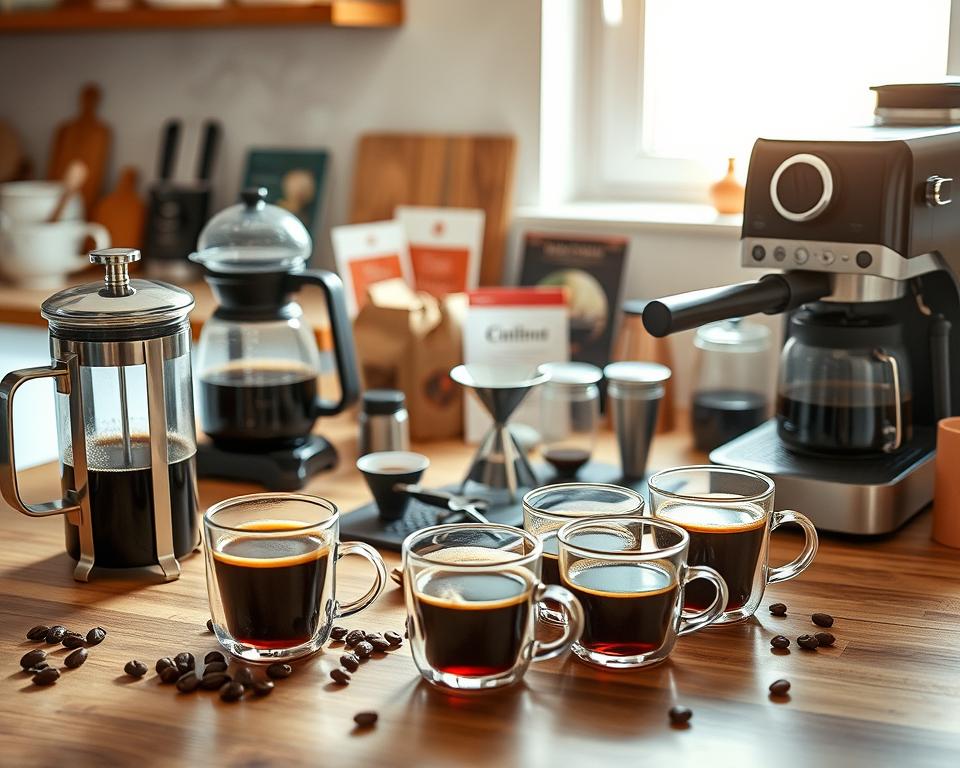
Brewing methods are key in balancing coffee’s acidity and bitterness. The brewing process is an art that requires understanding and experimentation. It can either highlight or reduce certain flavors.
Different brewing methods extract flavors in unique ways. For example, longer extraction times bring out more bitterness. Shorter times might emphasize acidity.
Pour Over vs. Espresso
Pour-over brewing lets you control brewing parameters like water temperature and coffee-to-water ratio. It can result in a balanced cup that highlights the coffee’s acidity. Espresso, on the other hand, is a concentrated brew with a rich body and balanced flavors.
Espresso needs a fine grind and short brewing time for a bold flavor. Pour-over uses a coarser grind and longer time for a cleaner flavor.
“The art of brewing is not just about following a recipe; it’s about understanding how different variables interact to produce the desired flavor.”
French Press and Cold Brew
French press steep coarse coffee grounds in hot water and then press the grounds to the bottom. This method results in a richer, more full-bodied coffee with a heavier body and more sediment. It can increase the perception of bitterness.
Cold brew steep coarse coffee grounds in cold water for 12-24 hours. It produces a smooth, low-acidity coffee that is less bitter than hot-brewed coffee. Cold brew’s flavor is often described as sweet and smooth, with less emphasis on acidity.
| Brewing Method | Acidity Level | Bitterness Level |
|---|---|---|
| Pour Over | High | Medium |
| Espresso | Medium | High |
| French Press | Low | High |
| Cold Brew | Low | Low |
Understanding brewing methods’ impact on flavor is key to balancing acidity and bitterness. By experimenting with brewing techniques, coffee lovers can tailor their coffee to their taste preferences.
My Personal Coffee Flavor Preferences
My coffee journey has shown me how acidity and bitterness work together. I love finding coffees that balance these two perfectly.
Acidity vs bitterness is key in coffee. Acidity makes it lively, while bitterness adds depth. I prefer coffees with a lot of acidity for a better taste.
Favorite Types of Coffee
I love coffees with bright acidity, like Ethiopian Yirgacheffe or Kenyan AA. They have floral and fruity flavors that shine with their acidity.
Here’s a look at my top coffee picks and their flavors:
| Coffee Type | Acidity Level | Bitterness Level | Flavor Notes |
|---|---|---|---|
| Ethiopian Yirgacheffe | High | Low | Floral, citrus |
| Kenyan AA | High | Medium | Fruity, wine-like |
| Colombian Supremo | Medium | Medium | Caramel, nuts |
Balancing Acidity and Bitterness
Finding the right mix of acidity and bitterness is an art. I use methods like pour-over or French press to control the brewing.
For example, with Ethiopian Yirgacheffe in a pour-over, I tweak the grind and water temperature. This way, I boost the acidity without too much bitterness.
Trying different roast levels is also key. Lighter roasts keep the coffee’s natural acidity. Darker roasts offer richer flavors with a hint of bitterness.
Popular Coffee Varieties and Their Profiles
Coffee comes in many flavors, from Ethiopian Yirgacheffe’s bright taste to Italian Roast’s deep bitterness. Knowing about different coffee beans is key for coffee lovers. It helps them enjoy the rich flavors of coffee.

Arabica vs. Robusta
The Arabica vs. Robusta debate is long-standing. Arabica is famous for its complex flavors, like fruit and floral hints. Robusta, on the other hand, has a bold taste and more caffeine.
Arabica grows at high altitudes, adding to its rich taste. Robusta is easier to grow and is often in instant coffee and espresso.
Flavor Notes in Different Varieties
Coffee varieties have many flavors. For example, Ethiopian coffees are known for their bright taste and fruity notes. Brazilian coffees are mild and sweet.
- Arabica: Fruity, floral, and wine-like flavors
- Robusta: Bitter, harsh, and earthy flavors
- Colombian Supremo: Balanced acidity with caramel and nutty flavors
- Sumatran Mandheling: Earthy, herbal, and sometimes smoky flavors
Knowing these flavors helps coffee lovers pick the right coffee for them.
Tips for Choosing Coffee Based on Taste
The world of coffee is vast and varied. Choosing a coffee that suits your taste is exciting but also challenging. Understanding the factors that influence flavor is key to enjoying your perfect cup.
Understanding Coffee Labels
Coffee labels can be overwhelming but hold valuable information. Look at the roast level, origin, and processing method. These details can tell you about the coffee’s acidity and bitterness.
A coffee from Ethiopia might have fruity notes, indicating high acidity. A coffee from Brazil might have nutty flavors, suggesting a smoother taste. Knowing these labels helps you make better choices.
How to Taste Coffee Like a Pro
Tasting coffee like a pro means paying attention to its flavor profile. This includes acidity, bitterness, and body. Start by brewing your coffee and appreciating its aroma. Then, take a sip and let it sit in your mouth before swallowing.
Consider these characteristics when tasting:
- Acidity: Is it bright and snappy or dull?
- Bitterness: Is it balanced or overpowering?
- Body: Is it light and watery or rich and heavy?
By focusing on these elements, you can understand your preferences better. For example, if you like balanced acidity and bitterness, try a coffee with chocolate notes and a medium body.
| Coffee Characteristic | Description | Example Flavor Notes |
|---|---|---|
| Acidity | Bright, snappy, or dull | Fruity, citrus |
| Bitterness | Balanced or overpowering | Chocolate, nuts |
| Body | Light and watery or rich and heavy | Creamy, smooth |
To find the perfect balance, consider the roast level and brewing method. Lighter roasts are more acidic, while darker roasts are bitter. Try different roast levels and brewing techniques to find your ideal cup.
Conclusion: Finding Your Perfect Brew
Understanding coffee flavor profiles is key to finding your perfect cup. We’ve seen how coffee origin, roast level, and brewing method shape taste. These factors are important.
Exploring Flavor Profiles
Trying different coffee varieties and brewing methods opens up a world of flavors. High-altitude coffees from Ethiopia or Kenya offer bright, fruity notes. Exploring roast levels helps find the right balance of acidity and bitterness.
Appreciating Coffee Complexity
Embracing coffee’s complexity means appreciating acidity vs bitterness. Knowing how these elements work together helps improve your brewing. For more on coffee acidity, check out Bluewater Café’s blog for insights on flavor profiles.