


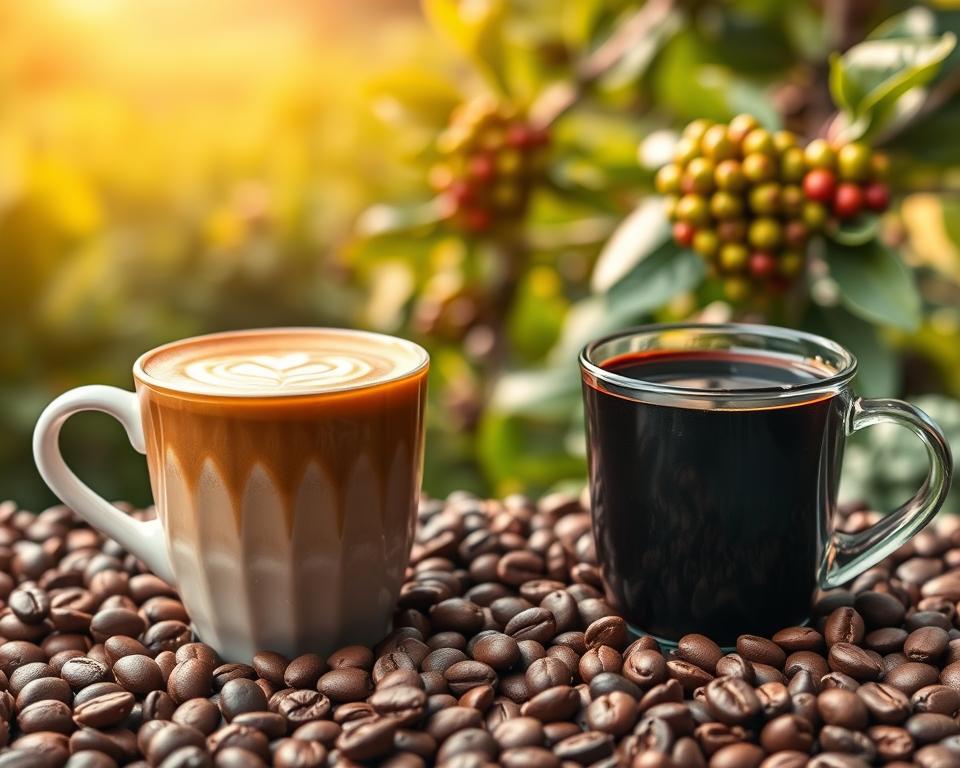
Many coffee lovers ask about the differences between Arabica and Robusta coffee. Did you know Arabica makes up about 70% of global coffee production? Robusta accounts for around 30%. This big difference in production is just the start of what makes these two coffee types unique.
Exploring coffee means knowing the traits, tastes, and growing spots of Arabica and Robusta. In this detailed guide, I’ll share my knowledge on these two popular coffee types. This will help you choose the coffee that suits your taste best.
Key Takeaways
- Arabica coffee is generally considered to be of higher quality and more expensive than Robusta.
- Robusta coffee has a higher caffeine content compared to Arabica.
- The flavor profile of Arabica is often described as nuanced and sweeter, while Robusta is known for its harsh, yet deep flavor.
- Arabica beans are typically ovular and oilier, whereas Robusta beans are smaller and rounder.
- Robusta is easier to grow and has a higher yield due to its hardiness and resistance to insects.
Introduction to Coffee Varieties
My journey into coffee has shown me the big difference between Arabica and Robusta. As someone who loves coffee, I’ve learned about their unique traits. These traits greatly affect how we enjoy our coffee.
My Journey with Coffee
I’ve been trying out different coffee types for years. I’ve found that knowing the difference between Arabica and Robusta is key. The taste, smell, and even caffeine levels are all different.
Arabica has a mild and complex flavor, while Robusta is bolder and more bitter. This flavor difference is what makes one coffee better than another.
Why It Matters to Know the Difference
Knowing the difference between Arabica and Robusta is important. It changes how we taste and enjoy coffee. Whether you drink coffee often or just sometimes, knowing this can make your coffee experience better.
Here’s a comparison of some key differences between Arabica and Robusta:
| Coffee Type | Flavor Profile | Caffeine Content |
|---|---|---|
| Arabica | Mild, nuanced, with notes of fruit and floral hints | 0.8-1.2% |
| Robusta | Bolder, more bitter, with a harsh aftertaste | 1.7-4% |
The table shows the big differences between Arabica and Robusta. From taste to caffeine, these differences help us choose the right coffee.
Overview of Arabica Coffee
Arabica coffee is loved for its unique taste and high quality. It’s a top choice for coffee lovers. Let’s explore what makes Arabica special.
Characteristics of Arabica Beans
Arabica beans have a complex flavor profile. They grow at high altitudes. They are bigger than Robusta beans and have a more acidic taste.
The quality of Arabica beans depends on soil, climate, and how they’re processed. Coffee experts say, “The terroir greatly affects Arabica coffee’s flavor.”
“The altitude, soil, and weather conditions all contribute to the nuanced flavors found in Arabica coffee,”

Flavor Profile: What to Expect
Arabica coffee tastes nuanced and rich. It has notes of fruit, floral, and wine. Its acidity is higher than Robusta, making it bright and lively.
Brewing Arabica coffee gives you a smooth and balanced taste. The flavor changes with the roast level. Lighter roasts are more acidic and fruity. Darker roasts are deeper and richer.
Growing Conditions for Arabica
Arabica coffee plants need specific conditions to grow well. They thrive at high altitudes, between 1,000 and 2,000 meters above sea level. They also need a cool, subtropical climate. The soil must be rich in nutrients and drain well.
- High altitude
- Cool, subtropical climate
- Nutrient-rich soil
- Adequate rainfall
These conditions are key for Arabica’s complex flavors and aromas.
Overview of Robusta Coffee
As a coffee lover, I’ve grown to love Robusta for its special traits and uses. Robusta coffee is known for its strong taste and lots of caffeine. It’s a big part of the global coffee scene.
Characteristics of Robusta Beans
Robusta beans are larger and rounder than Arabica beans. They have a distinctive flavor that’s often seen as harsh or bitter. The beans also have more caffeine than Arabica, making them great for those who want a stronger coffee.
Flavor Profile: What to Expect
The taste of Robusta coffee is bold and bitter, with hints of chocolate and nuts. It’s often used in instant coffee and espresso blends to add depth. When you brew Robusta, you get a strong and rich taste. It’s perfect for those who prefer their coffee black.
Growing Conditions for Robusta
Robusta coffee is easier to grow than Arabica, doing well in lower altitudes and warmer climates. It’s also more resistant to pests and diseases. This makes it a more sustainable option for farmers in some areas. Its hardiness is why it’s so popular among coffee producers.
In short, Robusta coffee has unique qualities that make it important in the coffee world. Its bold taste and high caffeine content make it a key ingredient in many coffee blends.
Differences in Caffeine Content
The caffeine levels in Arabica and Robusta coffee beans are quite different. This affects how we experience coffee. Robusta has more caffeine than Arabica. Robusta beans have about 2.7% caffeine, while Arabica has about 1.5%. This difference comes from the coffee plant’s type and where it grows.
How Caffeine Levels Affect Flavor
Caffeine does more than just give us energy. It also changes how coffee tastes. Robusta’s higher caffeine makes it taste bitter. Arabica’s lower caffeine makes it smoother.
“Caffeine is a significant contributor to the bitterness we experience in coffee.”
Some people don’t like the bitterness of Robusta. Others love its strong taste. Other compounds in coffee mix with caffeine, making the taste complex.
Personal Preferences on Caffeine
What we like about coffee is personal. Some like Robusta for its caffeine kick. Others prefer Arabica for a calmer coffee moment. Think about how caffeine affects you and why you drink coffee when choosing.
- If you’re sensitive to caffeine, Arabica might be the better choice.
- If you need a stronger energy boost, Robusta could be more suitable.
Knowing about caffeine content helps us choose what we like. It’s about finding the right coffee for you.
Taste Test: Arabica vs Robusta
I wanted to know the difference between Arabica and Robusta coffee. So, I did a taste test. This let me see the flavor and aroma differences that coffee lovers talk about.
My Tasting Experience
I made both coffees the same way to compare them fairly. The Arabica coffee tasted smooth and nuanced with fruity hints and a light acidity. On the other hand, the Robusta coffee was bold and harsh, with a bitter taste that stayed.
Observations on Flavor and Aroma
Arabica had a richer flavor, with chocolate and nut notes. Robusta was simpler, with a strong bitterness. Arabica’s aroma was sweeter and floral, unlike Robusta’s less inviting scent.
| Coffee Type | Flavor Profile | Aroma |
|---|---|---|
| Arabica | Smooth, nuanced, fruity, subtle acidity | Sweet, floral |
| Robusta | Bold, harsh, bitter | Less pronounced, earthy |
For more details, check out The Roasters Pack. They dive deep into the unique traits of Arabica and Robusta.
Price and Availability Factors
Many coffee fans choose between Arabica and Robusta based on price and availability. Knowing these factors helps you pick what fits your budget and taste.
Why Arabica is Usually More Expensive
Arabica coffee costs more than Robusta for several reasons. Arabica plants need cooler, higher places with lots of rain to grow. This limits where Arabica can be grown, making it pricier.
Arabica plants also grow fewer beans than Robusta, raising the price. The hard work of picking Arabica beans by hand adds to the cost. This makes best Arabica coffee a luxury item.
Availability in Local Stores
Arabica is pricier, but both types are easy to find in stores. But, where you live affects what’s available. Cities often have more coffee options, including specialty Arabica.
In contrast, Robusta is common in regular grocery stores, often at a lower price. If you’re after the best Robusta coffee, you might need to check out specialty shops or online.
In summary, the cost and where you can find Arabica and Robusta coffee depend on how they’re grown and sold. Knowing this helps you choose the right coffee for you.
Popular Uses for Each Coffee Type
Arabica and Robusta are not just different coffee types; they also lend themselves to different brewing techniques. Understanding these differences can help coffee enthusiasts choose the best method for their preferred coffee beans.
Brewing Methods for Arabica
Arabica coffee is known for its delicate flavor and aroma. It’s perfect for brewing methods that highlight these qualities. Pour-over and drip brewing are popular for Arabica, as they extract flavors cleanly and nuancedly. For a richer experience, French press is also an option, but it requires careful handling to avoid over-extraction.
When brewing Arabica, use water at the right temperature (195°F to 205°F). Adjust the coffee-to-water ratio based on the brewing method. Experimenting with these variables can enhance Arabica’s flavors.
Brewing Methods for Robusta
Robusta coffee has a bolder and more bitter taste. It’s often used in espresso blends for its rich crema. It’s also common in instant coffee. For a strong coffee, Robusta works well in stovetop espresso or French press, highlighting its robust flavor.
To brew Robusta, balance its boldness. Use the right coffee amount and adjust brewing time for a balanced flavor. Robusta is also great in cold brew coffee, where its bold flavors are smoothed out over time.
Health Aspects of Arabica and Robusta
Arabica and Robusta coffee differ in more than just taste. They also have different health benefits. Each type has its own nutritional profile, affecting our health in unique ways.
Comparing the Nutritional Benefits
Arabica and Robusta coffee have different nutritional contents. Here are some key differences:
- Arabica has more antioxidants than Robusta, which can protect cells.
- Robusta has more caffeine, which is good for those who need a boost.
- Arabica has less chlorogenic acid, which some studies say is healthy.
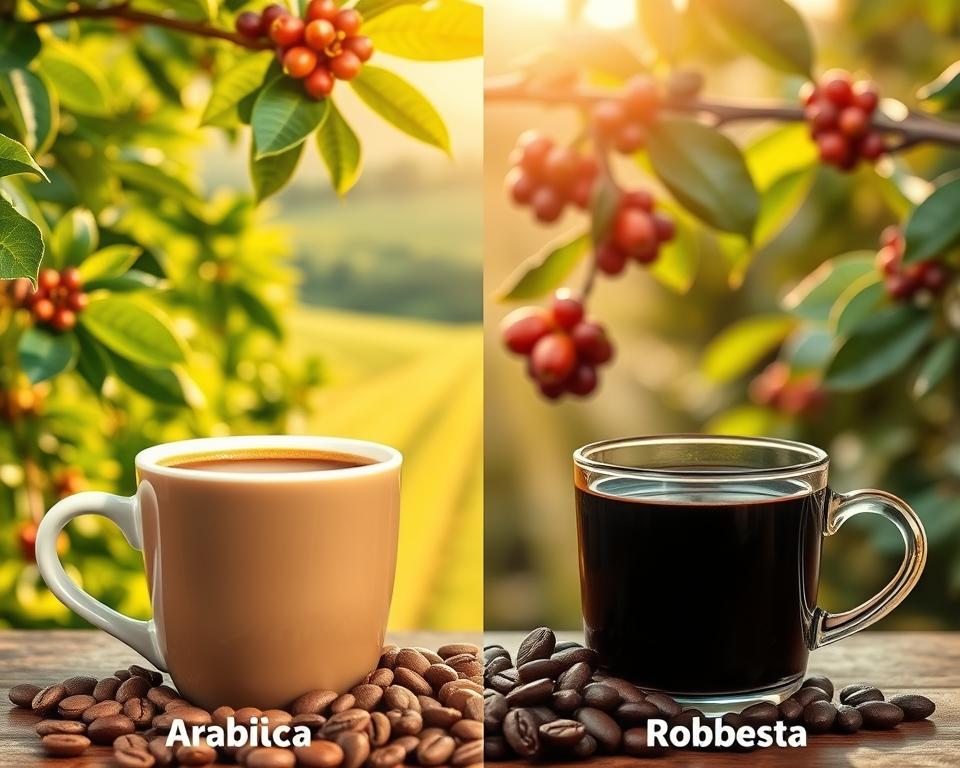
Both types of coffee have their health benefits. Arabica is known for its antioxidants. Robusta’s caffeine can give you energy.
My Thoughts on Health and Taste
I enjoy coffee every day and think it’s important to balance health and taste. Arabica has more antioxidants, but Robusta’s bold taste is great too. The choice between Arabica and Robusta depends on your health goals and taste.
If you’re sensitive to caffeine, Arabica might be better. But if you want a stronger flavor and don’t mind more caffeine, Robusta is good.
In conclusion, knowing the health benefits of Arabica and Robusta helps us make better choices. It lets us choose coffee that fits our health goals and taste preferences.
Sustainability and Coffee Production
The environmental impact of coffee farming is a big deal for many of us. I’ve learned that it’s not just about the planet. It’s also about the future of coffee.
Coffee farming, whether Arabica or Robusta, affects the environment a lot. Issues like deforestation and water use are big problems. But, there’s a shift towards greener coffee farming.
Environmental Impact of Arabica Farming
Arabica farming is seen as better for the environment. It’s often grown in shaded areas, which helps animals and plants. But, it needs special weather, which can cause deforestation if not done right.
Key environmental impacts of Arabica farming include:
- Water usage for irrigation
- Soil degradation due to intensive farming practices
- Deforestation for new coffee plantations
Environmental Impact of Robusta Farming
Robusta farming is known for high yields and easy growing. But, it often means more chemicals and soil damage.
The comparison between Arabica and Robusta’s environmental impact is nuanced:
| Aspect | Arabica | Robusta |
|---|---|---|
| Water Usage | High | Moderate |
| Biodiversity Impact | Lower due to shade-grown practices | Higher due to intensive farming |
| Chemical Use | Lower | Higher |
Knowing these facts helps us choose better. By picking sustainable coffee, we help the environment.
In conclusion, both Arabica and Robusta have good and bad sides for the environment. As the coffee world gets greener, it’s key for us to support eco-friendly coffee.
Conclusion: Which One Should You Choose?
When deciding between Arabica and Robusta coffee, think about what you like. Each type has its own special qualities. Knowing these differences helps you choose wisely.
Personal Final Thoughts
In my coffee journey, I’ve learned to love both Arabica and Robusta. Arabica is known for its complex flavors and aroma. Robusta is famous for its strong taste and caffeine.
What you choose depends on what you like. If you want a finer coffee taste, Arabica might be for you. But if you like a bolder, more energizing coffee, Robusta is the way to go.
Encouragement to Explore Both Varieties
I suggest trying both Arabica and Robusta to find your favorite. You might be amazed at how different they taste and smell.
| Coffee Type | Flavor Profile | Caffeine Content |
|---|---|---|
| Arabica | Nuanced, with notes of fruit and floral hints | Lower |
| Robusta | Bold, with a harsh, burnt taste | Higher |
Think about these points to make a choice that pleases your taste. Whether you pick Arabica, Robusta, or a mix, coffee has something for everyone.
Resources for Coffee Lovers
As we wrap up our exploration of Arabica and Robusta coffee, I’m thrilled to share some great resources. These will make your coffee journey even more exciting. Whether you’re a coffee expert or just starting out, these tips will take you deeper into the coffee world.
Coffee Literature for the Enthuasiast
Looking to learn more? Check out “The Coffee Roaster’s Companion” by Scott Rao. It’s a detailed guide to roasting coffee. Another excellent choice is “Coffee: A Guide to Buying, Brewing, and Enjoying” by Kenneth Davids. It gives you a deeper look into coffee.
These books will help you understand and appreciate the best Arabica and Robusta coffee.
Where to Find the Best Coffee
Want to try the finest Arabica and Robusta coffee? Visit specialty coffee shops or check out online stores. Blue Bottle Coffee and Intelligentsia Coffee offer top-notch Arabica beans. Kicking Horse Coffee has great Robusta options.
Online marketplaces like Amazon also have a wide range of coffee beans from different roasters.