


As a coffee lover, I often think about the difference between aroma and flavor in my coffee. Did you know that coffee’s taste isn’t just about what we taste? It’s also about the smells our brain turns into flavor. This makes coffee really interesting.
Knowing the difference between aroma and flavor can make us enjoy coffee more. In this article, we’ll explore how our senses work together to make coffee so enjoyable.
Key Takeaways
- Coffee’s sensory experience involves both aroma and flavor.
- The distinction between aroma and flavor enhances coffee appreciation.
- Our brain plays a significant role in interpreting coffee’s sensory cues.
- The complexity of coffee’s flavor profile is influenced by its aroma.
- Understanding coffee’s sensory aspects can elevate the drinking experience.
Understanding Coffee Aromas
The aroma of coffee is the first thing we notice, setting the tone for our coffee experience. As a coffee enthusiast, I’ve come to realize that the aromatic compounds in coffee play a significant role in its overall appeal.
What are Coffee Aromas?
Coffee aromas are the volatile compounds that we perceive through our sense of smell. These compounds are responsible for the diverse range of aromas we experience, from floral and fruity to nutty and chocolatey. Developing a coffee tasting vocabulary is essential to fully appreciate these aromas.
When we smell coffee, the aromatic compounds travel up the back of our nostrils. They bind to olfactory receptors, which sends signals to our brain. This allows us to perceive different aromas. This process is known as coffee aroma perception.
The Importance of Aroma in Coffee
Aroma is a key part of the coffee experience, as it evokes emotions and anticipation. The aroma of coffee can transport us to a particular time or place. It makes the experience personal and subjective.
- Aroma enhances the overall flavor experience.
- It can evoke emotional responses.
- Aroma is the first sensory experience when drinking coffee.
How Aroma Influences My Experience
For me, the aroma of coffee is a big part of the coffee-drinking experience. It sets the expectation for the flavor and quality of the coffee. When I encounter a coffee with a complex and appealing aroma, I’m more likely to enjoy the coffee.
“The aroma of freshly brewed coffee is like a warm hug on a cold morning.”
This personal connection to coffee aroma is what drives me to explore different coffee varieties and brewing methods. I’m always on the lookout for that perfect cup.
Decoding Coffee Flavor
Exploring coffee flavor shows us a mix of basic tastes and smells. It’s not just about the beans. How they’re brewed and the techniques used matter too.
Coffee flavor includes many sensations and taste notes. You might taste fruity, floral, nutty, or chocolatey. Knowing coffee flavor profiles makes enjoying coffee even better.
What Defines Coffee Flavor?
Coffee flavor comes from several things. The type of beans, roast level, and brewing method all play a part. Basic tastes like sweet, sour, salty, and bitter shape the flavor.
For example, light roast coffee is often acidic. Dark roast is richer and bolder.
Let’s look at the common flavors in different coffees:
| Coffee Type | Common Flavor Notes |
|---|---|
| Light Roast | Fruity, Floral, Acidic |
| Dark Roast | Nutty, Chocolatey, Smoky |
| Espresso Roast | Bold, Rich, Caramel-like |
The Role of Taste in Coffee Enjoyment
Taste is key to enjoying coffee. Being able to notice different flavors makes coffee more satisfying. For more on coffee descriptions, check out this resource.
Exploring coffee shows us flavor is more than just taste. It’s about understanding what makes each coffee unique. By focusing on flavor profiles, we appreciate the art of coffee making.

How Flavor Develops During Brewing
The brewing process shapes coffee flavor. Different methods highlight different flavors. For example, French press makes coffee richer, while pour-over brings out acidity.
Knowing how to brew can change the flavor. Try adjusting water temperature and coffee-to-water ratio to see the difference.
The Chemistry behind Aroma and Flavor
Exploring coffee’s chemistry shows how aroma and flavor work together. The taste of coffee comes from many chemical compounds. These compounds shape both its smell and taste.
Volatile Compounds in Coffee
The smell of coffee comes from volatile compounds. These compounds give coffee its unique smells. Some important ones are:
- Aldehydes: They add fruity and floral notes.
- Ketones: They make coffee smell sweet and creamy.
- Sulfur compounds: In small amounts, they add depth to the smell.
The Interaction of Aroma and Flavor
Flavor in coffee comes from taste and smell. When I drink coffee, the smell goes up my throat and into my nose. This makes the taste better.
The mix of smell and taste is key to enjoying coffee. A coffee with a great smell but no taste is not good. And a coffee with a weak smell but strong taste is also not great.
How Brewing Methods Affect Chemistry
Brewing methods change how coffee’s compounds are extracted. This affects both smell and taste. Different methods can bring out different notes, depending on water temperature, brewing time, and coffee-to-water ratio.
For example, French press brewing gets more oils and solids from the coffee. This makes the coffee taste richer and have a heavier body. Pour-over methods, on the other hand, get a cleaner taste. They highlight the coffee’s bright, acidic notes and subtle smells.
Knowing how coffee’s chemistry works helps me try different roasts and brewing methods. This way, I can find the perfect cup of coffee for me.
Personal Preferences: Aroma vs Flavor
The way we enjoy coffee is shaped by our personal taste. This includes our preferences for aroma and flavor. Each of us has our own unique way of liking coffee.
Some people love the smell of coffee more than its taste. Others prefer a complex flavor. Knowing what we like best helps us enjoy our coffee more.
My Favorite Coffee Aromas
I’m drawn to coffees with unique smells. Floral and fruity notes are my favorites. They make the coffee more interesting.
When I brew coffee, the smell is important. It sets the mood for the whole experience.
How Flavor Dictates My Choices
But it’s the taste that really matters to me. I like coffees that are balanced and smooth. Chocolatey and caramel notes are great too. They make the coffee richer.
Finding the Balance in My Coffee Experience
Finding the right mix of smell and taste is key. I learn how brewing methods and coffee origins affect both. This way, I can make my coffee just right for me.
The mix of smell and taste makes each cup of coffee special. It’s a unique experience every time.
Aroma Profiles: A Deep Dive
For coffee lovers, understanding coffee aroma profiles is key. Coffee aroma can be fruity, floral, or nutty. It greatly affects how much we enjoy our coffee.
Common Aromas Found in Coffee
Coffee aromas vary a lot. You might smell floral, fruity, chocolatey, and nutty scents. These smells tell us about the coffee’s place of origin, how it was made, and its roast level.
Ethiopian coffees often have floral and fruity smells. South American coffees might smell nutty or chocolatey. Knowing these smells helps us appreciate each coffee’s unique taste.
How I Identify Different Aromas
Spotting coffee aromas needs both knowledge and skill. I first notice the coffee’s scent before brewing. The smell of freshly ground coffee gives us clues. Then, as it brews, the aroma changes, showing us more about the coffee’s taste.
To get better at spotting aromas, I practice coffee cupping often. This method lets me carefully taste and smell coffee. It helps me notice the small differences between coffee types.
Pairing Aromas with Foods
Matching coffee aromas with foods can make the coffee taste even better. For instance, a coffee with fruity notes goes well with desserts that taste like citrus or berries. A coffee with nutty or chocolatey aromas pairs well with savory dishes or rich desserts.
Trying out different pairings is fun. It shows how versatile coffee can be. By matching coffee aromas with the right foods, we can make both the coffee and the food taste better, creating a great meal experience.
Flavor Profiles: Exploring Tastes
Coffee flavors range from bright and acidic to rich and chocolatey. Each flavor profile is unique, just like the beans. Knowing these profiles can make my coffee experience better.
Common Flavor Notes in Coffee
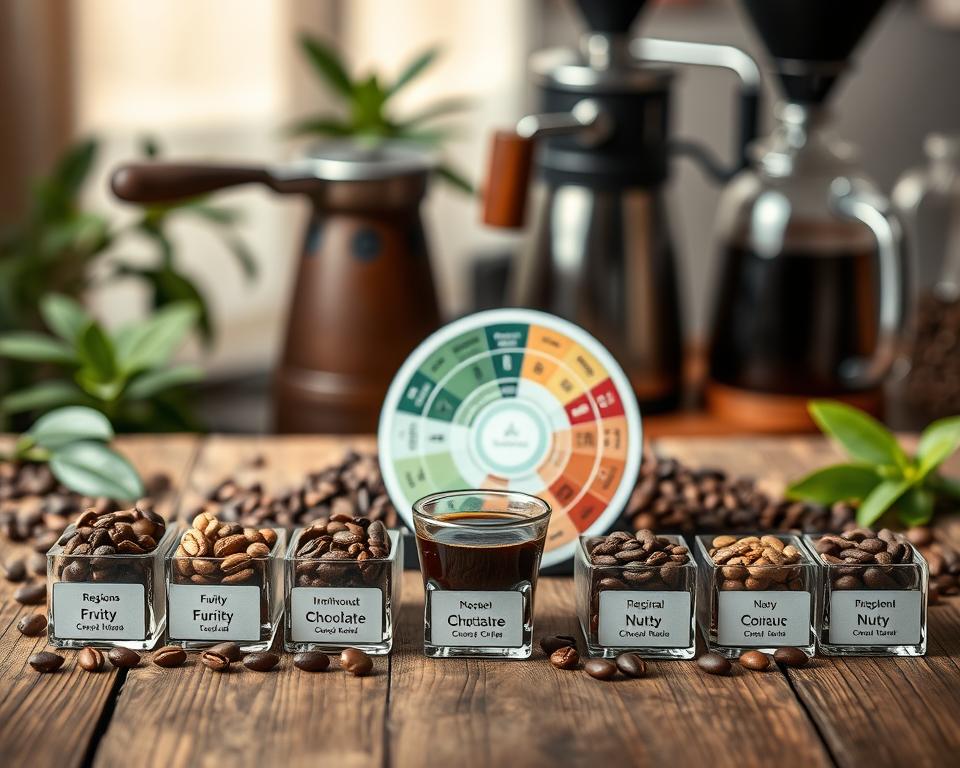
Coffee flavors fall into several categories. You’ll find fruity, floral, chocolate, and nutty notes. These flavors change based on the bean’s origin, roast, and brewing method.
For example, Ethiopian coffees are known for their fruity and floral tastes. Brazilian coffees often have a nutty flavor. Knowing these notes helps me enjoy coffee’s complexity.
My Taste Preferences Over the Years
My taste preferences have changed over time. At first, I liked strong, bitter coffees. But, I’ve grown to love milder and more nuanced flavors.
This change led me to try different brewing methods and beans. Now, I prefer light roast coffees for their bright acidity and subtle flavors.
Exploring Flavor Pairings
Understanding coffee flavors lets me find great pairings with food. For instance, a coffee with chocolate notes goes well with desserts. A coffee with fruity notes pairs well with breakfast items.
Trying new pairings has made my coffee experience richer. It’s also encouraged me to try new foods and flavors. It’s a fun way to explore coffee’s world.
- Pair chocolatey coffees with chocolate desserts for a decadent treat.
- Match fruity coffees with fruit-based breakfast dishes for a refreshing start.
- Combine nutty coffees with nut-based snacks for a satisfying flavor combination.
Brewing Techniques and Their Effects
Brewing techniques are key in creating the coffee sensory experience. The method we pick can greatly affect both the coffee’s aroma and taste.
Impact on Aroma
The brewing method can either boost or cut down the coffee’s aromatic qualities. For example, methods with higher temperatures and longer times extract more aromatic compounds. This leads to a more fragrant coffee. But, methods with lower temperatures and shorter times keep the delicate aromas intact.
Flavor Extraction Techniques
Each brewing technique uses different flavor extraction methods. French press, for instance, steep coarse coffee grounds in hot water and then presses them down. This results in a richer, more full-bodied taste. Pour-over methods, on the other hand, allow for a cleaner extraction. They highlight the coffee’s nuanced flavor notes.
Experimenting with Variables
Trying out different brewing variables like water temperature, coffee-to-water ratio, and brewing time can help us find our ideal cup. By tweaking these variables, we can adjust the brewing process. This way, we can bring out the desired qualities in our coffee.
| Brewing Method | Impact on Aroma | Impact on Flavor |
|---|---|---|
| French Press | Rich, intense aroma | Full-bodied, rich flavor |
| Pour-over | Delicate, nuanced aroma | Clean, nuanced flavor |
| Cold Brew | Smooth, low acidity aroma | Smooth, low acidity flavor |
The Role of Freshness in Aroma and Flavor
As a coffee lover, I’ve learned that fresh coffee beans are vital. They make each cup more enjoyable. We’ll see why freshness is important and how it affects our coffee.
Why Fresh Beans Matter to Me
Fresh coffee beans are key for a great coffee experience. They have more volatile compounds, which enhance aroma and flavor. I always check the roast date to get the freshest beans.
Using fresh beans changes the taste. The flavors are more lively, and the coffee tastes more complex. Whether it’s espresso or pour-over, fresh beans make a big difference.
Effects of Stale Beans on Aroma and Flavor
Stale beans, on the other hand, result in a dull coffee. Beans lose flavor and aroma when exposed to air, light, and moisture. Stale beans taste flat and may have bad notes.
The aroma suffers too. Freshly roasted coffee has a wonderful smell that fades quickly if not stored right. I’ve noticed this when I forgot to seal my beans, making the coffee less enjoyable.
My Tips for Maintaining Freshness
To keep my beans fresh, I follow a few tips. I buy beans in small amounts to use them within a few weeks. I also store them in an airtight container, away from light and heat.
- Buy freshly roasted beans in smaller quantities.
- Store beans in an airtight container.
- Keep beans away from light and heat.
- Grind beans just before brewing for optimal flavor.
By following these tips, I get a consistently great cup of coffee. Freshness is essential for the best coffee experience. It’s something I focus on every day.
The Future of Aroma and Flavor in Coffee
I’m excited about the future of coffee. New ways to enhance flavor and aroma will change the industry. We’re learning more about coffee profiles, which lets us enjoy each cup more.
Innovations on the Horizon
The coffee world is seeing a lot of new flavors. This includes new ways to process and brew coffee. Our vocabulary for tasting coffee is growing, helping us enjoy complex tastes and smells.
Enhancing the Coffee Experience
Techniques to improve coffee’s aroma are getting better. We can now get the most out of our coffee beans. This is thanks to advanced roasting and clever brewing tools.
The Evolution of Coffee Tasting
Coffee tasting events are getting more popular. They let coffee lovers share their passion. As we learn more about coffee, we can appreciate its subtleties, making our coffee experience better.