

I remember my first taste of cold brew coffee; it changed everything. The flavor was smooth and rich, without any bitterness. It was a big deal for me. Many others love it too, as cold brew’s popularity keeps growing.
Making DIY cold brew coffee at home is super easy. You just need a few ingredients and some time. This article will show you how to make homemade cold brew. Plus, I’ll share some tips to help you get started.
Key Takeaways
- Learn the basics of making cold brew coffee at home.
- Discover the benefits of homemade cold brew.
- Find out how to customize your cold brew to your taste.
- Get tips on the best coffee beans to use.
- Understand the simple equipment needed.
What is Cold Brew Coffee?
Cold brew coffee is popular for a reason. It’s simple and delicious. I’m excited to share the basics and some cold brew coffee tips to get you started.
The Basics of Cold Brew
Cold brew coffee is made by steeping coarse-ground coffee beans in cold water for 12 to 24 hours. This method creates a smooth, low-acidity coffee concentrate. To make the best cold brew recipe, getting the coffee to water ratio right is key.
One of the best things about cold brew is how easy it is. You only need a container to steep your coffee and a strainer to separate the grounds. Here’s how to make an easy cold brew coffee:
- Grind your coffee beans to a coarse grind.
- Combine the grounds with cold water in a container.
- Steep for 12 to 24 hours in the refrigerator.
- Strain the coffee into a separate container.
- Serve the cold brew concentrate over ice or mix with water or milk.
How Does It Differ from Iced Coffee?
Many people confuse cold brew with iced coffee. But they’re different. Iced coffee is brewed hot and then chilled, which can make it bitter. Cold brew, never exposed to heat, has a smoother, sweeter flavor.
Knowing these differences helps you appreciate cold brew. It’s a great choice if you’re looking for a new coffee experience. With these basics and tips, you’re ready to make great cold brew at home.
The Benefits of Cold Brew Coffee
As a coffee lover, I’ve found that cold brew coffee has many benefits. Its smooth flavor and gentle on the stomach make it perfect for warm months. It’s become my favorite coffee choice.
Cold brew coffee is made without heat, which brings unique advantages. Let’s explore some key benefits for coffee fans.
Low Acidity Levels
Cold brew coffee has low acidity, unlike hot-brewed coffee. This makes it smoother on the palate. It’s made by steeping coarse-ground coffee beans in cold water for 12-24 hours without heat.
Key advantages of low acidity include:
- A smoother flavor profile
- Less likelihood of causing stomach upset
- A more approachable taste for those who find regular coffee too acidic
Smooth and Rich Flavor Profile
Cold brew coffee is known for its smooth and rich flavor. The slow steeping process extracts flavors without the bitter compounds of hot water. This results in a delicious coffee that’s great on its own or in recipes.
The rich flavor of cold brew coffee makes it a versatile ingredient for coffee-based drinks and desserts. Enjoy it black or with milk and sugar, and you’ll be impressed.
Easier on the Stomach
Many coffee lovers find hot-brewed coffee too acidic. Cold brew coffee, with its lower acidity, is a better choice. It’s perfect for those who love coffee but can’t handle traditional brewing methods.
Some reasons cold brew is easier on the stomach include:
- Lower acidity levels reduce the risk of heartburn and discomfort.
- The smoother flavor can be less irritating to the stomach lining.
- Cold brew’s gentle nature makes it a great option for coffee lovers who experience sensitivity.
In conclusion, cold brew coffee’s benefits make it a great choice for anyone. Its low acidity, smooth flavor, and gentle nature are perfect for enjoying high-quality coffee at home. Whether you’re a coffee expert or new to cold brew, give it a try and see the difference for yourself.
Essential Equipment for Making Cold Brew
Starting your cold brew journey with the right tools is key. Making cold brew coffee at home is easy. But, the right equipment can make your brew taste better and be of higher quality.
Choosing the Right Coffee Grinder
A good coffee grinder is vital for cold brew. The grind size and consistency impact your coffee’s flavor. I recommend a burr grinder over a blade grinder. Burr grinders give a consistent grind and don’t heat up, which can harm the beans.
When picking a coffee grinder, think about these:
- Grind settings: Find a grinder with adjustable settings for the perfect cold brew coarseness.
- Capacity: Pick a grinder that fits the coffee you usually use.
- Ease of cleaning: A simple-to-clean grinder makes brewing more efficient.
Selecting the Best Brewing Container
The brewing container is key for your cold brew. You can use a dedicated cold brew coffee maker or a large glass jar with a fine-mesh strainer.
Consider these when choosing a brewing container:
- Material: Glass is best to avoid flavor contamination.
- Size: Choose a container big enough for your coffee and water.
- Ease of use: A container with a built-in strainer or a fine-mesh sieve makes brewing simpler.
With the right coffee grinder and brewing container, you’re set to make great cold brew coffee at home.
My Favorite Coffee Beans for Cold Brew
As a cold brew fan, I’ve learned that the right coffee beans are key. The best cold brew recipe depends on the beans you pick.
The flavor of your cold brew changes with the coffee beans. We’ll look at light and dark roast, and single-origin versus blends.
Light Roast vs. Dark Roast
When picking cold brew coffee tips, light and dark roast beans make a big difference. Light roast beans keep their natural taste and acidity. Dark roast beans have a bolder taste and less acidity.
Light roast gives a bright, fruity taste in cold brew. Dark roast offers a deeper, chocolatey flavor. It’s all about what you like.
Single-Origin Beans vs. Blends
For easy cold brew coffee, single-origin beans are great for unique flavors. They come from one place, showing off their unique taste. Blends mix beans from different places, giving a balanced taste.
Single-origin beans bring interesting flavors like floral and fruity. Blends are smoother and more consistent. They’re perfect for those who like a balanced taste.
For single-origin, try Ethiopian Yirgacheffe or Colombian Gesha for floral and fruity notes. For blends, a mix of Brazilian and Colombian beans is smooth and balanced.
- Single-origin beans offer unique, distinct flavors.
- Blends provide a balanced and consistent taste.
- Experimenting with both can help you find your perfect cold brew.
The Perfect Coffee-to-Water Ratio
Finding the right coffee-to-water ratio is key to making great cold brew coffee. This ratio affects the flavor, strength, and quality of your homemade cold brew. I’ll show you how to understand and adjust these ratios to match your taste.
Standard Ratios for Cold Brew
The usual coffee-to-water ratio for cold brew is between 1:4 and 1:8. A 1:4 ratio makes a stronger brew, while 1:8 is milder. A common starting point is 1:6 for a balanced taste. But, you can tweak it based on your taste and the coffee beans.
Adjusting for Strength Preferences
To make your cold brew coffee tutorial your own, try different ratios. For a bolder coffee, use a 1:4 or 1:3 ratio. For a lighter taste, add more water to reach a 1:8 or 1:12 ratio. Remember to note your changes to find your perfect ratio.
By playing with the coffee-to-water ratio, you can make a homemade cold brew that’s just right for you. Whether you’re a coffee expert or new to it, getting this ratio right is essential for a great cold brew coffee experience.
Step-by-Step Guide to Brew Cold Brew
Cold brew coffee is smooth and tasty. I’ll show you how to make it at home. You’ll need basic supplies and patience. This way, you can enjoy cold brew without going to a coffee shop.
Preparing Your Coffee Grounds
First, prepare your coffee grounds. Choose a high-quality coffee bean for cold brew. Use a medium to coarse grind for the best flavor.
To grind your coffee, use a burr grinder or a rolling pin. Aim for a consistent grind size. Here’s a table to guide you on grind sizes for different brewing methods:
| Brewing Method | Grind Size |
|---|---|
| Cold Brew | Medium to Coarse |
| Drip Coffee | Medium |
| French Press | Coarse |
Brewing Time Explained
Cold brew coffee takes longer to brew than other methods. It usually steeps for 12 to 24 hours. The longer it steeps, the stronger the coffee.
Here’s how brewing time affects coffee strength:
- 12 hours: Light to medium strength
- 16 hours: Medium strength
- 20-24 hours: Strong to very strong
Straining Your Coffee
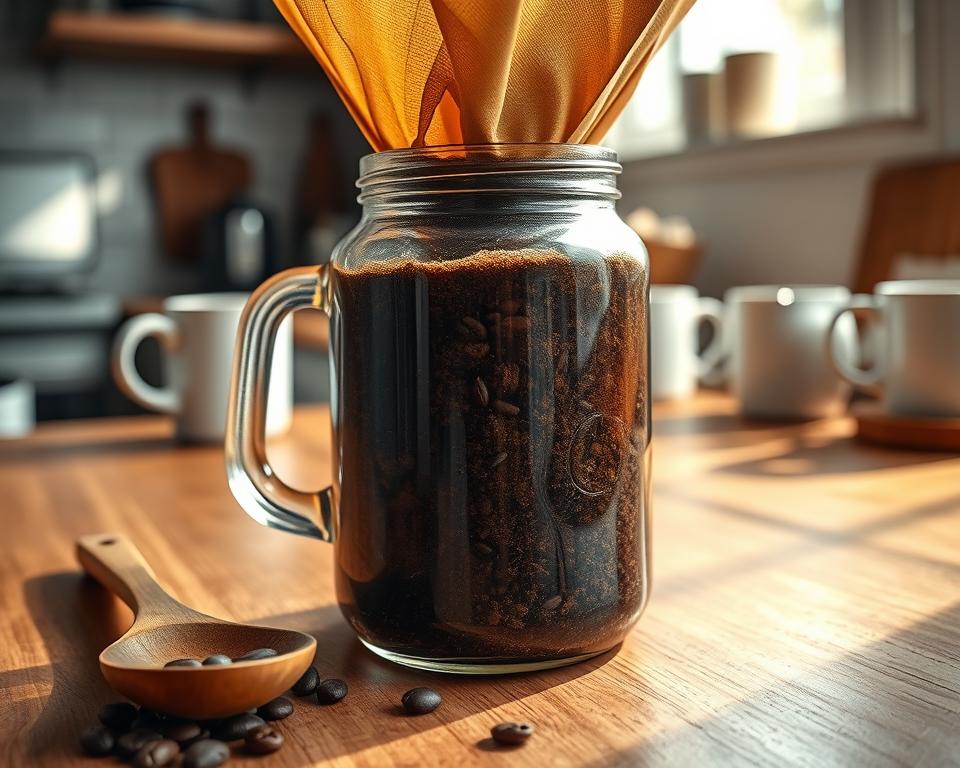
After steeping, strain your cold brew. Use a fine-mesh sieve or cheesecloth to strain it into a large container. Throw away the grounds and store the coffee in an airtight container.
Here are some straining tips:
- Use a fine-mesh sieve to catch the grounds and prevent sediment.
- Don’t worry about sediment in your coffee – it’s normal.
- Try different straining methods to find what works best for you.
By following these steps, you can make delicious cold brew coffee at home. Happy brewing!
Flavoring and Enhancing My Cold Brew
Customizing cold brew is my favorite part. You can make it sweet or keep it simple. There are many ways to enjoy it just the way you like.
Dairy and Non-Dairy Options
Adding milk is a simple way to flavor your cold brew. Whole milk makes it creamy, while skim milk is lighter. If you’re vegan or can’t have dairy, almond, soy, or oat milk works great.
For a richer treat, try flavored creamers or half-and-half. Vanilla, hazelnut, and caramel are favorites. For a dairy-free option, coconut cream or cashew milk adds creaminess without dairy.
Infusing with Flavorful Ingredients
Adding flavorful ingredients is another great way to enhance your cold brew. You can mix in syrups like vanilla or hazelnut for a quick flavor boost. Or, try spices like cinnamon for something unique.
For more ideas, see this guide on how to flavor cold brew coffee. You can also add fruits or herbs during brewing for a refreshing twist. Try citrus fruits, berries, or mint for a different taste.
- Citrus fruits like oranges or lemons for a bright, zesty flavor
- Berries such as strawberries or raspberries for a fruity twist
- Mint leaves for a refreshing, cooling effect
Experimenting with ingredients lets you find your perfect cold brew. Whether you like it sweet, creamy, spicy, or fruity, there’s a lot to try. Cold brew is a fun and versatile drink to enjoy.
Serving Suggestions for Cold Brew
Serving cold brew in the right glassware makes a big difference. The look of your cold brew is as important as its taste. I prefer tall, clear glasses to show off the coffee’s rich color.
Ideal Glassware for Presentation
The right glassware can make your cold brew experience better. Tall, clear glasses are best because they let the coffee’s color stand out. You might also want glasses with wide mouths to let the aromas out.
As coffee aficionados often say, “The glass is part of the experience.” The right glassware can turn your cold brew into a special treat.
Serving Over Ice vs. Neat
Cold brew is versatile. You can serve it over ice for a cool drink or neat for a stronger flavor. Serving over ice is great for hot days, while neat lets you enjoy the full flavor.
A survey found that many coffee lovers prefer cold brew over ice. But serving it neat can be just as good, for those who want to enjoy the complex flavors.
“Cold brew is not just a drink, it’s an experience that can be tailored to your taste preferences.”
Try both ways to find your favorite way to enjoy cold brew. Whether over ice or neat, the key is to enjoy it.
Storing Cold Brew Coffee
Keeping your homemade cold brew coffee fresh is important. It can last weeks if stored right. This way, you always have your favorite drink ready.
How to Keep It Fresh
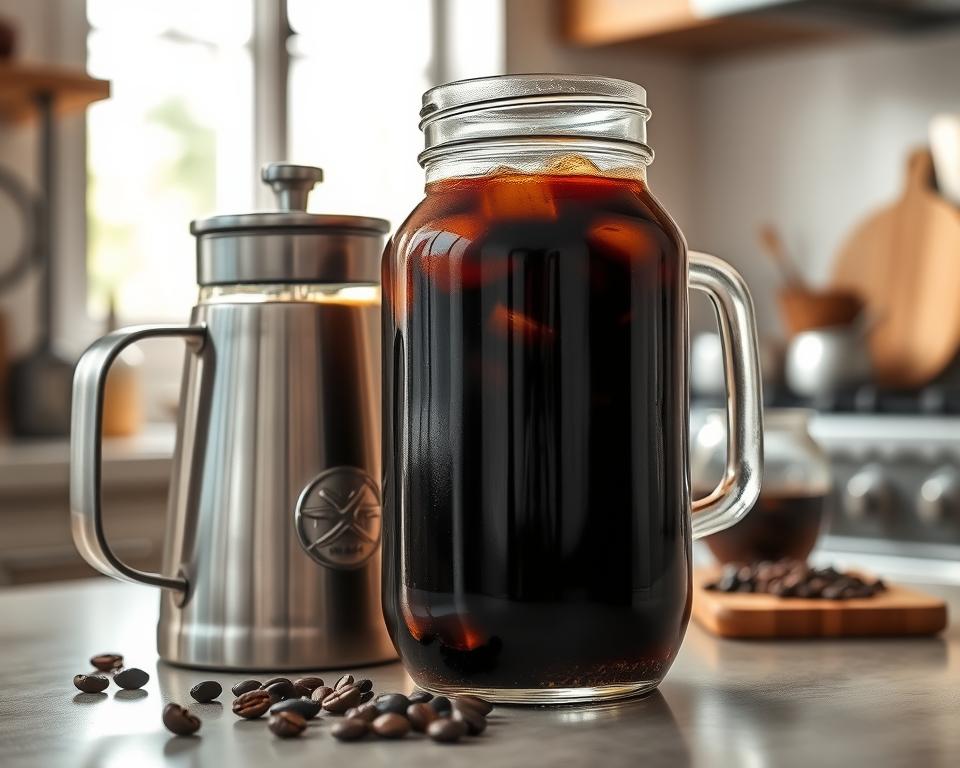
For fresh cold brew, use an airtight container. Glass containers with tight lids work best. They keep air out and preserve the coffee’s taste. Always store it in the fridge to slow down spoilage.
Tips for Freshness:
- Store in airtight containers
- Keep refrigerated at all times
- Avoid exposure to light
Best Practices for Shelf Life
The life of cold brew coffee depends on how you store it and the brewing ratio. Homemade cold brew can last up to two weeks in the fridge. But for the best taste, drink it within a week.
Maximizing Shelf Life:
- Brew in smaller batches to avoid having too much coffee sitting around for too long.
- Use a clean container to prevent contamination.
- Label your container with the date you brewed the coffee.
Follow these tips to enjoy your cold brew longer. Happy brewing!
Troubleshooting Common Cold Brew Issues
If you’re having trouble with your cold brew, you’re not alone. Here are some solutions to common cold brew coffee issues. Making the perfect cold brew can be tricky, but with a few adjustments, you can get it right every time.
Overly Bitter Flavor
A bitter cold brew can be off-putting. To avoid this, adjust your coffee-to-water ratio. If you’re using too little water, your cold brew may be too strong and bitter. Try increasing the water amount in your next batch to see if that improves the flavor.
Also, be mindful of the grind size of your coffee beans. A coarse grind can help prevent over-extraction, which contributes to bitterness.
For more detailed tips on adjusting your cold brew recipe, visit this helpful resource. It provides additional guidance on making easy cold brew coffee at home.
Weak Cold Brew Solutions
If your cold brew is too weak, there are a few adjustments you can make. First, check your steeping time. Cold brew coffee typically needs to steep for 12-24 hours. If you’re not getting the desired strength, try extending the steeping time.
You can also try using more coffee grounds or switching to a darker roast. This can provide a bolder flavor even with the same amount of coffee.
Experimenting with these variables can help you find the perfect balance for your taste preferences. This makes it easy to enjoy cold brew coffee at home.
Cold Brew Coffee Recipes to Try
Now that you know how to make cold brew coffee, it’s time to try some new recipes. Cold brew coffee is great for making tasty drinks and desserts.
Classic Cold Brew Recipe
A classic cold brew recipe is easy and tasty. You’ll need:
- 1 cup cold brew coffee
- 1/2 cup milk or creamer
- 1 tablespoon sugar (optional)
- Ice cubes
Put cold brew coffee, milk, and sugar in a glass with ice. Stir it well and enjoy. You can change the coffee to milk ratio to your liking.
Cold Brew Cocktails for Special Occasions
Cold brew coffee is perfect for making unique cocktails for special times. Here are a few ideas:
Cold Brew Coffee Martini: Mix cold brew coffee with vodka, coffee liqueur, and cream. Shake it well and pour into a chilled martini glass.
Cold Brew Coffee Spritzer: Mix cold brew coffee with sparkling water, lime juice, and vanilla syrup. Serve over ice in a tall glass.
Try different flavors and ingredients to make your own cold brew coffee cocktails. Be creative and experiment with new combinations.
Frequently Asked Questions about Cold Brew
As we’ve explored the world of cold brew coffee, some common questions often arise. Let’s dive into a few of these FAQs to help clarify any remaining doubts you may have about making and enjoying cold brew at home.
Shelf Life of Cold Brew
Cold brew coffee typically lasts up to two weeks when stored properly in the refrigerator. To keep it fresh, it’s essential to store it in an airtight container. If you’re following a cold brew coffee tutorial or DIY cold brew coffee guide, make sure to check the coffee’s flavor and aroma before consuming it, even if it’s within the two-week timeframe.
Using Decaf Coffee for Cold Brew
Yes, you can use decaf coffee for cold brew. The process of making decaf cold brew is the same as regular cold brew. If you’re sensitive to caffeine or prefer to drink coffee later in the day, decaf cold brew is a great option. Simply choose your favorite decaf coffee beans and follow the steps outlined in our guide on how to make cold brew at home.
By understanding these key aspects, you’ll be well on your way to enjoying delicious cold brew coffee whenever you want. Whether you’re a seasoned coffee enthusiast or just starting to explore the world of cold brew, experimenting with different roasts and brewing times can help you find your perfect cup.