


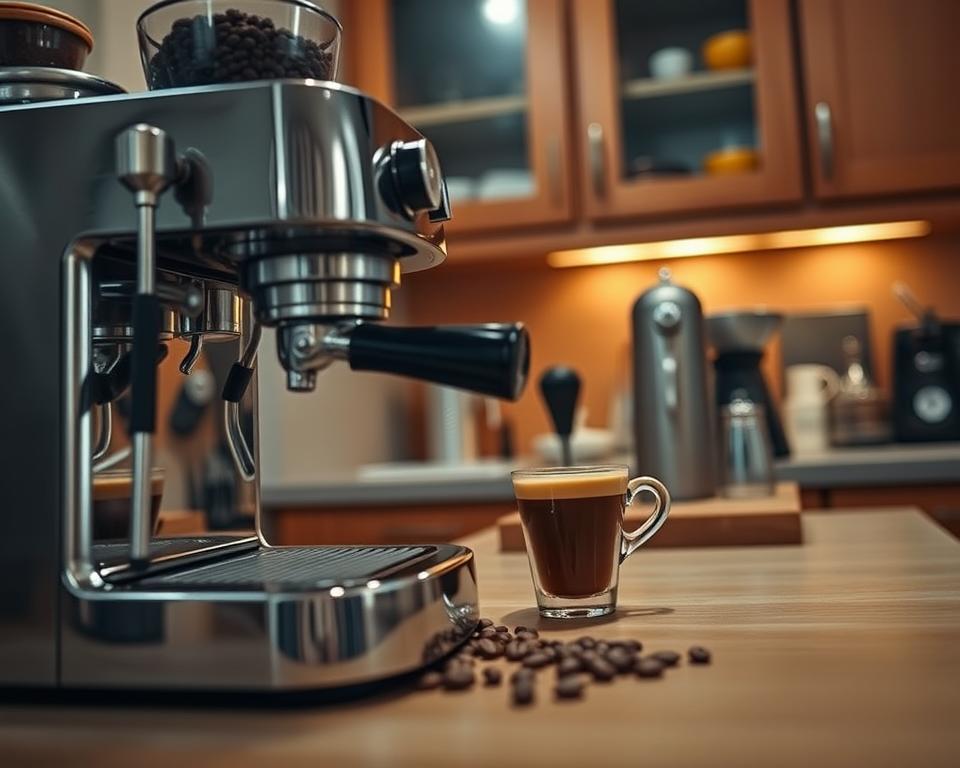
Did you know the global coffee market is set to hit $81.6 billion by 2025? Espresso is a big part of this growth. You can join this trend by learning to make great espresso at home.
With the right tools and a little practice, you can make espresso as good as your favorite coffee shop. This guide will show you how to start brewing espresso like a pro.
Mastering espresso making saves money and lets you try new roasts and techniques.
Key Takeaways
- Learn the essential steps to make high-quality espresso at home.
- Discover the necessary equipment for brewing cafe-quality espresso.
- Understand the benefits of making espresso at home, including cost savings and experimentation with different roasts.
- Start your espresso journey with confidence and creativity.
- Explore various brewing techniques to enhance your espresso experience.
The Journey Begins: Why I Love Espresso
Stepping into the world of home espresso making changed my mornings. It wasn’t just about coffee; it was about creating a joyful experience every day.
Discovering My Passion for Coffee
My love for coffee started with the amazing flavors and smells of a good espresso. I learned about the espresso machine fundamentals that make a great cup. It was fascinating and rewarding to understand the mechanics and art of brewing.
Trying different coffee beans and roast levels opened up a world of flavors. From fruity to smoky, I discovered new tastes. This helped me grow my taste buds and enjoy espresso’s subtleties.
The Benefits of Brewing at Home
Brewing espresso at home has many perks. I can try new recipes and techniques without coffee shop limits. Having the right home barista essentials makes a big difference. Each tool, from the machine to the grinder, is key to a perfect shot.
Also, brewing at home saves money and is convenient. It’s not just about saving; it’s about the joy of making something myself. Brewing espresso has become a calming ritual, setting a positive tone for my day.
Essential Equipment for Brewing Espresso
Starting your espresso journey at home requires the right tools. As a beginner, it can feel overwhelming. But, focusing on a few key items can make a big difference.
Choosing the Right Espresso Machine
The espresso machine is the heart of your setup. You’ll find manual, semi-automatic, and automatic machines. Manual machines give you control and are easy to move. Semi-automatic machines offer a mix of control and ease. Automatic machines are simpler but might limit your options.
Grinders: Why Fresh is Best
Grinding your coffee beans yourself is key for a great espresso. Pre-ground coffee can lose flavor and aroma over time. A good grinder lets you grind just before brewing, ensuring the best taste. Burr grinders are best because they’re consistent and let you adjust the grind size.
Accessories for Optimal Brewing
There are more tools to improve your brewing. A scale is vital for precise coffee and water measurements. A tamper ensures the coffee grounds are evenly pressed, which is important for a good extraction. A milk frother is also useful if you like lattes and cappuccinos.
By focusing on these key items, you’ll be well on your way to making great espresso at home. Remember, the quality of your equipment greatly affects your espresso’s taste. So, investing in good machines and tools is worth it.
Understanding Coffee Beans
Getting to know coffee beans is key to making the perfect espresso. There are many coffee beans out there, each with its own special traits. Choosing the right one can really change how your espresso tastes.
Types of Coffee Beans and Flavors
Coffee beans come in many types, each with its own flavor and smell. The two main types are Arabica and Robusta. Arabica beans are known for their mild and complex flavors. On the other hand, Robusta beans have a stronger and more bitter taste.
The taste of coffee beans is also affected by where they are grown, the height of the land, and how they are processed. For example, beans from Ethiopia often have fruity and floral notes. Beans from Brazil tend to have a nutty and smooth taste.
| Type of Coffee Bean | Flavor Profile | Region |
|---|---|---|
| Arabica | Mild, nuanced, fruity | Ethiopia, Colombia |
| Robusta | Bitter, bold, earthy | Vietnam, Indonesia |
| Liberica | Fruity, floral, smoky | West Africa |
How to Choose the Best Beans for Me
Choosing the right coffee beans for your espresso depends on what you like. If you like a milder taste, Arabica beans might be best. For a bolder shot, Robusta beans could be better.
Trying out different beans and roast levels can help you find your perfect flavor. It’s also important to use fresh beans. Freshly roasted and ground coffee always tastes better.

By learning about the different coffee beans and their flavors, you can make better choices. This will help you improve your espresso brewing skills and get the perfect shot every time.
The Perfect Brew: Espresso Techniques
Making the perfect espresso shot is all about mastering extraction techniques and knowing your machine. It takes knowledge, patience, and practice to get it right.
Mastering the Art of Extraction
Extraction pulls flavors from coffee beans with hot water. You want a balanced extraction for the best flavor. Under-extraction makes it sour, and over-extraction makes it bitter.
To get it right, you need to know how grind size, tamping, and brewing time affect it. Try different settings to find what you like best.
Understanding Pressure and Temperature
Pressure and temperature are key in espresso brewing. The best brewing temperature is between 195°F and 205°F. Temperature control is important because it changes how fast the coffee is extracted and its flavor.
Pressure, around 9 atmospheres, pushes the water through the coffee grounds. This creates the crema of a great espresso. Learning to adjust and keep the right pressure is essential for consistent results.
| Parameter | Ideal Setting | Impact on Espresso |
|---|---|---|
| Temperature | 195°F – 205°F | Affects extraction rate and flavor |
| Pressure | 9 atmospheres | Influences crema formation and flavor |
| Grind Size | Fine to extra-fine | Impacts flow rate and extraction |
By understanding and experimenting with these elements, you’ll be well on your way to making perfect espresso at home.
My Favorite Espresso Recipes
In my kitchen, I love trying out different espresso recipes. With just a few ingredients and some basic tools, I can whip up tasty drinks any time. These drinks are great for any part of the day.
Classic Espresso Shot
A perfect espresso shot is the base of many coffee drinks. I use high-quality coffee beans and a well-kept espresso machine. Here are some tips for a great shot:
- Use the right amount of coffee: about 14-17 grams for a double shot
- Ensure the water temperature is between 195°F and 205°F
- Adjust the grind size to achieve the perfect flow rate
Lattes and Cappuccinos Made Easy
Lattes and cappuccinos are my go-to drinks to make at home. With a bit of practice, you can make beautiful designs on top. Here are some simple steps to follow:
- Pull a shot of espresso into a cup
- Steam milk to the right temperature and texture
- Combine the espresso and steamed milk, holding back the foam with a spoon
- Top with foam and create a design, if desired
Seasonal Flavors to Try
Making espresso at home lets me try out new flavors and ingredients. Here are some seasonal flavors you can try:
- Winter: peppermint, gingerbread, or eggnog
- Spring: lavender, lemon, or orange blossom
- Summer: strawberry, peach, or mint
- Autumn: pumpkin, cinnamon, or nutmeg
Adding these flavors to your espresso recipes makes unique and tasty drinks. They’re perfect for any season.
Learning to Taste: Espresso Flavor Profiles
Learning to taste espresso is an art that turns a simple drink into a rich experience. As I delved into the world of espresso, I realized that knowing its flavors was essential. It helped me enjoy it more.
Recognizing Aromas and Textures
The first step was learning to spot the different aromas and textures in espresso. From the fruity notes of Ethiopian roasts to the rich, chocolatey tastes of Brazilian blends, each shot is unique.
- Identify the aroma: Is it floral, fruity, or nutty?
- Notice the texture: Is it creamy, silky, or watery?
- Taste the flavors: Are they balanced, or does one dominate?
Developing My Palate Over Time
Improving my palate took time and effort. I began by tasting various espressos and noting their traits. With practice, I got better at spotting different flavor profiles. I also learned how roast level and brewing method change the taste.
- Start with a variety of coffee beans to compare flavors.
- Experiment with different roast levels and brewing methods.
- Record your observations to track your progress.
By following these steps and exploring espresso, I’ve grown to appreciate its complexity. Whether you’re new to coffee or already love it, learning to taste espresso is a journey worth taking.
Common Mistakes to Avoid
Exploring the world of espresso, I found it’s key to avoid common mistakes for a great shot. Through trial and error, I’ve learned that knowing these mistakes can greatly improve your brewing skills.
Under and Over-Extracting
Getting the perfect extraction is critical in brewing espresso. Under-extraction makes the taste sour because the water moves too fast. Over-extraction makes it bitter because the water stays too long. The goal is to find that perfect balance.
To avoid under-extraction, I make sure my espresso machine is at the right pressure. I also adjust the grind size for the perfect flow. To prevent over-extraction, I watch the brewing time and adjust the coffee-to-water ratio.
Ignoring Grind Size Importance
The grind size of your coffee beans is very important for your espresso’s quality. A grind that’s too fine can make it too bitter. A grind that’s too coarse can make it weak. Finding the right grind size is key.
| Grind Size | Effect on Espresso | Recommended Use |
|---|---|---|
| Fine | Can lead to over-extraction and bitterness | Use with lighter roasts or for a stronger shot |
| Medium | Balances extraction for a well-rounded flavor | Ideal for most brewing methods and roast levels |
| Coarse | Can result in under-extraction and weakness | Best for darker roasts or when brewing with a French press |
By avoiding these mistakes and adjusting my technique, I’ve greatly improved my espresso.
If you want to perfect your espresso shot, try different grind sizes and watch the brewing time. With practice, you’ll make amazing espresso at home.
The Importance of Water Quality
Getting the perfect espresso at home starts with the water. The quality of your water greatly affects the taste of your espresso. It’s a key factor in making great espresso at home.
How Water Affects the Brew
The water you use in brewing espresso impacts the extraction process. Impurities in water can make the flavor unbalanced. On the other hand, properly filtered water brings out a cleaner, more nuanced taste.
Water that’s too hard or too soft can change how the espresso is extracted. For example, water with lots of minerals like calcium and magnesium can cause scale buildup in your espresso machine. This can damage it over time.
Filtration Systems to Enhance Taste
Using a water filtration system can make your espresso taste better. It removes impurities and minerals that can affect the flavor. You can choose from simple pitcher filters to more complex under-sink systems.
| Filtration Method | Effectiveness | Maintenance |
|---|---|---|
| Activated Carbon Filter | Removes chlorine and improves taste | Replace every 6 months |
| Reverse Osmosis | Removes up to 99% of impurities | Replace membranes every 2-3 years |
| Ion Exchange System | Softens water, reduces scale buildup | Regenerate resin every 3-6 months |
Understanding the importance of water quality and using the right filtration system can greatly improve your espresso’s taste. This is key to making great espresso at home.
Cleaning and Maintenance Tips
As a home barista, I’ve learned that keeping my espresso machine clean is key. Regular cleaning and maintenance help the machine last longer and make better espresso. A well-kept machine is essential for great espresso shots every time.
Daily Maintenance Routines
Keeping my espresso machine in top shape is a daily task. I wipe it down after each use to stop old coffee oils and residue from building up. I also clean the portafilter and basket well, as they can get clogged with coffee grounds.
Another daily task is to check and adjust the grind size as needed. This ensures the espresso extraction is perfect, keeping the flavor just right. Doing this daily helps me get the best espresso shots.
| Daily Task | Purpose | Frequency |
|---|---|---|
| Wipe down the machine | Prevent buildup of coffee oils and residue | After each use |
| Clean the portafilter and basket | Prevent clogging with coffee grounds | After each use |
| Check and adjust grind size | Ensure optimal espresso extraction | Daily |
Deep Cleaning My Espresso Machine
Along with daily care, I do a deep clean of my espresso machine regularly. This includes descaling the machine to remove mineral deposits that can affect taste and performance. I also backflush the machine to clean out the group head and valves.
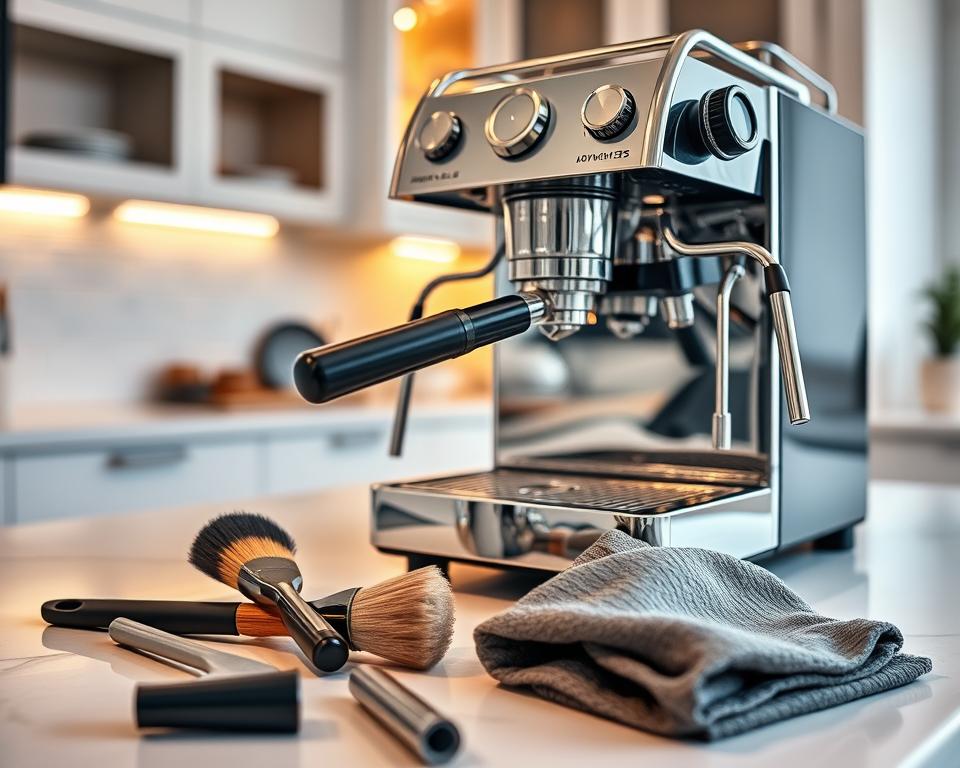
By following these cleaning and maintenance tips, I keep my espresso machine in top shape. Whether you’re new or experienced, these routines can greatly improve your espresso-making skills.
Experimenting with Different Techniques
After mastering the basics, I began exploring new brewing methods. This journey has been incredibly rewarding. It has allowed me to discover new flavors and improve my espresso-making skills.
One exciting part of experimenting is adjusting my brewing method to match the coffee beans. For example, some beans work great with the Aeropress method, while others are better for traditional espresso.
Trying Out Alternative Brewing Methods
Exploring different brewing methods has opened up a new world for me. I’ve tried various devices, like the French press and pour-over. Each one offers a unique flavor and brewing experience.
For instance, the French press gives a richer, full-bodied flavor because the coffee grounds stay in contact with the water longer. On the other hand, pour-over brewing offers a cleaner taste. It allows for more control over brewing parameters.
Understanding the Science Behind Brewing
Learning about the science behind brewing has been fascinating. Knowing about extraction principles, like water temperature, grind size, and pressure, has helped me improve my brewing technique.
I’ve found that the ideal water temperature for espresso is between 195°F and 205°F. The grind size of the coffee beans is also key. It affects how fast the coffee is extracted.
By mixing theory with practice, I’ve honed my espresso-making skills. I’ve also developed a deeper appreciation for the art of brewing.
Community and Resources for Espresso Lovers
As I honed my skills, I found that being part of a community and having the right resources made a big difference. The world of espresso is not just about perfecting a technique. It’s also about sharing experiences and learning from others.
Engaging with online forums and social media groups has been a game-changer for me. Websites like Home-Barista.com offer a wealth of information. They have detailed guides and discussions on the latest trends in espresso.
Engaging with Online Coffee Communities
Online communities are a fantastic way to connect with other espresso enthusiasts. You can share your experiences, ask questions, and learn from others. These communities often discuss the latest equipment, share recipes, and provide tips on improving your brewing technique.
Being part of these communities has not only improved my skills but has also made the hobby more enjoyable. I’ve discovered new home barista essentials and learned how to use them effectively.
Recommended Books and Podcasts
For those looking to dive deeper, there are numerous books and podcasts dedicated to the art of espresso. Books like “The Coffee Roaster’s Companion” offer insights into the world of coffee roasting and brewing. Podcasts, on the other hand, provide a more casual way to learn, with discussions ranging from brewing techniques to industry trends.
These resources have been invaluable to me, providing a deeper understanding of the complexities of espresso. They inspire me to continue experimenting with different techniques and equipment.
Whether you’re just starting out or are a seasoned barista, being part of a community and having access to the right resources can significantly enhance your espresso journey. I encourage you to explore these options and see how they can improve your brewing experience.
Next Steps in My Espresso Journey
I’m excited to keep improving my espresso skills at home. Perfecting your espresso shot is a journey, not a finish line. I’m eager to try new roasts and brewing methods.
For beginners, I suggest checking out beginner espresso tips. These can help you start your own espresso journey. Whether it’s mastering extraction or steaming milk, there’s always room to get better.
I’m thinking about upgrading my equipment to make mornings easier, now that my kids are busier. Machines like the La Marzocco Micra or Decent DE1 are on my list. They offer a mix of automation and experimentation. You can find more info on these machines and user experiences on Home-Barista.
Setting Personal Brewing Goals
Setting goals is key to improving my brewing skills. Whether it’s mastering a recipe or speeding up my brewing, clear goals keep me focused.
Exploring Advanced Techniques
I’m ready to learn advanced brewing techniques. This includes adjusting grind sizes and trying different roast levels. It will improve my skills and help me enjoy espresso more.