

Coffee lovers are turning their kitchens into coffee shops. Over 10 million Americans now call themselves coffee experts.
For those who love making the perfect cup, setting up a custom coffee bar is key. It’s not just about the gear; it’s about the experience.
With the right barista station essentials, your morning coffee can feel like a visit to your favorite coffee shop.
Key Takeaways
- Crafting a professional-grade coffee experience at home
- Essential elements for a custom coffee bar setup
- Tips for elevating your daily coffee ritual
- Creating a sophisticated coffee experience
- Transforming your kitchen into a coffee haven
Understanding the Home Barista Movement
The home barista movement is all about making the perfect cup of coffee at home. It’s not just about brewing coffee. It’s an art form that involves trying different techniques, equipment, and ingredients.
This movement is growing in popularity. Brewing at home saves money, reduces waste, and lets you experiment with coffee recipes. Whether you love coffee or are just starting, being a home barista is about enjoying the coffee-making process.
What is a Home Barista?
A home barista is someone who loves making coffee and experimenting with brewing methods. It’s about being creative and having fun. As a home barista, you can try new recipes, techniques, and find your own style.
Benefits of Brewing at Home
Brewing coffee at home has many benefits. You can save money by not buying coffee every day. You also reduce waste by using reusable filters and beans. Plus, you can have fun trying out different recipes and techniques.
Some key benefits include:
- Cost savings: Brewing at home saves money.
- Reduced waste: Using reusable items reduces waste.
- Creativity: Trying new recipes and techniques is fun and creative.
Popular Coffee Brewing Methods
Home baristas can try many brewing methods. These include pour-over, French press, and espresso. Each method has its own unique flavor and requires specific equipment and techniques.
| Brewing Method | Equipment Needed | Flavor Profile |
|---|---|---|
| Pour-over | Cone-shaped dripper, coffee filter | Clean, nuanced flavor |
| French press | French press coffee maker | Rich, bold flavor |
| Espresso | Espresso machine, portafilter | Concentrated, intense flavor |
When setting up your home barista station, think about coffee corner design ideas and creating a DIY home coffee station. It can make your coffee-making experience better.
Essential Equipment for Your Barista Station
Setting up your home barista station starts with choosing the right equipment. A well-organized station is key for great coffee and a better brewing experience.
The equipment you pick depends on your brewing method. Whether it’s espresso, drip coffee, or another method, let’s look at the main pieces you’ll need.
Coffee Machines: Espresso vs. Drip
The coffee machine you choose is critical. You might prefer an espresso machine for strong coffee or a drip coffee maker for simplicity.
- Espresso Machines: These machines make a concentrated coffee by forcing hot water through ground beans. They’re great for lattes and cappuccinos.
- Drip Coffee Makers: Drip brewers slowly drip water through coffee in a filter. They’re easy to use and perfect for daily coffee.
Think about your coffee taste and the drinks you like to make when choosing.
Grinders: Blade vs. Burr
A coffee grinder is vital for your station. It lets you grind beans fresh for better flavor and aroma.
Grinders come in two types: blade and burr.
- Burr Grinders: These use surfaces to grind beans for a consistent size. Coffee lovers prefer them for better flavor and control.
- Blade Grinders: Blade grinders chop beans with a blade. They’re cheaper but can heat up beans and grind unevenly.
For the best taste, choose a burr grinder.
Accessories: Scales, Frothers, and More
Several accessories can improve your barista experience. These include more than just a coffee machine and grinder.
- Scales: A precise scale is key for measuring coffee and water right, for a balanced brew.
- Frothers: A milk frother is essential for lattes and cappuccinos, making smooth microfoam.
- Other Accessories: Useful items include coffee filters, tamper, and a knock box for espresso machines.
Choosing the right equipment and accessories makes a well-organized barista station. This meets your needs and improves your brewing.
Organizing your essentials well is important for a great barista station. Think about the layout and workflow to make brewing smooth.
Choosing the Right Coffee Beans
Choosing the perfect coffee beans is key to a great home barista experience. The quality of your coffee beans greatly affects the taste and smell of your coffee. It’s important to pick beans that match your taste.
Exploring Single-Origin vs. Blends
You can choose between single-origin and blends when picking coffee beans. Single-origin beans have unique flavors from their region. They let you taste the special flavors of different coffee-growing areas.
Blends mix beans from various regions for a balanced taste. Whether you like the detailed taste of single-origin or the mix of blends, knowing the difference helps you choose.
Freshness: Why It Matters
Freshness is critical for a delicious cup of coffee. Beans that are freshly roasted and ground taste better than older ones. To keep beans fresh, buy from local roasters or trusted online sources with roast dates.
Using coffee bar organization tips like storing beans in airtight containers also helps keep them fresh.
Storing Coffee Beans Properly
Storing beans right is essential to keep their freshness and flavor. Keep beans in a cool, dark spot, away from sunlight and moisture. For those with a small space coffee nook, airtight containers or coffee bean storage canisters are great for keeping beans fresh and organized.
Don’t store coffee beans in the fridge or freezer. Moisture from these places can harm the beans.
Setting Up Your Barista Workspace
Setting up my home barista station was a big deal. I learned how a well-designed space can change your daily coffee routine.
Optimal Layout for Efficiency
When designing your barista station, think about the steps: grinding, brewing, and serving. A good layout cuts down on movement and boosts productivity. For example, put your grinder, coffee machine, and scale in a triangle to make things easier.
A well-planned layout makes brewing coffee more fun. You can find lots of DIY home coffee station ideas online to get ideas for your space.
Lighting and Ambiance Considerations
Good lighting is key for a functional and welcoming barista station. Natural light is best, but good artificial light works too. Think about the vibe you want: cozy and warm or bright and modern.
As coffee lover James Hoffmann said,
“The ritual of coffee preparation is just as important as the coffee itself.”
Creating a cozy atmosphere can make your coffee time better.
To get the right feel, consider the colors, decor, and look of your coffee corner. Add plants, art, or old coffee gear to make it special and inviting.
Mastering Brewing Techniques
As you improve your home barista station, learning brewing techniques is key. You’ll need to know about different methods, the role of water quality and temperature, and finding the right grind size for your beans.
Different Brewing Methods Explained
There are many brewing methods, each with its own taste and feel. French press makes a rich, full-bodied coffee by steeping coarse grounds in hot water. Pour-over methods, on the other hand, offer a clean and nuanced flavor, bringing out the coffee’s subtle notes.
- French Press: Rich and full-bodied
- Pour-over: Clean and nuanced
- Cold Brew: Smooth and low-acidity
Trying out different methods can help you find your favorite flavor.
Importance of Water Quality and Temperature
Water quality and temperature greatly affect your coffee’s taste. Using filtered water helps avoid off-flavors or odors. The best brewing temperature is between 195°F and 205°F, for the best extraction.
| Brewing Method | Ideal Water Temperature |
|---|---|
| Espresso | 195°F – 205°F |
| Pour-over | 200°F – 205°F |
| French Press | 195°F – 200°F |
Dialing in Your Grind Size
The grind size of your coffee beans is vital for a perfect brew. Each brewing method needs a specific grind size. For example, espresso needs a fine grind, while French press prefers a coarse grind.
By adjusting your grind size and trying out brewing techniques, you can enhance your home barista skills. This will lead to a better cup of coffee.
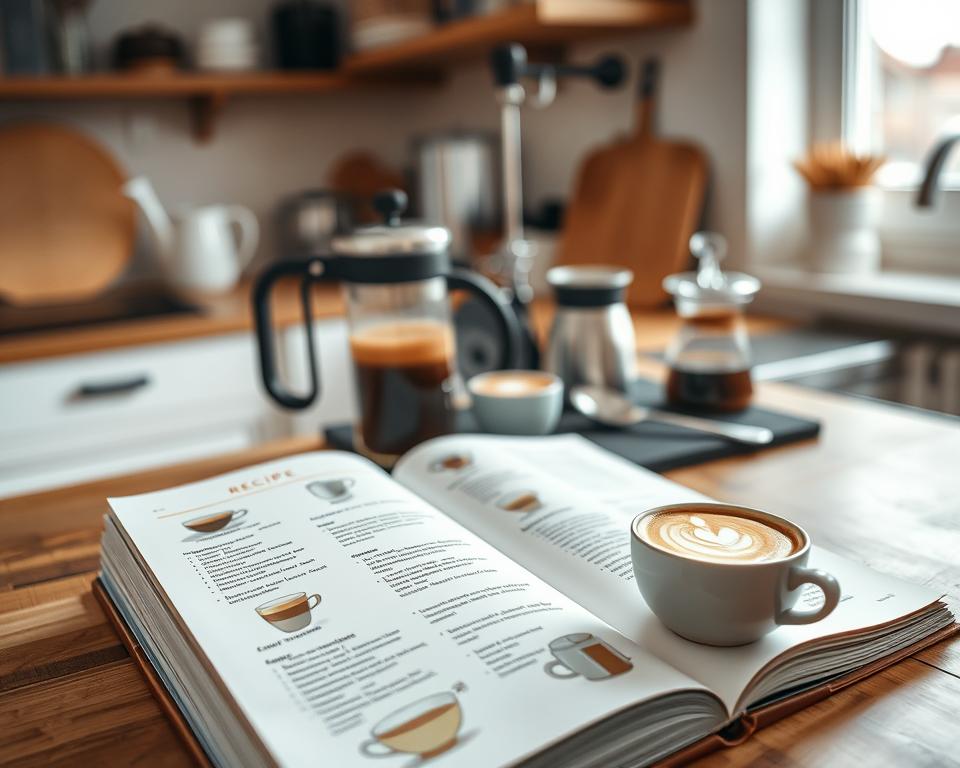
Creating a Coffee Recipe Guide
As a home barista, making a coffee recipe guide can make brewing better. It will hold your top recipes, brewing methods, and what you’ve tried.
Exploring Popular Coffee Drinks
Knowing about common coffee drinks is key for your guide. Favorites like lattes, cappuccinos, and Americanos are found in many coffee shops. Learning these can improve your brewing.
Here’s a quick look at these popular drinks:
| Drink | Coffee-to-Milk Ratio | Brewing Method |
|---|---|---|
| Latte | 1:5 | Espresso |
| Cappuccino | 1:3 | Espresso |
| Americano | N/A | Espresso diluted with water |
Developing Your Signature Brew
Creating your unique brew takes time and trying new things. Begin by tweaking the coffee-to-water ratio, brewing time, and grind size. This will help you find your ideal cup.
Tips for Developing Your Signature Brew:
- Try different coffee beans and roast levels.
- Change your brewing method based on your equipment.
- Log your experiments to see how you’ve improved.
By following these tips and keeping a coffee recipe guide, you can get better at brewing. Enjoy a more personal coffee experience at your barista station at home.
Enhancing Your Experience with Add-Ons
To make your home barista experience better, try adding special touches. These can turn a simple coffee into a fancy drink. It makes your morning routine more fun.
Try different milks and syrups to change up your coffee. There are many options for those who want something new or don’t drink dairy.
Milk Alternatives and Flavor Syrups
Almond milk, oat milk, and soy milk can make your coffee taste great. Almond milk has a nutty flavor, while oat milk is creamy. Syrups like vanilla, hazelnut, and caramel add sweetness or a smooth texture.
| Milk Alternative | Flavor Profile | Best Paired With |
|---|---|---|
| Almond Milk | Subtle nutty flavor | Vanilla syrup, cinnamon |
| Oat Milk | Creamy texture | Caramel syrup, cocoa powder |
| Soy Milk | Mild, slightly sweet | Hazelnut syrup, whipped cream |
As coffee lover, Scott Rao, said, “The art of coffee is not just about the equipment or the beans, but about the experience.” Trying different milks and syrups makes your coffee your own.
“The art of coffee is not just about the equipment or the beans, but about the experience.” – Scott Rao
Unique Toppings for Presentation
Adding special toppings can make your coffee taste better and look great. Try whipped cream, cocoa powder, or cinnamon for a professional look.
- Whipped cream adds a rich, creamy texture
- Cocoa powder provides a deep, chocolatey flavor
- Cinnamon adds a warm, spicy kick
Tips for Presentation: Sprinkle cinnamon or cocoa powder on whipped cream for a nice touch. Drizzle syrups in patterns on your coffee for a beautiful finish.
Adding these extras to your coffee routine makes it delicious and pretty, even in a small space coffee nook. Whether you’re experienced or new, trying different add-ons can improve your coffee.
Maintenance and Cleaning of Your Equipment
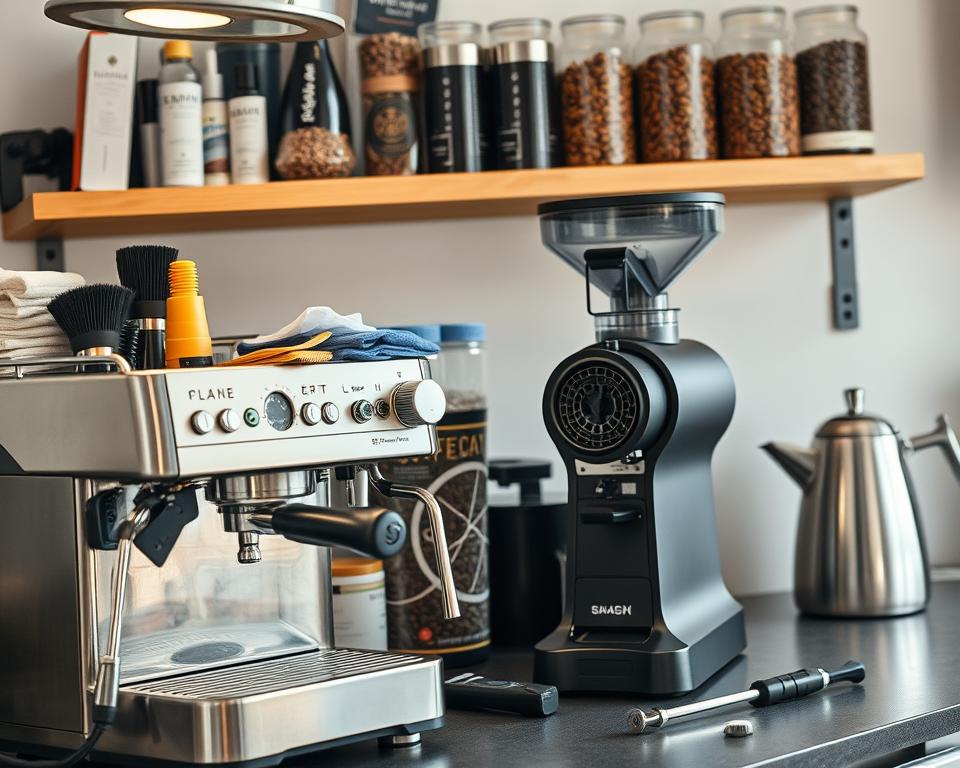
Keeping your home barista equipment in good shape is essential. Regular cleaning and maintenance help your machines last longer and make better coffee. We’ll look at daily and weekly cleaning routines and how to keep your gear in top shape.
Daily Cleaning Routines
It’s important to clean your equipment every day. This prevents old coffee oils and residue from building up. Here’s how to do it:
- Wipe down the surfaces of your coffee machine and grinder with a damp cloth.
- Clean the brew group and portafilter thoroughly.
- Empty and rinse the drip tray and clean the steam wand.
By doing these simple steps daily, you’ll keep your coffee tasting great and your equipment working well.
Weekly Deep Cleaning
Every week, do a deeper clean to get rid of tough buildup. Here’s what to do:
- Descaling your coffee machine to remove mineral deposits.
- Clean the grinder by grinding a small amount of rice to absorb any oils.
- Run a cleaning cycle on your machine, if available.
Descaling is key because mineral buildup can ruin your coffee’s taste and your machine’s performance.
Tips for Effective Descaling
When descaling, remember to:
- Use a descaling solution recommended by the manufacturer.
- Follow the instructions provided with the descaling solution.
- Rinse the machine thoroughly after descaling.
Regular descaling prevents damage to your machine and makes your coffee taste better.
| Cleaning Task | Frequency | Importance |
|---|---|---|
| Wipe down surfaces | Daily | High |
| Descaling | Weekly | High |
| Grinder cleaning | Weekly | Medium |
By sticking to these cleaning routines and tips, you’ll keep your equipment in great condition. And you’ll always have a perfect cup of coffee.
Joining the Home Barista Community
As you work on your home barista station, meeting others who love coffee can make it even better. The home barista community is full of people who love coffee as much as you do. They share tips, tricks, and their passion for coffee.
Online Forums and Resources
Online, you can find lots of help for your DIY coffee station. Forums and social media groups are great places to ask questions and share ideas. Sites like CoffeeGeek and Reddit’s r/coffee community are great places to start.
Workshops and Local Meetups
Workshops and meetups let you learn by doing. Coffee shops and roasters often host events for home baristas. These are perfect for learning new things, meeting people, and keeping up with coffee trends.
Being part of the home barista community helps you get better at making coffee. You can try new ways of brewing and make your coffee even better. Whether it’s online or in person, connecting with coffee lovers can really improve your setup.