



Every time I enjoy my ethically sourced coffee beans, I think about the impact it has. It affects the environment, farmers, and local communities. The coffee industry is huge, employing millions of farmers worldwide.
Many coffee farmers face tough times because of unfair trade practices. But, by choosing ethical coffee trade, we can help. I believe in supporting sustainable practices and fair prices for farmers.
Key Takeaways
- Ethical coffee choices can positively impact the environment and farmers’ livelihoods.
- Fair trade practices ensure that farmers receive a fair price for their produce.
- Sustainable coffee production helps preserve natural resources.
- By choosing ethically sourced coffee, consumers can promote positive change.
- Supporting local communities is key for a fairer coffee industry.
What is Ethical Coffee Trade?
Ethical coffee trade is more than a trend. It’s a move towards fairness and sustainability in the coffee world. It ensures coffee farmers get paid fairly and that coffee is made in an eco-friendly way.
Definition of Ethical Coffee Trade
Ethical coffee trade focuses on fair trade practices. It puts the well-being of farmers and the planet first. It means open trading, fair prices, and direct deals between farmers and buyers. This helps farmers and supports green farming.
The Fair Trade Foundation says, “Fair trade is a partnership based on open dialogue, transparency, and respect. It aims for more fairness in global trade.” This sums up ethical coffee trade, highlighting the need for fair trade.
Importance of Fair Practices
Fair practices in coffee are key for many reasons. They make sure farmers get a fair price for their coffee. This lets them cover costs and invest in their communities. They also encourage sustainable farming methods, which is good for the environment.
- Fair compensation for farmers, improving their livelihoods.
- Promotion of sustainable farming practices, reducing environmental degradation.
- Empowerment of local communities through fair trade premiums.
By picking coffee that’s certified as fair trade or ethically sourced, we help make the coffee industry better. As more people want ethically sourced coffee, more farmers and traders will follow fair and green practices. This will help coffee production become more sustainable for the future.
The Origins of Coffee Production
Exploring coffee’s world, I find its history and diverse production regions fascinating. Coffee is a big part of many cultures. Knowing where it comes from helps us understand today’s coffee industry.
Historical Context
Coffee’s history goes back to the 9th century in Ethiopia. It spread to the Arabian Peninsula and then globally. The journey of coffee was shaped by trade routes and cultural exchanges. Sustainable coffee production has evolved, blending old and new methods.
Baba Budan, an Indian Sufi saint, introduced coffee to India in the 17th century. He brought seven coffee beans from Mecca. This story shows how global connections have shaped coffee.

Coffee-Producing Regions
Coffee comes from many places, like Ethiopia’s highlands and Colombia’s mountains. Each place has its own climate, soil, and traditions. Choosing organic coffee beans supports farmers who use eco-friendly methods.
| Region | Climate | Notable Characteristics |
|---|---|---|
| Ethiopia | Highland | Known for heirloom varieties and distinct flavor profiles |
| Colombia | Mountainous | Produces high-quality Arabica beans with balanced acidity |
| Sumatra | Tropical | Famous for earthy and herbal flavors |
We can shape the coffee industry by choosing wisely. Supporting sustainable and organic coffee helps make the trade better for everyone and the planet.
“The coffee industry is a complex web of social, economic, and environmental factors. As consumers, we must be aware of the impact of our choices and strive to make a positive difference.”
The Impact of Traditional Coffee Trade
The traditional coffee trade deeply affects coffee farmers and the environment. Looking into coffee production issues shows the big problems with old methods.
Exploitation of Farmers
Coffee farmers get very little money for their beans. This makes it hard for them to live. The lack of clear information in the coffee chain leads to this unfairness.
Changing to socially responsible coffee is key to fix this. It helps farmers get paid right and improve their farms.
To stop this unfairness, we need a transparent coffee supply chain. This way, farmers get fair pay and can farm sustainably.
Environmental Consequences
Old ways of farming coffee hurt the environment a lot. Deforestation, water pollution, and soil erosion are big problems. These issues threaten coffee’s future.
Using green farming methods helps a lot. It reduces harm to the planet. This makes the coffee world better for everyone and the environment.
By choosing socially responsible coffee and a transparent coffee supply chain, we can make a difference. We can help the coffee industry be fair and green.
Principles of Ethical Coffee Trade
Ethical coffee trade focuses on fairness, protecting the environment, and helping coffee farmers. These key principles aim to make the coffee industry better for everyone.
Fair Compensation for Farmers
Ensuring farmers get fair compensation is a main goal. This means paying them enough to cover costs and improve their lives. Fair trade coffee helps make this happen, as explained in the article on the role of fair trade in coffee.
Here’s a comparison of traditional and ethical coffee trade:
| Aspect | Traditional Coffee Trade | Ethical Coffee Trade |
|---|---|---|
| Farmer Compensation | Often below production cost | Fair price that covers production cost and provides a decent income |
| Farming Practices | May involve exploitative labor practices | Promotes sustainable and environmentally friendly practices |
| Community Development | Limited investment in local communities | Invests in community development projects |
Sustainable Farming Practices
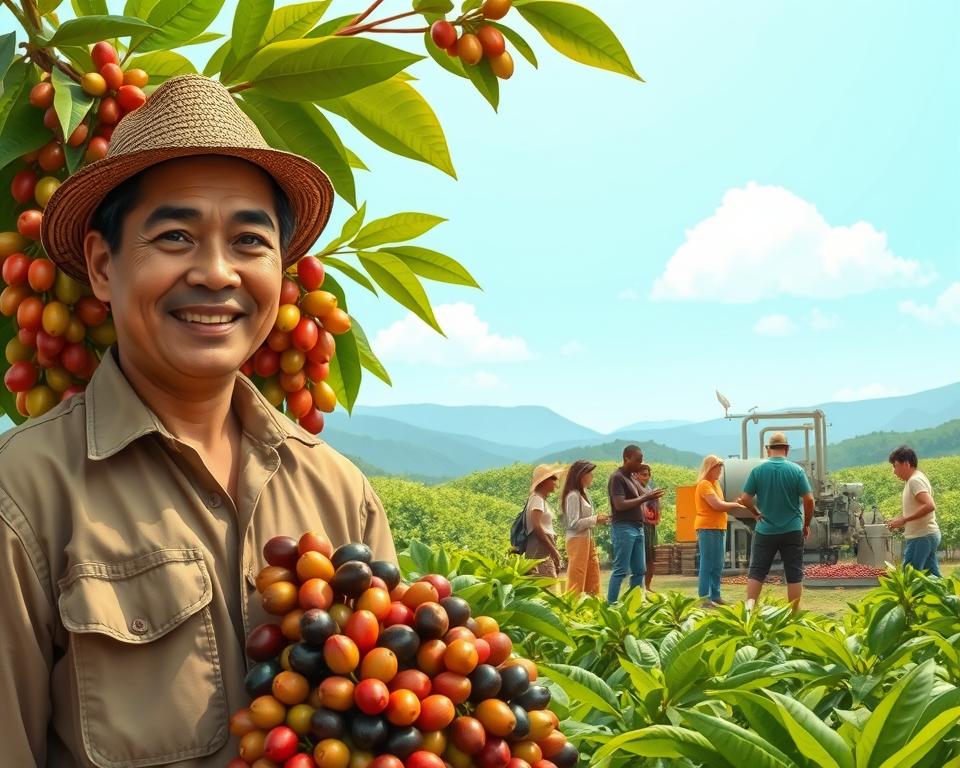
Ethical coffee trade also values sustainable farming practices. This includes methods like shade-grown coffee and organic farming. These practices help the environment and improve coffee quality.
Community Development
Community development is another key principle. It involves supporting local projects like education and healthcare. This helps the community and goes beyond just coffee.
In summary, ethical coffee trade aims to make the industry fairer and better. By focusing on fair pay, sustainable farming, and community support, we can improve the lives of coffee farmers and consumers.
Certifications to Look For
Certifications are key to making sure your coffee is sourced right. There are many certifications out there. Knowing what each one means helps you pick the best ethical coffee brand.
Fair Trade Certification
Fair Trade Certification is well-known for fairness in coffee. It makes sure farmers get a fair price for their beans. This helps with fair trade and supports community and environment.
Rainforest Alliance
The Rainforest Alliance certification is all about sustainability. It checks if coffee farms are good for the environment, workers, and communities. Choosing Rainforest Alliance coffee means you support green farming.
Organic Certification
Organic Certification is for those who care about the planet. It means coffee beans are grown without harmful chemicals. Organic farming is better for soil, water, and wildlife.
Here’s a quick look at these certifications:
| Certification | Focus | Key Benefits |
|---|---|---|
| Fair Trade | Fairness and Community Development | Fair prices for farmers, community development projects |
| Rainforest Alliance | Sustainability and Environmental Conservation | Sustainable farming, conservation of biodiversity, improved livelihoods for farmers |
| Organic | Environmental Sustainability | No synthetic fertilizers or pesticides, promotes soil health and biodiversity |
Choosing coffee with these certifications supports brands that care about fairness and the planet. Your choices can make a big difference in the coffee world.
Benefits of Choosing Ethical Coffee
Choosing ethically sourced coffee beans does more than just make our morning better. It also helps a lot of people and the planet. It’s a choice that makes a big difference.
Supporting Local Economies
One big plus of ethical coffee is how it helps local communities. When we buy coffee that’s fairly traded, farmers get a better deal. This fair compensation improves their lives and helps their families.
It also helps the community grow. Ethical coffee trade funds projects like schools and healthcare. By drinking ethical coffee, we help make communities stronger.
Environmental Sustainability
Sustainable coffee production is another reason to choose ethical coffee. Farms that grow ethical coffee use methods that are good for the planet. They grow coffee in the shade, use organic methods, and save water.
These farms also try to reduce their carbon footprint. They use renewable energy and cut down on waste. By picking coffee that’s good for the environment, we help protect our planet.
In short, choosing ethical coffee helps a lot. It supports local communities and helps the environment. Our choices can really make a difference.
Responsible Brands Leading the Way
The coffee industry is changing fast, thanks to brands that care about fairness and the planet. More and more people want to know how their coffee is made. This has led companies to use better, greener methods.
Notable Ethical Coffee Companies
Some brands are at the forefront of ethical coffee. Intelligentsia Coffee, Blue Bottle Coffee, and Equal Exchange are known for their fair trade and green practices. They make sure their coffee is top-notch and helps the environment and local communities.
For example, Intelligentsia Coffee works directly with farmers to set fair prices and promote green farming. Blue Bottle Coffee also focuses on organic, high-quality coffee and green practices in its supply chain.
Their Impact on the Coffee Industry
These brands are making a big difference in the coffee world. They focus on buying coffee ethically, which helps farmers and the planet. Their efforts improve lives and protect the environment.
| Brand | Certifications | Key Practices |
|---|---|---|
| Intelligentsia Coffee | Fair Trade, Organic | Direct Trade, Sustainable Farming |
| Blue Bottle Coffee | Organic, Rainforest Alliance | High-Quality Sourcing, Environmental Stewardship |
| Equal Exchange | Fair Trade, Organic | Fair Compensation, Community Development |
By choosing these brands, we help make the coffee world better. As more people look for socially responsible coffee, more companies will join the effort. This will make the coffee industry fairer and greener for everyone.
How to Identify Ethical Coffee Brands
Choosing the right coffee starts with knowing how to find ethical brands. We can shape the coffee world by picking brands that value fairness, sustainability, and openness.
“The coffee industry is evolving, thanks to consumers who want more honesty and fairness,” notes a coffee expert. This move towards ethical choices is more than a trend. It’s a push for a fairer coffee supply chain.
Reading Labels and Certifications
Spotting ethical coffee brands is easy with labels and certifications. Look for Fair Trade, Rainforest Alliance, and Organic. These signs mean the brand meets standards for fair pay, green practices, and good farming.
I always check for these labels when buying coffee. For example, Fair Trade ensures farmers get a fair price. Rainforest Alliance supports farming that keeps nature and ecosystems safe.

Researching Brand Practices
It’s also key to dig into a brand’s practices and policies. Look at their sourcing, how open they are about their supply chain, and their community work. Brands that share their journey and stand for fairness are good choices.
Some brands share their sustainability and sourcing stories in annual reports. This openness helps us make better choices. By backing brands that care, we help make coffee more sustainable and fair.
As I dive into the world of ethical coffee, I see that every cup matters. By picking ethical brands, we enjoy great coffee and support a fairer, greener future.
Getting Involved in Ethical Coffee Trade
Exploring ethical coffee shows us how our actions can make a big difference. By choosing the right coffee, we help fair trade and support the environment. This is how we can change the coffee world for the better.
Spreading Awareness
Talking about fair trade coffee is key. Sharing what we know with others helps build a community that cares. This movement can push for more fair trade in the coffee world.
Supporting Local Coffee Shops
Going to local coffee shops that buy fair trade is important. It shows we want more of this. This can make more shops choose fair trade, helping farmers and the planet.
Thinking about how we can help, I see the power of working together. By pushing for fair trade and backing local shops, we can make a difference. Together, we can make the coffee world fairer and greener, one cup at a time.