


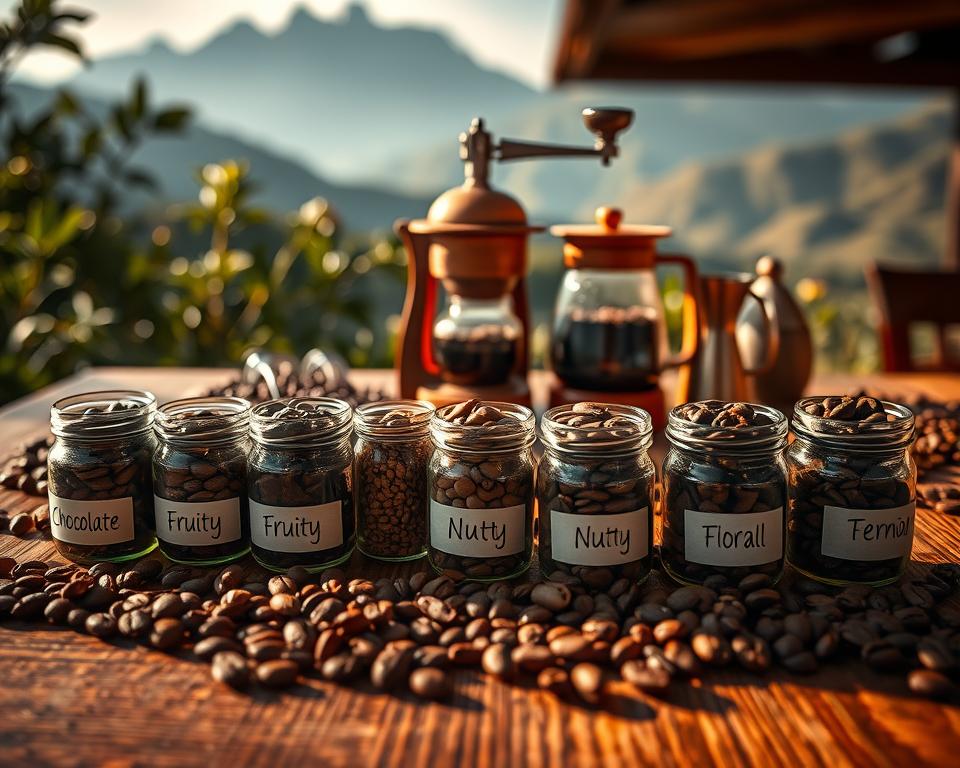
As a coffee lover, I’ve always been curious about the complex tastes of my favorite coffee. Did you know that where coffee is grown and the farm’s altitude can change its taste? This is called coffee terroir and it’s key to coffee’s flavor.
As I learned more about coffee, I found out that altitude greatly affects taste. Coffee from high places often tastes more unique than coffee from lower areas.
Key Takeaways
- Terroir and altitude significantly influence coffee flavor profiles.
- Coffee grown at high altitudes tends to have a more distinct flavor.
- Understanding terroir and altitude can enhance your coffee appreciation.
- Regional differences play a critical role in shaping coffee flavors.
- Exploring different coffee flavor profiles can be a rewarding experience.
What is Coffee Terroir?
Coffee terroir is the mix of environmental factors that shape coffee beans’ flavor. It makes each region’s coffee special. Knowing about terroir helps us enjoy the different tastes of coffee from around the world.
The idea of terroir started in wine but now applies to coffee too. It includes soil, climate, altitude, and how coffee is processed. All these things affect the coffee’s taste.
Defining Terroir in Coffee Cultivation
Terroir in coffee means the special environment where it’s grown. This includes the soil, rainfall, temperature, and altitude. Each factor impacts the coffee’s flavor.
Coffee from volcanic soil tastes stronger than that from less fertile areas. Coffee grown high up matures slower, leading to a more complex taste.
The Role of Soil in Flavor Development
Soil is key in terroir and affects coffee’s taste. Different soils give coffee unique qualities. For example, clay-rich soils make coffee taste heavier, while sandy soils make it lighter.
| Soil Type | Flavor Profile |
|---|---|
| Clay-rich | Heavier body, richer flavor |
| Sandy | Lighter body, brighter acidity |
| Volcanic | Robust flavor, distinct mineral notes |
Understanding soil’s role in coffee flavor is important. It helps both producers and coffee lovers. By knowing how soil affects coffee, we can appreciate the unique tastes from different places.
The Impact of Altitude on Coffee
Exploring coffee, I learned that altitude is key in shaping coffee flavors. The height where coffee grows changes how it tastes. This is because altitude affects how coffee grows and tastes.
How Elevation Affects Growing Conditions
Coffee grown high up matures slower because it’s cooler. This slower growth makes the coffee taste more complex. High-altitude coffees are known for their greater acidity and deeper flavors.
At higher altitudes, there’s less humidity and fewer diseases. This makes coffee plants healthier. Farmers at high altitudes use special ways to grow coffee to get the best taste and quality.
Flavor Profiles Linked to Different Altitudes
Coffees from different heights taste different. High-altitude coffees, above 1,500 meters, have bright acidity and complex tastes. They might taste like citrus or have floral notes.
Coffees from lower altitudes are sweeter and more balanced. They might taste like chocolate or caramel. The taste differences come from the growing conditions and the coffee types used at different heights.
Knowing how altitude affects coffee taste helps coffee lovers enjoy their drinks more. Whether it’s the sharp acidity of high-altitude coffee or the rich taste of lower-altitude coffee, elevation is very important in coffee.
Key Coffee Regions and Their Terroirs
Coffee terroir shapes the flavors we love, from Latin America’s highlands to Africa’s savannas and Asia’s jungles. Exploring these areas helps us see how terroir affects our coffee.
Exploring Latin American Coffees
Latin America is famous for its coffee, with Colombia, Brazil, and Costa Rica leading. Their coffees are known for balanced flavors and medium bodies, thanks to the terroir. For example, Colombian coffee is sweet with citrus notes, while Brazilian coffee tastes nutty with a smooth finish.
Different climates and soils in Latin America create a variety of flavors. Costa Rica’s high altitudes and volcanic soil make coffees bright and fruity. Coffee expert George Howell says, “Costa Rican coffees are clear and complex, unlike anywhere else.”
The Unique Characteristics of African Coffees
African coffees, like those from Ethiopia and Kenya, stand out for their unique tastes. Ethiopian coffees have floral and fruity notes with bergamot and citrus hints. Kenyan coffees are known for their blackcurrant flavor and bright acidity. These tastes come from the region’s terroir, including altitude, soil, and climate.
“African coffees are like a symphony of flavors, with each note and nuance telling a story of the land and the people who cultivate it.”
Coffee Grown in Asia: A Flavorful Journey
Asian coffees, mainly from Indonesia and Vietnam, have different flavors than those from Latin America and Africa. Indonesian coffees, like Sumatra’s, have earthy and herbal notes with a heavy body and low acidity. Vietnamese coffees are rich and full-bodied, with chocolate notes.
Asia’s unique terroir, with its volcanic soil and tropical climate, shapes these flavors. As the coffee world grows, knowing about terroir will become more important for both producers and consumers.
The Science Behind Coffee Flavor
Exploring coffee’s chemistry reveals a delicate mix of its parts. Its taste is influenced by many chemical compounds. These are shaped by the coffee’s environment and how it’s processed.
Understanding the Chemical Compounds in Coffee
Coffee is made up of over 1,000 chemical compounds. These compounds add to its taste and smell. Key ones include:
- Acids: Such as citric, malic, and quinic acid, which make coffee bright and fruity.
- Sugars: Like sucrose, fructose, and glucose, which sweeten and thicken the coffee during roasting.
- Volatile compounds: Including aldehydes, ketones, and esters, which give coffee its aroma.
These compounds mix in complex ways, creating each coffee’s unique taste. As Peter Giuliano, Chief Coffee Officer at the Specialty Coffee Association, says, “Coffee’s flavor is a mix of these compounds.”

How Processing Methods Interact with Terroir
How coffee is processed greatly affects its taste, working with the terroir to create unique flavors. The main methods are:
- Washed processing: Removes the skin and pulp, giving a clean, bright taste.
- Natural processing: Keeps the cherry intact, making the coffee fruitier and sweeter.
- Honey processing: A mix that keeps some pulp, blending the best of washed and natural methods.
Processing methods and terroir work together in different ways. For instance, Kenya’s bright coffees are often washed to highlight their acidity.
“The way coffee is processed can either accentuate or mute the inherent qualities of the terroir,” says
.
My Personal Coffee Experiences at Different Altitudes
I love coffee and have tried many types. I’ve explored high-altitude coffee and its special flavors. I’ve visited many places where coffee is grown at different heights.
Tasting Notes from High-Altitude Coffees
Trying high-altitude coffees shows me unique tastes. Coffees from high places often have:
- A brighter acidity
- A more complex flavor profile
- Notes of citrus and floral hints
One of my top picks is from DrinkTrade. It highlights the special qualities of coffee from high elevations.
Comparing Low and High Altitude Brews
Comparing low-altitude and high-altitude brews shows big differences. Low-altitude coffees are:
- Sweeter
- Less acidic
- More balanced
On the other hand, high-altitude coffees are more complex. This shows how elevation impacts coffee flavor.
Exploring coffees from various altitudes has deepened my coffee knowledge. It’s made me appreciate the skill in coffee making. It’s also inspired me to keep exploring coffee.
How to Brew Coffee for Optimal Flavor
To enjoy coffee’s unique flavors, mastering the brewing process is key. The brewing method can either enhance or hide the flavors from the coffee’s terroir and altitude. As a coffee lover, I’ve found that the right brewing technique can make a big difference.
Choosing the Right Grind Size
The grind size of our coffee beans is vital for the flavor of the brewed coffee. A grind that’s too fine can make the coffee taste bitter. On the other hand, a grind that’s too coarse can make it taste weak. Finding the optimal grind size is essential for the right flavor balance.
For example, a French press needs a coarse grind for the right extraction. Pour-over or drip coffee makers prefer a medium to fine grind. Trying different grind sizes can help find the perfect match for your brewing method.
Brewing Methods that Highlight Terroir
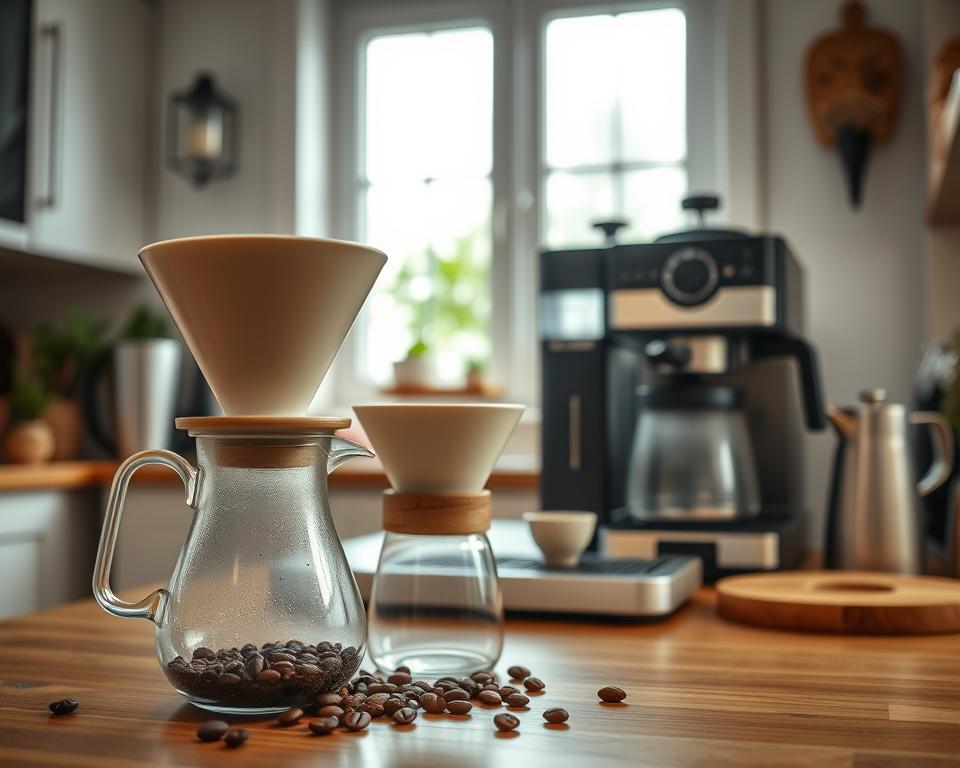
Various brewing methods can emphasize different aspects of the coffee’s terroir. Pour-over brewing offers a clean extraction that highlights the coffee’s acidity and fruit notes. French press brewing, with its steeping of coarse grounds, extracts more oils and sediments, creating a richer coffee.
Aeropress and cold brew brewing also showcase coffee terroir in unique ways. Aeropress brewing produces a smooth, full-bodied coffee that enhances the flavor profile. Cold brew, with its long steeping, results in a sweeter, less acidic coffee.
By exploring different brewing methods and grind sizes, we can fully appreciate the coffee’s terroir and altitude. This way, we can unlock the coffee’s full flavor.
The Best Coffee Shops to Experience Terroir
Exploring coffee terroir is an exciting adventure. You can do this by visiting specialty coffee shops. As a coffee lover, I’ve found many shops that highlight coffee’s unique terroir. Here, we’ll look at top local spots and specialty shops with elevation-specific blends.
Local Favorites for Freshly Brewed Coffee
Local coffee shops are great for tasting coffee terroir. They get their beans from local roasters who know the region’s flavors well. For example, Intelligentsia Coffee in Chicago offers high-quality, direct-trade beans that show off different terroirs.
“The best coffee is not just about the beans, it’s about the people and the place.” –
Other local favorites include:
- Blue Bottle Coffee in California, known for its careful brewing and top-notch beans.
- Stumptown Coffee Roasters in Oregon, famous for its unique flavors and direct trade commitment.
Specialty Shops With Elevation-specific Blends
Specialty coffee shops offer blends from specific elevations. This shows the unique tastes from different growing heights. For instance, La Colombe Coffee has an Elevation Series. It features coffees from high-altitude farms in Ethiopia to lower-altitude farms in Brazil.
| Coffee Shop | Location | Notable Blend |
|---|---|---|
| La Colombe Coffee | Philadelphia, PA | Elevation Series |
| Cafe Imports | Minneapolis, MN | Single-Origin Coffees |
| Counter Culture Coffee | Durham, NC | Terroir Blend |
Visiting these shops lets you taste the wide range of coffee terroir. As I keep exploring coffee, I’m looking forward to finding more local and specialty shops that highlight coffee’s unique qualities.
Supporting Sustainable Coffee Cultivation
As a coffee lover, I think it’s key to support sustainable coffee farming. The way coffee is grown and processed impacts the environment and its taste.
Efficient farming practices and sustainable cultivation methods keep our ecosystems healthy. By picking sustainable coffee, we back farmers who value the environment and their crops’ future.
The Importance of Ethical Sourcing
Ethical sourcing means more than just fair trade. It’s about coffee made in an eco-friendly and socially responsible way. This includes shade-grown coffee, which keeps biodiversity and cuts down on harmful chemicals.
Choosing ethically sourced coffee helps coffee farmers and their communities. It ensures the coffee industry helps the economies and environments of coffee countries.
How Terroir Influences Sustainability Practices
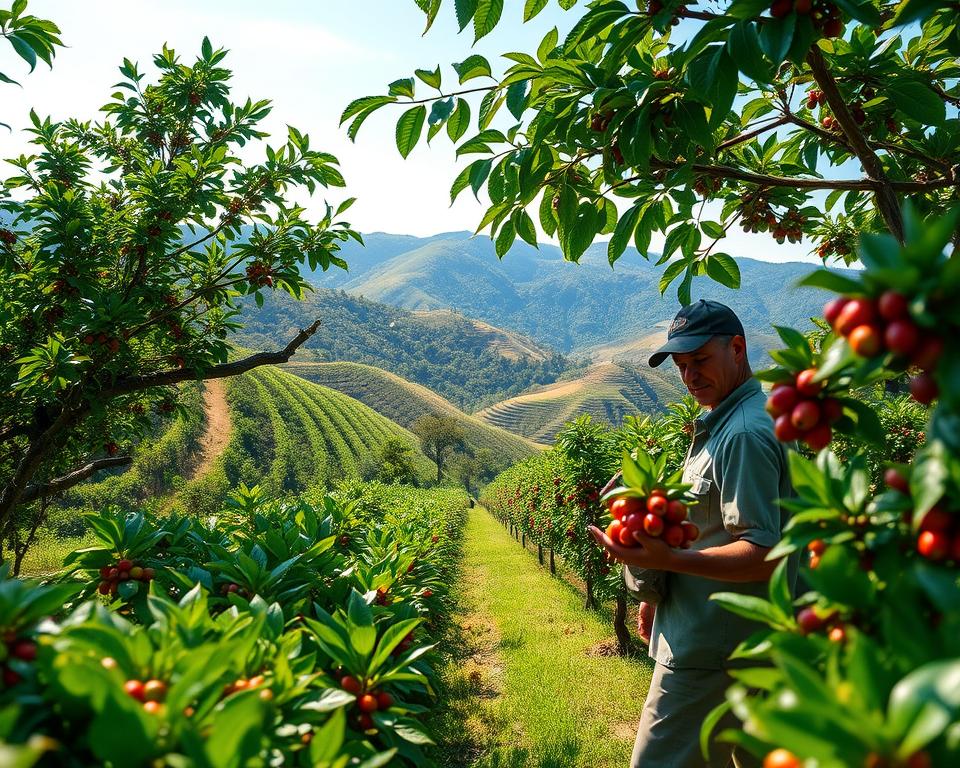
The terroir of a coffee region affects its sustainability. Areas with unique or fragile ecosystems need special care. For example, high-altitude or sensitive biodiversity areas might need more eco-friendly farming.
Knowing about different coffee regions’ terroir shows the effort in sustainable coffee. It also shows the need to support local communities and conservation.
By choosing our coffee wisely, we support sustainable coffee farming. We also get to enjoy the unique flavors that come from this approach.
Exploring Coffee Certifications and Quality Labels
Exploring coffee certifications opens a world that affects our daily coffee’s taste and quality. As a coffee lover, knowing about these certifications helps me choose better coffee.
Coffee certifications and quality labels are key to ensuring coffee’s authenticity and quality. They are more than just marketing tricks. They show a dedication to quality and sustainability.
Understanding Specialty Coffee Certifications
Specialty coffee certifications, like those from the Specialty Coffee Association (SCA), are highly valued. These certifications are given for meeting strict standards. These include flavor, sustainability, and how the coffee is processed.
To get SCA certification, coffee makers must follow strict rules. They need to score well on cupping tests. These tests check the coffee’s taste, smell, and overall quality.
“The SCA certification is a benchmark for specialty coffee, ensuring that consumers get the highest quality coffee possible.” –
The Role of Ratings in Tasting and Selection
Ratings are key in choosing and tasting coffee. The SCA’s cupping protocol is a standard way to judge coffee quality.
These ratings give insights into the coffee’s taste, acidity, and body. They help me pick coffees that match my taste. This way, I can enjoy specialty coffee more.
For example, a coffee rated 85 or higher by the SCA is top-notch. It shows quality and unique flavors. This rating helps me find special and high-quality coffees.
By learning about coffee certifications and ratings, I can improve my coffee experience. I can appreciate the skill that goes into making great coffee.
My Favorite Coffee Brands Focusing on Terroir and Altitude
I’ve explored many coffee brands that focus on terroir and altitude. These brands have made my coffee experience better. They’ve also helped me understand how different places can change coffee flavors.
The link between terroir, altitude, and coffee flavor is complex. Terroir includes the soil, climate, and environment where coffee grows. It greatly affects coffee’s taste. Altitude also matters, as it changes the temperature, oxygen, and sunlight coffee plants get. This affects the flavor too.
Highlighting Brands Committed to Quality
Several coffee brands have impressed me with their quality focus and terroir and altitude emphasis. Blue Bottle Coffee stands out for its careful sourcing and roasting. It brings out the unique flavors of each coffee’s terroir.
Intelligentsia Coffee is another brand that shines. It focuses on direct trade and gets high-quality beans from around the world. Every cup shows their dedication to quality, with complex and nuanced flavors.
Personal Recommendations for Unique Flavors
If you want to try unique coffee flavors, I suggest Gesha coffees from Finca El Injerto in Guatemala. These coffees have floral and citrus notes. This is because they’re grown at high altitudes.
For something different, try Kona coffee from Mountain Thunder Coffee Plantation in Hawaii. Grown on Mauna Loa and Hualalai volcanoes, these coffees have a smooth flavor. They taste like chocolate and nuts, thanks to the volcanic soil and climate.
| Coffee Brand | Terroir/Altitude | Flavor Profile |
|---|---|---|
| Blue Bottle Coffee | Various terroirs | Complex, nuanced |
| Intelligentsia Coffee | High-altitude regions | Floral, citrus notes |
| Finca El Injerto | High-altitude Guatemala | Floral, citrus |
| Mountain Thunder Coffee Plantation | Kona, Hawaii | Smooth, chocolate, nuts |
Future Trends in Coffee Terroir and Elevation
The coffee world is about to see big changes. These changes come from climate shifts and new ways to grow and process coffee. Terroir and elevation will be key in these changes.
Shifts in Global Climate Patterns
Climate change is changing where coffee grows. It’s affecting the terroir and altitude. Farmers must adapt, which might bring new flavors and growing areas.
Advancements in Coffee Production
New methods in growing and processing coffee are coming. Precision farming and advanced processing will improve quality and sustainability. These will highlight the unique tastes of coffees from different places.
These trends mean coffee lovers will get to try more flavors. They also support eco-friendly farming. The future of coffee is bright, with many new tastes and sustainable practices to explore.