


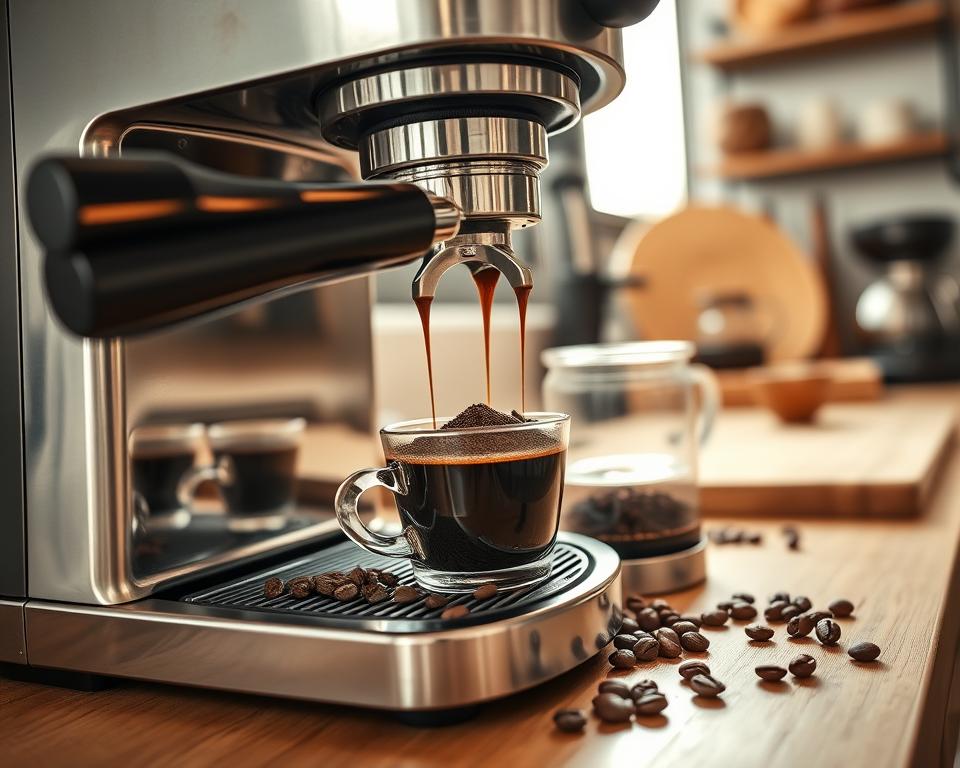
Coffee lovers know that the perfect cup is more than just the beans. It’s also about the extraction process. Did you know the ideal extraction time changes with each brewing method? For example, French press and pour-over have different times.
Getting to know extraction time is essential for the best coffee taste. We’ll dive into the science behind it. You’ll learn how to fine-tune your brewing to get that perfect cup every time.
Key Takeaways
- Understanding the basics of extraction time is key for the best coffee flavor.
- The extraction process changes a lot with different brewing methods.
- Mastering extraction time can make your coffee brewing better.
- Things like coffee bean quality and grind size affect extraction time.
- Practical tips can help you adjust your brewing for the perfect cup.
What is Extraction Time?
Extraction time is how long water flows through coffee grounds. It’s key to the taste of your coffee. The time water spends with coffee grounds greatly affects the flavor.
Definition and Importance
Extraction time is the time water stays with coffee grounds. It’s important because it decides how much flavor and oils go into your coffee. The importance of extraction time lies in its impact on the final taste; it can make or break your coffee. Finding the right extraction time is vital for a balanced flavor.
How It Affects Flavors
The extraction time affects the flavors in your coffee. If it’s too short, your coffee might taste sour. If it’s too long, it could taste bitter. Finding the optimal extraction time is key to a well-balanced flavor. Adjusting grind size, water temperature, and brewing method can help you find your perfect taste.
Key Factors Influencing Extraction
Several things affect extraction time, like grind size, water temperature, and brewing method. Here’s how they impact extraction time:
| Factor | Impact on Extraction Time |
|---|---|
| Grind Size | Finer grinds reduce extraction time, while coarser grinds increase it. |
| Water Temperature | Higher temperatures generally decrease extraction time. |
| Brewing Method | Different methods have optimal extraction times; e.g., espresso has a shorter extraction time than drip coffee. |
Knowing these factors and how they work together is key to mastering coffee brewing.
The Science Behind Extraction
Getting to know the science of extraction is key to making great coffee. It’s all about how chemical and physical processes work together. These processes shape the flavor and quality of your coffee.
Chemistry of Extraction
The chemistry of extraction shows how coffee’s compounds are pulled out at different rates. This affects the taste. Caffeine, oils, and acids are important compounds extracted during brewing. The rate at which they are extracted can change the taste, making it bitter if too much is pulled out or sour if not enough is.
Role of Temperature and Pressure
Temperature and pressure are big players in extraction. Temperature changes how coffee’s compounds dissolve, with higher temperatures speeding up extraction. But, too high a temperature can make the coffee taste bitter. Pressure, like in espresso, pushes water through the coffee, boosting the extraction of flavors and oils.
Water-to-Coffee Ratio Effects
The water-to-coffee ratio is also very important. The right ratio is key to getting the flavors just right. Too much water can pull out too little, and too little can pull out too much. Finding the perfect balance is essential for the taste you want. Trying different ratios can help you get better at extraction time optimization strategies for your brewing method.
By tweaking these factors, you can make your coffee better and more consistent. Learning about extraction time is vital for anyone serious about improving their coffee-making skills.
Types of Extraction Methods
The art of coffee extraction includes many methods, each with its own set of parameters and outcomes. Knowing these methods is key for maximizing extraction time efficiency and getting the perfect cup of coffee.
Brewing Techniques Overview
Coffee brewing techniques vary a lot. From the quick and intense extraction of espresso to the slow and cold steeping of cold brew coffee. Each method has its own unique characteristics and requirements for optimal extraction.

| Brewing Method | Extraction Time | Characteristics |
|---|---|---|
| Espresso | 20-30 seconds | High pressure, fine grind |
| Drip Coffee | 5-7 minutes | Medium grind, automated process |
| Cold Brew | 12-24 hours | Cold water, coarse grind, long steeping |
Espresso vs. Drip Coffee
Espresso and drip coffee are two extremes in brewing techniques. Espresso forces pressurized hot water through finely ground coffee, making a concentrated beverage with rich flavor. Drip coffee, on the other hand, is made by a slower drip process, resulting in a more balanced and less concentrated coffee. Understanding the extraction process breakdown for each method is key to optimizing the brewing process.
Cold Brew Basics
Cold brew coffee is made by steeping coarse-ground coffee beans in cold water for 12 to 24 hours. This method produces a smooth, low-acidity coffee that’s perfect for hot summer days. The long extraction time allows for a unique flavor profile that’s different from hot-brewed coffee.
Measurement of Extraction Time
Getting the extraction time right is key to making great coffee. It affects the taste, smell, and quality of your coffee. Knowing how to measure this time helps you tweak your brewing to get the perfect cup.
Standard Extraction Times for Different Methods
Each brewing method has its own best extraction time. Espresso needs just 20-30 seconds, while French press takes about 4 minutes. Drip brewing falls in the middle, needing 5-7 minutes.
| Brewing Method | Standard Extraction Time |
|---|---|
| Espresso | 20-30 seconds |
| French Press | 4 minutes |
| Drip Brewing | 5-7 minutes |
How to Measure Extraction Time
Measuring extraction time is easy with a timer. For manual brewing, start the timer when you begin and stop when you finish. Automated machines like drip brewers also have built-in timing, but you can watch the time too.
Tips for manual brewing: Use a digital timer for exact timing. Start it when you pour water over the coffee, and stop when you pour it into your cup.
Tools for Precision Measurement
For those serious about brewing, there are special tools. Scales with timers, coffee apps, and smart coffee makers help measure extraction time precisely.
Using these tools and knowing the standard times for your method can improve your brewing. This way, you can make consistently great coffee.
Ideal Extraction Time for Coffee
To brew the perfect cup, knowing the ideal extraction time is key. This time affects the flavor, aroma, and quality of your coffee.
General Guidelines for Brew Types
Each brewing method needs a specific extraction time for the best taste. For example, espresso needs 20-30 seconds, while drip coffee takes 4-6 minutes. Knowing these times is the first step to making your coffee just right.
| Brewing Method | Ideal Extraction Time |
|---|---|
| Espresso | 20-30 seconds |
| Drip Coffee | 4-6 minutes |
| Cold Brew | 12-24 hours |
Influence of Grind Size on Time
The size of your coffee grind also changes extraction time. A finer grind extracts faster, while a coarser one takes longer. For instance, espresso needs a very fine grind for quick extraction.
Adjusting for Personal Taste Preferences
While guidelines are helpful, your personal taste matters most. Try different extraction times to find your favorite cup.
If you like your coffee strong and bitter, try a longer extraction time. For a milder taste, go for a shorter time.
By adjusting these factors, you can perfect your coffee brewing. Enjoy your perfect cup every time.
Common Mistakes in Extraction Timing
Mastering extraction time is an art that requires avoiding common errors. It’s key for getting the perfect flavors in your coffee.
Over-Extraction vs. Under-Extraction
Two big mistakes in extraction timing are over-extraction and under-extraction. Over-extraction happens when coffee grounds stay in water too long, making it bitter. Under-extraction occurs when coffee doesn’t get enough time to release its flavors, making it weak or sour.
Here’s how to tell the difference:
- Over-extraction: Bitter, unpleasant flavors
- Under-extraction: Weak, sour, or lacking flavors
Signs of Improper Timing
Knowing the signs of improper extraction timing is key to improving your brewing. Look out for:
- A taste that’s too bitter or too sour
- A flavor that lacks depth or complexity
- A brew that’s too weak or too strong

Tips to Avoid Common Pitfalls
To master extraction time, follow these tips:
- Monitor your grind size and adjust it for your brewing method
- Use the right water temperature and quality
- Try different coffee-to-water ratios to find your perfect balance
By knowing these common mistakes and avoiding them, you can improve your brewing. This way, you’ll enjoy a perfectly balanced cup of coffee every time.
Impact of Extraction Time on Taste
Getting the most out of your coffee beans starts with the right extraction time. This time is key to unlocking the full flavor of your coffee. It affects the balance of various compounds in your coffee.
Compounds Contributing to Flavor
Coffee has over 1,000 compounds that shape its taste. The extraction time decides which of these compounds make it into your coffee. A study on the dynamics of coffee extraction shows that the right time brings out the best flavors.
Balance Between Acidity and Bitterness
Finding the right balance between acidity and bitterness is essential for great-tasting coffee. Too little extraction can make it sour, while too much can make it bitter. The perfect extraction time balances these two, creating a smooth taste.
Tasting Notes from Various Extraction Times
Extraction time greatly influences the taste of your coffee. For example, a shorter time might bring out fruity and floral notes. A longer time can reveal deeper flavors like chocolate or caramel. Trying different extraction times helps you find your favorite taste.
Understanding how extraction time impacts taste lets you improve your brewing. This way, you can enjoy a more satisfying cup of coffee.
Adjusting Extraction Time
Adjusting extraction time is key for coffee lovers wanting to improve their brew. Whether you’re experienced or new, knowing how to adjust extraction time can change your coffee’s taste.
When to Shorten or Lengthen Time
It’s important to know when to adjust extraction time. If your coffee is too bitter, it’s over-extracted and you should shorten the extraction time. If it’s too sour or weak, it’s under-extracted, so you need to lengthen the extraction time.
Start by making small changes to your brewing time and taste the difference. This helps you see how extraction time affects your coffee’s flavor.
Impact on Different Brewing Methods
Each brewing method has its own extraction time. For example, espresso needs a short time, about 20-30 seconds. French press coffee, on the other hand, takes longer, often 4 minutes.
It’s important to understand these differences. For French press, you might need to adjust the grind size and extraction time for the perfect balance.
Experimenting with Your Brew
Experimentation is key to finding your ideal extraction time. I suggest keeping a coffee journal to track your changes and flavors. This helps you spot patterns and preferences over time.
Don’t hesitate to try new things. Changing variables like grind size, water temperature, and coffee-to-water ratio, along with extraction time, can make your coffee better. The goal is to find a balance that you enjoy.
The Role of Freshness in Extraction
Freshness is key to making the perfect cup of coffee. The freshness of coffee beans greatly affects how well they are extracted. This, in turn, impacts the taste and quality of your coffee.
Importance of Freshly Roasted Beans
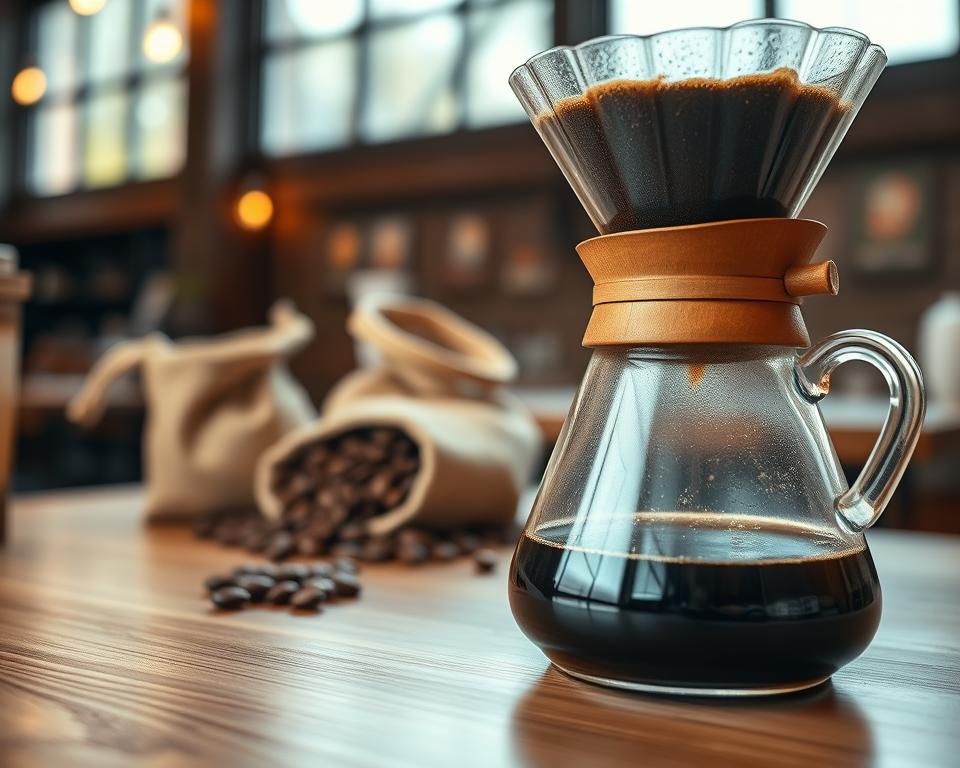
Using freshly roasted beans is vital for the best extraction. Fresh beans have more CO2, which changes how long they take to extract and their flavor. They taste more vibrant and complex, making your coffee better.
Freshly roasted coffee leads to a balanced extraction. This is because the beans haven’t lost their quality yet. It means your coffee will taste richer and more flavorful.
How Age Affects Extraction Time
The age of coffee beans changes how long they need to extract. As beans get older, they lose CO2 and become less dense. This means older beans might need more time to extract right, while fresher ones might need less.
- Fresh beans (0-7 days after roasting): May require shorter extraction times.
- Beans at optimal age (7-14 days after roasting): Typically require standard extraction times.
- Older beans (beyond 14 days after roasting): May require longer extraction times.
Best Practices for Storing Coffee
To keep coffee beans fresh, proper storage is a must. Here are some tips:
- Store coffee beans in an airtight container to keep air, moisture, and light out.
- Put the container in a cool, dark place, away from sunlight and heat.
- Don’t store coffee in the fridge or freezer, as it can pick up moisture and smells.
By knowing how important freshness is and following these storage tips, you can improve your coffee’s extraction time. This will lead to a more enjoyable cup of coffee.
Techniques for Consistent Extraction
For coffee lovers, getting the extraction right is key to a perfect cup. It’s what makes a good coffee great. Let’s explore how to get consistent extraction.
Importance of Consistency
Consistent extraction means every cup of coffee tastes the same. It’s about controlling factors like grind size, water temperature, and brewing time. Coffee expert James Hoffmann says, “Consistency is key to achieving a balanced flavor.”
“Consistency is key to achieving a balanced flavor.” – James Hoffmann
To get consistent results, precision is vital. Start by using a scale to measure coffee and water accurately.
Brew Ratios vs. Extraction Time
Brew ratio and extraction time are important but different. The brew ratio is coffee to water, and extraction time is how long you brew. A balanced brew ratio can significantly impact the optimal extraction time.
| Brew Ratio | Extraction Time | Flavor Profile |
|---|---|---|
| 1:15 | 3-4 minutes | Bright, acidic |
| 1:17 | 4-5 minutes | Balanced, nuanced |
| 1:12 | 2-3 minutes | Strong, bold |
Practices for Consistent Brewing
To brew consistently, follow some key practices. First, maintaining a consistent grind size is essential. It affects how fast the coffee extracts. Second, use water at the right temperature (195°F to 205°F) for balanced extraction.
- Use a burr grinder for consistent grind size.
- Monitor water temperature with a thermometer.
- Adjust brewing time based on the brew method.
By following these practices and understanding brew ratios and extraction time, you can make a consistently great cup of coffee.
How Environment Affects Extraction Time
Exploring coffee brewing shows that the environment greatly impacts extraction time. It’s not just about following a recipe. It’s also about how the environment around you affects the final product.
The environment plays a big role in coffee extraction. It affects the flavor, aroma, and quality of the brew. Altitude, water quality, temperature, and humidity all play a part in the extraction process.
Altitude and Water Quality Impact
Altitude changes the boiling point of water, affecting extraction time. At higher altitudes, water boils at a lower temperature. This can lead to under-extraction if not adjusted for.
Water quality is also key. The minerals and purity of the water can greatly affect coffee taste. Using filtered water helps keep extraction consistent.
| Altitude (feet) | Boiling Point (°F) | Adjustment Needed |
|---|---|---|
| 0 | 212 | None |
| 5,000 | 203 | Increase extraction time by 10% |
| 10,000 | 194 | Increase extraction time by 20% |
Temperature Variability Considerations
Temperature variability also affects extraction time. The ideal brewing temperature is between 195°F and 205°F. Deviations from this range can lead to improper extraction.
To ensure optimal extraction, monitor the brewing water’s temperature. Adjust the extraction time as needed. Using a thermometer can help keep the water at the right temperature.
Humidity’s Role in the Brewing Process
Humidity also impacts extraction, mainly in coffee bean storage and grind consistency. High humidity can make coffee beans absorb moisture, leading to inconsistent extraction.
To avoid this, store coffee beans in a cool, dry place. Grind them just before brewing for the best flavor.
By understanding and adjusting for these environmental factors, you can improve extraction time efficiency. This way, you’ll enjoy a perfectly brewed cup of coffee every time.
Conclusion: Mastering Extraction Time
Learning about extraction time is a journey. It involves understanding its basics, trying out different methods, and tweaking settings to fit your taste. By breaking down the extraction process, we can better grasp how to get the best results.
Key Takeaways
The secret to great extraction is knowing what affects it. This includes grind size, water temperature, and brewing method. By tweaking these, we can find the perfect flavor balance in our coffee.
Tips for Optimal Brewing
To get the best brew, follow some key tips. Use freshly roasted beans, adjust the grind size, and keep an eye on brewing time. These steps help us bring out the best in our coffee.
Continuing the Journey
Learning about extraction time is just the start. Coffee lovers should keep trying new techniques and settings to find their ideal cup. With time and effort, anyone can become a skilled brewer.