


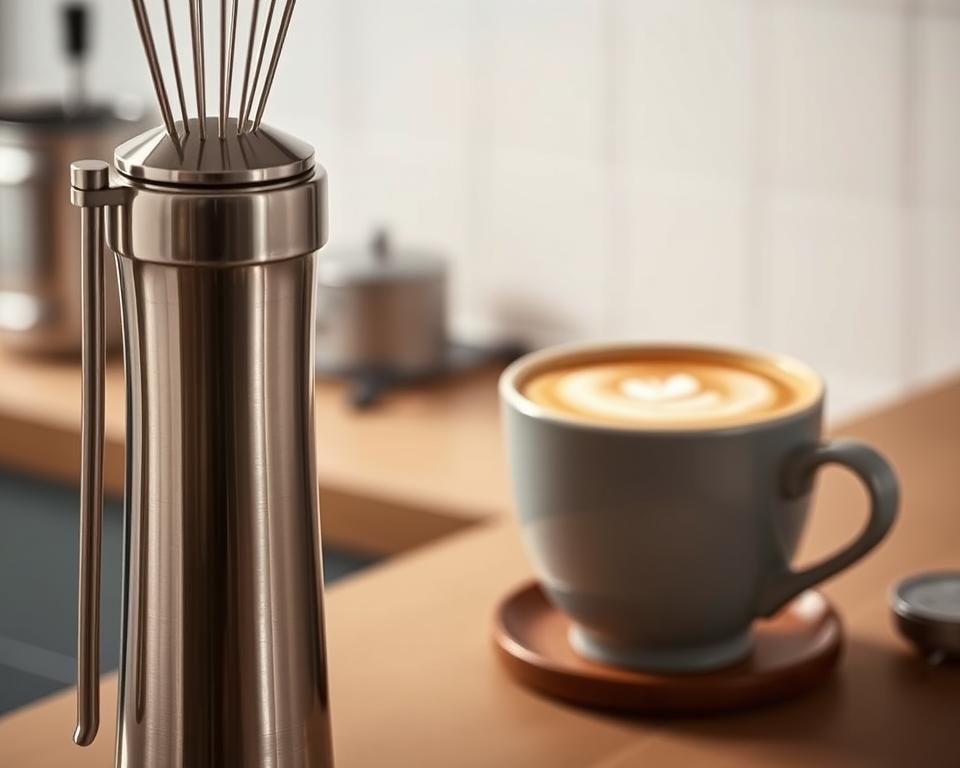
Making perfect lattes at home is now easier than ever. This is thanks to the milk frother. It lets you create that café-quality foam that makes your coffee even better.
I was amazed to find out that a milk frother does more than just make your coffee taste better. It also lets you get creative with latte art. Whether you love coffee or are just starting to try lattes, a best latte milk frother is a must-have.
Adding a milk frother to your daily routine means you can make professional-level lattes at home. It’s a simple way to wow your friends and family or just to enjoy a tasty coffee.
Key Takeaways
- Using a milk frother can elevate your latte game to a professional level.
- A best latte milk frother is a must-have for coffee enthusiasts.
- Experimenting with latte art becomes easy and fun.
- You can achieve café-quality foam at home.
- A milk frother allows for creativity and customization in your coffee.
What is a Milk Frother and Why I Love It
I’m a big fan of coffee, and I’ve found that a milk frother is key for making great lattes at home. It’s a device that froths and heats milk to the right consistency for coffee. This simple gadget has really improved my coffee-making skills.
Types of Milk Frothers
There are many types of milk frothers out there, each with its own special features. You can find manual, automatic, and electric frothers.
- Manual frothers are handheld and need you to froth the milk yourself. They’re perfect for those who like to get their hands dirty.
- Automatic frothers, by contrast, froth the milk for you, making it quicker and simpler.
- Electric frothers use electricity and often have extra features like temperature control and different frothing settings.
Benefits of Using a Milk Frother
Using a milk frother has lots of benefits, mainly for those who love making lattes at home. It lets you make professional-quality lattes easily. You can get the perfect microfoam, which is key for latte art.
It’s also great for frothing different milks. Whether you like whole milk, skim milk, or something else, a milk frother can handle it.
| Type of Frother | Ease of Use | Frothing Quality |
|---|---|---|
| Manual | Requires effort | Good |
| Automatic | Easy | Excellent |
| Electric | Very Easy | Excellent |
I personally love using an automatic milk frother because it’s so easy to use and makes amazing froth. It’s really changed my coffee-making game, letting me make stunning lattes with hardly any effort.
My Favorite Milk Frother for Lattes
I’ve tried many milk frothers and found the best one for lattes at home. My favorite is the Nespresso Aeroccino, an electric milk frother for lattes. It has changed my morning routine for the better.
Brand Features I Appreciate
The Nespresso Aeroccino is easy to use and versatile. It froths both hot and cold milk, ideal for different latte recipes. I love its simple, one-touch operation and how easy it is to clean.
Its ability to froth milk perfectly every time is a big plus. Whether I’m making a cappuccino or latte, the Aeroccino always gets it right.
How It Compares to Others
Compared to other electric milk frothers, the Nespresso Aeroccino is a standout. Brands like Breville and De’Longhi have good products too. But the Aeroccino’s performance and durability make it the best choice for latte milk frother reviews.
- Easy to use and clean
- Versatile frothing options
- Consistent results
In conclusion, if you’re looking for an electric milk frother for lattes, consider the Nespresso Aeroccino. Its quality and features make it a great addition to any coffee lover’s home.
The Best Milk for Frothing
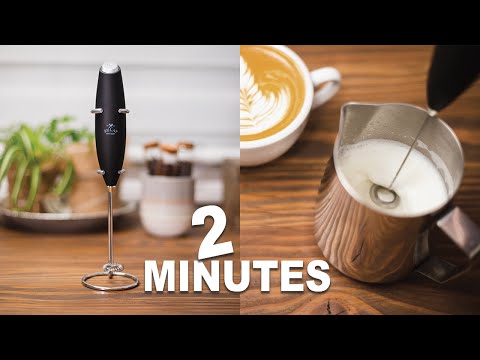
Choosing the right milk is key to making tasty lattes. Whether you use a handheld milk frother or a machine, the milk type matters a lot. It affects the texture and taste of your latte.
Whole Milk vs. Skim Milk
Whole milk and skim milk are top picks for frothing. Whole milk has more fat, making it easier to froth. It also adds a richer, creamier texture to lattes.
Skim milk, with less fat, is great for a lighter latte. Frothing whole milk creates a stable foam. Skim milk makes a lighter, more delicate froth. But, the frothing results can change based on the milk frother you use.
Alternatives: Non-Dairy Options
For those who can’t have dairy or prefer plant-based diets, non-dairy milks are good alternatives. Options like almond milk, soy milk, and oat milk work well for frothing. For example, almond milk is harder to froth because of its low fat. But, soy milk and oat milk can make a creamier froth.
When picking non-dairy milks, look for brands that say they’re “barista-friendly” or “suitable for frothing.” These are made to froth better in milk frothers.
Preparing Your Ingredients for the Perfect Latte
To make a truly exceptional latte, start with high-quality ingredients. The flavor and aroma of your latte depend on the coffee beans, milk, and any sweeteners or flavorings you add.
Choosing the Right Coffee Beans
Choosing the right coffee beans is key to a great latte. I prefer high-quality Arabica beans for their rich flavor and lower bitterness. The origin of the beans also affects the flavor, with different regions bringing unique notes.
I recommend using a medium to dark roast for a balanced latte. These roasts have a deep flavor that complements the frothed milk. Trying different roasts can help you find the perfect taste for you.
| Coffee Bean Origin | Flavor Profile | Recommended Roast |
|---|---|---|
| South America | Nutty, Chocolatey | Medium |
| Ethiopia | Fruity, Floral | Light to Medium |
| Sumatra | Earthy, Herbal | Dark |
Sweeteners and Flavorings I Use
While a well-made latte is great on its own, adding sweeteners or flavorings can make it even better. I often use vanilla syrup or a sprinkle of cinnamon to add depth. For those who like it sweeter, a bit of sugar or honey works well.
Trying different flavorings can also be fun. From caramel to hazelnut, there are endless options. You can easily find a flavor that suits your taste.
Step-by-Step Process for Frothing Milk
To get silky, smooth foam, start with the right temperature. A latte art milk frother is key for perfect foam. It’s a skill that needs practice, but with the right tips, you can get it.
First, prepare your gear and ingredients. Make sure your frother is clean and ready. I choose a top rated frother for lattes for its consistent results.
How to Get the Right Temperature
Temperature is vital when frothing milk. Aim for 140°F to 160°F. I always use a thermometer to check the temperature.
When the milk is at the right temperature, froth it. Put the pitcher under the frother and turn it on. Move the pitcher in circles to mix air and create creamy foam.
Tips for Achieving the Perfect Foam
For perfect foam, you need the right temperature, technique, and equipment. Here are some tips to help you:
- Use cold milk: Cold milk froths better than warm milk.
- Don’t over-froth: Over-frothing can make the foam too stiff or too thin.
- Experiment with different milks: Whole milk, skim milk, and non-dairy alternatives froth differently.
By following these steps and tips, you’ll be well on your way to creating beautifully frothed milk for your lattes. Remember, practice makes perfect, so don’t get discouraged if it takes a few tries to get it right.
Crafting My Latte Art Skills
With my milk frother in hand, I started exploring latte art. It’s become a key part of my coffee-making, letting me show my creativity. It adds a special touch to my lattes.
Basic Designs I Started With
I began with simple designs like hearts and leaves. These helped me learn to hold the pitcher right and control the milk flow.
- Hearts: A classic design that involves pouring milk in a circular motion to create a heart shape.
- Leaves: A simple design that requires a steady hand and a smooth flow of milk.
As I got better, I tried more complex designs like rosettas and tulips. These need more practice, but they’re worth it.
Tools I Use for Latte Art
To make beautiful latte art, I use a few key tools. My milk frother is essential, and I also use a thermometer to check the milk’s temperature.
| Tool | Purpose |
|---|---|
| Milk Frother | Froths milk to the perfect consistency for latte art |
| Thermometer | Ensures the milk is at the ideal temperature |
| Latte Art Pitcher | Allows for precise control when pouring milk |
I’m always looking for new tools and techniques to get better at latte art. With practice and patience, anyone can make stunning latte art.

Enhancing Flavor in My Lattes
My electric milk frother has turned making lattes into an art. It froths and heats milk perfectly. This lets me try out many flavors and ingredients.
I love adding syrups and extracts to my lattes. Vanilla and hazelnut are always in my pantry. Caramel and peppermint syrups add a special touch for each season.
Using Syrups and Extracts
When using syrups and extracts, start with a little and adjust. I add a single pump or a few drops first. Then, I add more until it’s just right.
Almond, coconut, and mint extracts are my favorites. They make my lattes taste amazing. I also try pumpkin spice and gingerbread syrups for seasonal flavors.
Seasonal Flavor Ideas
My electric milk frother lets me make seasonal lattes. In fall, I make pumpkin spice lattes with whipped cream and cinnamon. In winter, I prefer peppermint mochas with chocolate syrup and crushed candy canes.
As the seasons change, I try new flavors and ingredients.
“The possibilities are endless when it comes to creating unique latte flavors,”
says a fellow coffee lover. I couldn’t agree more. I’m always excited to try new combinations.
Adding syrups, extracts, and seasonal ingredients to my lattes has improved my coffee game. Whether you’re a coffee expert or just starting, I encourage you to be creative and try different flavors.
Common Mistakes to Avoid When Frothing Milk
Making tasty lattes with a handheld milk frother is simpler when you know what to avoid. Frothing milk can be tricky, but knowing the common mistakes can help a lot.
As I keep working on making perfect lattes, I’ve found that avoiding certain mistakes is key. I’ll talk about two big errors to watch out for: overheating the milk and not cleaning the frother well.
Overheating the Milk
One big mistake is overheating the milk. When milk gets too hot, it can scald, ruining its taste and texture. It’s important to keep an eye on the temperature. The milk should be heated to about 140°F to 150°F (60°C to 65°C) for the best froth.
Tips for avoiding overheating:
- Use a thermometer to check the temperature.
- Heat the milk slowly, stirring often.
- Take the milk off the heat as soon as it’s at the right temperature.
Not Cleaning the Frother Properly
Another big mistake is not cleaning the frother well after each use. Milk residue can dry and block the frother, hurting its performance and life. Cleaning it regularly keeps your frother working well and gives you consistent results.
Best practices for cleaning your frother:
- Rinse the frother with warm water right after using it.
- Use a mild detergent and soft brush to clean off any leftover milk.
- Make sure to dry the frother well to stop water spots and bacteria.
By avoiding these common mistakes, you can get better at frothing milk. This way, you can enjoy delicious lattes made with your handheld milk frother for lattes.
Cleaning and Maintaining Your Milk Frother
Keeping your milk frother clean is essential for making tasty lattes. I’ll share my cleaning routine. Regular cleaning extends your milk frother machine for lattes life and improves latte taste. Here, I’ll explain daily and deep cleaning steps.
Daily Maintenance Tips
Daily upkeep is easy and fast. I rinse the frothing pitcher with warm water after each use. This stops bacteria and keeps the frother working well.
- Wipe the outside with a damp cloth to avoid splatter marks.
- Always clean the steam wand after each use.
- Make sure all parts are dry before putting them back together to avoid water spots.
Deep Cleaning Procedures
Deep cleaning your milk frother machine for lattes is key to remove buildup. I do this weekly.
- Make a mix of equal parts water and white vinegar in the pitcher.
- Froth the mix to clean the frother’s inside parts.
- Rinse well with warm water to get rid of vinegar taste.
For deeper cleaning, you might need to take apart some parts. Check your frother’s manual for how to do this. Regular deep cleaning keeps your frother working great.
Troubleshooting Frothing Issues
Frothing milk can be tricky, but with the right techniques, you can solve common problems. Whether you use a manual or automatic frother, knowing the issues and solutions is key. This will help you get the perfect froth for your lattes.
Fixing Common Frothing Problems
Several issues can happen when frothing milk, like poor froth quality, temperature control problems, and frother malfunctions. Here are some tips to troubleshoot these problems:
- Poor Froth Quality: Check the milk type. Some milks, like skim milk, froth better than others. Adjust the frothing time or temperature if needed.
- Inadequate Temperature Control: Make sure your frother is at the right temperature. Most have a setting; if not, check the temperature manually.
- Frother Malfunction: Clean your frother regularly to avoid malfunctions. Follow your user manual for cleaning tips.
For more detailed tips on avoiding common frothing mistakes, check out Whole Latte Love’s guide on the topic.
When to Replace Your Frother
If you’ve tried troubleshooting and issues persist, it might be time for a new frother. Signs include:
- Consistent failure to froth well, even with proper maintenance and technique.
- Visible wear and tear on parts, like whisks or heating elements.
- The frother is old and no longer works well.
Getting a high-quality latte art milk frother or best latte milk frother can greatly improve your frothing. Look for models with good reviews and features that fit your needs.
Making Lattes Beyond the Basics
My journey with latte-making has taken me beyond the basics. I’m excited to share my discoveries with you. With a top-rated frother for lattes, the possibilities are endless. I’m always looking for new ways to experiment and innovate.
Exploring latte-making, I found flavored lattes add excitement to my day. For example, I make a caramel latte by adding caramel syrup to frothy milk. You can find great tips on milk frothing for beginners on Whole Latte Love’s website.
Flavored Lattes I Enjoy
My favorite flavored lattes include vanilla, hazelnut, and peppermint. The electric milk frother for lattes creates a silky smooth texture. This texture complements the flavors perfectly. An expert notes, “The key to a great flavored latte is to balance the flavors without overpowering the coffee.”
“The art of latte-making is all about experimentation and finding the perfect balance of flavors.”
Iced Lattes for Summer Days
When it’s hot, I love making iced lattes to cool down. Frothing milk and pouring it over ice makes a refreshing drink. I add a splash of flavored syrup, like mocha or caramel, for extra flavor.
Whether you’re a seasoned latte enthusiast or just starting, I encourage you to try new flavors and techniques. Find your perfect cup.
Final Thoughts on My Milk Frother Journey
Thinking back on my milk frother adventures, I remember the fun of making the perfect latte. The right milk frother makes it easy to enjoy tasty drinks at home. I learned that a great latte comes from using a top-notch frother and the right techniques.
A Simple yet Delicious Latte Recipe
I love making lattes with a Breville milk frother. It’s a top pick based on my experience and positive reviews. I froth whole milk to a smooth microfoam, mix it with espresso, and add vanilla syrup. This makes a rich, creamy latte that wows everyone.
Getting Started with Your Own Milk Frother
Starting with a milk frother is easy. With a bit of practice, you’ll make lattes like a pro. Try different methods, flavors, and find the best frother for you. Whether you’re a coffee lover or new to it, making lattes is exciting and rewarding.