


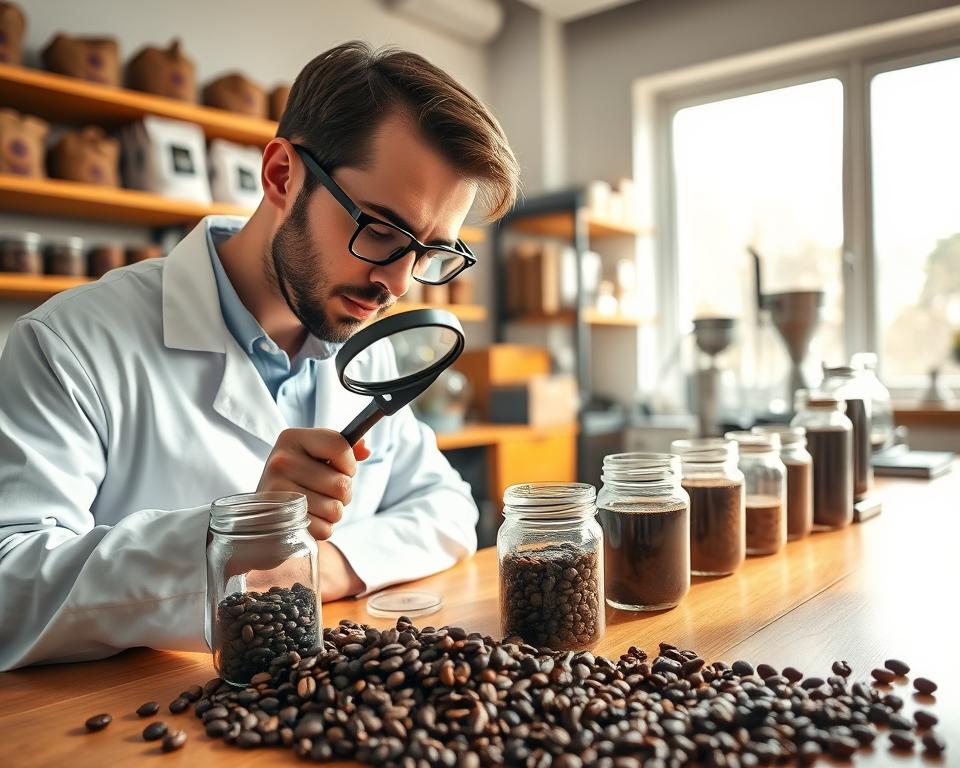
As a coffee enthusiast, I’ve learned that one bad bean can spoil a whole batch. In fact, up to 10% of the world’s coffee is flawed, causing big losses for everyone involved.
Knowing how to spot these flaws helps you enjoy specialty coffee more. It’s key to improving your coffee experience. Understanding defects is essential for anyone wanting to enhance their coffee.
Key Takeaways
- Defects can significantly alter the taste and aroma of coffee.
- Recognizing defects is key to enjoying specialty coffee.
- Knowing about coffee quality control helps you make better choices.
- Coffee defects lead to big losses for producers and consumers.
- Learning to identify defects can make your coffee experience better.
Understanding Coffee Quality and Defects
To truly appreciate coffee, one must understand what makes it good or bad. Coffee quality is complex, including flavor, aroma, and acidity. Knowing these elements helps identify top-quality coffee and spot defects.
What Makes Coffee Great?
Coffee cupping is a method to evaluate coffee’s quality and flavor. It looks at the coffee’s aroma, flavor, acidity, and body. This process shows what makes coffee great and spots any defects.
During coffee cupping, the coffee is steamed to release CO2. Then, it’s tasted to assess its flavor. This is key to determining coffee quality and spotting defects.
| Coffee Attribute | Description | Importance |
|---|---|---|
| Aroma | The scent of the coffee, which can range from floral to fruity. | High |
| Flavor | The taste of the coffee, which can include notes of chocolate, nuts, or fruit. | High |
| Acidity | The brightness or liveliness of the coffee, which can range from sharp to smooth. | Medium |
| Body | The texture or heaviness of the coffee in the mouth. | Medium |
The Importance of Quality Control
Coffee grading is key in the coffee industry. It evaluates coffee beans by size, shape, and density. Quality control ensures coffee meets standards and is free from defects.
Quality control is vital for coffee producers and roasters. It ensures their coffee is high-quality and meets consumer expectations. This involves coffee cupping and grading to spot defects and ensure proper processing and storage.
Common Types of Coffee Defects
As a coffee lover, knowing about common coffee defects can make your coffee better. These defects fall into three main categories: physical, flavor, and aroma. Each type affects your coffee in different ways.
Physical Defects in Coffee Beans
Physical defects in coffee beans come from bad processing or handling. You might find broken or damaged beans, which look bad and roast unevenly. Also, stones or sticks in the beans can harm your grinder.

Flavor Defects to Look For
Flavor defects can happen for many reasons, like improper processing, poor storage, or bad roasting. You might taste sour, bitter, or unripe flavors. For example, over-fermented coffee tastes sour, while under-roasted coffee tastes unripe or grassy.
Aroma Defects and Their Impact
Aroma defects can really change how you enjoy your coffee. Aroma is a big part of the coffee experience. Bad smells like musty or moldy can come from bad storage or too much moisture during processing. These smells can make coffee hard to drink, showing how important good handling and storage are.
In short, knowing about these common coffee defects helps you choose and brew better coffee. It makes your coffee experience better.
Impact of Coffee Defects on Flavor
Coffee tasting is an art that requires understanding how defects can influence the flavor. As a coffee enthusiast, being able to identify these defects can elevate your coffee experience.
Coffee defects can significantly alter the taste profile, making it essential to understand their impact. When coffee beans are defective, they can introduce undesirable flavors that detract from the overall quality of the coffee.
How Defects Alter Taste Profiles
Defects in coffee beans can lead to a variety of undesirable taste profiles. For instance, beans that have been damaged during processing may taste sour or unripe. On the other hand, beans that have been contaminated with foreign objects can introduce entirely new and unpleasant flavors.
To illustrate how defects can alter taste profiles, consider the following table:
| Defect Type | Taste Profile Impact |
|---|---|
| Physical Damage | Sour or unripe taste |
| Contamination | Unpleasant or foreign flavors |
| Over-roasting | Bitterness |
As shown in the table, different types of defects can significantly alter the taste profile of coffee. By understanding these defects, you can better identify them during coffee tasting.
“The art of coffee tasting is not just about detecting defects, but also about appreciating the nuances that make coffee great.”
The Role of Aroma in Coffee Experience
The aroma of coffee plays a significant role in the overall coffee experience. Aroma can greatly influence how we perceive the flavor of coffee. Defects can affect the aroma, leading to an unbalanced or unpleasant coffee experience.
For example, coffee beans that have been improperly stored may lose their aroma or develop off-flavors. This can result in a coffee that tastes stale or unappealing.
By understanding the impact of defects on both flavor and aroma, you can enhance your coffee tasting skills. This knowledge will allow you to appreciate the nuances of coffee and identify defects more effectively.
Visual Inspection for Coffee Defects
Spotting coffee defects starts with a close look. As a coffee lover, I’ve found that checking coffee beans visually is key. This means looking at green beans and the roast color for any issues.
Spotting Visual Flaws in Green Beans
Green coffee beans are essential for a great cup. When checking green beans, watch for discoloration, insect damage, or broken beans. These problems can ruin the coffee’s taste and smell. For example, discolored beans might mean the coffee got wet or wasn’t stored right.
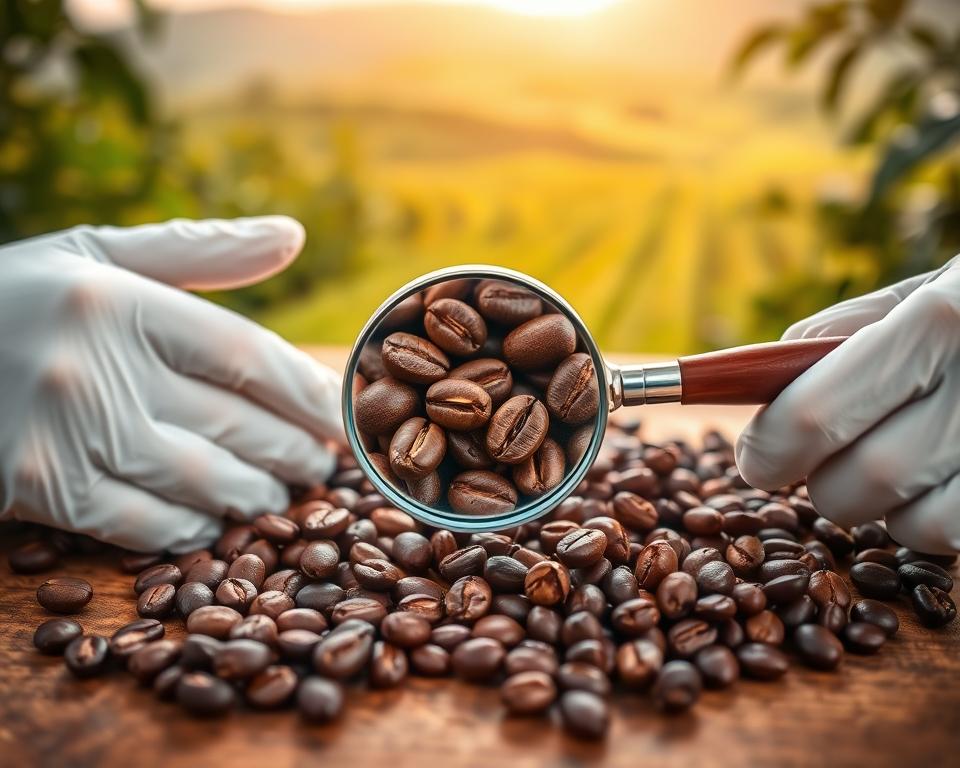
To check green beans well, spread them out and look closely under bright light. This helps spot any flaws that aren’t obvious. It’s also smart to check if all beans are the same size and color. If not, it could mean the quality isn’t good.
Identifying Defects Through Roast Color
The roast color of coffee beans is very important. Uneven roasting can make the coffee taste bad, with some beans too dark and others too light. Look for beans that are all the same color. Beans that look different might have a problem.
The roast color also tells you about the coffee’s origin and how it was made. For example, a very dark roast might hide bad flavors. By looking at the roast color and comparing it to what’s expected, you can judge the coffee’s quality better.
Recognizing Flavor Defects in Tasting
To truly appreciate coffee, you need to know about common flavor defects. These defects can change how coffee tastes, making it less enjoyable. It’s important to understand these defects for coffee quality control.
Common Flavor Defects Explained
There are several common flavor defects in coffee tasting. These include:
- Fermented flavor, which can happen if coffee cherries are over-ripened.
- Musty or earthy flavors, often caused by bad processing or storage.
- Bitter or over-roasted flavors, from roasting too much.
Coffee experts say, “Knowing these defects is key to high-quality coffee.”
“Coffee tasting is a sensory evaluation that requires a trained palate to detect subtle flavor notes and defects.”
| Flavor Defect | Cause | Impact on Taste |
|---|---|---|
| Fermented | Over-ripening | Fruity, sour taste |
| Musty | Poor processing/storage | Earthy, moldy taste |
| Bitter/Over-roasted | Excessive roasting | Unpleasant bitterness |
How to Taste and Identify Defects
Tasting coffee is more than just drinking it. It’s about a systematic approach to find flavor defects. Here’s how to do it:
- First, notice the aroma, as it can suggest flavor defects.
- Then, taste the coffee, focusing on its acidity, body, and flavor.
- Lastly, check the aftertaste, as lingering flavors can show defects.
By following these steps and training your palate, you can spot flavor defects in coffee. This skill is vital for anyone in coffee quality control.
The Role of Brewing in Identifying Defects
Coffee brewing techniques are key in showing or hiding coffee defects. The brewing method can make these defects more noticeable or less obvious. This is why it’s so important in checking the quality of coffee.
Brewing Techniques That Highlight Defects
Some brewing methods are better at showing coffee defects than others. For example, pour-over or French press methods can reveal defects. This is because they use immersion and extraction, which bring out more flavors.
But, drip brewing might hide some defects. This is because it uses automated processes and paper filters. These can soak up some of the coffee’s natural oils and flavors.
Best Practices for Brewing Defect-Free Coffee
To make coffee without defects, start with top-quality beans. A guide on coffee defects says choosing well-processed and stored beans is key.
- Use the right water temperature: between 195°F and 205°F.
- Use the appropriate coffee-to-water ratio: typically around 1:15 to 1:17.
- Monitor the brewing time to avoid over-extraction.
By sticking to these best practices and choosing the right brewing method, coffee lovers can greatly reduce the chance of tasting defects.
Importance of Proper Storage
Keeping coffee beans fresh is all about the right storage. It’s key to keep the flavor and aroma just right. This way, every cup of coffee is a delight for coffee lovers.
How Storage Conditions Affect Coffee Quality
Coffee beans are very sensitive to their surroundings. Things like temperature, humidity, and light can really affect their quality. These factors are important for keeping the beans fresh.
- Temperature: Coffee needs a cool, steady spot to stay fresh. Too hot can ruin the taste and smell.
- Humidity: Coffee hates moisture. Too much can make it stale or taste bad.
- Light: Sunlight can harm coffee beans, making them lose their oils and flavor.
To keep coffee at its best, store it in a cool, dark place. Use containers that keep air out. This helps keep the coffee fresh by blocking moisture and other bad stuff.
Signs of Coffee Defects Due to Poor Storage
Bad storage can cause many problems with coffee. Here are a few:
- Stale or Sour Taste: Air, moisture, or heat can make coffee taste bad.
- Mold or Mildew: Too much moisture can grow mold or mildew, which is unhealthy.
- Loss of Aroma: Bad storage can also make coffee lose its smell, making it less enjoyable.
Knowing how storage affects coffee quality helps keep it fresh. As someone who loves coffee, I know that storing it right is simple but very important. It makes every cup of coffee better.
“The way we store coffee can significantly impact its flavor and aroma, making storage a critical factor in the coffee experience.”
By storing coffee the right way, anyone can make a great cup of coffee. It’s all about paying attention to the details.
Advanced Techniques for Identifying Defects
Spotting coffee defects needs a mix of old and new methods. The specialty coffee world is growing fast. This means we need better ways to check quality.
Sensory Evaluation Methods
Checking coffee quality is all about taste, smell, and feel. Professional coffee tasters follow a set way to taste coffee. They look at its sharpness, feel, and taste.
“The art of cupping is not just about tasting coffee; it’s about understanding its story, from the soil it’s grown in to the hands that processed it.” –
Spotting defects is a big part of this. Defects like fermented, earthy, and musty tastes can happen for many reasons. These include bad processing, storage, or roasting.
| Defect | Description | Cause |
|---|---|---|
| Fermented | Sour or overly fruity flavor | Over-ripening or improper processing |
| Earthy | Flavor reminiscent of soil or moss | Contamination during processing or storage |
| Musty | Damp, moldy flavor | Poor storage conditions |
Using Technology for Quality Control
Technology is helping us check coffee quality better. Tools like near-infrared spectroscopy (NIRS) can find defects and guess the taste.
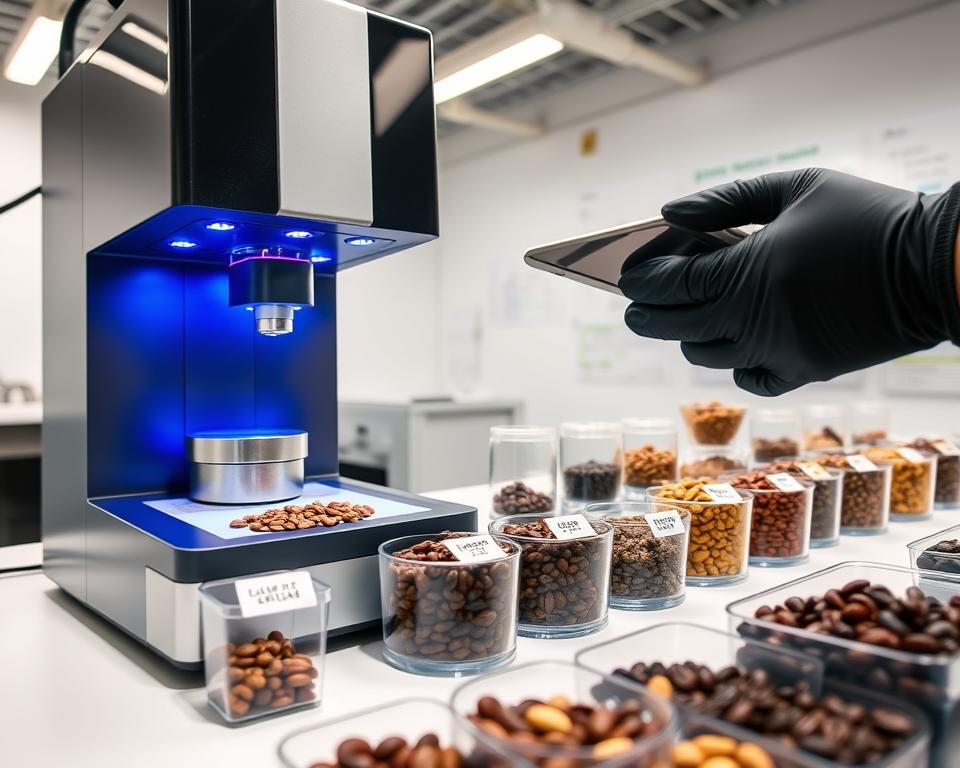
NIRS uses infrared light to check coffee beans. It shows what’s inside the beans, helping find defects that taste tests might miss.
By mixing old ways with new tech, we can make coffee better. This means a better taste for everyone who drinks it.
Training Your Palate
As a coffee lover, I think it’s key to train your palate. This lets you spot coffee defects and enjoy coffee more. It makes your coffee experience better.
To get good at tasting coffee, start with the basics. Learn about coffee tasting and coffee cupping. Steps to Develop a Discerning Palate include practicing and trying different coffees.
Steps to Develop a Discerning Palate
- Start with high-quality coffee samples to understand the flavor profiles.
- Practice coffee cupping regularly to develop your sensory skills.
- Take notes on the flavors, acidity, and body of the coffee.
For better coffee tasting skills, there are many Resources for Coffee Tasting Training out there. Online courses and workshops offer great insights into coffee.
Resources for Coffee Tasting Training
Recommended resources include online forums, coffee tasting apps, and professional training programs. These help you improve your palate and spot coffee defects better.
By spending time on palate training, you’ll not only spot defects but also appreciate the skill in making top-notch coffee.
The Future of Defect Identification in Coffee
The future of coffee defect identification is bright. New technologies and changing tastes are leading the way. These changes will make coffee even better.
Innovations in Quality Control Technology
The coffee world is seeing big steps forward in quality control. Coffee grading is getting better with AI and machine learning. These tools can spot tiny defects in coffee beans.
One big leap is near-infrared spectroscopy for checking coffee quality. It lets us analyze beans without harming them. This method quickly tells us if there are coffee roasting defects.
Trends in Consumer Awareness
People are learning more about coffee quality. They want better coffee and are willing to pay for it. This means coffee makers have to focus on quality more than ever.
There’s a big push for better quality control. Coffee producers and roasters are working hard to remove defects. They also want to make sure every cup tastes great. This is why coffee grading and better tasting methods are becoming more important.
In short, the future of coffee defect identification looks good. Technology and consumer awareness are driving quality up. We can look forward to even better coffee for everyone.
Conclusion: Enjoying Coffee Without Defects
Identifying coffee defects is key to a better coffee experience. Knowing the common defects helps improve your coffee quality. This knowledge lets you pick the best coffee.
Practical Tips for Quality Coffee
Choosing the right coffee beans is vital. Make sure they are stored well to avoid defects. The roast level and origin also affect the taste.
Home coffee roasters should invest in a good roaster. Learning different roasting techniques can reduce defects. The Specialty Coffee Association offers great tips on quality control and roasting.
Resources for Improvement
To get better at spotting coffee defects, check out coffee tasting training and quality control tech. With practice and knowledge, you’ll enjoy top-notch, defect-free coffee.