


Did you know that the flavor and aroma of your coffee are significantly enhanced by freshly grinding the beans just before brewing? The type of grinder you use can make all the difference.
Choosing between a manual and an electric grinder depends on several factors. These include your personal preferences, budget, and brewing habits. In this guide, I will walk you through the key considerations to help you make an informed decision.
Key Takeaways
- Understand the difference between manual and electric grinders.
- Learn how to choose the right grinder based on your needs.
- Discover the benefits of freshly grinding your coffee beans.
- Explore the factors that influence your grinder choice.
- Get insights into making an informed decision.
Understanding Coffee Grinding Basics
Grinding your coffee beans is key to a great cup of coffee. It affects the flavor, aroma, and quality of your coffee. We’ll explore why grinding is important and how it impacts your coffee.
Why Grind Coffee?
Grinding coffee beans releases the flavors and oils inside. Pre-ground coffee can lose its taste and smell over time. Grinding your beans fresh ensures you get the best flavor.
Freshly ground coffee is key to a more satisfying cup.
How Grinding Affects Flavor
The size and distribution of the grind greatly impact your coffee’s taste. A grind that’s too fine can make your coffee bitter. Too coarse, and it might taste weak or sour.
Getting the grind just right is essential. It ensures your coffee is neither too bitter nor too weak.
Here are some key points to consider:
- Grind size affects the rate of extraction.
- Grind distribution impacts the flavor consistency.
- The right grinder can improve the overall quality of your coffee.
Different Grind Sizes Explained
Different brewing methods need different grind sizes. For example:
| Brewing Method | Grind Size |
|---|---|
| French Press | Coarse |
| Drip Coffee | Medium |
| Espresso | Fine |
Knowing the right grind size for your brewing method is vital. Whether you use a manual or electric grinder, being able to adjust the grind size is important for quality.
Manual Coffee Grinders: An Overview
In the world of coffee, manual grinders are special. They offer a personal and engaging way to make coffee. You can control the grind size and texture yourself.
Pros of Using Manual Grinders
Manual grinders are great for a quiet and meditative experience. They let you connect deeply with the coffee-making process. This is different from electric grinders.
- Cost-effective: Manual grinders are cheaper than electric ones.
- Portable: They are small and light, perfect for travel or camping.
- Control: You have precise control over the grind size. This is key for the perfect coffee.
Coffee lovers say, “The manual grinder’s simplicity is its greatest strength. It offers a more authentic coffee experience.” For more on coffee at home, check out this article that compares manual and electric grinders.
Cons of Using Manual Grinders
Manual grinders have their downsides too. They need physical effort to grind coffee beans. This can be exhausting, mainly for large amounts of coffee.
- Time-consuming: Grinding coffee manually takes longer than electric grinders.
- Physical effort: The manual process can be tiring, mainly for large quantities.
- Limited capacity: Manual grinders can only hold a small amount of coffee compared to electric ones.
In conclusion, manual coffee grinders have unique benefits and drawbacks. Knowing these is key to deciding if a manual grinder fits your coffee needs.
Electric Coffee Grinders: An Overview
Electric coffee grinders have changed how we make coffee, making it quicker and easier. They are a favorite among coffee lovers who want to improve their brewing skills. Let’s look at the good and bad sides of electric grinders.

Advantages of Electric Grinders
Electric grinders are great because they grind coffee beans fast and well. This is perfect for those who are always in a hurry or work in a coffee shop. They can grind a lot of beans at once, which is great for families who drink a lot of coffee.
They also grind coffee evenly, which is key for a great cup of coffee. Coffee expert James Hoffmann says, “The grind size is perhaps the most critical factor in brewing coffee.” Electric grinders help you get the right grind, whether it’s fine for espresso or coarse for French press.
Disadvantages of Electric Grinders
But electric grinders have some downsides too. One big issue is they can get too hot while grinding, which can hurt the coffee beans. Too much heat can ruin the flavor and smell of the coffee, making it less enjoyable.
They can also be loud and need more care than manual grinders. The parts need cleaning often to keep the coffee tasting good. Plus, there’s the cost and the environmental effect of using electricity.
In summary, electric coffee grinders are handy and efficient but have some downsides. Knowing the pros and cons helps coffee lovers decide if an electric grinder is right for them.
Comparing Cost: Manual vs Electric
As a coffee lover, knowing the price difference between manual and electric grinders is key. The cost varies based on brand, quality, and features. This helps you make a smart choice.
Price Range of Manual Grinders
Manual grinders are loved for their simplicity and lasting quality. Prices start at $20 for basic models and can reach $100 or more for top models. For example, the Hario Mini Mill is about $30, a great value for quality.
“Manual grinders are not just affordable; they also let you control the grind size better than electric grinders,” notes a coffee expert. This control is vital for coffee brewing methods like pour-over or French press.
Price Range of Electric Grinders
Electric grinders are quick and convenient, appealing to many. Prices range from $20 for simple models to over $300 for advanced ones. For instance, the Baratza Encore electric grinder is around $140, known for its quality and ease.
When looking at costs, remember the long-term value too. Think about durability and maintenance costs. As
“The best coffee grinder is not the one that costs the most, but the one that meets your brewing needs and fits your budget.”
This view stresses the need to weigh upfront costs against overall value when picking between manual and electric grinders.
Grind Consistency: Which Is Better?
Getting the perfect grind is key for a great cup of coffee. The grind affects the flavor, aroma, and quality of the coffee. We’ll look at why grind consistency matters and how different grinders achieve it.
Importance of Grind Consistency
Grind consistency is important because it ensures even extraction during brewing. If the grind is uneven, the coffee can taste bad. A consistent grind size allows for optimal extraction, bringing out the coffee’s flavors and oils.
The grind size must match the brewing method. For example, French press needs a coarse grind, while espresso needs a fine one. The right grind consistency for your brewing method is key to achieving a perfect cup.
How Each Type Achieves Consistency
Manual and electric grinders can both achieve consistent grind sizes. Manual grinders, like those with burr mechanisms, offer control over grind size. Adjusting the burrs allows for the desired consistency.
Electric grinders, like burr grinders, also offer precise control. They often have preset settings for different brewing methods. The debate between burr grinder vs blade grinder is significant; burr grinders are preferred for their consistent grind without excessive heat.
| Grinder Type | Grind Consistency | Adjustment Ease |
|---|---|---|
| Manual Burr Grinder | High | Manual Adjustment |
| Electric Burr Grinder | High | Preset Settings |
| Blade Grinder | Variable | Difficult |
In conclusion, both manual and electric burr grinders can achieve high grind consistency. This is essential for optimal coffee brewing. The choice between them depends on personal preference, brewing method, and desired control.
Convenience Factor: Manual vs Electric
When it comes to coffee grinders, convenience is key. The debate between manual and electric grinders often centers on how easy they are to use.
Portability of Manual Grinders
Manual coffee grinders, or hand crank grinders, are super portable. They are small, light, and don’t need electricity. This makes them perfect for travel or camping.
I love grinding my coffee beans anywhere, without needing a power outlet. For example, a comparison of manual versus electric coffee shows manual grinders are great for portability and ease of use.
Speed and Ease of Electric Grinders
Electric coffee grinders are all about speed and ease. With just a button press, you can grind your beans fast. This is great for those with busy mornings or who want a quick coffee.
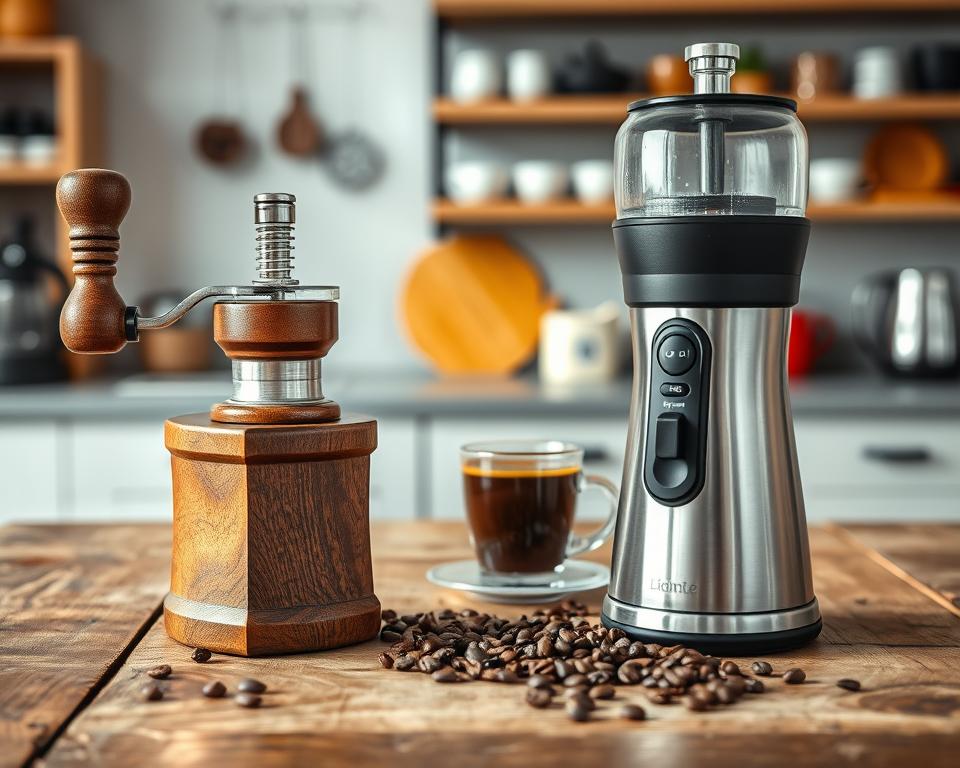
To understand the convenience of each grinder, let’s look at some key points in the table below:
| Feature | Manual Grinders | Electric Grinders |
|---|---|---|
| Portability | Highly portable, no electricity needed | Limited by cord length or battery life |
| Grinding Speed | Manual effort required, slower | Quick, with the press of a button |
| Ease of Use | Simple, but physically engaging | Effortless, minimal physical exertion |
In conclusion, whether manual or electric grinders are more convenient depends on your needs. If you like portability and a hands-on experience, manual grinders are great. But if you want speed and ease, electric grinders are better.
Noise Levels: What to Expect
The noise level of a coffee grinder can greatly affect your morning. It’s important to know the difference between manual and electric grinders. Think about how much noise you can handle.
Manual Grinder Noise Levels
Manual coffee grinders are usually quieter than electric ones. They use a manual crank, so you only hear the beans grinding and the handle turning. This can be very calming, perfect for those who enjoy grinding their coffee.
Manual grinders have some great benefits for noise:
- Minimal disturbance: They won’t wake up others in the house, great for early or late grinding.
- No motor noise: Without an electric motor, they are naturally quieter.
Electric Grinder Noise Levels
Electric coffee grinders, by contrast, can be quite loud. The noise level varies by model and brand. If you grind coffee early, think about how loud it might be.
Here are some things to keep in mind about electric grinder noise:
- Variable noise levels: Some electric grinders are quieter, so look for those if you mind the noise.
- Speed vs. noise: Faster grinders tend to be louder.
In summary, if you’re sensitive to noise, manual grinders are much quieter. But if you like the speed and ease of electric grinders, there are quieter models out there.
Maintenance and Cleaning Requirements
Keeping your coffee grinder in top shape is key to its longevity and performance. Both manual and electric grinders need regular care to make great coffee. This care ensures they keep working well.
Cleaning Manual Grinders
Manual coffee grinders are easy to clean. They have fewer parts and no electronics, so a quick brush or wipe with a dry cloth works well. For a deeper clean, take it apart and wash the parts with mild soap and water. Make sure to dry everything well to avoid moisture problems.
Tips for Cleaning Manual Grinders:
- Use a soft-bristled brush to remove coffee residue.
- Stay away from harsh chemicals that could harm the materials.
- Ensure all parts are dry after cleaning.
Cleaning Electric Grinders
Electric coffee grinders need a bit more attention when cleaning. It’s best not to soak them in water to protect the electrical parts. Instead, use a damp cloth for the outside and a small brush for the grinding chamber. Some models have parts that can be washed, but always check the manual first.
Tips for Cleaning Electric Grinders:
- Always unplug the grinder before cleaning.
- Use a damp cloth for the outside, but avoid wetting electrical parts.
- Keep the grinding chamber clean to prevent old coffee oils from affecting taste.
By following these cleaning and maintenance tips, you can make your coffee grinder last longer. This way, it will keep making delicious coffee for you.
Aesthetic Appeal: Which Suits Your Kitchen?
The design of your coffee grinder can greatly change your kitchen’s look and feel. As someone who loves a well-designed kitchen, I see the grinder’s look as key as its use.
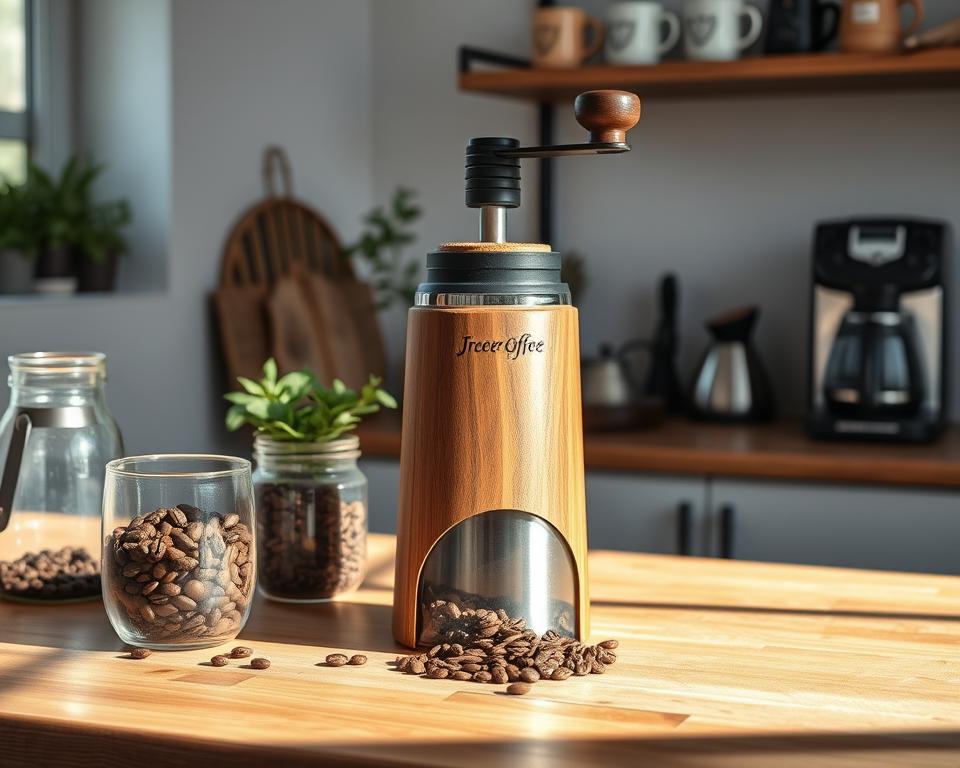
Design of Manual Grinders
Manual coffee grinders are known for their classic design. They’re made from durable materials like stainless steel, wood, or ceramic. These materials add elegance to your kitchen.
A wooden handle can give your kitchen a warm, rustic vibe. A stainless steel grinder, on the other hand, brings a sleek, modern look.
Some popular manual grinder designs include:
- Classic crank-style grinders that evoke a nostalgic feel
- Compact, portable grinders perfect for travel or small kitchens
- Grinders with adjustable grind settings, combining function and style
Design of Electric Grinders
Electric coffee grinders have a more modern and sleek design. They come in various styles, from small and simple to larger with advanced features. These grinders can be a stylish addition to your kitchen.
Some notable design features of electric grinders include:
- Touchscreen interfaces for easy operation
- LED displays that show grind settings and other information
- Sleek, compact bodies that save countertop space
When picking between a manual and electric coffee grinder, think about your kitchen’s style. Whether you like the classic look of a manual grinder or the modern vibe of an electric one, there’s a best grinder for coffee beans for you.
Ideal Usage Scenarios for Each Type
Manual and electric coffee grinders serve different needs. Knowing when to use each can help you pick the best one. It’s all about finding the right fit for your coffee routine.
Best Situations for Manual Grinders
Manual grinders are great for those who love a hands-on coffee experience. They’re perfect for:
- Camping or backpacking trips where electricity is not available.
- Small kitchens or apartments where space is limited.
- Those on a budget, as manual grinders are often less expensive than their electric counterparts.
As “coffee aficionados often praise manual grinders for their ability to provide a high degree of control over grind size”, they’re ideal for experimenting with brewing methods.
Best Situations for Electric Grinders
Electric grinders are for those who want convenience and speed. They’re best for:
- Busy households where coffee is consumed frequently.
- Those who prefer a consistent grind size without the manual effort.
- Large families or offices where multiple cups of coffee are made at once.
According to a review of electric coffee grinders,
“The ease of use and consistency provided by electric grinders make them a favorite among coffee enthusiasts who value convenience.”
Choosing between a manual and electric coffee grinder depends on your needs and preferences. Think about your coffee habits and what you value most. This way, you can pick the grinder that makes your coffee experience better.
Personal Experience: My Journey with Both Grinders
My journey with coffee grinders has been exciting. I’ve explored both manual and electric grinders. I’ve learned about their good points and not-so-good points.
Transitioning from Manual to Electric
I started with a manual grinder. I loved the control over grind size and the feel of grinding beans by hand. But, as my coffee needs grew, I needed to grind more beans faster. That’s when I thought about getting an electric grinder.
Switching to an electric grinder was a big change. It made grinding coffee much quicker and easier, perfect for making coffee for a crowd. I was amazed at how electric grinders kept the grind size consistent. This is key for a great cup of coffee.
Lessons Learned Along the Way
I’ve picked up some important lessons. Choosing between manual and electric grinders depends on your coffee habits and what you value. It’s not just about what you like better.
If you love the coffee grinding ritual and have time for it, manual grinders are great. But, if you want something quick and consistent, electric grinders are better. I’ve realized that both have their own role in coffee, depending on your needs.
In the end, using both manual and electric grinders has helped me understand coffee better. It’s made me better at choosing what’s right for me.
Making the Right Choice for You
Choosing between manual and electric coffee grinders depends on your personal taste, brewing needs, and kitchen habits. Both types have their good and bad sides.
Key Considerations
Think about grind consistency, noise level, and how easy it is to clean. If you want precise control, a burr grinder is better than a blade grinder.
Final Considerations
Understanding the differences between manual and electric grinders is key. It helps you choose the right one for your coffee needs. By considering your priorities and brewing habits, you can pick the best grinder for you.