


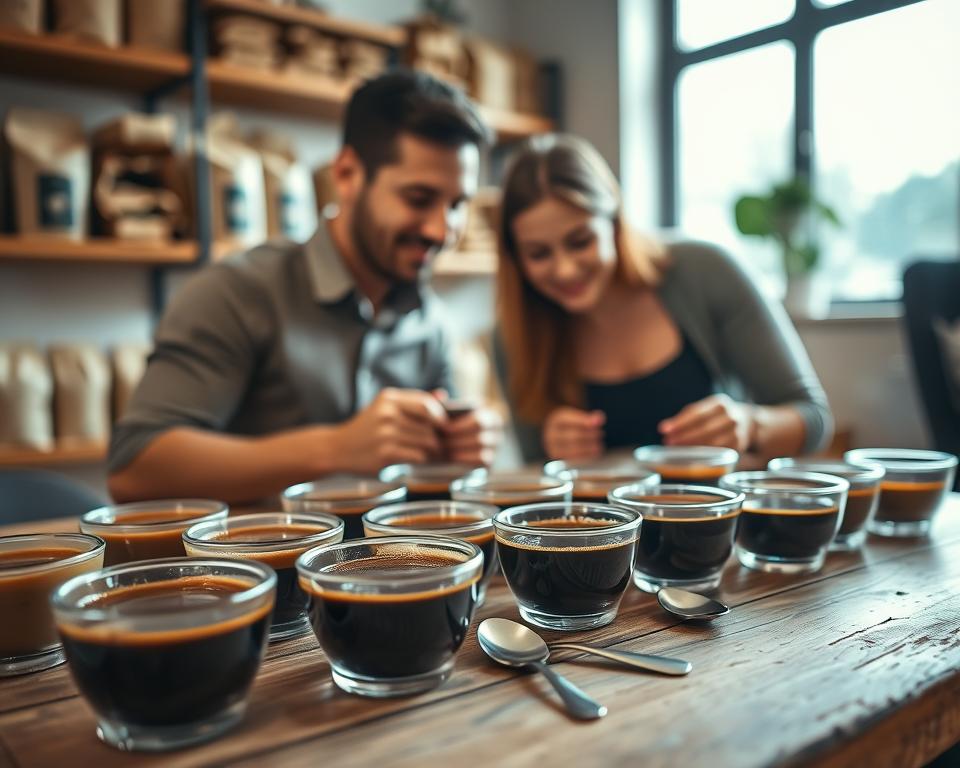
As a coffee enthusiast, I’m excited to share my journey into the world of coffee cupping. Over a billion cups are enjoyed every day. The art of coffee tasting is more than a ritual. It’s a way to experience the complex flavors and aromas of coffee.
In this beginner’s guide, I’ll teach you the basics of coffee tasting. You’ll learn to evaluate the aroma, flavor, and body of coffee. This will help you improve your tasting skills and explore the world of coffee cupping.
Key Takeaways
- Understand the process of coffee cupping and its significance.
- Learn how to evaluate the aroma, flavor, and body of coffee.
- Develop your tasting skills with practical tips and techniques.
- Discover how to refine your palate and explore the world of coffee.
- Get started with coffee cupping and enhance your coffee experience.
What is Coffee Cupping?
Coffee cupping is a way to check coffee’s quality and taste. It’s a sensory journey that lets coffee lovers dive into the flavors of coffee in a detailed way.
Understanding the Basics
Coffee cupping uses a special method to judge a coffee’s taste, acidity, and body. You need to know about the tools and methods used. This includes cupping bowls and lids, coffee grinders, scales, and thermometers, which are key for fair evaluation.
The Purpose of Cupping
The main goal of coffee cupping is to judge a coffee’s quality and features. It helps both coffee experts and fans to spot the unique flavors, acidity, and body of various coffee beans. This way, they get a full picture of the coffee’s taste.
How It Differs from Other Brewing Methods
Coffee cupping stands out because it follows a set process for fairness and accuracy. The brewing method in cupping is made to bring out the coffee’s flavors in a controlled way. This standardization is vital for a precise look at the coffee’s qualities.
Knowing the basics, purpose, and special features of coffee cupping is the first step for newcomers. Whether you’re a coffee pro or just a fan, coffee cupping is a rich experience. It makes you appreciate coffee even more.
Essential Tools for Coffee Cupping
Getting the right tools is key to mastering coffee cupping. You’ll need a few important pieces to assess coffee’s qualities.
Cupping Bowls and Lids
Cupping bowls and lids are the basics for coffee cupping. Bowls let you evaluate coffee in a controlled way. Lids keep the aromas in. Choose bowls made from non-reactive materials to avoid flavor contamination.
Coffee Grinder Options
A coffee grinder is vital for cupping. I suggest a burr grinder for consistent grinds. Blade grinders can heat up, damaging beans and flavor.
Scales and Thermometers
You’ll need a scale for precise coffee and water measurements. A thermometer is also key for the right water temperature, between 195°F and 205°F. Digital tools ensure accurate measurements and results.
With these tools, you’re ready to improve your coffee cupping skills. You’ll become a coffee connoisseur in no time.
Selecting Coffee Beans for Cupping
Choosing the right coffee beans is key to a great cupping experience. The quality of the beans affects the taste, smell, and overall feel of the coffee.
The Importance of Freshness
Freshness is vital for coffee beans. Beans that are freshly roasted taste and smell better than older ones. I aim to pick beans roasted within a few days to a week before tasting.
Here are some tips for ensuring freshness:
- Check the roast date on the packaging.
- Purchase beans from roasters who provide transparent information about their roasting schedule.
- Store beans in an airtight container to preserve freshness.
Sourcing Quality Beans
Finding high-quality coffee beans is essential for a great cupping experience. I buy beans from reputable specialty coffee roasters who get their beans from famous coffee-producing areas.
When looking for quality beans, consider:
- Understanding the origin of the beans.
- Looking for beans that have been processed with care.
- Reading reviews and tasting notes from other coffee enthusiasts.
Exploring Different Coffee Varieties
Coffee cupping is a chance to try many coffee varieties. From Ethiopian Yirgacheffe to Colombian Gesha, each has its own taste and traits.
Trying different varieties helps you learn about coffee. I suggest trying various beans to find what you like best.
Preparing for a Cupping Session
To enjoy your coffee cupping, you need to prepare well. This means following a few steps to appreciate the coffee’s details.
Setting Up Your Workspace
First, set up your workspace right. Pick a place with good air flow, away from smells of food. This helps you focus on the coffee’s aroma. Make sure your bowls, grinder, and tools are clean and ready.
- Clear your workspace of any clutter or strong odors.
- Have all your equipment within easy reach.
- Use a table or countertop that is stable and comfortable to work on.

Measuring Coffee and Water
Getting the coffee and water measurements right is key. The usual ratio is 1 gram of coffee for every 16 grams of water. But, you can tweak it to your liking. Use a precise scale for both to keep things consistent.
Key considerations:
- Use freshly roasted and ground coffee.
- Measure the coffee and water accurately.
- Adjust the ratio as needed based on your taste preferences.
The Best Water Temperature
The water’s temperature is very important. It should be between 200°F and 205°F. Water that’s too hot can burn the coffee. Water that’s too cold can make it taste weak.
By following these steps and tips, you’ll be ready for a great coffee cupping session. Remember, it takes practice to get it right. So, don’t worry if it takes a few tries.
The Cupping Process Explained
As a coffee lover, I’m thrilled to share the coffee cupping process. It’s a way to taste and understand coffee’s complexity. It’s key for coffee cupping for beginners to learn and get better.
The cupping process has several important steps. These steps help us judge coffee’s quality and taste. First, we must prepare our coffee samples right.
Grinding the Coffee
The first step is grinding the coffee to the right size. Using a coffee grinder that grinds evenly is important. This affects how the coffee tastes during cupping. For more info on grinding, check out this guide on coffee cupping.
Smelling the Grounds
Before adding water, we smell the coffee grounds. This is called “dry fragrance.” It gives us a first look at the coffee’s quality and taste.
Adding Water
After smelling, we add water. The coffee-to-water ratio and water temperature are very important. They help get the best flavor and oils from the coffee.
By following these steps, coffee cupping for beginners can learn more about coffee. They can also appreciate different coffee types more.
Tasting Techniques in Cupping
The art of coffee cupping is more than just making it. It’s about the tasting techniques that show the coffee’s true self. How you taste it can change how you see its quality and what it’s like.
The Slurp Method
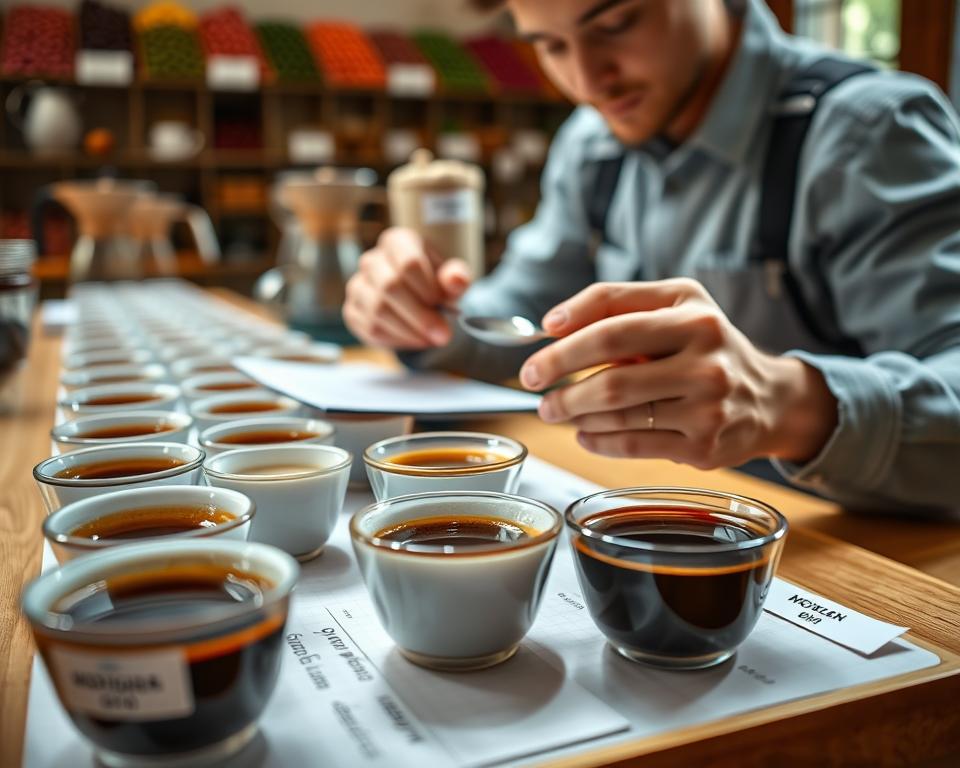
The “slurp method” is a key part of coffee cupping. It involves slurping the coffee to bring out its flavors and smells. This way, you can really get to know the coffee’s details. To slurp right, take a spoonful of coffee, then quickly breathe in through your teeth and lips. This lets the coffee spray on the back of your tongue. It might feel odd at first, but it’s essential for enjoying the coffee fully.
Evaluating Aroma and Flavor
When tasting the coffee, focus on its aroma and flavor profile. The aroma can be fruity, floral, or nutty, and more. The flavor profile is what you taste while it’s in your mouth. Look for the coffee’s acidity, body, and unique tastes. A good coffee will have all these elements working together well.
| Characteristic | Description | Example Descriptors |
|---|---|---|
| Aroma | The scent of the coffee | Fruity, floral, nutty |
| Flavor Profile | The tastes experienced while the coffee is in your mouth | Sweet, bitter, acidic |
| Acidity | The bright, snappy sensation in the coffee | High, low, balanced |
Identifying Aftertaste
Another important part is the aftertaste, or the flavors that stay after you swallow. The aftertaste can show subtle things about the coffee that aren’t obvious at first. A coffee with a nice aftertaste will stick with you, making it more memorable. Think about the aftertaste’s length and what it tastes like. Is it clean and sharp, or does it hang around with certain flavors?
By getting good at these tasting techniques, you’ll improve at coffee cupping and enjoy coffee more. Whether you’re new to it or want to get better, keep practicing and be open to coffee’s rich tastes and smells.
Recording Your Cupping Notes
Recording cupping notes is key for coffee lovers. It helps track progress, spot preferences, and learn about coffee types.
The Importance of Note-taking
Note-taking is vital for coffee tasting. It lets me systematically evaluate coffee’s aroma, taste, and aftertaste. It also helps me compare different coffees and find what makes each unique. This way, I can better understand coffee and choose what I like.
Here’s why note-taking is great:
- It improves how I evaluate coffee.
- It boosts my coffee knowledge.
- It makes comparing coffees easier.
Ideal Note Formats
Using a standard note format is important. A typical form has sections for:
- Aroma: describing the coffee’s scent before and after grinding.
- Flavor: evaluating the coffee’s taste, including its acidity, sweetness, and body.
- Aftertaste: noting the flavors that linger after swallowing.
Common Tasting Terms
Knowing common tasting terms is essential. It helps me accurately describe coffee’s qualities. Some common terms include:
| Term | Description |
|---|---|
| Fruity | Having flavors reminiscent of fruit |
| Floral | Exhibiting floral notes, such as jasmine or rose |
| Nutty | Displaying flavors similar to nuts, like almonds or hazelnuts |
Understanding these terms helps me share my observations. It also deepens my appreciation for coffee’s complexity.
How to Learn from Your Cupping Sessions
To get the most out of coffee cupping, it’s key to analyze and learn from each session. As a beginner, coffee cupping’s nuances might seem tough. But, with the right approach, it’s a journey full of learning.
Analyzing Your Findings
After a cupping session, review your notes and findings. Look for patterns or unique characteristics in the coffees you tasted. This step is vital for developing your palate and understanding different coffee beans.
You might notice a coffee’s fruity aroma or chocolatey aftertaste. Documenting these observations helps track your progress and improve your tasting skills.

Comparing Different Coffees
Comparing different coffees side by side is a key part of coffee cupping. It shows subtle differences in flavor, acidity, and body. To compare well, consider making a table to summarize your findings:
| Coffee Variety | Aroma | Flavor Profile | Aftertaste |
|---|---|---|---|
| Ethiopian Yirgacheffe | Floral, citrus | Fruity, tea-like | Clean, citrus |
| Colombian Supremo | Nutty, caramel | Balanced, chocolatey | Smooth, nutty |
Sharing Your Experience
Sharing your cupping experiences can offer new insights. Join online forums or local coffee groups to discuss with others. You can also check out The Beginner’s Guide to Cupping Coffee for tips and guidance.
By analyzing, comparing, and sharing, you’ll deepen your coffee knowledge. You’ll also join a lively coffee community.
Getting Involved in the Coffee Community
Exploring coffee cupping has led me to connect with others who love coffee as much as I do. Joining local cupping events is a great way to meet like-minded people. I learn new easy coffee cupping techniques from their experiences.
Local Cupping Events
Local cupping events let me taste different coffees and learn new methods. It’s a chance to meet coffee lovers and keep up with trends.
Online Resources
I also use online resources like coffee blogs and YouTube channels. They offer tips on techniques, equipment, and coffee industry news.
Networking with Enthuasiasts
Networking with coffee enthusiasts helps me share and learn. This exchange improves my coffee cupping skills and keeps me connected to the coffee world.