


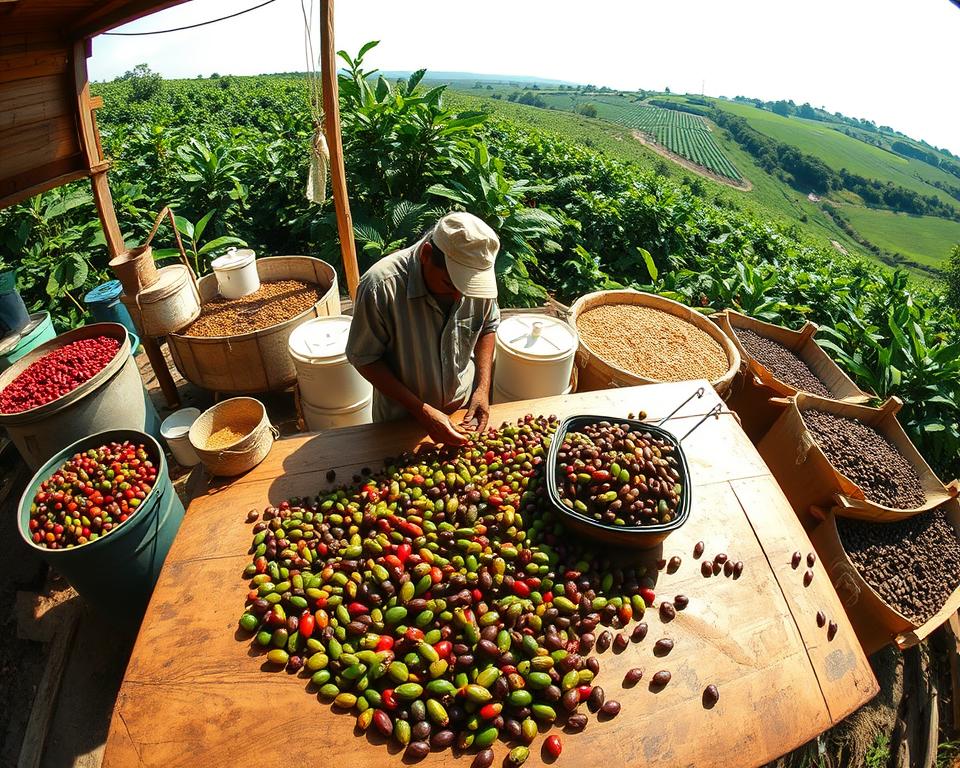
I’ve always been excited about how coffee beans go from farm to cup. Did you know the processing method can change the taste of your coffee? Different techniques can result in a wide range of taste experiences, from sweet and fruity to earthy and smoky.
Learning about coffee processing methods helps us appreciate the skill in making great coffee. In this guide, I’ll share my insights into the various processing techniques and their effects on the final product.
Key Takeaways
- Different coffee processing methods can significantly impact the flavor profile.
- Understanding processing techniques is key to appreciating high-quality coffee.
- Various methods result in a range of taste experiences.
- Coffee processing involves several stages, from harvesting to drying.
- The choice of processing method depends on factors like climate and equipment.
Understanding Coffee Processing: An Overview
To truly appreciate coffee, one must understand the various processing techniques that bring out its unique flavors. Coffee processing is a critical step that transforms coffee cherries into the beans we brew. As I explore the world of coffee processing, I will discuss its significance and the different methods used.
What is Coffee Processing?
Coffee processing refers to the methods used to extract the coffee beans from the coffee cherry. It’s a key step that affects the flavor, quality, and overall character of the coffee. The processing method can either enhance or diminish the coffee’s natural flavors, making it a vital aspect of coffee production.
As coffee processing involves several techniques, it’s essential to understand the basics. The primary goal is to remove the outer skin and pulp of the coffee cherry, leaving just the inner seed, which is the coffee bean.
Importance of Coffee Processing
The importance of coffee processing cannot be overstated. It plays a significant role in determining the final flavor profile of the coffee. Different processing methods can result in a wide range of flavors, from fruity and floral to nutty and chocolatey. As a coffee enthusiast, understanding the processing method can help you choose coffee that suits your taste preferences.
“The way coffee is processed can dramatically change its flavor profile, making it a critical step in coffee production.”
Overview of Processing Methods
There are several coffee processing methods, each with its unique characteristics. The most common methods include the washed process, natural process, and honey process. The washed process involves removing the outer skin and pulp before drying, resulting in a cleaner and brighter flavor. The natural process, on the other hand, involves drying the coffee cherries intact, which enhances the fruit’s natural flavors.
- Washed Process: Known for its clean and bright flavor.
- Natural Process: Enhances the fruit’s natural flavors.
- Honey Process: A hybrid method that combines elements of both washed and natural processes.
Understanding these processing methods is key to appreciating the diverse flavors and qualities of coffee. As we explore further, we’ll dive into the specifics of each method and their impact on the final product.
The Cherry Harvesting Process
The journey to a perfect cup of coffee starts with the cherry harvesting process. This step is key to the coffee’s quality. As a coffee lover, I’ve learned the art and science of picking the right cherries.
Selecting the Right Cherries
Choosing the right cherries is essential for quality coffee. We look for cherries that are ripe and have the perfect mix of sweetness and acidity. The FAO says the ripeness of cherries greatly affects the coffee’s taste. Cherries that are not ripe or too ripe can ruin the taste.

Hand-Picking vs. Mechanical Harvesting
There are two main ways to harvest coffee cherries: hand-picking and mechanical harvesting. Hand-picking means picking cherries by hand, which is more precise. It ensures only the ripest cherries are picked. Mechanical harvesting uses machines to pick cherries, but it can mix ripe and unripe cherries.
The choice between these methods depends on the farm’s resources and the coffee type. Specialty coffee farms often choose hand-picking for its precision. Larger farms might use mechanical harvesting for its speed.
Interestingly, the harvesting method can also affect the dry processing method. Dry processing, or natural processing, dries the cherries in their fruit. This can be influenced by how the cherries are harvested and sorted.
Dry Processing: A Traditional Method
Dry processing, also known as natural processing, is an old method in coffee making. It dries coffee cherries in their fruit, giving a special taste.
What is Dry Processing?
Dry processing is a simple and affordable way to make coffee. It starts with sorting and cleaning the cherries. Then, they are dried in the sun or with machines.
The cherries are dried on concrete or brick patios, or on raised beds. This helps them dry evenly. It’s important to turn them often to avoid spoilage and ensure even drying.
Pros and Cons of Dry Processing
Dry processing is good because it’s cheaper and uses less water. But, it has downsides like being weather-dependent and needing more labor for sorting and turning.
Key Benefits:
- Lower operational costs
- Less water usage
- Distinct flavor profiles
Key Drawbacks:
- Weather dependency
- Higher labor costs for sorting and turning
- Risk of over or under-drying
Flavor Profiles from Dry Processed Beans
Dry processed beans taste fruity and sweet. The drying process lets the beans soak up more of the cherry’s sugars and flavors.
Some common flavors in dry processed coffee include:
- Fruity and floral notes
- Sweet and honey-like flavors
- Hints of spice and wine
In conclusion, dry processing is a traditional method that gives coffee a unique taste. It has its advantages and disadvantages, but it’s loved by many coffee lovers and producers.
Wet Processing: A Popular Choice
The wet processing method, also known as washed processing, is favored for its role in improving the flavor profile of coffee beans. This technique involves removing the outer skin and pulp of the coffee cherry before drying. This significantly impacts the final taste.
How Wet Processing Works
Wet processing begins with the pulping of fresh coffee cherries, typically within 24 hours of harvesting. The pulp is removed, leaving the inner seeds. These seeds are then fermented in water tanks.
This fermentation process breaks down the mucilage, a sticky substance covering the beans. It is critical for developing the coffee’s flavor profile.
After fermentation, the beans are washed to remove any remaining pulp and mucilage. This results in a cleaner, brighter flavor. The beans are then dried to a moisture level of around 11%, either by machine or sun-dried on patios or raised beds.
Key Steps in Wet Processing:
- Pulping: Removing the outer skin of the coffee cherry.
- Fermentation: Breaking down the mucilage in water tanks.
- Washing: Removing the mucilage and pulp residue.
- Drying: Reducing the moisture content to 11%.
Advantages of Wet Processing
One of the primary advantages of wet processing is its ability to produce coffee with a cleaner and more nuanced flavor profile. The removal of the pulp and mucilage before drying reduces the risk of over-fermentation and spoilage. This leads to a higher quality coffee.
“Wet processing allows for a more precise control over the fermentation process, which is critical in developing the desired flavor characteristics in coffee.” – Coffee Expert
Wet processing also allows for a more consistent product. The washing step removes defective or unripe beans, which enhances the overall quality.
Flavor Profiles from Wet Processed Beans
Coffee beans processed using the wet method typically exhibit brighter acidity and a cleaner, more pronounced flavor profile. The flavor notes can range from floral and fruity to wine-like. This depends on factors like the coffee variety, region, and specific processing techniques.
| Flavor Characteristics | Description |
|---|---|
| Brightness | Higher acidity, giving a vibrant taste. |
| Fruity Notes | Flavors reminiscent of citrus, berries, or tropical fruits. |
| Floral Notes | Hints of jasmine, rose, or other floral hints. |
Wet-hulling, a variation of wet processing used in some regions, involves removing the parchment layer from the beans before drying. This further influences the flavor profile.
Honey Processing: A Unique Technique
As a coffee lover, I’ve learned to love honey processing. It brings out complex flavors in coffee beans. This method, also known as pulped natural, is getting more attention for its unique coffee production approach.
What is Honey Processing?
Honey processing is a mix between wet and dry coffee processing. It removes the coffee cherry’s outer skin but keeps the mucilage. Then, the beans are dried. This slow drying time helps develop the coffee’s flavor.
How it Differs from Other Methods
Unlike dry processing, honey processing doesn’t dry the whole cherry. This reduces the chance of over-fermentation. It also keeps more natural sweetness, thanks to the mucilage during drying. This makes the coffee balanced and complex.
According to coffee expert,
“Honey processing offers a middle ground between the brightness of wet-processed coffees and the body of dry-processed coffees.”
Flavor Profiles from Honey Processed Beans
Honey-processed beans taste like honey, caramel, and fruit. Roasting them can make these flavors richer and smoother. Here’s how different processing methods compare in flavor:
| Processing Method | Flavor Profile |
|---|---|
| Dry Processing | Earthy, fruity, and sometimes wild |
| Wet Processing | Bright acidity, cleaner, and more floral |
| Honey Processing | Balanced, with notes of honey, caramel, and fruit |
In conclusion, honey processing is special. It gives coffee a unique taste that’s both complex and balanced. Its blend of wet and dry processing makes it a great choice for those wanting to try something new.
Experimental Processing Techniques
The world of coffee processing is changing fast. New techniques like anaerobic fermentation are leading the way. These methods create unique flavors that coffee lovers everywhere are excited about.
Overview of New Approaches
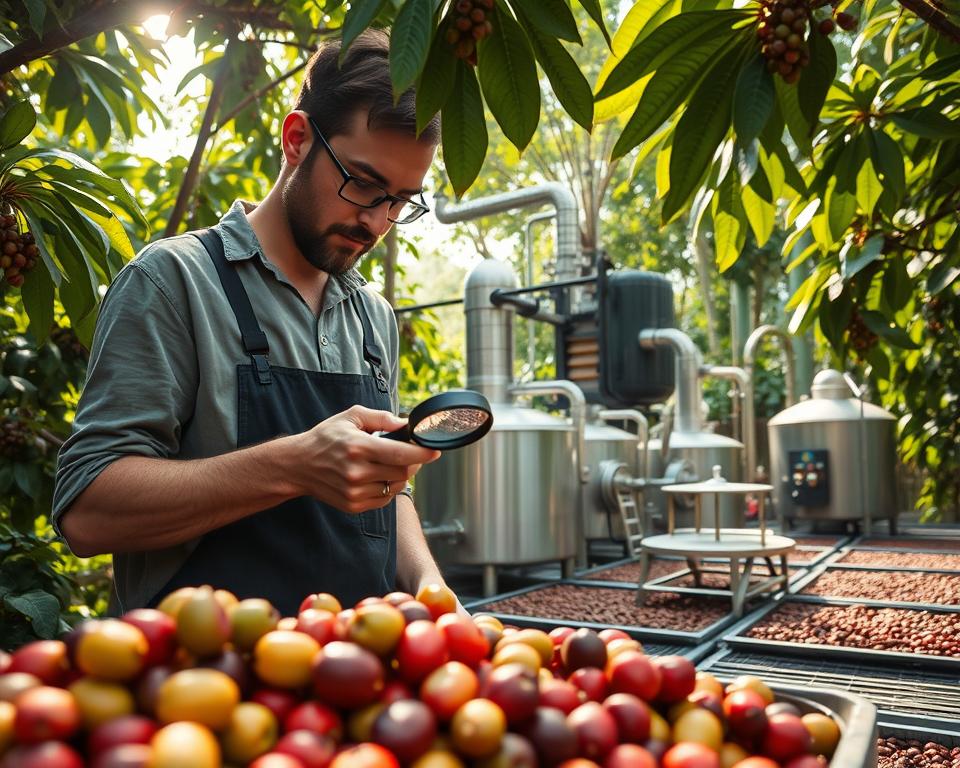
Experimental processing breaks away from old ways to find new tastes and smells. Anaerobic fermentation is one such method. It ferments coffee cherries in low oxygen, making the coffee sweeter and more complex.
The semi-washed process is another new technique. It mixes wet and dry processing. This creates a coffee that’s both bright and full-bodied.
Fermentation and Its Role
Fermentation is key in coffee making. It breaks down the mucilage and shapes the coffee’s taste and smell. Anaerobic fermentation is special because it brings out unique flavors.
The length and conditions of fermentation greatly affect the coffee. Producers are trying different times and environments to get the perfect taste.
Notable Innovations in Processing
The coffee world is seeing big changes in how coffee is made. Some of these include:
- Advanced fermentation techniques
- Use of different processing containers
- Experimentation with various fermentation times
| Processing Technique | Flavor Profile | Characteristics |
|---|---|---|
| Anaerobic Fermentation | Fruity, Floral | Enhanced sweetness, complex flavor |
| Semi-Washed Process | Balanced, Bright | Combines the benefits of washed and natural processing |
Regional Differences in Coffee Processing
Exploring coffee processing, I see that each region has its own way. The way coffee is processed greatly affects its taste and quality.
Climate, geography, and local traditions shape these differences. Knowing these helps us enjoy the wide variety of coffee flavors worldwide.
Coffee Processing in Latin America
Latin America is famous for its high-quality coffee. The processing methods used here are key to this quality. Countries like Colombia and Brazil mix wet and dry methods, depending on the coffee type.
In Colombia, the wet method is common. It removes the coffee cherry’s skin and pulp before drying. This method creates a clean, bright taste.
Coffee Processing in Africa
Africa is known for its unique coffee flavors. The processing methods here are a big reason why. In Ethiopia, for example, coffee is dried in its fruit using the dry method.
This method gives Ethiopian coffee its fruity and floral taste. Kenya and other African countries mix wet and dry methods to create different flavors.
Coffee Processing in Asia
Asia is a big coffee producer, with its own processing traditions. In Indonesia, the wet hulling method is used. It removes the coffee cherry’s skin and pulp before drying.
This method creates a distinct taste, with earth and musk notes. Vietnam and other Asian countries also use both wet and dry methods to make various flavors.
In summary, the way coffee is processed varies by region. This variation greatly influences coffee’s taste and quality. Understanding these differences helps us appreciate the wide range of coffee flavors available.
The Impact of Processing on Coffee Quality
It’s key to know how coffee processing affects quality. The way beans are processed changes their taste and smell.
Flavor Impact
The taste of coffee changes with processing. For example, the washed process brings out clean, bright flavors. On the other hand, natural processing adds fruitier, sweeter notes.
- Washed processing: Cleaner, brighter flavors
- Natural processing: Fruitier, sweeter notes
- Honey processing: Balanced acidity and sweetness
Each method can bring out or hide certain tastes. Trying different ways can help makers find their perfect flavor.
The Relationship Between Processing and Aroma
The smell of coffee also changes with processing. Aroma can be floral, fruity, or spicy.
- Washed coffees often have a more pronounced floral or tea-like aroma.
- Naturally processed coffees tend to have fruitier aromas.
- Honey processed coffees can exhibit a balanced aroma with notes of fruit and floral hints.
Processing can make some smells stronger or weaker. This affects the coffee’s overall scent.

In summary, how coffee is processed greatly affects its quality. It changes both taste and smell. Knowing this helps coffee lovers appreciate the effort that goes into making great coffee.
Sustainability in Coffee Processing
I’ve seen how sustainable coffee processing helps the environment and local communities. The coffee industry is growing fast. It needs to use eco-friendly and socially responsible methods more.
Processing coffee affects the environment a lot. It uses a lot of water and creates waste. So, using eco-friendly practices is key to reducing harm.
Eco-Friendly Practices
Eco-friendly coffee processing means using methods that are kind to the planet. This includes using renewable energy sources and cutting down on water waste. For example, some farms use solar power to run their facilities.
Using recycling and composting is also important. Coffee cherry husks can be composted and turned into fertilizer. This helps the soil and reduces waste.
Social Responsibility in Processing
Social responsibility is just as vital in coffee processing. It means treating workers fairly, supporting local communities, and promoting fair trade. Fair labor practices include safe work conditions, fair pay, and respecting workers’ rights.
Many coffee producers are starting community development projects. They build schools, healthcare facilities, and support local economies. This improves life for those in coffee production and makes the industry more sustainable and fair.
By focusing on both eco-friendly practices and social responsibility, the coffee industry can have a sustainable future. As consumers, we can help by choosing to buy from producers who care about sustainability and ethics.
My Personal Coffee Processing Journey
Reflecting on my coffee journey, I’ve grown to love coffee processing methods. Exploring different techniques has opened my eyes to new flavors and smells. It’s been a thrilling adventure.
Exploring Favorite Methods
I’ve found some methods I really enjoy. Dry processing brings out fruity notes, while wet processing gives a cleaner taste. Trying out these methods has helped me find my top coffee picks.
Influencing Coffee Choices
Knowing about coffee processing changes how I choose my coffee. It lets me pick coffees that match my taste. Whether it’s honey sweetness or complex flavors, the method matters a lot to me.
Tips for Coffee Enthuasiasts
If you love coffee, try out different processing methods. Notice the techniques used in your favorite coffees. Experimenting with new methods will deepen your appreciation for coffee’s artistry and unique qualities.