


I’m excited to share my knowledge about light and dark roast coffee profiles. The world of specialty coffee is booming. It’s expected to hit $81.6 billion by 2025.
The art of coffee bean roasting is key to revealing each roast’s unique traits. Whether you’re a coffee expert or new to specialty coffee, knowing the differences can make your coffee better.
Key Takeaways
- Coffee roast profiles significantly impact flavor and aroma.
- Light roast coffee tends to be more acidic and fruity.
- Dark roast coffee is often richer and bolder.
- Specialty coffee has driven the demand for diverse roast profiles.
- Understanding roast profiles can enhance your coffee experience.
What Are Coffee Roasts, Anyways?
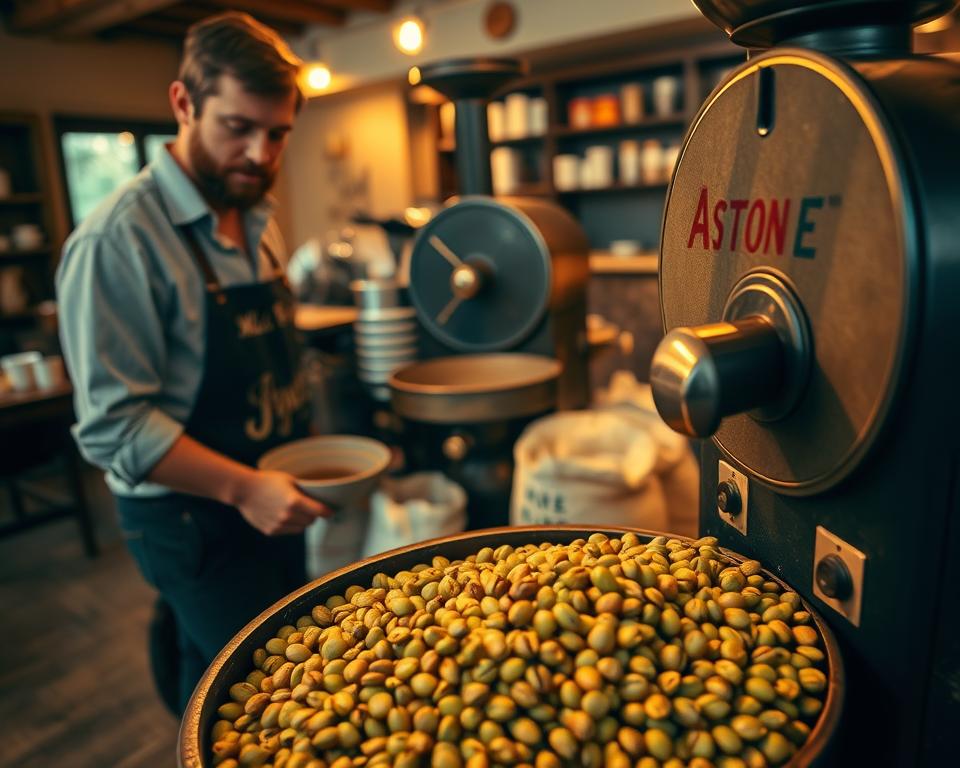
Getting into coffee roasts means learning the basics of how they’re made. Roasting coffee turns green beans into the tasty drink we love.
The Roasting Process
The roasting process heats green coffee beans to high temperatures, between 400°F to 450°F (200°C to 230°C). The time and heat used shape the coffee’s flavor profile.
The process has several stages. First, the beans dry and turn yellow. Then, as heat rises, they expand and brown, creating their unique taste and smell.
The Science Behind Roasting
The science of coffee roasting involves chemical reactions. One key reaction is the Maillard reaction. It happens when amino acids and sugars meet, creating the flavors we love in browned foods. In coffee, it enhances the flavor and aroma.
| Roast Level | Flavor Profile | Aroma Characteristics |
|---|---|---|
| Light Roast | Bright, acidic, fruity | Floral, tea-like |
| Dark Roast | Richer, bitter, chocolatey | Smoky, deep, caramel-like |
Understanding the roasting process and its science helps coffee lovers appreciate different roasts. Whether you like light or dark roasts, knowing how beans are transformed makes your coffee experience better.
The Characteristics of Light Roast
Light roast coffee keeps the coffee bean’s natural flavors. This is because it’s roasted for a shorter time. This way, more of the coffee’s original taste stays.
Flavor Notes and Acidity
Light roast coffee is known for its bright acidity and detailed flavor. You might taste floral hints or fruit notes. For example, a light roast from Ethiopia could have citrus and bergamot flavors.
To learn more about light and dark roast coffees, check out Cooper’s Coffee Co.’s ultimate guide.
Aroma and Body
The aroma of light roast coffee is delicate and tea-like. It has a lighter body than darker roasts. This makes it perfect for those who like a coffee that’s both fragrant and gentle.
Caffeine Content
Light roast coffee also has slightly more caffeine than darker roasts. This is because some caffeine is lost during the longer roasting time for darker roasts.
In summary, light roast coffee is special. It has unique flavors, acidity, aroma, body, and caffeine levels. It’s a great choice for coffee lovers who want to try something new or explore coffee’s many tastes.
The Allure of Dark Roast
As a coffee lover, I’ve always been drawn to dark roast coffee. Its bold, rich taste is a favorite among many. There’s something special about the depth of flavor it offers.

Flavor Profiles and Bitter Notes
Dark roast coffee is known for its bold flavor profiles. These are developed during a longer roasting process. This process brings out deep, rich flavors like chocolate and caramel.
The bitterness in dark roast coffee is more pronounced. But it’s balanced by sweetness, creating a complex taste experience.
The roasting time impacts the flavor greatly. It allows for a more extensive development of the coffee’s natural oils. As a result, dark roast coffee often has a smooth, velvety texture that coats the palate.
Aroma and Fullness
The aroma of dark roast coffee is another aspect that makes it appealing. The intense, smoky aroma is inviting and sets the stage for the rich flavors that follow. The full-bodied nature of dark roast coffee means it has a heavier body and a more satisfying mouthfeel compared to lighter roasts.
This fullness is not just about the texture; it’s also about the lingering flavors that remain after each sip. The combination of a robust aroma and a full-bodied taste makes dark roast coffee a favorite among those who enjoy a more intense coffee experience.
Caffeine Levels Compared
One common misconception about dark roast coffee is that it contains more caffeine than lighter roasts. But the opposite is true: dark roast coffee generally has less caffeine due to the longer roasting time, which burns off some of the caffeine. Despite this, the perception of a stronger coffee due to its bold flavors often leads people to believe it’s more caffeinated.
Understanding the caffeine levels in dark roast coffee can help coffee drinkers make informed choices based on their caffeine preferences. Whether you’re looking for a bold taste or a specific caffeine content, knowing the characteristics of dark roast coffee can enhance your coffee experience.
Choosing the Right Roast for Your Taste
Knowing what you like is key to enjoying great coffee. Whether you’re a coffee expert or new to it, picking between light and dark roasts can make a big difference.
Personal Preferences Matter
Personal taste is very important when it comes to coffee. Some like the bright, acidic taste of light roasts. Others prefer the rich, bold taste of dark roasts. It’s important to try different ones to find what you like best.
If you like fruity and floral tastes, a light roast might be for you. If you prefer chocolatey flavors, a dark roast could be better.
Understanding Flavor Palettes
Light and dark roasts have different tastes. Light roasts often have citrus, berry, and floral notes. They’re great for those who like a more complex coffee taste. Dark roasts have bold, sometimes smoky flavors. They’re perfect for those who want a stronger coffee.
As you try different roasts, pay attention to the coffee tasting notes. You might find that a certain roast brings out flavors you love. This is important in finding your favorite roast.
James Hoffmann once said, “The art of coffee is not just about the beans, it’s about the experience.” Trying different roasts and brewing methods can help you find your perfect cup. Whether you prefer the bright taste of light roasts or the deep taste of dark roasts, knowing what you like is the first step to enjoying coffee more.
“The art of coffee is not just about the beans, it’s about the experience.”
In conclusion, finding the right roast is a personal journey. By understanding your taste preferences and trying different specialty coffee options, you can find the perfect roast for you.
Brewing Methods for Light Roast
To enjoy light roast coffee fully, you need to learn the right brewing techniques. Light roast coffee is known for its complex flavors and high acidity. This makes the brewing process very important.
When brewing light roast coffee, finding the right balance is key. Too much extraction can make the coffee bitter. Too little can make it sour or weak. You want to get it just right.
Best Practices for Extraction
To get the best extraction, follow these tips:
- Use fresh, high-quality coffee beans.
- Adjust the grind size according to the brewing method.
- Monitor the water temperature; it should be between 195°F and 205°F.
- Experiment with brewing times to find the optimal duration.
Recommended Equipment
The right equipment can make a big difference. Here are some tools you might find useful for brewing light roast coffee:
| Brewing Method | Recommended Equipment | Benefits |
|---|---|---|
| Pour-over | Cone-shaped dripper (e.g., Hario V60) | Clean and nuanced flavor |
| Chemex | Chemex coffee maker | Smooth, balanced flavor |
| Aeropress | Aeropress coffee maker | Versatile and rich flavor profile |
By using these brewing methods and the right equipment, you can bring out the best in your light roast coffee. Enjoy a more satisfying coffee experience.
Brewing Methods for Dark Roast
To get the most out of dark roast coffee, you need to learn how to brew it right. Dark roast coffee is known for its bold and rich flavors. The right brewing techniques and equipment can enhance these flavors.
Brewing Techniques for Intensity
When brewing dark roast coffee, it’s key to use methods that highlight its intensity. Here are some effective methods:
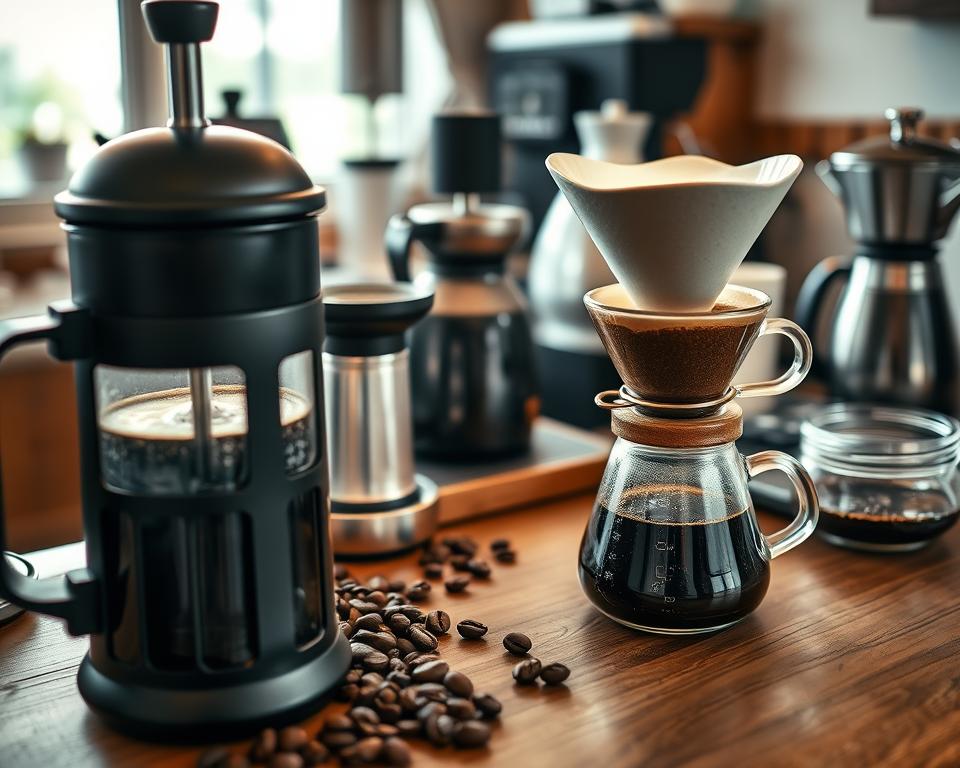
- French Press: This method lets the coffee grounds steep in hot water. It results in a full-bodied cup that shows off the dark roast’s rich flavors.
- Espresso: Dark roast coffee is a favorite for espresso. Its bold flavors can handle the high pressure and temperature of the espresso machine.
- Pour-over: This method lets you control brewing parameters closely. It’s great for customizing the flavor to your liking.
Each brewing technique offers a unique way to enjoy dark roast coffee’s depth and complexity. By trying different methods, you can find the one that suits your taste best.
Equipment I Recommend
The right equipment can greatly improve your dark roast coffee’s quality. Here are some top picks:
- French Press Coffee Maker: Opt for one with a stainless steel or glass container to keep the coffee’s flavor intact.
- Espresso Machine: Look for a machine with adjustable pressure and temperature settings. This lets you customize your espresso experience.
- Pour-over Dripper: Choose a dripper that ensures even extraction. It should be made from a material that won’t affect the coffee’s flavor, like glass or ceramic.
Investing in quality equipment ensures you can brew high-quality dark roast coffee consistently. It will meet your expectations every time.
Food Pairings for Light Roast
Light roast coffee is perfect for many food pairings. Its subtle flavors work well with both sweet and savory dishes. This makes it a versatile choice for any meal.
Perfect Matches
Some foods pair amazingly well with light roast coffee. For example, its bright acidity complements flaky croissants or lemon bars. This balance of flavors is a delight.
Here’s a simple table showing some perfect matches:
| Food | Light Roast Coffee Flavor Profile |
|---|---|
| Croissants | Bright, citrus notes |
| Lemon Bars | Tart, slightly sweet |
| Fresh Fruit Salad | Fruity, floral hints |
Unique Pairing Ideas
For those who like to try new things, light roast coffee pairs well with unique dishes. Try it with spicy Asian cuisine or herb-infused Mediterranean dishes. These pairings create exciting flavors.
- Pair light roast with smoked salmon on toast for a savory treat.
- Match it with chicken salad that includes fruits and nuts for a refreshing twist.
Exploring different pairings can lead to new favorites. It makes your light roast coffee experience even better.
Food Pairings for Dark Roast
Dark roast coffee is perfect for pairing with many dishes. It goes well with rich desserts or hearty breakfasts. Dark roast coffee can make the flavors of your food even better.
Complementary Foods
Dark roast coffee is great with foods that have strong flavors. Here are some of my top picks:
- Chocolate Desserts: The bitterness of dark roast coffee balances the sweetness of chocolate.
- Bacon and Sausages: The smoky taste of these breakfast items matches the bold, smoky notes in dark roast coffee.
- Nuts: Snacking on almonds or walnuts is enhanced by the earthy tones of dark roast coffee.
Creative Pairing Suggestions
Want to try something new? Here are some unique pairing ideas:
| Food | Dark Roast Coffee Flavor Profile |
|---|---|
| Spicy Foods | The bold flavors of dark roast coffee balance out spicy dishes. |
| Caramelized Desserts | The sweetness of caramelized desserts is boosted by dark roast coffee’s rich flavors. |
| Smoked Cheeses | The smokiness of cheeses like cheddar or gouda is matched by dark roast coffee’s smoky notes. |
When pairing dark roast coffee with food, aim for balance. The coffee’s strong flavors should enhance, not overwhelm, the dish. Trying different pairings can lead to exciting discoveries and improve your mealtime.
Health Benefits of Light vs Dark Roasts
Coffee is more than a morning pick-me-up. It has big health benefits. The roasting process changes the coffee’s nutritional profile.
The roasting process changes flavor, antioxidants, and caffeine levels. This affects how coffee impacts our health. Some roasts are better for certain health aspects than others.
Antioxidants in Coffee
Antioxidants protect cells from damage. Coffee is a big source of antioxidants. Lighter roasts might have more antioxidants than darker roasts because they lose less during roasting.
A study in the Journal of Agricultural and Food Chemistry found light roast coffee has more antioxidants. But, both light and dark roasts are rich in antioxidants. This means coffee, no matter the roast, is good for a diet full of antioxidants.
| Roast Level | Antioxidant Level | Caffeine Content |
|---|---|---|
| Light Roast | Higher | Slightly Higher |
| Dark Roast | Lower | Slightly Lower |
Caffeine Effects on Health
Caffeine is a key part of coffee. It affects health. Light and dark roasts both have caffeine, but light roasts have a bit more.
Moderate caffeine use has health benefits. It boosts alertness and physical performance. It might also lower the risk of Parkinson’s and Alzheimer’s. But too much caffeine can cause jitteriness, anxiety, and insomnia.
“Caffeine can have both positive and negative effects on health, depending on the amount consumed and individual sensitivity.”
Enjoying coffee’s caffeine benefits means drinking it in moderation. Knowing your caffeine sensitivity and drinking the right amount helps. This way, you get the good without the bad.
My Personal Preferences
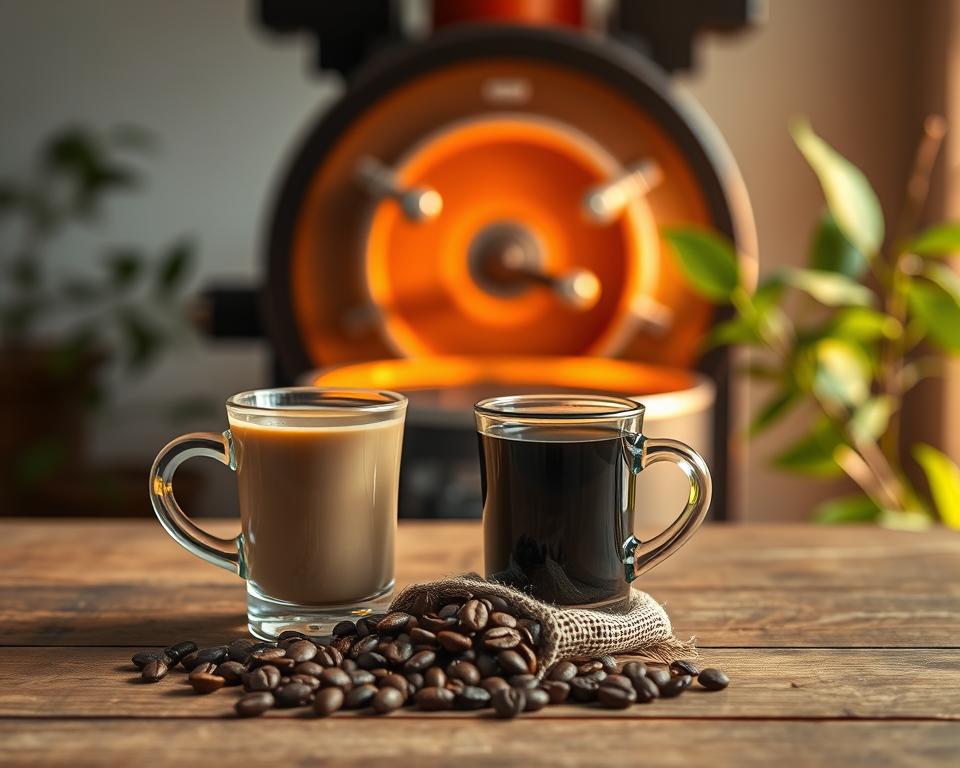
Exploring coffee roasts for years has shaped my taste. I love light roast for its bright flavors and high acidity. But, I also enjoy dark roast on certain days.
Why I Lean Towards Light Roast
I choose light roast for its lively taste and sharp acidity. It lets me enjoy the coffee’s natural flavors, which dark roasts often hide. The acidity in light roast adds depth to its flavor.
Here’s a comparison of some key characteristics of light and dark roasts in a table format:
| Coffee Roast | Flavor Profile | Acidity Level | Caffeine Content |
|---|---|---|---|
| Light Roast | Fruity, floral, and nuanced | Higher | Slightly more |
| Dark Roast | Bitter, rich, and bold | Lower | Slightly less |
Occasions for Dark Roast Enjoyment
Even though light roast is my go-to, I love dark roast too. Dark roast is great for a chilly winter morning or when I need a strong start. Its rich taste is comforting and fulfilling.
The brewing method affects how I enjoy my coffee. For example, French press is best for dark roasts, while pour-over or Chemex suits light roasts better.
In summary, I prefer light roast for its taste and acidity. But, I enjoy dark roast for its boldness and richness on special days.
Common Misconceptions About Roasts
There’s a lot of wrong information about coffee roasts out there. It’s time to correct some common myths. Many people believe things about light and dark roasts that aren’t true. Let’s look at some of these myths and set the record straight.
The Caffeine Myth
Many think darker roasts have less caffeine than lighter ones. But, the caffeine difference between light and dark roasts is small. Some caffeine is lost during roasting, but it’s not a big difference. The caffeine amount really depends on how you brew your coffee, not the roast level.
Here’s a quick look at why:
- The type of coffee bean used can affect caffeine content more than the roast level.
- Brewing methods, like espresso versus drip coffee, have a bigger impact on caffeine content.
- Lighter roasts might have a bit more caffeine per bean, but it’s not noticeable when brewed.
Flavor Experience Myths
Some think dark roasts are always more flavorful or bitter than light ones. It’s true that dark roasts have a bolder taste. But, light roasts can have a more complex and nuanced flavor. Flavor is very personal and can vary a lot.
Here are some important points about flavor:
- The flavor of coffee depends on the roast level, but also on the coffee’s origin and brewing method.
- Lighter roasts keep more of the coffee’s natural acidity and flavor notes.
- Darker roasts have a richer taste, but might hide the coffee’s unique qualities.
By knowing these myths and the real facts about coffee roasts, coffee lovers can make better choices about what they like.
Summing It Up: Which Is Right for You?
Exploring coffee roasts shows us that light and dark roasts are all about taste. They depend on how you like your coffee and the brewing method. Specialty coffee highlights the unique qualities of each roast level.
Making the Choice
Think about how you make your coffee. Different methods bring out special traits in light and dark roasts. For example, pour-over and Chemex highlight light roast flavors. French press, on the other hand, brings out dark roast’s fullness.
Final Thoughts on Roasts
Try different roasts and brewing ways to find your ideal coffee. Whether you love light roast’s bright taste or dark roast’s smoky depth, there’s a lot to explore. Understanding roast differences and trying new brewing methods can make your coffee experience even better.