


As a coffee lover, I’ve learned that great coffee can change everything. With over 100 million coffee bags sold daily, it’s clear that quality matters a lot. The SCA Specialty Coffee Score is key in judging coffee quality, shaping the specialty coffee world.
In this guide, I’ll explain the specialty coffee association score in detail. This will help you pick the best coffee for your next cup. Learning about the specialty coffee quality standard will deepen your love for top-notch coffee.
Key Takeaways
- Understanding the SCA Specialty Coffee Score can enhance your coffee experience.
- The specialty coffee association score is a measure of coffee quality.
- Knowing the specialty coffee quality standard helps in choosing high-quality coffee.
- The SCA Specialty Coffee Score plays a significant role in the specialty coffee industry.
- Evaluating coffee quality is important for coffee lovers.
What is the SCA Specialty Coffee Score?
In the world of specialty coffee, the SCA Specialty Coffee Score is key. It helps figure out coffee quality. To understand its importance, we need to know what specialty coffee is and how it’s judged.
Definition of Specialty Coffee
Specialty coffee scores 80 or higher on the SCA’s 100-point scale. This means the coffee meets high quality standards. High-quality Arabica beans, careful processing, and precise roasting are what make it special.
Specialty coffee isn’t just about the score. It’s also about the unique flavor profiles and qualities that make it stand out. The coffee’s origin, processing method, and roast level all play a part in its quality.
Importance of the Score
The SCA Specialty Coffee Score is vital. It offers a standardized method for judging coffee quality. This score helps everyone talk about coffee quality clearly. It also helps find high-quality coffee beans worth investing in.
- Provides a universal language for coffee quality
- Helps in distinguishing between high-quality and lower-quality coffees
- Influences consumer purchasing decisions
How the Score is Determined
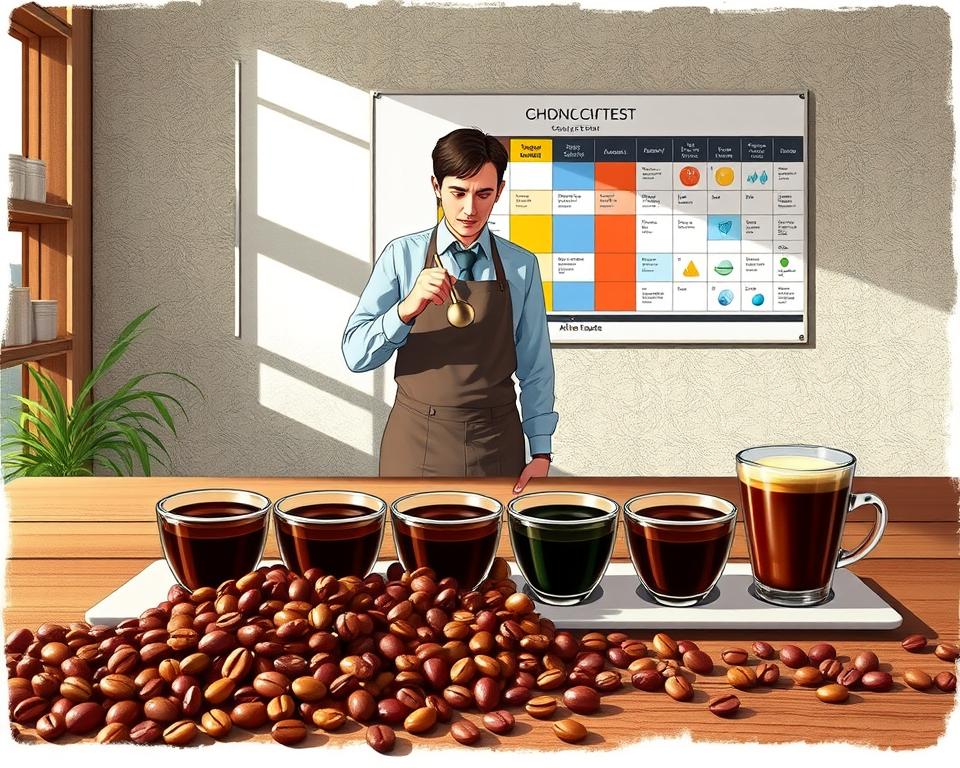
The SCA Specialty Coffee Score comes from a detailed process called coffee cupping. Experts look at the coffee’s flavor, acidity, body, and overall impression. They use a standard form to keep the evaluation consistent.
Certified cuppers taste the coffee and rate it based on several factors. The final score is a mix of these ratings, giving a complete quality assessment.
- Cuppers evaluate the coffee’s fragrance and aroma
- They assess the coffee’s flavor, acidity, and body
- The overall impression and aftertaste are also considered
The Grading Process Explained
Evaluating specialty coffee is a detailed process. It looks at many coffee attributes. This is key to getting the SCA Specialty Coffee Score, a top mark for quality coffee.
The process focuses on cupping, a method used by coffee experts. They brew the coffee to highlight its unique traits like aroma, flavor, and body. This helps them understand the coffee’s overall quality.
Evaluating Coffee via Cupping
Cupping is a sensory test that needs skill and knowledge. Coffee experts slurp the coffee to taste it fully. This way, they can judge the coffee’s qualities well.
Key aspects evaluated during cupping include:
- Fragrance and aroma
- Flavor profile
- Acidity
- Body
- Balance
- Overall impression
Key Factors Considered in Grading
The SCA Specialty Coffee Score looks at several important factors. These include flavor, acidity, body, and balance. Knowing these helps judge coffee quality.
The flavor profile is very important, as it covers the coffee’s taste. Acidity and body also affect the coffee’s quality and score.
| Factor | Description | Weightage |
|---|---|---|
| Flavor Profile | The overall taste characteristics of the coffee | 30% |
| Acidity | The coffee’s bright, snappy sensation | 20% |
| Body | The coffee’s texture and weight in the mouth | 15% |
| Balance | The harmony of the coffee’s various attributes | 20% |
| Overall Impression | The overall quality and impression of the coffee | 15% |

Knowing about the grading process and what matters helps coffee lovers appreciate specialty coffee more. It also helps them understand the SCA Specialty Coffee Score.
Components of the Specialty Coffee Score
To truly appreciate specialty coffee, it’s essential to understand the elements that make up its score. The Specialty Coffee Association’s scoring system is designed to evaluate coffee based on several critical factors. These factors contribute to its overall quality and taste experience.
Acidity and Flavor
Acidity and flavor are two of the primary components assessed in the Specialty Coffee Score. Acidity refers to the bright, snappy sensation that coffee can have. It’s often described as vibrant or lively. Flavor, on the other hand, encompasses the wide range of tastes that coffee can exhibit. This includes fruity and floral to chocolatey and nutty.
The interplay between acidity and flavor is critical. It defines the coffee’s overall taste profile. For instance, a coffee with high acidity might have citrus or berry notes. A coffee with rich flavor might have caramel or vanilla undertones. The balance between these elements is key to a coffee’s success.
Body and Balance
The body of a coffee refers to its texture or mouthfeel. It can range from light and tea-like to heavy and syrupy. Balance refers to how well the different elements of the coffee work together in harmony. A well-balanced coffee is one where no single element overpowers the others.
This creates a smooth and enjoyable drinking experience. A coffee with good balance is easy to drink and enjoyable.
| Component | Description | Example |
|---|---|---|
| Acidity | Bright, snappy sensation | Citrus, berry notes |
| Flavor | Range of tastes | Fruity, floral, chocolatey |
| Body | Texture or mouthfeel | Light, heavy, syrupy |
| Balance | Harmony among elements | Smooth, enjoyable |
Aftertaste and Overall Impression
The aftertaste refers to the lingering flavors that remain after you’ve swallowed the coffee. A coffee with a pleasant aftertaste can leave a lasting impression. The overall impression is a subjective evaluation of the coffee’s overall quality.
When evaluating the aftertaste and overall impression, consider how the coffee makes you feel. Whether you look forward to taking another sip is important. A high-quality specialty coffee should leave a positive and lasting impression.
The 100-Point Scale
The 100-point scale is at the heart of the SCA Specialty Coffee Score. It offers a detailed look at coffee quality. This scale is key for understanding specialty coffee’s many aspects.
Understanding the Range
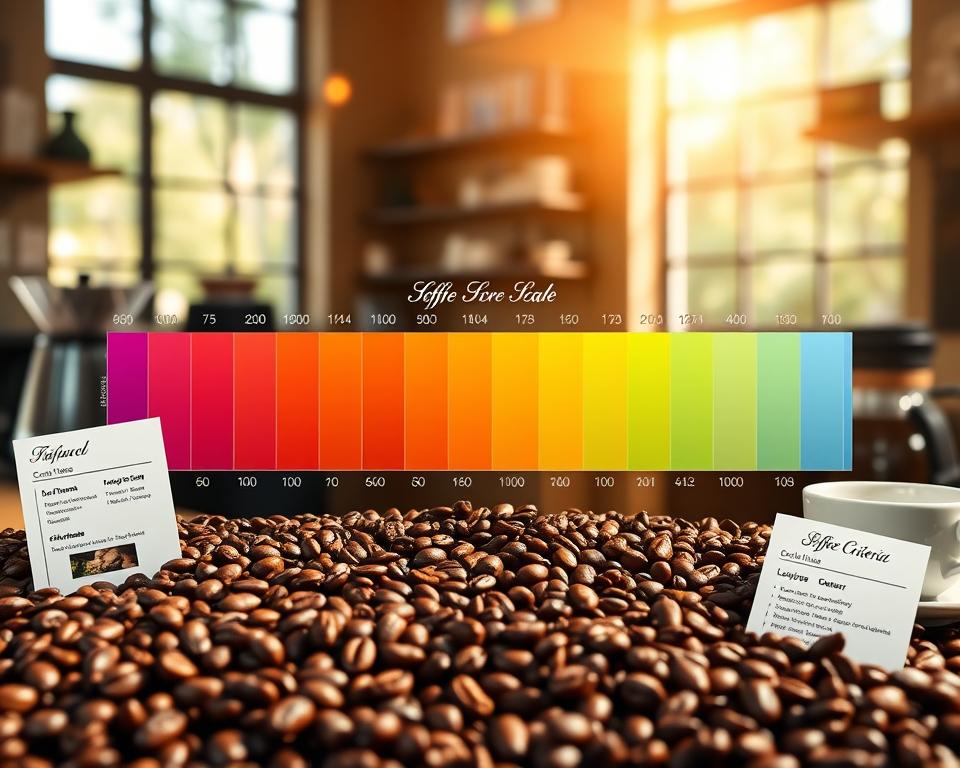
The SCA Specialty Coffee Score goes from 0 to 100. Scores under 80 are not considered specialty. Scores from 80 to 90 show high-quality coffee. Scores above 90 are truly exceptional.
This range helps sort coffee by quality and features.
| Score Range | Coffee Quality | Description |
|---|---|---|
| 0-79 | Below Specialty Grade | Coffee that does not meet the specialty coffee standards due to defects or lack of distinct characteristics. |
| 80-89 | Specialty Coffee | Coffee that exhibits distinct characteristics and meets the high standards of specialty coffee. |
| 90-100 | Exceptional Specialty Coffee | Coffee of outstanding quality with unique and pronounced characteristics. |
What Different Scores Indicate
Different scores on the SCA Specialty Coffee Score scale show different coffee qualities. A score can show a coffee’s acidity, flavor, body, balance, aftertaste, and overall feel. For example, a coffee with a score of 95 might have exceptional acidity and complex flavor.
A score of 85 might mean a coffee is well-balanced with a clean aftertaste.
Coffee experts say, “The score is not just a number; it’s a reflection of the coffee’s unique attributes and its overall quality.” Knowing what scores mean can improve your coffee experience. It helps you choose the right coffee.
Understanding the 100-point scale helps you appreciate the effort in making specialty coffee. Whether you buy coffee or roast it, knowing the SCA Specialty Coffee Score is essential. It helps you explore the world of specialty coffee.
The Role of the SCA
The SCA is key in improving and setting standards for specialty coffee. It aims to make specialty coffee better and more sustainable. This is thanks to its leading role in the coffee world.
Overview of the Specialty Coffee Association
The Specialty Coffee Association is a non-profit group that has led the coffee industry for over 30 years. It has members from over 40 countries. This group includes farmers, roasters, and retailers from all over.
The SCA works to bring innovation, quality, and sustainability to specialty coffee. Its goal is to make the coffee world better.
Key Activities of the SCA:
- Developing and maintaining quality standards for specialty coffee
- Providing training and education for coffee professionals
- Promoting sustainability and environmental stewardship
- Facilitating networking and collaboration among industry stakeholders
Why Their Standards Matter
The SCA’s standards are important because they help everyone understand coffee quality. The SCA’s grading system makes sure coffee is judged fairly. This is good for both those who make coffee and those who drink it.
The SCA’s standards have a big impact. They help make the coffee industry more open and trustworthy.
In short, the SCA’s role in setting standards for specialty coffee is vital. By following these standards, coffee experts can make sure their coffee is of the highest quality and sustainable.
How to Use the Specialty Coffee Score
As a coffee lover, I’ve learned the SCA Specialty Coffee Score is key. It helps pick top-notch coffee and tweak roasting methods. The score is more than a number; it’s a detailed review of coffee quality and traits.
The SCA Specialty Coffee Score is great for both coffee lovers and roasters. It helps make smart choices about coffee and how it’s roasted.
For Consumers: Choosing Better Coffee
The SCA Specialty Coffee Score is a must-have for coffee shoppers. It shows the coffee’s taste, acidity, and quality. This helps pick the best coffee and try new ones.
When buying coffee, check the SCA Specialty Coffee Score. A score of 80 or higher means it’s specialty grade. This lets you explore different beans, roast levels, and brewing ways to find your favorite.
For Roasters: Improving Quality
Roasters use the SCA Specialty Coffee Score to aim for better quality. It helps improve roasting skills and understand coffee better.
Roasters can check their roasting success with the score. If a roast scores low in flavor or acidity, they can try new roast levels. This way, they keep getting better at making great coffee.
Notable Trends in Specialty Coffee Scoring
As a coffee lover, I’ve seen a big change in specialty coffee. Now, we see more unique flavors and eco-friendly ways to make coffee. The specialty coffee scoring method has also changed to match these new tastes and ways of making coffee.
The SCA coffee score scale is a key way to judge coffee quality. But, new trends are changing how we score and see coffee.
Rising Popularity of Unique Varietals
Unique coffee varietals like Gesha and Yirgacheffe are becoming more popular. They’re known for their special tastes, like fruit, floral, and wine. The Gesha varietal, for example, has a complex taste with citrus and jasmine notes.
Roasters are trying out these unique varietals to make special blends. This is because people want new and exciting coffee experiences.
Sustainable Practices Impacting Scores
Sustainability is also a big trend in specialty coffee. Producers and roasters are using eco-friendly and fair practices. This includes organic farming, rainforest alliance, and fair trade. These methods make coffee better and help the industry be fairer.
| Sustainable Practice | Impact on Coffee Score | Benefits |
|---|---|---|
| Organic Farming | Improved flavor profile | Environmentally friendly, healthier soil |
| Rainforest Alliance Certification | Enhanced biodiversity | Conservation of ecosystems, improved livelihoods for farmers |
| Fair Trade Practices | Better quality control | Fair prices for farmers, improved social equity |
Knowing about these trends helps coffee lovers understand high-quality coffee evaluation better. It shows how a coffee’s score on the SCA scale is influenced by many things.
Common Misconceptions about Specialty Coffee
Specialty coffee is getting more popular, but many people don’t get it right. Both consumers and coffee experts often misunderstand what specialty coffee really is.
Many think a high SCA Specialty Coffee Score means top-notch quality. But, it’s more complex than that. The SCA score is useful for checking coffee quality, but it’s not everything.
Not All High Scores Mean Quality
A high score shows a coffee meets certain quality standards by the SCA. Yet, it doesn’t mean it’s perfect for everyone. For example, a coffee might score well but taste too bitter or acidic to some.
An article on debunking specialty coffee misconceptions points out personal taste matters a lot. “The best coffee isn’t just about the score,” a coffee expert says. “It’s about how it tastes to you.”
The Influence of Personal Preference
What you like in a cup of coffee can really vary. Things like acidity, body, and aftertaste differ for everyone. So, what’s perfect for one might not be for another.
In short, knowing the common mistakes about specialty coffee can help you enjoy it more. It’s not just about the score. It’s about finding the coffee that you love.
Resources for Further Learning
If you love coffee and want to learn more, there are many resources out there. These resources can help you understand the SCA Specialty Coffee Score better. It’s important to have reliable and informative materials as you explore.
There are many books and online platforms that focus on coffee. The Specialty Coffee Association says, “education is at the heart of our mission” (
“The SCA is committed to providing resources that help coffee professionals and enthusiasts alike to deepen their understanding of specialty coffee.”
). They offer a wide range of resources to help you learn.
Recommended Books and Publications
There are several books and publications that are great for learning about specialty coffee. They cover topics like coffee production and roasting techniques. Some top picks include:
- Coffee: A Guide to Buying, Brewing, and Enjoying by Kenneth Davids
- The Coffee Roaster’s Companion by Scott Rao
- The Specialty Coffee Association’s own publications, which offer insights into the latest research and trends in specialty coffee.
To learn more about coffee scoring methods, check out this page. It explains how high-quality coffee is evaluated.
Online Platforms and Courses
Online platforms and courses offer interactive learning experiences. The SCA’s official platform has courses on coffee tasting, roasting, and more. Some key online resources include:
| Platform | Course Offerings |
|---|---|
| SCA Online Learning | Coffee Tasting, Roasting, Brewing |
| CoffeeConfidential | Coffee Production, Roasting Techniques |
| Sensory Skills | Cupping, Flavor Profiling |
By using these resources, you can deepen your appreciation for specialty coffee. You’ll stay updated with the latest trends and best practices. Remember, the world of coffee is vast and always changing, full of opportunities for discovery.
Conclusion: Embracing the Specialty Coffee Journey
Understanding the world of SCA Specialty Coffee Score can make your coffee experience better. The SCA specialty coffee score helps measure coffee quality. It’s a standard that both consumers and roasters use to appreciate high-quality coffee.
Discovering Personal Taste
Exploring specialty coffee has made my coffee experience richer. By learning about the SCA specialty coffee score, I’ve become more picky about coffee. I now enjoy the unique flavors of different coffee beans and roasts.
Exploring Specialty Coffee
I suggest you start your own coffee journey. Dive into the world of specialty coffee and its quality standards. The SCA Specialty Coffee Score is a great tool for anyone who loves coffee. It helps you appreciate the finer details of high-quality coffee.