

The coffee world is changing fast, with specialty coffee becoming more popular everywhere. Did you know the global specialty coffee market is expected to grow a lot? This is because people want unique and top-notch coffee experiences. As someone who loves coffee, I’m eager to learn about the differences between specialty and commercial coffee.
Knowing the differences between these two types of coffee can make you appreciate the skill and quality in every cup. For more information, check out Press Coffee’s page on the subject. It talks about what makes specialty coffee special, like its limited releases and varied origins.
Key Takeaways
- The global specialty coffee market is experiencing significant growth.
- Specialty coffee is known for its high quality and unique tastes.
- Commercial coffee, by contrast, is mass-produced and lacks distinct flavors.
- Understanding these differences can deepen your coffee appreciation.
- Specialty coffee often includes limited releases and diverse origins.
Understanding Specialty Coffee
Specialty coffee is more than a drink; it’s an experience. It combines skill with a deep coffee knowledge. For those who love coffee, specialty coffee is special because of its careful making and focus on details.
Definition and Characteristics
Specialty coffee uses high-quality beans from all over the world. The coffee industry now values artisanal coffee more, with specialty coffee leading the way. Its unique tastes come from the soil, climate, and how it’s processed.
Specialty coffee has:
- High-quality Arabica beans
- Unique flavors like fruits, chocolates, and spices
- Beans are carefully chosen and processed to keep their natural taste
- Small batches are roasted to highlight its special traits
Flavor Profiles
Specialty coffee is known for its varied and rich flavors. Flavors can be fruity, floral, nutty, or chocolatey, making it a delightful taste experience. The taste of specialty coffee depends on the bean’s origin, how it’s processed, and its roast level.
Some common flavors in specialty coffee are:
- Fruity notes like citrus or berries
- Floral notes like jasmine or rose
- Chocolate notes, from milk to dark chocolate
Sourcing and Quality
The quality of specialty coffee depends on where it comes from. Beans are sourced from trusted farms and cooperatives that focus on quality and sustainability. The beans are then processed and roasted to enhance their unique tastes.
To ensure top quality, producers follow strict quality control. This includes:
- Cupping to check the coffee’s taste
- Regular checks for quality and consistency
- Working with farmers to improve growing and processing
Exploring Commercial Coffee
Commercial coffee is what most people know and love. But there’s more to it than you might think. Let’s dive into its definition, taste, and how it’s made to see its importance in the coffee world.
Mass-Market Appeal
Commercial coffee is loved by many because it’s everywhere. It’s made in big batches and comes from famous brands. This coffee is usually roasted darker to give it a consistent taste.
Key characteristics of commercial coffee include:
- Mass production and distribution
- Medium to dark roast levels
- Blended beans from various regions
- Consistent flavor profile
Flavor Profiles
Commercial coffee tastes balanced and easy to enjoy. It might not have the complex flavors of specialty coffee. But it’s made to please a wide range of tastes.
A typical flavor profile of commercial coffee might include notes of:
- Caramel
- Nuts
- Chocolate
- A hint of bitterness
Production Scale
Commercial coffee is made in huge amounts, much more than specialty coffee. Beans from all over are mixed to create a consistent taste. This big production helps meet the demand for this coffee.
To see how commercial coffee differs from specialty, let’s look at a comparison table:
| Coffee Type | Production Scale | Flavor Profile | Roast Level |
|---|---|---|---|
| Commercial Coffee | Large-scale | Balanced, straightforward | Medium to dark |
| Specialty Coffee | Small-scale | Nuanced, varied | Light to medium |
Understanding commercial coffee’s traits and how it’s made helps us see its place in the coffee world. It shows how it compares to specialty coffee.
The Origin of Specialty Coffee
To truly appreciate specialty coffee, we must explore its origins. This journey takes us from the early days to the current gourmet coffee scene. Understanding its history and evolution helps us see what makes it special.
History and Evolution
In the 1960s and 1970s, coffee lovers started looking for high-quality beans. They wanted better flavors and a personal touch. This movement grew, leading to a focus on small-batch coffee and quality.
Many factors have shaped specialty coffee. Advances in production, changing tastes, and new coffee regions have played a part. Today, it’s known for its top-notch beans and unique flavors.
Notable Regions and Varieties
Some regions have greatly influenced specialty coffee. Ethiopia is famous for its heirloom varieties, while Colombia is known for balanced flavors. Kenya is celebrated for its bright acidity, and Sumatra for its earthy notes.
The variety of coffee beans is vast. From Arabica and Robusta to rare species, there’s a wide range. This variety lets roasters and coffee shops offer many flavors, pleasing coffee lovers everywhere.
In conclusion, specialty coffee’s origin is rich and complex. It’s a story of quality, passion, and unique flavors. As the industry grows, gourmet coffee and small-batch coffee will lead the way.
The Story Behind Commercial Coffee
Exploring commercial coffee, I see how history and big brands have shaped it. The industry’s long history has been influenced by major brands and their impact.
A Brief History
Commercial coffee started in the early 20th century. It became a mass-market product. Folgers and Maxwell House led the way, making coffee affordable and convenient for everyone.
After World War II, coffee became even more popular. Brands like Nescafe became famous worldwide. This time also saw coffee roasters experimenting with new techniques, creating the variety we see today.
“The coffee industry is a complex and multifaceted market, with various players and stakeholders influencing its dynamics.”
Major Brands and Their Impact
Big brands have greatly influenced commercial coffee. Starbucks, for example, has made coffee culture popular and pushed for innovation. Dunkin’ Donuts has built a strong customer base through its products and marketing.
These brands have shaped what consumers want and the competitive market. Below is a table showing some key players and their market share.
| Brand | Market Share (%) | Key Products |
|---|---|---|
| Starbucks | 25 | Whole-bean coffee, ground coffee, single-serve cups |
| Dunkin’ Donuts | 15 | Ground coffee, single-serve cups, flavored coffee |
| Nescafe | 10 | Instant coffee, coffee capsules |
The rise of third-wave coffee has also changed the industry. Many now seek high-quality, artisanal coffee. Coffee roasters have responded by improving their techniques and sourcing better beans.
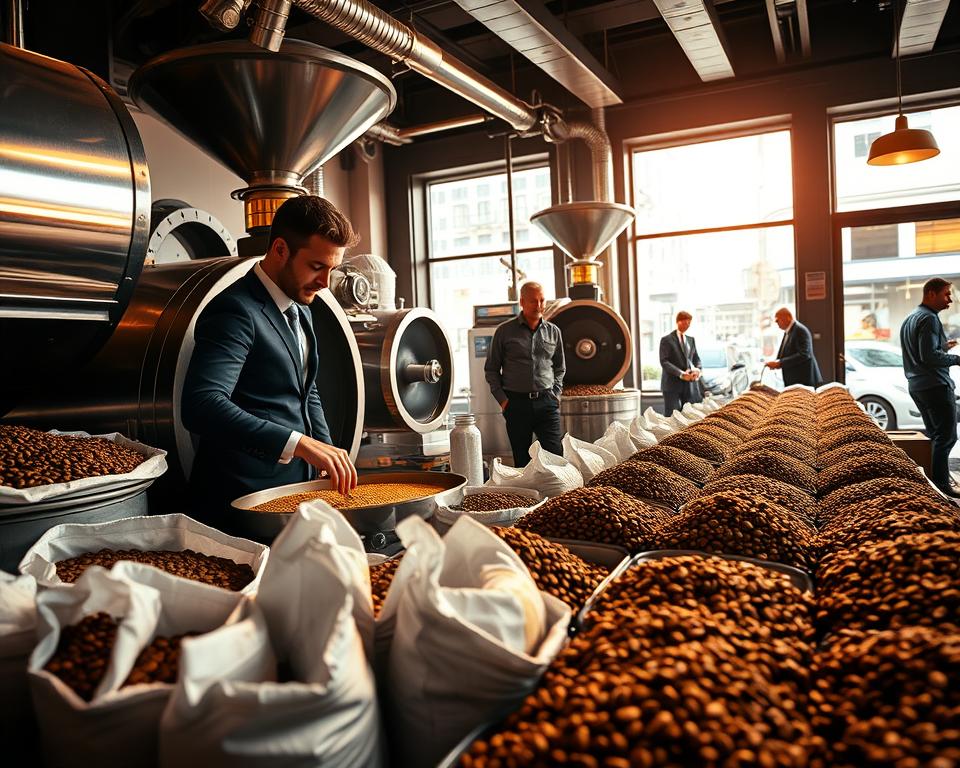
In conclusion, commercial coffee’s story is one of growth and change. Major brands and coffee roasters have driven this evolution. As the industry grows, we can expect new trends and innovations.
The Role of Roasting
As a coffee lover, I’ve learned how important roasting is. It changes the taste of coffee a lot. Both specialty and commercial coffee use roasting to make their flavors stand out.
Specialty Coffee Roasting Techniques
Specialty coffee roasters use special methods to bring out the best in coffee beans. They roast in small batches, which lets them control the roasting better. Small-batch roasting means they can adjust the temperature and time for each bean type.
This makes the coffee taste more complex and show off its origin. For example, light roasting highlights the coffee’s acidity and fruitiness. On the other hand, dark roasting brings out deeper, richer tastes.
Commercial Coffee Roasting Methods
Commercial coffee roasting focuses on making lots of coffee quickly and consistently. They use big batches and automated systems. This way, they make coffee that tastes familiar but lacks the special touch of specialty coffee.
Commercial roasting might also make coffee darker to hide any bad beans. This makes the coffee taste bitter. This is different from specialty roasters, who aim to show off the coffee’s unique qualities.
Knowing the difference between specialty and commercial roasting helps us appreciate coffee more. Whether you’re new to coffee or a seasoned fan, understanding roasting can make your coffee experience better.
Taste Test: Specialty vs Commercial
In my journey as a coffee lover, I’ve done a taste test between specialty and commercial coffee. It was eye-opening. I wanted to see the differences between these two types for myself.
A Personal Journey Through Flavors
I’ve tried many coffee roasters and brewing methods. Specialty coffee usually has a more complex taste than commercial coffee. You can taste fruit, chocolate, or nuts more clearly, making each sip special.
Commercial coffee tastes straightforward, often described as balanced but less deep. It’s not bad; it’s just simpler and less complex than specialty coffee.

Conducting Your Own Taste Test
Want to know the difference? Try a taste test yourself. Here’s how:
- Choose a few specialty and commercial coffee samples.
- Use the same brewing method for all to keep it fair.
- Notice the aroma, flavor, and aftertaste of each coffee.
- Write down your thoughts to compare later.
To make it easier, use a table like this:
| Coffee Type | Aroma | Flavor | Aftertaste |
|---|---|---|---|
| Specialty Coffee | Fruity, floral | Complex, with notes of chocolate | Long, with a sweet finish |
| Commercial Coffee | Rich, straightforward | Balanced, with a hint of bitterness | Short, with a slight bitterness |
By following these steps, you’ll understand the differences between specialty and commercial coffee. This will help you see why quality and unique experiences are key in coffee trends.
Price Points: What to Expect
When you buy coffee, knowing the price difference between specialty and commercial coffee is key. The cost affects the taste and the values you support. It’s important to understand this.
Factors Influencing Specialty Coffee Pricing
Specialty coffee is known for its quality, unique taste, and careful making. These things make it more expensive than commercial coffee. The cost includes several important parts:
- Quality of Beans: Specialty coffee beans come from specific places known for their quality. The cost is higher because of the soil, climate, and farming methods.
- Production Process: Making specialty coffee is more work. It involves careful picking, processing, and roasting to bring out the coffee’s unique flavors.
- Roasting Techniques: Specialty coffee roasters use small batches for a better flavor. But, this method is more time-consuming and expensive.
So, specialty coffee can cost between $10 to $20 or more per pound. A cup might be $3 to $5. This shows its high-quality ingredients and making process.
Understanding Commercial Coffee Pricing
Commercial coffee is made on a large scale and is cheaper and more accessible. Its price is influenced by different things:
- Economies of Scale: Commercial coffee producers save money by buying and processing lots of beans. This lowers the cost per unit.
- Bean Quality: Commercial coffee uses good-quality beans but not as high as specialty coffee. It has a consistent taste that many like.
- Marketing and Distribution: Commercial coffee is widely sold and marketed. This can affect its final price to consumers.
Commercial coffee is cheaper, with a pound costing $5 to $10 and a cup $1 to $2. It’s a good choice for everyday drinking.
| Coffee Type | Price per Pound | Price per Cup |
|---|---|---|
| Specialty Coffee | $10-$20+ | $3-$5 |
| Commercial Coffee | $5-$10 | $1-$2 |
As the coffee market grows, knowing these prices helps you choose. You can pick gourmet coffee for a special experience or go for commercial coffee for everyday use.
“The coffee industry is evolving, with consumers increasingly willing to pay a premium for high-quality, sustainably sourced coffee.”
The Brewing Process Comparison
The brewing process is where coffee’s true character shines. It’s interesting to see how specialty and commercial methods differ. As someone who’s tried both, I know brewing technique is key to a great coffee experience.
Specialty coffee brewing is all about highlighting the unique flavors of small-batch coffee. Enzymes like pour-over, French press, and Aeropress are favorites. They let you control brewing to bring out the best flavors.
Specialty Coffee Brewing Methods
Specialty coffee aims to show off its distinct tastes. Techniques like:
- Pour-over: Offers a clean and nuanced extraction.
- French press: Gives a rich and full-bodied taste.
- Aeropress: Combines the best of both, for a smooth and rich coffee.
These methods pair well with artisanal coffee roasting. Together, they create a unique coffee experience.
Commercial Coffee Brewing Techniques
Commercial coffee focuses on consistency and speed. Drip brewing and automatic espresso machines are used because they’re fast and efficient.
Commercial brewing often involves:
- Drip brewing: Simple and consistent.
- Automatic espresso machines: Great for making lots of coffee quickly.
These methods might not have the finesse of specialty brewing. But they’re perfect for serving many people.
In summary, brewing is a vital part of the coffee experience. Whether it’s a carefully made pour-over or a quick drip brew, knowing how it’s made can deepen your appreciation for coffee.
Health Benefits and Considerations
Specialty coffee is getting more popular, and it’s time to look at its health perks. We need to know how our coffee choices affect our health.
Benefits of Specialty Coffee
Specialty coffee is known for its unique tastes and health benefits. High-quality beans and special processing can make coffee healthier. Some research shows specialty coffee has more antioxidants because of its quality and roasting.
The distinct roasting profiles of specialty coffee can also be healthier. They might need less sugar or cream, which is good for those watching their calories or managing diabetes.
Concerns with Commercial Coffee
Commercial coffee, made in large quantities, has its own health issues. Its darker roasting can reduce antioxidants, making it less healthy than specialty coffee.
Commercial coffee might also have impurities or defects because of less quality control. This could harm health, mainly for those drinking a lot of coffee.
In summary, specialty coffee might have health benefits over commercial coffee. Knowing these differences helps us choose better coffee for our health.
Sustainability and Ethics
The way coffee is made is now a big deal for those who love coffee. People care about the environment when they pick between specialty and commercial coffee. As someone who loves coffee, I’ve learned that how coffee is made matters a lot.
Specialty coffee is all about being green. These coffee makers focus on being kind to the earth. They use methods like shade-grown coffee and organic farming. They also try to use less waste.
Specialty Coffee’s Sustainability Practices
Specialty coffee does a lot to help the planet. Here are some ways they do it:
- They use eco-friendly packaging.
- They have recycling programs for coffee waste.
- They support fair trade to help local communities.
- They use renewable energy.
These actions help make specialty coffee better for the environment. They also make the coffee world fairer and more sustainable.
Commercial Coffee’s Environmental Impact
Commercial coffee, on the other hand, focuses on being cheap and easy. But this can harm the environment. It can cause deforestation, pollute water, and release a lot of greenhouse gases.
Some big problems with commercial coffee are:
- It uses harmful chemicals.
- It uses farming methods that hurt the soil.
- It creates a lot of waste from packaging and cups.
Even though some commercial coffee brands are trying to be better, there’s a lot more work to do. They need to adopt more green practices.
We can make a difference by choosing coffee that’s good for the planet. By picking sustainable coffee, we help make the coffee world better for everyone and the earth.
Conclusion: My Final Thoughts
Exploring specialty and commercial coffee has shown me their unique qualities. These differences go beyond taste. They also reflect the experience and values each offers.
Specialty coffee is special because of its unique flavors and the care in sourcing and roasting. Working with skilled coffee roasters has taught me about the craftsmanship. The attention to detail and quality are what I admire most.
The Allure of Specialty Coffee
I love specialty coffee for its rich flavors and the stories behind each cup. The specialty coffee industry is leading in new coffee trends. It’s all about pushing the limits of taste and sustainability.
Exploring the World of Specialty Coffee
I think everyone should explore specialty coffee. You’ll find new flavors and support innovators in the coffee world. Whether you’re a coffee expert or just starting, there’s always something new to discover.