


Did you know the coffee industry is a big cause of deforestation worldwide? As someone who loves coffee, I’m excited to learn about eco-friendly coffee practices that help.
Exploring the world of coffee, I see how vital sustainable practices are. Choosing the right coffee not only gives you a great taste but also supports a greener and fairer industry.
By choosing sustainable coffee sourcing, we can lessen the harm our coffee does to the planet. In this article, I’ll show you the ethical ways to make a difference.
Key Takeaways
- Learn how to source coffee in an eco-friendly way.
- Discover the benefits of sustainable coffee practices.
- Understand the impact of your coffee choices on the environment.
- Explore ways to support socially responsible coffee production.
- Find out how to make a positive change with your daily brew.
What is Sustainable Coffee Sourcing?
Sustainable coffee sourcing is more than a trend. It’s a key step towards a fair and green coffee industry. Understanding it helps us make better choices when buying coffee.
Definition and Key Principles
Sustainable coffee sourcing means producing and buying coffee in ways that are good for the planet and fair for people. It focuses on environmental stewardship, social equity, and economic viability. These principles help coffee producers and buyers make choices that benefit everyone involved.
This approach helps the coffee industry reduce its carbon footprint and protect nature. It also improves the lives of coffee farmers. Transparency and accountability are key, ensuring everyone in the supply chain is committed to sustainability.
Importance in Today’s Market
In today’s market, sustainable coffee sourcing is becoming more important. Consumers are now more aware of the impact of their choices. They want coffee that is not only good but also sustainably made.
Choosing sustainable coffee supports fair trade practices and ethical coffee production. It helps create a fairer coffee industry that benefits farmers and the environment.
The Impact of Coffee Production on the Environment
As a coffee lover, I’ve learned how coffee production affects our planet. The coffee industry’s environmental impact is wide-ranging, from deforestation to water pollution.
Coffee production involves many stages, from growing to processing. Each step has its own environmental effects. For example, growing coffee often means cutting down forests. This not only harms biodiversity but also contributes to climate change.
Deforestation and Habitat Loss
The growth of coffee plantations leads to deforestation in many countries. Forests are cleared for coffee, harming many species. This is a big problem in places like Latin America and Southeast Asia, where biodiversity is rich.

To fight deforestation, many coffee farmers use sustainable land-use practices. They grow coffee with other crops and trees. This keeps ecosystems healthy while they make coffee.
Water Usage and Pollution
Coffee production also affects water. It needs a lot of water, which can pollute water sources if not handled right. The waste from coffee processing can harm nearby water.
To solve these problems, coffee farmers are using sustainable water management practices. They’re finding ways to use less water and clean the waste before it goes into the environment.
By picking coffee that’s sustainably sourced, we can help reduce its environmental impact. Choosing coffee that’s good for the planet is key. It helps make the coffee industry more sustainable.
Benefits of Choosing Sustainable Coffee
Choosing sustainable coffee has many benefits. It supports farmers and helps biodiversity. By picking ethically sourced coffee beans, we make a big difference in the coffee world.
Support for Farmers and Communities
Sustainable coffee helps farmers and their communities a lot. When coffee is bought ethically, farmers get fair prices. This helps them live better and invest in their areas.
This way, socially responsible coffee sourcing helps everyone. It’s good for farmers, their families, and the whole community.
- Fair prices for farmers, ensuring a stable income
- Community development projects, such as education and healthcare initiatives
- Empowerment of local economies through sustainable practices
Enhanced Flavor Profiles
Coffee lovers say ethically sourced coffee beans taste better. This is because of how they’re handled and processed. It makes the coffee more enjoyable to drink.
What makes the flavor better includes:
- High-quality coffee beans, carefully selected and processed
- Optimal growing conditions, including shade and soil quality
- Expert roasting techniques that bring out the best in the beans
Positive Impact on Biodiversity
Sustainable coffee farming is good for the environment. It helps keep ecosystems healthy. By picking socially responsible coffee sourcing, we support these green practices.
Here’s how sustainable coffee farming helps biodiversity:
- Preservation of natural habitats and ecosystems
- Protection of wildlife, such as birds and insects
- Promotion of ecological balance through sustainable farming methods
Certifications to Look For in Sustainable Coffee
To make sure your coffee is eco-friendly, look for certain certifications. These labels show a commitment to the environment and fair labor. By choosing coffee with these certifications, you support farmers who care about the planet and fair trade.
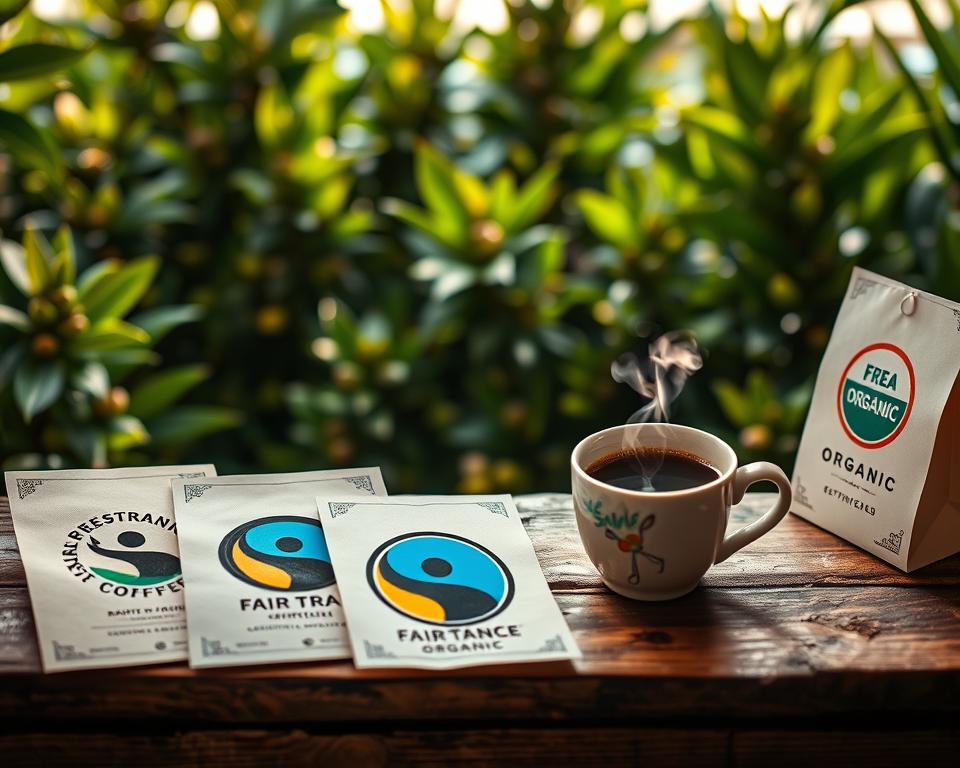
Fair Trade Certification
Fair Trade Certification is well-known in the coffee world. It makes sure farmers get a fair price for their coffee. This helps with community growth and fair trade.
“Fair Trade is about better prices, direct trade, and community development.” This quote shows Fair Trade’s goal. It’s about helping coffee farmers and their communities.
Rainforest Alliance Certification
The Rainforest Alliance Certification is key for sustainable coffee. It ensures coffee is grown in a way that protects nature. Farms with this certification help wildlife and keep water sources safe.
“Sustainable agriculture is not just about producing food; it’s about preserving the planet.” This certification highlights the importance of eco-friendly farming in coffee.
Organic Certification
Organic Certification is important for those who want eco-friendly coffee. Organic coffee is made without harmful chemicals. This helps the soil and keeps nature balanced.
- Promotes ecological balance
- Conserves biodiversity
- Enhances soil health
Choosing coffee with these certifications supports a better coffee industry. It ensures your coffee is made in a way that’s good for the planet and fair for farmers.
How to Identify Sustainable Coffee Brands
Finding sustainable coffee is about making smart choices. I’m here to help you understand how. By picking brands that care about the planet, we can change the coffee world.
Key Questions to Ask
When checking if a coffee brand is sustainable, ask these questions:
- What is the brand’s policy on sourcing coffee beans?
- Are their beans certified by organizations such as Fair Trade or Rainforest Alliance?
- How does the brand support its farmers and local communities?
These questions help you see if a brand really cares about sustainable coffee sourcing.
Researching Brand Practices
It’s important to research a brand’s practices. Look for clear information about their supply chain and how they make coffee. Brands that share their methods are more likely to be eco-friendly.
Some brands share detailed reports on their green efforts. They might talk about their environmental impact and waste reduction. Others might join certifications or work with green groups.
“Sustainability is not just about the environment; it’s also about the people. Supporting fair trade practices ensures that farmers receive a fair price for their beans, improving their livelihoods.” – Expert in Sustainable Coffee
To learn more, check out what others say about the brand. Reviews and ratings can give you a glimpse into their commitment to sustainability.
In short, finding eco-friendly coffee brands takes some effort. By asking the right questions and looking into their practices, you can choose brands that support eco-friendly coffee practices. This helps make the coffee world better for everyone.
The Role of Consumers in Sustainable Sourcing
Choosing sustainable coffee is key to promoting ethical practices in the coffee world. As consumers, we can make a big difference by picking the right coffee. This choice helps drive positive change.
Supporting Ethical Brands
Supporting brands that focus on ethical coffee production is a great step. Look for companies that are open about where they get their coffee. They should also follow fair trade rules. For more info, check out Alpensierra Coffee’s blog on sustainable and ethical sourcing.
When checking a brand’s commitment, ask these questions:
- Do they share details about their supply chain?
- Are they certified by groups like Fair Trade or Rainforest Alliance?
- Do they work on community projects?
Choosing Local and Community-Based Roasters
Supporting local roasters is another smart move. They usually have a smaller environmental impact. Plus, they often buy from nearby farmers, helping the local economy.
Buying from local roasters means fresher coffee and helping your community. It makes the coffee world more sustainable and improves your coffee experience.
Exploring Different Coffee Growing Regions
Coffee-growing regions span from lush Latin America to vibrant Africa. Each is unique and fascinating. As we explore environmentally conscious coffee sourcing, knowing these regions is key.
Coffee isn’t just beans; it’s about people, land, and practices. Let’s dive into the main coffee-growing areas globally.
Latin America
Latin America is a top coffee producer, with Colombia, Brazil, and Costa Rica leading. The region’s soil, climate, and rainfall are perfect for coffee. Farms here are adopting sustainable practices like shade-grown and organic farming.
These methods improve coffee quality and support sustainable supply chain management.
Africa
Africa is a big player in the global coffee market. Countries like Ethiopia, Kenya, and Tanzania produce unique coffee varieties. African coffee is known for its bright acidity and complex flavors.
But, Africa faces challenges like climate change and soil degradation. Environmentally conscious coffee sourcing is essential for coffee’s future.
Asia and the Pacific
The Asia-Pacific region, including Indonesia and Vietnam, also plays a big role in coffee production. Its coffee often has earthy and herbal notes. As demand for sustainable coffee rises, producers here are adopting eco-friendly and fair practices.
This aligns with sustainable supply chain management principles.
In conclusion, the variety of coffee-growing regions shows coffee’s complexity and richness. By understanding these differences, we can make better choices. These choices support environmentally conscious coffee sourcing and help the coffee industry become more sustainable.
The Future of Sustainable Coffee Sourcing
The coffee industry is on the verge of a big change. This change comes from people wanting coffee that’s good for the planet and fair to farmers. As more people care about the environment, their choices are changing how coffee is made.
Trends in Consumer Preferences
People now want coffee that tastes great and is good for the planet. They’re learning more about how coffee is made and its impact. This new awareness is making them choose coffee that’s better for everyone.
- Ecological Awareness: Consumers are more informed than ever about the ecological footprint of their coffee.
- Transparency: There’s a growing demand for transparency in the supply chain, with consumers wanting to know more about where their coffee comes from.
- Certifications: Certifications like Fair Trade and Organic are becoming more popular as consumers look for assurances that their coffee is sustainably sourced.
Innovations in Sustainable Practices
The coffee industry is answering these demands with new, green ways of making coffee. These new methods are good for the planet and help coffee farmers do better.
| Innovation | Description | Impact |
|---|---|---|
| Regenerative Agriculture | Practices that enhance soil health and biodiversity. | Improves ecosystem services and resilience to climate change. |
| Precision Farming | Use of technology to optimize crop yields and reduce waste. | Reduces environmental impact and improves farmer incomes. |
| Direct Trade | Business model that eliminates intermediaries, ensuring farmers receive a fair price. | Improves farmers’ livelihoods and promotes transparency. |
The coffee world is changing fast, and it’s clear that making coffee in a green way is here to stay. By choosing sustainable coffee, we can help make the future of coffee better for everyone.
How to Brew Sustainable Coffee at Home
Brewing sustainable coffee at home is easy and impactful. It lets you enjoy your favorite coffee while helping the planet. By picking the right brewing methods and techniques, you can make your coffee taste better and support a greener coffee culture.
Quality Brewing Methods
To make high-quality sustainable coffee, choose the right brewing method. Some top methods include:
- Pour-over: It lets you get a clean and nuanced flavor.
- French press: It gives you a rich and full-bodied coffee.
- Cold brew: It’s perfect for a smooth and refreshing coffee.
Each method has its own benefits. Trying different techniques can help you find your ideal cup.
Maximizing Flavor
To get the most from your sustainable coffee, follow these tips:
- Use fresh, high-quality coffee beans.
- Adjust your grind size based on your brewing method.
- Try water temperatures between 195°F and 205°F.
These strategies can greatly improve your coffee’s flavor.
| Brewing Method | Grind Size | Water Temperature |
|---|---|---|
| Pour-over | Medium-fine | 200°F |
| French press | Coarse | 195°F |
| Cold brew | Coarse | Cold water |
By brewing sustainable coffee at home, you enjoy a delicious cup and support eco-friendly coffee practices and fair trade coffee sourcing. Try different methods and tips to find your perfect brew.
Getting Involved: Advocacy and Awareness
We can change the coffee industry by choosing coffee that’s good for the planet and people. By supporting coffee that’s sourced responsibly, we help make the industry better for everyone. This way, we can all benefit from a more sustainable coffee world.
Joining campaigns for sustainable coffee is a great way to help. Groups like the Rainforest Alliance and Fair Trade USA work hard to make coffee better. By backing these efforts, we help ensure coffee is fair and good for the environment.
Educating Others on Sustainable Choices
Telling our friends and family about sustainable coffee is also important. Sharing what we know can encourage others to choose coffee that’s better for the planet. This helps build a coffee industry that cares for both people and the environment.
Together, we can make the coffee industry better. Let’s keep pushing for coffee that’s good for everyone and the planet. Supporting sustainable coffee is key to a brighter future.