


As a coffee lover, I’m thrilled to dive into the world of coffee plant varietals. There are over 100 species, each with its own special traits. This makes your coffee experience even more exciting.
Did you know that arabica coffee makes up about 60-70% of the world’s coffee? It’s famous for its delicate and complex flavors.
Robusta coffee, on the other hand, is stronger and more full-bodied. It’s often found in instant coffee blends. Knowing about these differences can make you appreciate your coffee even more.
Key Takeaways
- Over 100 different coffee plant varietals exist worldwide.
- Arabica coffee is known for its delicate flavor profiles.
- Robusta coffee is bolder and often used in instant coffee.
- Growing conditions and processing methods impact flavor.
- Understanding varietals can elevate your coffee experience.
Understanding Coffee Plant Varietals
Exploring the world of coffee reveals many different types of coffee plants. Each type has its own special traits. Knowing about these varietals helps us enjoy coffee’s rich flavors and complexity.
What Are Coffee Varietals?
Coffee varietals are the different kinds of coffee plants. Just like apples come in many flavors, coffee plants have their own tastes and needs. Famous ones include Gesha coffee, known for its floral and citrus notes, Bourbon coffee, loved for its balanced taste, and Typica coffee, known for its delicate flavor.
These varietals are not just named differently; they taste unique. For example, Gesha coffee tastes like tea, while Bourbon coffee is sweet and balanced.
The Role of Geography in Varietals
Geography shapes the taste of coffee varietals. Climate, soil, and altitude all play a part. For instance, coffee grown at high altitudes matures slower, leading to a more complex taste.
The place where coffee is grown also affects its taste. Coffee from volcanic soil areas might taste earthy. Coffee from cooler climates might have a brighter taste. Knowing these facts helps us enjoy the differences in coffee varietals.
Major Coffee Species: Arabica and Robusta
The world of coffee is mainly made up of Arabica and Robusta species. Each has its own special traits. Knowing these differences helps us enjoy the wide range of coffee flavors and qualities.
Arabica and Robusta are more than just names. They stand for two distinct coffee types. They have different growing needs, tastes, and roles in the coffee world. Let’s look at what makes each unique.
Characteristics of Arabica Coffee
Arabica coffee is famous for its mild and complex taste. It grows best at high altitudes, between 1,000 and 2,000 meters. The cooler weather and rich soil add to its rich flavors.
- Higher acidity
- Milder flavor
- Grown at high altitudes
- More sensitive to growing conditions
Arabica is seen as higher quality. It’s often used in specialty coffee blends for its rich taste. Varieties like SL28 are loved for their special flavors.

Characteristics of Robusta Coffee
Robusta coffee is known for its strong and bitter taste. It’s easier to grow and more resistant to diseases than Arabica. This makes it a favorite for instant coffee and espresso blends.
- Bolder, more bitter flavor
- Higher caffeine content
- Easier to cultivate
- Often used in instant coffee and espresso blends
Robusta is sometimes criticized for its harsh taste. But it has its own place in the coffee world. It’s perfect for those who like a stronger coffee taste.
In summary, Arabica and Robusta cater to different tastes. Whether you prefer Arabica’s nuanced flavors or Robusta’s boldness, there’s a coffee out there for you.
Lesser-Known Coffee Varietals
Coffee lovers often stick to Arabica and Robusta. But, there’s a world of lesser-known varietals waiting to be discovered. These hidden gems bring unique flavors and qualities that can make your coffee experience better.
Liberica: A Unique Flavor Profile
Liberica coffee comes from West Africa and has a special taste. It’s known for its floral and fruity flavor with a touch of spice. This makes it a hit with those who love to try new things.
Liberica beans are bigger than Arabica and Robusta. Their size adds to the coffee’s unique taste. The beans also go through a traditional smoking process. This gives Liberica its strong and complex flavor.
Excelsa: The Mystery Bean
Excelsa coffee is a newer favorite. It’s a mix of Liberica and another coffee type. This makes it a unique blend. Excelsa is known for its balanced flavor, combining the best of its parents.
Excelsa coffee tastes like dark fruit with a hint of spice. Its flavor is complex and interesting. It’s a great choice for those looking to try something new. Even though it’s not as common as Arabica or Robusta, it’s worth trying.
Other varietals like Maragogipe and Pacamara are also worth exploring. Maragogipe is a type of Arabica with large beans and a mild taste. Pacamara, another Arabica type, has a complex flavor with fruit and chocolate notes.
The Impact of Altitude on Varietals
The height where coffee plants grow greatly affects their taste and smell. As we dive into the world of coffee, it’s clear that altitude plays a big role. It shapes the unique tastes of different coffee types.
Flavor Development at High Elevations
Coffee grown high up takes longer to ripen. This slower process lets the coffee cherries soak up more nutrients. High-altitude coffee is known for its bright acidity and complex flavors.
At heights over 1,500 meters, cooler temperatures slow down the plants’ growth. This makes the coffee beans denser and more flavorful. High-altitude coffee often tastes floral, citrusy, and wine-like.
Low-Altitude Growing Conditions
Coffee grown at lower heights ripens faster. This results in sweeter and more balanced flavors. Low-altitude coffee is known for its smooth, chocolatey, and nutty tastes.
It may not have the bright acidity of high-altitude coffee. But it has its own special charm. Many people love its milder taste.
| Altitude | Flavor Profile | Acidity |
|---|---|---|
| High (above 1,500 meters) | Complex, with floral, citrus, and wine-like notes | Bright acidity |
| Low (below 1,000 meters) | Smooth, with chocolatey and nutty flavors | Milder acidity |
How Coffee Varietals Affect Flavor
Coffee lovers know that the type of coffee bean greatly affects taste. Coffee comes in many flavors, from fruity and floral to chocolatey and nutty. This variety is mainly due to the different types of coffee beans.
Each coffee type has its own unique traits. These traits come from genetics, where the beans are grown, and how they are processed. For example, Gesha coffee is known for its floral and citrus tastes. On the other hand, Bourbon coffee is sweeter and more balanced.
Tasting Notes of Different Varietals
Flavors can differ a lot between coffee types. Some, like Gesha, have complex tastes. These can include jasmine, bergamot, and tropical fruits.
“The best coffee is not just about the beans, it’s about the experience. A great coffee can transport you to the farm where it was grown.”
Other types, like Bourbon, have a balanced taste. They might have hints of caramel and a smooth finish. But, the taste isn’t just about the type of bean. Soil quality, climate, and altitude also matter a lot.
| Coffee Varietal | Common Tasting Notes |
|---|---|
| Gesha | Floral, citrus, tropical fruits |
| Bourbon | Sweet, balanced, caramel |
| Typica | Fruity, floral, wine-like |
The Influence of Processing Methods
How coffee is processed also affects its taste. There are mainly three methods: washed, natural, and honey.
Washed processing makes the coffee taste cleaner and brighter. It has more acidity. Natural processing makes the coffee fruitier and sweeter because the fruit is left on during drying.
The choice of processing method can change how a coffee tastes. For example, a naturally processed Gesha might taste fruitier. A washed Gesha might taste more floral and tea-like.
Knowing how processing methods and coffee types work together helps everyone appreciate coffee’s complexity and variety.
Popular Arabica Varietals Around the World
Exploring Arabica varietals is a thrill for coffee lovers. Arabica coffee is known for its rich taste and aroma. We’ll look at two favorites: Bourbon and Typica.
Bourbon: A Beloved Choice
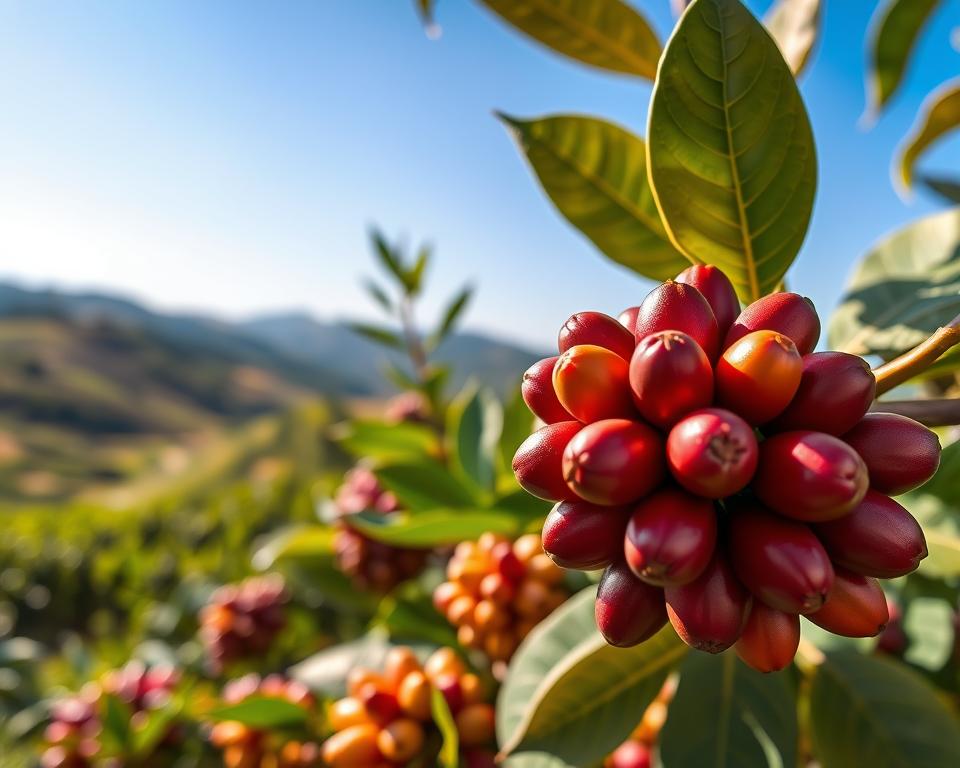
Bourbon coffee is loved for its balanced taste and sweet flavor. It comes from Bourbon Island, now Réunion Island. Today, it’s found in Latin America and Southeast Asia.
The taste of Bourbon coffee includes caramel, chocolate, and fruit. It offers a wonderful taste experience.
For more info on Arabica varietals, check out Gunter Coffee’s Arabica Varieties Lexicon. It has a detailed list of Arabica varietals.
Typica: The Original Coffee Plant
Typica coffee is the original coffee plant. It has a delicate flavor and lower yield. It’s grown in Central and South America.
Typica coffee is known for its complex flavor profile. It often tastes like floral, citrus, and jasmine.
Typica coffee’s history is important. It’s the base for many coffee varietals. Today, it’s a favorite among coffee lovers for its unique taste and rich history.
Exploring Robusta Varietals
Robusta coffee is often seen as less popular than Arabica. But it has its own special traits worth exploring. We’ll look into its strong taste and caffeine, as well as its different types.
Robustness and Caffeine Content
Robusta coffee is known for its bold flavor and more caffeine than Arabica. This makes it great for those who want a stronger coffee. Its higher concentration of caffeine gives it a unique taste and more energy.
For more info on coffee plants, check out Farm & Forest Coffee’s blog. It has a detailed guide on coffee types.
Key Robusta Sub-Varietals
Robusta isn’t just one type; it has several sub-varietals with unique features. Some notable ones are:
- Robusta Conilon: It’s very adaptable to different climates and soils.
- Robusta Kouilou: It has a distinct taste, often described as earthy and herbal.
Knowing about these sub-varietals helps us see the diversity in Robusta coffee. It also shows its value in various coffee blends.
Specialty Coffee and Unique Varietals
I’ve seen a big change in the specialty coffee world. Now, single-origin coffees are all the rage. People want unique tastes and top-notch coffee.
The Rise of Single-Origin Coffees
Single-origin coffees are loved for their special traits. Gesha coffee is famous for its floral and citrus flavors. Pacamara coffee is known for its big beans and complex tastes.
This focus on single-origin coffees helps farmers show off their skills. It also brings more variety to coffee making. This is good for farmers and for coffee lovers.
Impact of Sustainable Farming Practices
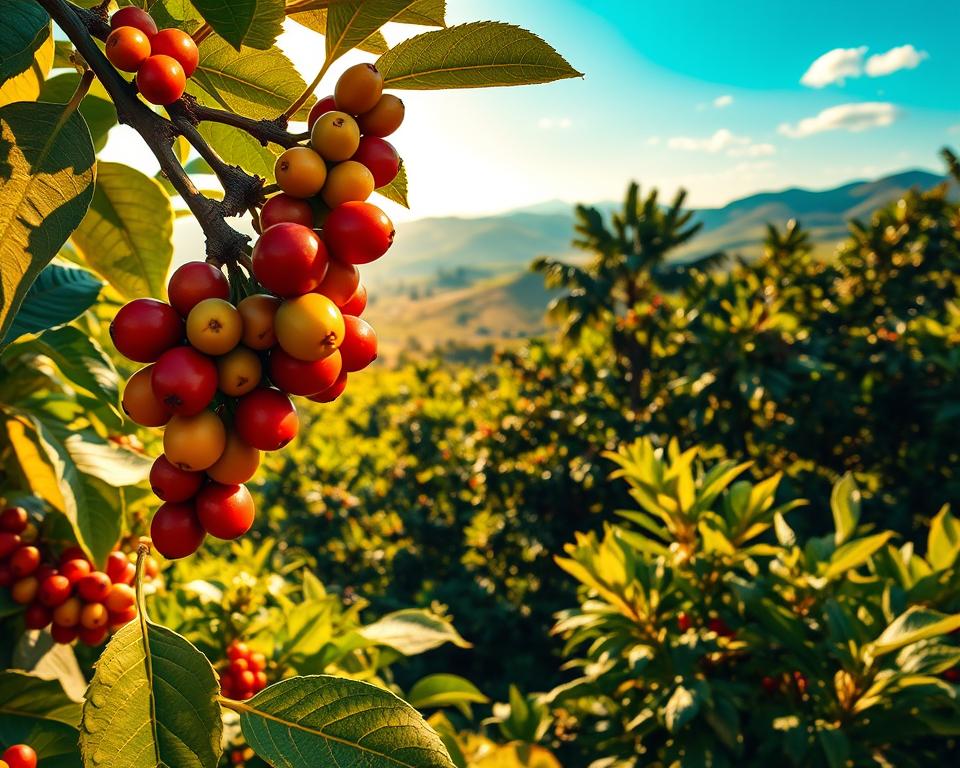
Sustainable farming is key for top-notch specialty coffee. Practices like shade-grown and organic farming are better for the planet. They also make the coffee taste better.
As the coffee world faces climate change, sustainable farming is more vital than ever. It helps farmers grow coffee for years to come.
| Sustainable Practice | Environmental Benefit | Impact on Coffee Quality |
|---|---|---|
| Shade-Grown Coffee | Preserves biodiversity, reduces soil erosion | Slower maturation, more complex flavors |
| Organic Farming | Reduces chemical use, promotes soil health | Healthier plants, cleaner flavor profiles |
| Water Conservation | Reduces water waste, protects water sources | More efficient processing, better quality control |
By choosing sustainable farming, the specialty coffee world can grow. It can do so while being kinder to our planet.
Choosing the Right Coffee Varietal for You
Exploring coffee plant varietals shows us each has its own taste and traits. Now, let’s find out how to pick the best one for you. Think about what you like and how you brew your coffee.
Discovering Your Flavor Profile
Knowing what you like is the first step. If you enjoy sweet coffee, try Arabica types like Bourbon or Typica. For a stronger taste, Robusta or its types might be better.
Brewing Techniques for Different Varietals
The way you brew coffee changes its taste. Pour-over and Chemex methods highlight Arabica’s flavors. French press is great for Robusta’s bold taste. Try different ways to brew to find your favorite.
By matching your taste and brewing style, you’ll get the most out of your coffee. Enjoy a better coffee experience with the right varietal and brewing method.