

As a coffee lover, I’ve always been amazed by the hidden flavors in a cup of coffee. Did you know that coffee drinkers can spot over 30 different tastes in their favorite coffee? The coffee flavor wheel is a tool that helps us understand these flavors, making our daily coffee more enjoyable.
Learning the language of coffee lets us appreciate the skill that goes into our favorite brew. In this article, we’ll dive into the world of coffee flavors. We’ll learn how to make our coffee experience even better.
Key Takeaways
- Discover the complexity of coffee flavors and how to identify them.
- Learn how to use the coffee flavor wheel to enhance your coffee experience.
- Understand the vocabulary used to describe coffee flavors.
- Appreciate the craftsmanship that goes into creating your favorite coffee.
- Explore the nuances of coffee flavors and how to appreciate them.
Understanding the Coffee Flavor Wheel
Exploring coffee, the Coffee Flavor Wheel is key for describing its complex flavors. It’s a tool that coffee lovers find invaluable. It guides us in understanding the wide range of coffee flavors.
What is the Coffee Flavor Wheel?
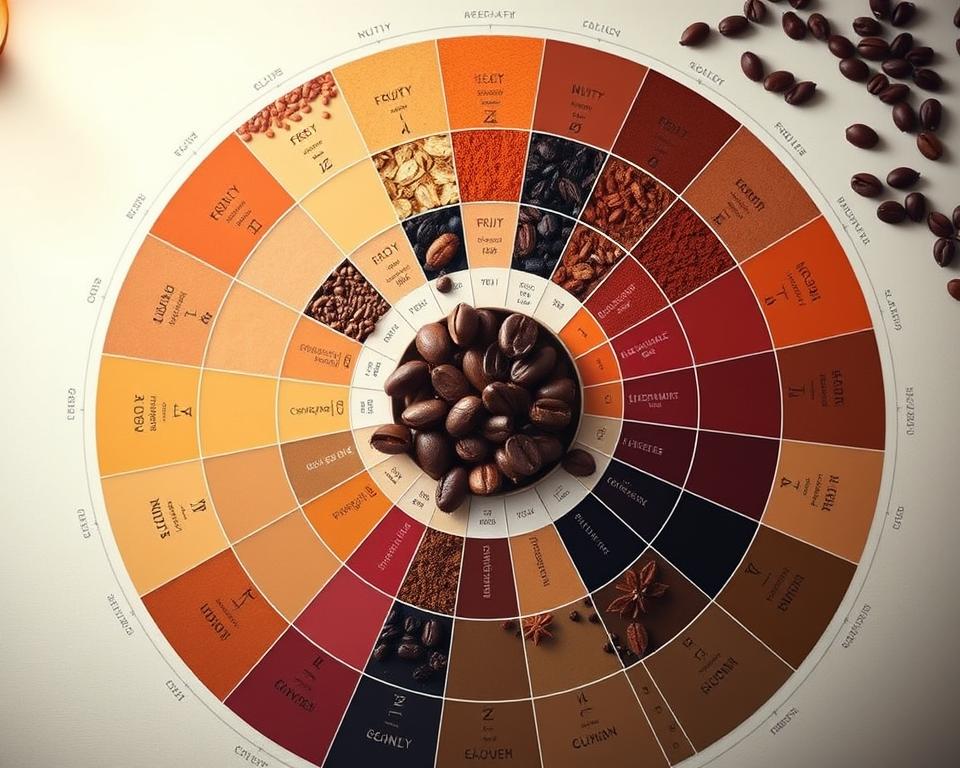
The Coffee Flavor Wheel is a visual tool that organizes coffee’s flavors and aromas. It was created to standardize coffee flavor descriptions. It’s a coffee tasting guide for both experts and coffee fans. It helps us understand the complex world of coffee tasting.
Using the Coffee Flavor Wheel involves a detailed approach to flavor identification. It ranges from sweet and fruity to bitter and spicy. This method ensures that coffee lovers and professionals share a common language.
History of the Coffee Flavor Wheel
The Coffee Flavor Wheel was introduced to standardize coffee flavor descriptions. It has been updated several times to include more flavors and improve usability. Its evolution shows our growing understanding of coffee’s complex taste.
The wheel’s creation aimed to provide a consistent coffee tasting guide. It’s now a key tool in the coffee world, used for training and education.
How It’s Used in the Coffee Industry
In the coffee world, the Coffee Flavor Wheel is essential for training and education. It helps professionals improve their taste skills. It’s also vital for coffee roasters and producers to describe their coffee accurately.
Using the wheel also supports coffee sensory analysis. It allows for a deep dive into coffee’s flavor profile. This not only deepens our appreciation of coffee but also ensures quality standards are met.
The Structure of the Coffee Flavor Wheel
The coffee flavor wheel is a detailed guide to coffee flavors. It’s a key tool for both coffee lovers and professionals. This structure helps us explore the wide world of coffee flavors.
Main Categories Explained
The coffee flavor wheel breaks down into main categories. These categories are the base for understanding coffee flavors. They are:
- Fruity: Flavors that remind us of fruits, like berries or citrus.
- Floral: Flavors that are like flowers, such as jasmine or rose.
- Nutty: Flavors that taste like nuts, such as almonds or hazelnuts.
- Chocolate: Flavors that remind us of cocoa or chocolate.
These main categories are key. They help users of the coffee flavor chart find the primary flavors in a coffee.
Subcategories and Their Importance
Under each main category, the coffee flavor wheel has subcategories. For example, ‘Fruity’ has ‘Berry’, ‘Citrus’, or ‘Stone Fruit’. These subcategories are vital for:
- Spotting the exact flavor notes in a coffee.
- Improving our ability to describe coffee flavors.
- Understanding coffee flavors more deeply.
By using a coffee flavor chart, we can see how subcategories fit under main categories. This makes it easier to grasp the complex flavors of different coffees.
How to Use the Coffee Flavor Wheel
Mastering the coffee flavor wheel takes practice, but it’s worth it for coffee lovers. This tool helps you identify and describe coffee’s complex flavors. It can make your coffee tasting experience better and deepen your appreciation for coffee making.
Tasting Your Coffee Like a Pro
To use the coffee flavor wheel well, taste your coffee like a pro. Pay close attention to its flavors and aromas. Start by smelling it, as smell greatly affects how we taste.
Then, take a sip and let it sit in your mouth. Notice the flavors that come out. Try to match them with the flavor wheel.
Some key steps to tasting coffee like a pro include:
- Pay attention to the coffee’s acidity, body, and overall flavor profile.
- Notice any distinct flavors or aromas, such as fruity, floral, or chocolate notes.
- Compare your observations to the categories and subcategories on the flavor wheel.
Identifying Flavors Through Comparison
Comparing flavors is a great way to identify them. By matching what you taste to the flavor wheel, you can describe your coffee more accurately. For example, if you taste something fruity, you can figure out if it’s citrus, berries, or stone fruits.
Key comparisons to make:
- Citrus vs. fruity flavors: Is it more like lemon or orange, or does it have a berry-like quality?
- Floral notes: Does your coffee have hints of rose, jasmine, or lavender?
- Nutty or chocolatey flavors: Are these flavors dominant, or are they subtle undertones?
By using the coffee flavor wheel and practicing, you can get better at identifying coffee flavors. This makes your coffee experience richer and lets you share your insights with others. It helps everyone appreciate the art of coffee making more.
Flavor Profiles: An Overview
Getting to know coffee flavor profiles is essential for enjoying your favorite coffee. Coffee lovers know that flavor profiles vary greatly. This is due to the beans’ origin, how they’re processed, and their roast levels.
Coffee flavors range from bright acidity in light roasts to the deep body of dark roasts. Exploring these profiles helps us appreciate the unique tastes and smells of each coffee.
Common Flavor Notes in Coffee
Coffee offers a wide range of flavors, from fruity and floral to nutty and chocolatey. The Coffee Tasters Flavor Wheel helps identify these flavors. It gives us a common language to talk about coffee’s taste and aroma.
Some common coffee flavors include:
- Fruity notes like citrus, berries, and stone fruits
- Floral hints like jasmine and rose
- Nutty and caramel tastes
- Chocolate and cocoa flavors
These flavors are shaped by the coffee bean’s origin, processing, and roast.
How Different Factors Affect Flavor
Many things influence coffee’s flavor, including the bean’s origin, processing, roast, and brewing method. For example, coffee beans from different places have unique flavors. This is because of the soil, climate, and altitude.
| Factor | Influence on Flavor |
|---|---|
| Origin | Regional flavors due to soil, climate, and altitude |
| Processing Methods | Changes the coffee’s body and acidity |
| Roast Levels | Light roasts are acidic, while dark roasts are richer |
| Brewing Techniques | Methods affect the final flavor and aroma |
Knowing how these factors impact flavor helps coffee lovers make better choices. This way, they can improve their coffee experience.
Regional Coffee Flavors
Exploring coffee flavors from around the world shows how each cup is special. From the floral notes of Ethiopian coffee to the nutty tastes of Brazilian coffee, every flavor is unique. Knowing these differences can make you enjoy coffee even more.
Coffee from Around the World
Coffee tastes vary by region. For example, Ethiopian coffees are fruity and floral. On the other hand, Brazilian coffees have nutty and chocolatey notes. The coffee aroma wheel helps us understand these flavors by identifying the aromatic compounds.
The Influence of Terroir on Flavor
Terroir, like in wine, affects coffee’s taste. Soil, climate, altitude, and how it’s processed all shape a region’s terroir. Coffees grown high up mature slower, leading to more complex flavors.
| Region | Common Flavor Notes |
|---|---|
| Ethiopia | Fruity, Floral, Wine |
| Brazil | Nutty, Chocolatey, Mild |
| Colombia | Caramel, Fruit, Balanced |
Understanding terroir helps us value coffees from different places. The coffee flavor vocabulary is key to describing and enjoying these unique tastes.
The Role of Roast Levels
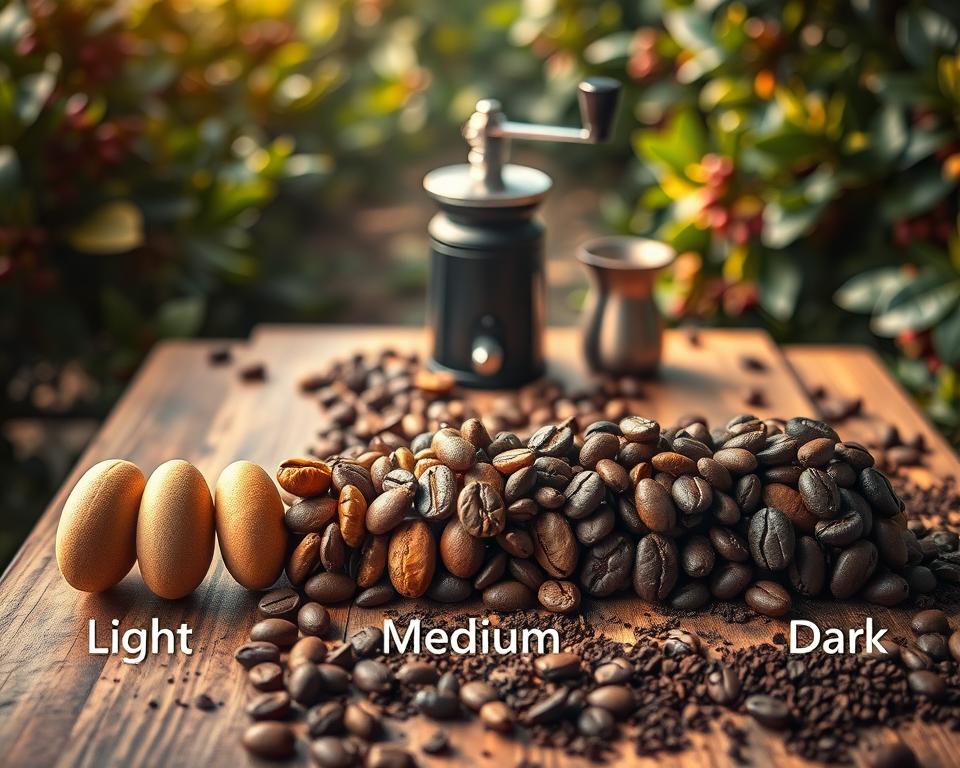
For coffee lovers, knowing about roast levels is key. Each roast level changes the flavor, with light, medium, and dark roasts each having its own taste.
Light, Medium, and Dark Roasts Explained
Coffee roasts fall into three main groups: light, medium, and dark. Light roasts are roasted briefly, keeping more of the coffee’s natural taste. Medium roasts have a balanced flavor, smooth with a bit of acidity. Dark roasts are roasted longer, giving a deeper, bolder taste with less acidity.
How Roast Level Affects Flavor Profile
The roast level changes the flavor by adjusting acidity, sweetness, and body. Lighter roasts are more acidic and fruity. Darker roasts are richer and more bitter. Here’s a table showing how different roast levels taste.
| Roast Level | Acidity | Flavor Notes | Body |
|---|---|---|---|
| Light | High | Fruity, Floral | Light |
| Medium | Balanced | Nutty, Caramel | Medium |
| Dark | Low | Chocolate, Smoky | Heavy |
Knowing how roast levels impact flavor helps coffee lovers choose the right coffee. Whether you like the bright taste of light roasts or the deep flavors of dark roasts, there’s something for everyone.
Understanding roast levels is vital for a coffee tasting guide and coffee sensory analysis. It lets coffee lovers enjoy the unique flavors and the skill that goes into roasting coffee beans.
Pairing Coffee with Food
Learning to pair coffee with food can turn a simple meal into a fun adventure. The coffee flavor wheel helps us find the right coffee for each dish. This way, we can enjoy a perfect match.
When I think about pairing coffee with food, I look at the flavors. For example, a coffee with bright acidity and fruity notes goes great with a citrusy dessert. It cuts through the dessert’s richness and refreshes your taste buds.
Best Food Pairings for Different Flavors
Each coffee flavor is best with certain foods. Here are some of my top picks:
- Fruity Coffee: Goes well with desserts like lemon bars or raspberry tart, which have similar fruit notes.
- Chocolatey Coffee: Perfect for rich chocolate desserts, such as brownies or chocolate mousse.
- Nutty Coffee: Matches well with nut-based desserts or savory dishes with nuts, like almond cake or pecan pie.
Trying out these pairings can open up new tastes in both the coffee and the food. It makes the dining experience even better.
Creating a Flavor Experience
To make a memorable flavor experience, balance the coffee and food flavors. The coffee flavor wheel is key here. It helps us find the coffee’s main flavors and pick dishes that match or contrast them well.
For instance, a coffee with a floral taste goes well with a dessert that has floral notes, like rosewater panna cotta. This creates a perfect harmony of flavors.
By carefully choosing coffee and food pairings, we can make both more enjoyable. This turns a simple meal into a memorable and engaging experience.
Coffee Flavor Wheel in Training
Using the coffee flavor wheel in training helps coffee experts get better at tasting and describing coffee. It’s key for understanding coffee’s complex flavors.
The coffee flavor wheel is more than a guide; it’s a game-changer in coffee education. It helps coffee pros accurately identify and describe coffee flavors.
Using the Wheel for Coffee Education
The coffee flavor chart is a must in coffee education. It lets students explore coffee’s wide range of flavors. Through tasting and lessons, they learn to identify coffee flavors well.
Teachers use the flavor wheel to teach systematic flavor evaluation. They cover everything from floral and fruity to chocolate and nutty notes. This way, students get a full grasp of coffee flavors.
Workshops and Certification Programs
Workshops and certification programs with the coffee flavor wheel offer a deep learning experience. They provide hands-on training and expert advice. This helps participants master coffee flavor profiling.
| Program Type | Duration | Focus Area |
|---|---|---|
| Basic Coffee Tasting | 1 Day | Introduction to coffee flavor identification |
| Advanced Coffee Flavor Profiling | 3 Days | Detailed analysis using the coffee flavor chart |
| Certified Coffee Professional | 6 Weeks | Comprehensive training in coffee flavor profiling and education |
By joining these programs, coffee experts can boost their skills. They learn to share coffee’s complex flavors with others.
The Science Behind Coffee Flavors
Exploring the science of coffee flavors shows its complexity. The flavors we taste come from a mix of chemical compounds.
Learning about these compounds and how brewing affects them can deepen our coffee appreciation. Coffee sensory analysis helps us pinpoint the flavors and smells created during brewing.
Chemistry of Coffee Flavor Compounds
Coffee has over 1,000 chemical compounds, many of which shape its taste and smell. These can be acids, sugars, or bitter compounds.
| Compound Type | Examples | Flavor Contribution |
|---|---|---|
| Acids | Citric, Malic, Acetic | Fruity, Bright, Sour |
| Sugars | Sucrose, Glucose, Fructose | Sweet, Caramel-like |
| Bitter Compounds | Caffeine, Trigonelline | Bitter, Earthy |
To learn more about the coffee flavor wheel and its role in identifying flavors, check out Kauai Coffee’s insights.
How Brewing Methods Affect Flavor
The way coffee is brewed greatly influences its taste. Different methods extract different amounts of coffee’s chemical compounds.
For example, French press brewing gives a richer flavor because it fully immerses coffee grounds in water. This extracts more oils and solids. On the other hand, drip brewing produces a cleaner, lighter taste.
Understanding the science of coffee flavors and how brewing methods change them helps us make a better cup of coffee. By refining our brewing techniques, we can enjoy a more satisfying coffee experience.
Expanding Your Coffee Knowledge
As we dive deeper into the world of coffee, staying connected with others is key. The coffee aroma wheel is a great tool for understanding coffee’s complex flavors.
Learning Resources
Online forums, coffee blogs, and educational sites are full of info. They cover coffee flavor and brewing techniques. The SCAA website offers guides and training for coffee lovers.
Joining the Coffee Community
Getting involved in local coffee groups and attending tastings is rewarding. It lets us learn from others and share our own coffee adventures. This way, we can better appreciate coffee’s many flavors and brewing styles.