


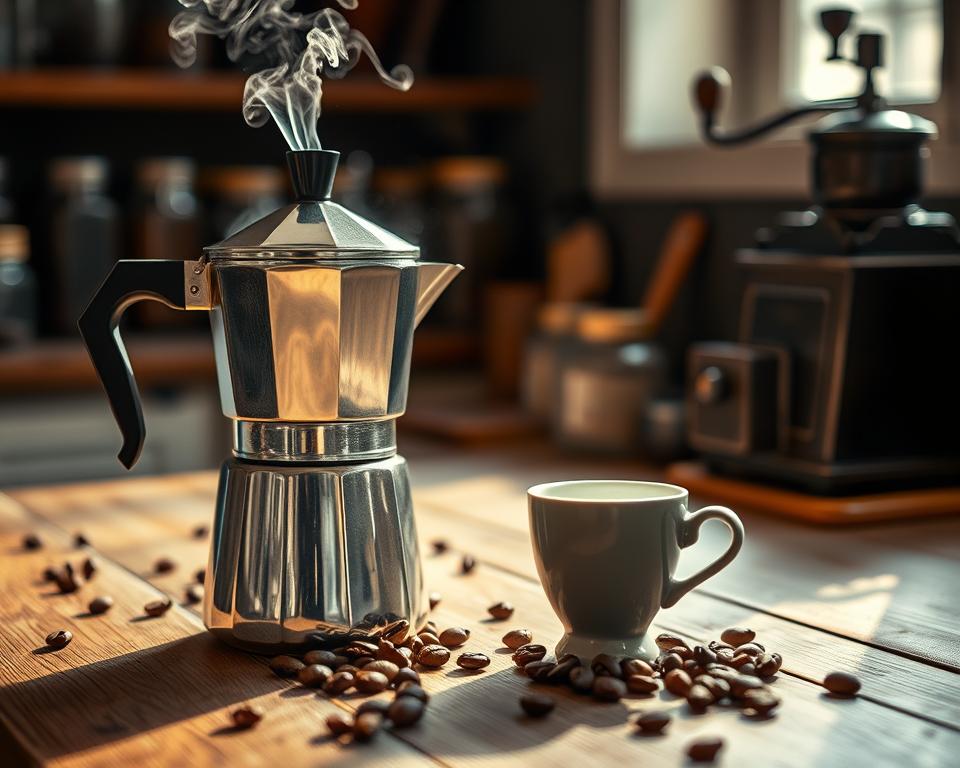
I’ve been a Moka Pot fan for a long time. I’m excited to share my knowledge to help you improve your coffee. The Moka Pot has been brewing great coffee for over 80 years. It’s a favorite among coffee lovers.
Using a Moka Pot can be a bit challenging. But with the right tips, you can make the most of it. In this article, we’ll cover the basics of Moka Pot brewing. We’ll talk about choosing the right coffee and expert advice for your coffee maker.
Key Takeaways
- Learn how to choose the right coffee for your Moka Pot
- Discover expert tips for mastering the Moka Pot brewing process
- Understand how to optimize your Moka Pot for the best flavor
- Get insights into common mistakes to avoid when using a Moka Pot
- Find out how to maintain and clean your Moka Pot for longevity
Understanding the Moka Pot Basics
Learning how a Moka Pot works is key to making the perfect coffee. This classic stovetop coffee maker uses a simple yet effective method. It has been a favorite among coffee lovers for many years.
What is a Moka Pot?
A Moka Pot is a stovetop coffee maker that uses steam pressure to force water through coffee grounds. This makes a rich and full-bodied coffee. It’s a manual, non-electric method that lets you control the brewing process.
The Moka Pot has a unique octagonal shape and a three-chamber design. It has a bottom chamber for water, a middle chamber for coffee grounds, and a top chamber for the brewed coffee.
How Does a Moka Pot Work?
The Moka Pot works by using steam pressure to push water through coffee grounds. When the water in the bottom chamber heats up, it turns into steam. This steam pressure forces the water up through the coffee and into the top chamber.
This process extracts flavors from the coffee grounds efficiently. It results in a smooth and satisfying cup of coffee.
Key Components of the Moka Pot
The Moka Pot has several key parts that work together to make great coffee. These include:
- The bottom chamber, which holds the water.
- The filter basket, where the coffee grounds are placed.
- The top chamber, which collects the brewed coffee.
- The gasket and seal, which ensure a tight seal and proper pressure.
Knowing these components and how they work is vital for optimal Moka Pot performance. It also helps in troubleshooting any issues.
By understanding the basics of the Moka Pot, you can experiment with different coffee blends and brewing techniques. This will enhance your coffee experience.
Choosing the Right Coffee for Your Moka Pot
Finding the right coffee beans can make your Moka Pot brewing better. With so many choices, picking the perfect coffee can be hard. But knowing a few key things can really help your brewing.
Best Coffee Beans for Moka Pot Brewing
Choosing the right coffee beans is key for Moka Pot brewing. Arabica beans are better than Robusta because they taste richer and more complex. Look for beans that are freshly roasted and have a medium to dark roast level. These usually taste the best in a Moka Pot.
Latin American and African beans are great for Moka Pot brewing. Latin American beans, like those from Colombia or Brazil, have a balanced taste and a smooth flavor. African beans add a bright, fruity taste to your coffee.

Grind Size: Why It Matters
The grind size of your coffee beans is very important for a good Moka Pot brew. If the grind is too fine, your coffee will taste bitter. If it’s too coarse, it will taste weak.
The best grind size is like table salt. It lets the coffee extract just right during brewing. Using a good burr grinder helps you get a consistent grind and better-tasting coffee.
Experimenting with Flavor Profiles
Brewing with a Moka Pot lets you try different flavors. You can change the coffee beans, roast level, and grind size to find your favorite taste.
Trying a single-origin coffee can show off the unique taste of that bean. Mixing different beans can create a complex and balanced flavor. Don’t be shy to try new things and find what you like best.
Mastering the Brewing Process
With your Moka Pot and coffee beans ready, it’s time to start brewing. This is where the magic happens. Getting it right is key to a perfect cup of coffee.
Prepping Your Moka Pot
Before brewing, make sure your Moka Pot is clean. Use warm water and a soft sponge to clean it. Avoid harsh materials that could scratch it. Rinse well to get rid of soap.
Fill the bottom chamber with fresh, cold water. Make sure the water level is below the safety valve. Add coffee grounds to the filter basket. The grind size is important; it should be fine but not too fine to clog. Level the grounds but don’t press down too hard to avoid over-extraction.
Water Temperature and Quality
Water temperature is key in brewing. It should be between 195°F and 205°F for the best flavor. Water that’s too hot or too cold can mess up the taste.
“The quality of the water is just as important as its temperature,”
as it affects the coffee’s taste.
For the best taste, use filtered water. If your tap water tastes good, you can use it. But if it’s chlorinated or smells bad, use filtered or bottled water.
Brewing Time: Finding the Sweet Spot
The brewing time is also important. It usually takes 4 to 6 minutes. Listen for the gurgling sound to know it’s done. Adjusting the heat can change the brewing time.
- For a stronger brew, reduce the heat towards the end.
- For a lighter brew, keep the heat steady.
Try different brewing times and heat levels to find your perfect cup.
Tips for Perfecting Your Brew
To make the perfect cup of coffee with your Moka Pot, you need to get your technique right. It’s all about the little details that make your coffee go from good to great.
The coffee-to-water ratio is super important. Finding the right balance helps avoid under or over-extraction. This affects the taste of your coffee a lot.
Adjusting Coffee-to-Water Ratios
The ratio of coffee to water is key in brewing. A good starting point is 1 gram of coffee for every 15 grams of water. But, it’s all about what you like. Try different ratios to find your favorite.
If you want a stronger coffee, try 1:12 or 1:10. For a milder taste, go for 1:17 or 1:18.
Utilizing the Right Heat Source
The heat you use for your Moka Pot matters a lot. Use a low, steady heat for better control over the brewing.
High heat can make your coffee too bitter. Take the Moka Pot off the heat when you hear the gurgling sound. This means it’s done brewing.
“The art of brewing coffee is not just about the equipment; it’s about understanding the nuances that make a difference in the flavor.”
Storing Leftover Coffee Properly
Storing leftover coffee right is key to keeping its taste. Use an airtight container to keep it fresh. This stops air, moisture, and light from getting in.
Putting your coffee in the fridge helps keep it fresh. But, make sure to use an airtight container. This stops your coffee from picking up smells from other foods.
Troubleshooting Common Issues
Moka Pot lovers often face problems that can spoil their coffee. But, these issues can be fixed easily. We’ll look at common problems and how to solve them step by step.
How to Fix Bitter Coffee
Bitter coffee is a common problem with Moka Pots. To fix it, try adjusting your coffee-to-water ratio. Too much coffee can make it bitter. For more help, check out this resource on Moka Pot issues.
Also, check the grind size of your coffee beans. A grind that’s too fine can cause bitterness. Try a coarser grind to see if it helps.
Preventing Over-Extraction
Over-extraction makes your coffee taste bad. To avoid it, watch your brewing time closely. Aim for 4-6 minutes for the best taste.
Adjusting the heat can also help. High heat can extract coffee too fast. Lower the heat to get a better balance.
Solving Clogging Problems
Clogging can mess up your Moka Pot’s performance. Make sure your coffee grounds aren’t too fine. Also, clean your Moka Pot regularly to avoid clogs.
| Issue | Cause | Solution |
|---|---|---|
| Bitter Coffee | Too much coffee or too fine a grind | Adjust coffee-to-water ratio or grind size |
| Over-Extraction | Too long brewing time or too high heat | Monitor brewing time and adjust heat |
| Clogging | Too fine coffee grounds or buildup | Use coarser grounds and clean Moka Pot regularly |
Enhancing Your Moka Pot Experience
Now that you know how to use your Moka Pot, let’s explore flavor variations and accessories. Making your Moka Pot experience better is all about trying new things and being creative.
Adding Flavor Variations
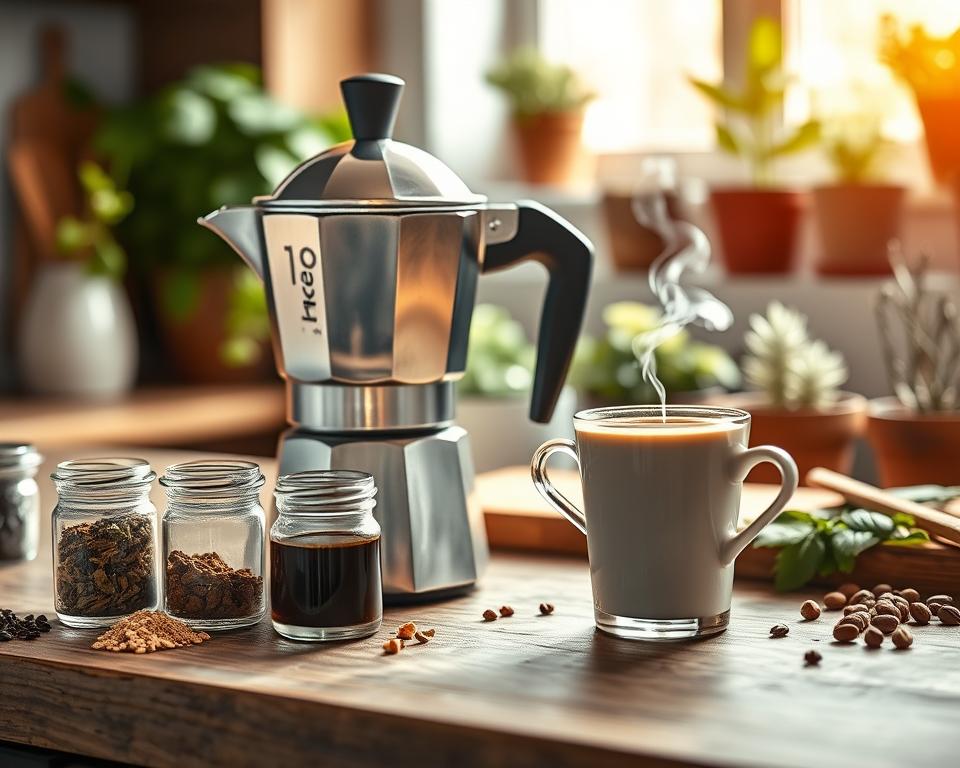
Using a Moka Pot lets you play with different coffee flavors. You can add spices like cinnamon or nutmeg to your coffee for a unique taste. For a sweeter coffee, try adding vanilla powder or a bit of honey.
For a bold move, try brewing coffee with flavored syrups or extracts. You can go from vanilla and hazelnut to caramel or peppermint. The goal is to find a flavor that complements your coffee without taking over.
Pairing with Pastries and Snacks
Pairing your Moka Pot coffee with the right treats can make your coffee time even better. Italian pastries like biscotti or cornetti are great for dipping in your coffee. For something sweeter, try pairing your coffee with croissants or muffins.
Moka Pot coffee also goes well with savory snacks. Enjoy your coffee with toasted almonds or cheese and crackers for a tasty snack.
Using Accessories for Better Brews
Getting the right moka pot accessories can really improve your coffee. A coffee grinder lets you freshly grind your beans for the best flavor. A scale helps you get the perfect coffee-to-water ratio.
Other accessories like a coffee tamp or a brewing timer can also make your Moka Pot experience better. These tools help you get a consistent brew. They’re great for when you entertain or want your coffee to be perfect.
By using these tips, you can make your Moka Pot experience even more enjoyable. Try new flavors and enjoy your coffee in different ways.
Cleaning and Maintaining Your Moka Pot
To keep your Moka Pot brewing great coffee, clean and maintain it regularly. A clean Moka Pot tastes better and lasts longer.
Effective Cleaning Methods
Cleaning your Moka Pot often is key. Take it apart after each use and wash with warm, soapy water. Don’t use harsh cleaners or scourers to avoid damage.
For hard stains or mineral buildup, mix equal parts water and white vinegar. Fill the bottom chamber with it and brew without coffee. This cleans and descales the pot.
Replacing Worn-Out Parts
Parts like the rubber seal and filter can wear out. Check them often and replace them when needed. A bad seal causes leaks, and a clogged filter spoils the coffee taste.
Look up the manufacturer’s guide for replacement parts. Follow their installation steps carefully.
Safe Storage Practices
After cleaning and drying, store your Moka Pot right. Keep it in a dry spot, away from sunlight and heat.
| Storage Tip | Benefit |
|---|---|
| Dry the Moka Pot thoroughly | Prevents mineral deposits and bacterial growth |
| Store in a cool, dry place | Maintains the integrity of the materials |
| Keep it away from direct sunlight | Prevents fading and damage to the finish |
By cleaning, maintaining, and storing your Moka Pot right, you’ll enjoy great coffee for years.
Exploring Moka Pot Alternatives
The world of stovetop coffee makers is full of options beyond the Moka Pot. If you’re looking to try something new or compare brewing methods, this section will guide you. It will cover some popular alternatives.
Other Stovetop Coffee Makers
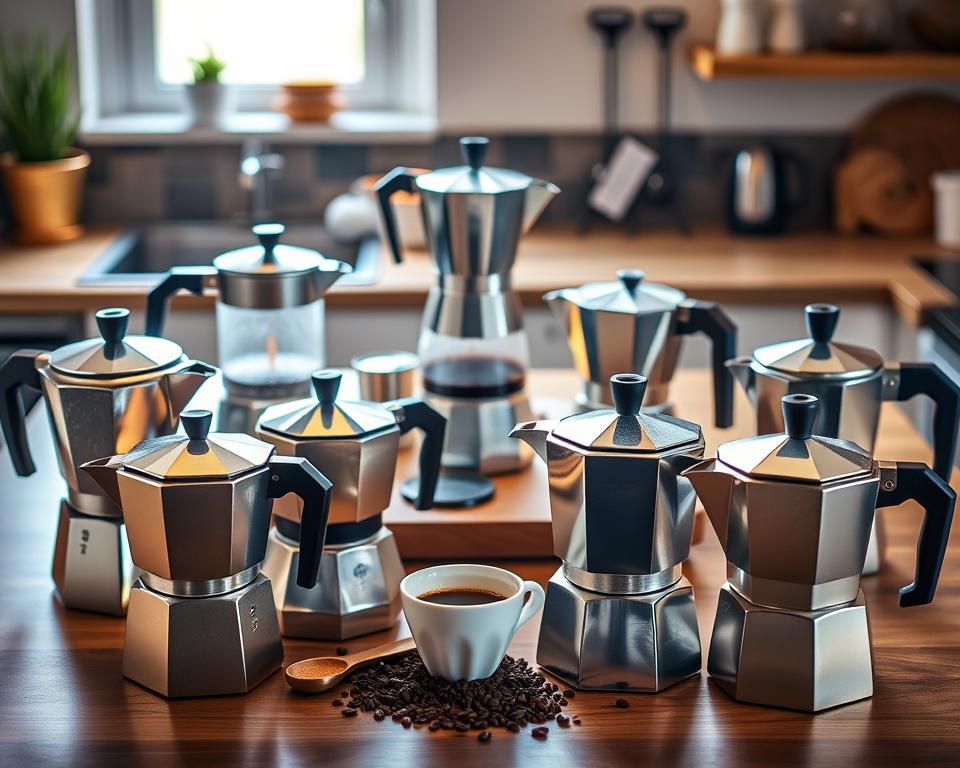
While the Moka Pot is loved, other stovetop coffee makers have unique features. They might suit your taste better. Some popular alternatives include:
- The Turkish coffee pot, known for its rich, bold flavor.
- The stovetop espresso maker, which produces a concentrated coffee similar to traditional espresso.
- The Percolator, a classic brewing method that cycles hot water through the coffee grounds.
Each alternative has its own pros and cons. For example, Turkish coffee pots are great for small, strong cups. Percolators are better for brewing larger quantities.
Comparing with French Press and Pour-Over
It’s important to compare the Moka Pot with other popular methods like French Press and pour-over. Here’s a comparison table to help you understand the differences:
| Brewing Method | Coffee Strength | Ease of Use | Cleanup |
|---|---|---|---|
| Moka Pot | Strong | Moderate | Easy |
| French Press | Very Strong | Easy | Moderate |
| Pour-Over | Variable | Moderate | Easy |
As shown in the table, each brewing method has its strengths. The Moka Pot is known for producing strong coffee with moderate ease of use.
When to Choose the Moka Pot
Despite other brewing methods, the Moka Pot is a favorite for many. You might prefer the Moka Pot if:
- You enjoy a strong, rich coffee.
- You appreciate the nostalgic or traditional aspect of using a Moka Pot.
- You need a brewing method that’s relatively easy to clean and maintain.
In conclusion, while there are many alternatives, the Moka Pot is a great choice. It’s perfect for those who value its unique characteristics. By understanding the strengths and weaknesses of different brewing methods, you can make an informed decision about which one is best for your needs.
Inspiring Recipes Using Moka Pot Coffee
With your Moka Pot coffee, the world of flavors opens up. You can try new recipes that make your coffee time special. I enjoy trying out new things with my Moka Pot coffee, and I’m eager to share some ideas with you.
Crafting Delicious Coffee Drinks
Making classic coffee recipes with Moka Pot coffee is a favorite of mine. Try mixing your Moka Pot coffee with steamed milk for a creamy café au lait. You can also add a pinch of cinnamon or nutmeg for a unique flavor.
Espresso-Based Delights
Moka Pot coffee is great for making espresso-based drinks. Mix it with frothed milk for a smooth cappuccino. For a richer treat, add chocolate syrup to your espresso drink.
Desserts with a Coffee Twist
Using Moka Pot coffee in desserts is another fun way to enjoy it. Try making a mocha cheesecake or a coffee-infused tiramisu. The rich taste of Moka Pot coffee goes well with chocolate and creamy textures, making desserts even better.