

As a coffee lover, I’m thrilled to share with you the differences between agitation and immersion brewing methods. Did you know that how you brew your coffee can change its taste? In fact, a study showed that brewing methods can alter coffee taste by up to 20%. This made me wonder – what’s the best way to highlight your favorite coffee beans’ unique flavors?
In this article, we’ll dive into specialty coffee brewing techniques. We’ll look at the special qualities of agitation and immersion methods. By knowing the differences, you’ll be able to brew the perfect cup of coffee that matches your taste.
Key Takeaways
- Understand the differences between agitation and immersion brewing methods.
- Learn how to bring out the unique characteristics of your favorite coffee beans.
- Discover the impact of brewing methods on coffee flavor profiles.
- Explore specialty coffee brewing techniques to enhance your brewing skills.
- Compare coffee brewing methods to find the best fit for your taste preferences.
Understanding Coffee Brewing Methods
The world of coffee brewing is full of variety. Agitation and immersion brewing are two main ways to make coffee. Knowing these methods is key for those who love coffee and want to get better at brewing.
Coffee brewing falls into two main types: agitation and immersion. Each has its own way of making coffee taste different.
What is Coffee Agitation?
Coffee agitation means moving the coffee grounds while brewing. This makes sure the grounds soak up water evenly. This leads to a more balanced taste.
The benefits of coffee agitation are:
- More control over brewing
- Clearer flavor
- Better taste of coffee’s subtle notes
What is Coffee Immersion?
Coffee immersion means letting the grounds steep in water for a while. This makes the coffee richer and fuller. The longer the grounds are in water, the better the taste.
The main points of coffee immersion are:
- Steeping coffee grounds in water
- Longer time for extraction
- Richer, fuller flavor
Understanding agitation and immersion brewing helps coffee lovers choose the right method and tools. This leads to a more enjoyable coffee experience.
The Science Behind Brewing Techniques
To master coffee brewing, you need to understand the science behind it. The methods used, like agitation or immersion, greatly affect the taste and quality of your coffee.
How Agitation Affects Extraction
Agitation is key in coffee brewing. It ensures all grounds are saturated evenly, leading to balanced extraction. This balance is what brings out the best flavors in your coffee.
Key benefits of agitation include:
- Increased extraction efficiency
- Improved flavor balance
- Enhanced overall coffee quality
The Role of Time in Immersion
Immersion brewing depends on how long the coffee grounds are in water. Longer times mean more extraction, but too long can make the coffee bitter.
Factors influenced by immersion time:
- Flavor profile
- Strength of the coffee
- Potential for over-extraction
Coffee Particle Size and Flavor
The size of coffee particles also impacts flavor. Finer grinds extract faster, while coarser ones take longer. This affects the taste of your coffee.
| Grind Size | Extraction Rate | Flavor Profile |
|---|---|---|
| Fine | Fast | Bright, acidic |
| Medium | Balanced | Balanced, nuanced |
| Coarse | Slow | Rich, full-bodied |
Understanding these scientific principles lets coffee lovers experiment. They can tweak agitation, immersion time, or grind size to create their ideal cup. The possibilities for personalizing your coffee are endless.
Comparing Flavor Profiles: Agitation vs. Immersion
Brewing coffee through agitation or immersion methods yields distinct flavor profiles. As a coffee enthusiast, understanding these differences can elevate your brewing experience.
Brightness and Acidity Levels
Agitation brewing methods, such as pour-over, tend to result in brighter, more acidic flavors. This is because the water flows through the coffee grounds in a controlled manner, extracting more acidic compounds. On the other hand, immersion brewing methods, like French press, steep the grounds in water, leading to a potentially less acidic flavor profile.
Full-Bodied vs. Clean Cup
Immersion brewing often results in a full-bodied cup due to the longer steeping time, which extracts more oils from the coffee beans. In contrast, agitation methods can produce a cleaner cup, as the water passes through the grounds, leaving behind some of the heavier oils.
| Brewing Method | Brightness/Acidity | Body/Cleanliness |
|---|---|---|
| Agitation (Pour-over) | Bright, acidic | Clean cup |
| Immersion (French press) | Less acidic | Full-bodied |
By understanding these differences, you can choose the brewing method that best suits your taste preferences. Whether you prefer the bright, clean taste of agitation brewing or the rich, full-bodied flavor of immersion brewing, there’s a method out there for you.
Popular Brewing Methods Using Agitation
The art of agitation brewing includes several techniques loved by coffee fans. These methods let people try out different tastes and brewing styles.
French Press
French Press, also known as a cafetière or coffee press, is a classic. It uses agitation to get flavors from coffee grounds. Pressing the plunger mixes the grounds with water, making a rich coffee.
Key Characteristics: Rich flavor, heavy body, and thick texture from the immersion of grounds.
AeroPress
The AeroPress combines French Press and pour-over methods. It involves adding hot water to coffee, stirring, and then pressing through a filter. This makes a smooth, full-flavored coffee.
Key Characteristics: Smooth flavor, low acidity, and a clean finish.
Pour Over Techniques
Pour-over brewing means pouring hot water over coffee beans in a filter. It lets you control brewing details like water temperature and coffee-to-water ratio. You can also adjust the agitation technique.
Key Characteristics: Clean and nuanced flavor, with the ability to highlight subtle coffee notes.
| Brewing Method | Flavor Profile | Body |
|---|---|---|
| French Press | Rich, bold | Heavy |
| AeroPress | Smooth, full-flavored | Medium |
| Pour Over | Clean, nuanced | Light to Medium |
Each agitation brewing method gives a unique coffee experience. They let coffee lovers explore different flavors and techniques. Knowing what each method offers helps you pick the best one for your coffee needs.
Immersion Brewing Methods Explained
Immersion brewing uses several techniques to create unique flavors. It involves steeping coarse coffee grounds in water. This method extracts rich flavors. We’ll look at three popular methods: Cold Brew Coffee, Turkish Coffee, and Traditional French Press.
Cold Brew Coffee
Cold brew coffee is a refreshing summer drink. It’s made by steeping coarse-ground coffee in cold water for 12-24 hours. This method makes a smooth, low-acidity coffee great for hot days.
To make cold brew, you need a cold brew maker or a large glass jar. For more details, check Prima Coffee’s guide on immersion coffee.
- Use coarse-ground coffee to prevent over-extraction.
- Steep the coffee in cold water for 12-24 hours.
- Strain the coffee grounds before serving.
Turkish Coffee
Turkish coffee is a traditional method. It involves finely grinding the coffee beans and brewing them in a small pot called an ibrik or cezve. The coffee is not filtered, so the grounds stay in the liquid, creating a strong flavor.
Turkish coffee is served in small cups. The grounds are allowed to settle at the bottom.
- Grind the coffee beans to a fine powder.
- Combine the coffee grounds with cold water in an ibrik.
- Heat the mixture over low heat until it froths.
Traditional French Press
French press, also known as a cafetière or coffee press, is a classic method. It involves adding coarse coffee grounds to a container, pouring hot water over them, and then pressing the grounds to the bottom. French press coffee is known for its rich flavor and the texture of the coffee grounds at the bottom of the cup.
To brew the perfect French press coffee, follow these steps:
- Use a coarse grind to prevent clogging the press.
- Heat water to the optimal temperature (around 200°F).
- Steep the coffee for 3-4 minutes before pressing.
Factors Influencing Coffee Flavor
When brewing coffee, knowing what affects flavor is key. It’s not just about the beans. How you brew them matters too.
Water Temperature
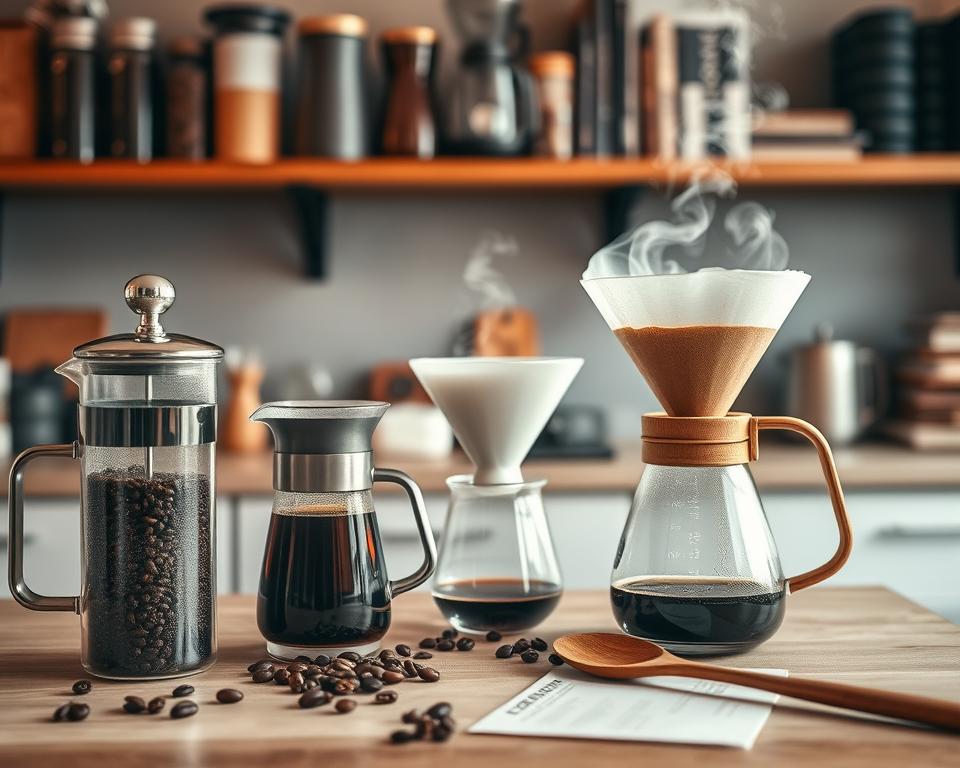
Water temperature is very important for extracting coffee flavors. The best temperature is between 195°F and 205°F. If it’s too hot, your coffee can taste bitter.
If it’s too cold, it won’t taste right. Coffee experts say the right temperature is essential for the best flavor. Understanding coffee extraction is vital.
Brew Time Considerations
Brew time also affects coffee flavor. Longer brew times extract more flavors. But, too long can make it bitter.
Too short, and it won’t taste good. Pour-over methods need 3-4 minutes. French press takes longer.
Coffee to Water Ratio
The coffee-to-water ratio is also important. Too much coffee makes it bitter. Too little makes it weak.
Use about 1 gram of coffee for every 15-17 grams of water. This lets you adjust the flavor to your liking.
By adjusting water temperature, brew time, and coffee-to-water ratio, you can improve your coffee’s flavor. Trying different settings is fun. It lets you find the perfect taste for you.
Equipment for Agitation Brewing
The right equipment can make a big difference in agitation brewing. It can take your coffee to a whole new level. Methods like pour-over, AeroPress, and French press need specific tools to get the best results.
Recommended Pour Over Gear
Pour-over brewing is a favorite among coffee lovers. It lets you control the brewing process a lot. To pour-over like a pro, you’ll need a few key items.
- A pour-over dripper, such as the Hario V60 or Chemex
- A coffee grinder, preferably a burr grinder like the Baratza Encore
- A kettle, ideally with a gooseneck spout for precise pouring, such as the Fellow Stagg
Coffee expert James Hoffmann says, “Pour-over brewing is great for those who love the details in their coffee.”
“Pour-over brewing is all about control and precision. It lets you adjust your brewing to match the coffee perfectly.”
Best Practices for AeroPress
The AeroPress is a versatile brewing device. Here are some tips for using it:
- Use a fine grind size for better extraction
- Try different brewing times and pressures to find your perfect mix
- Get a high-quality AeroPress, like the AeroPress Standard
| AeroPress Model | Key Features |
|---|---|
| AeroPress Standard | Durable, BPA-free plastic; easy to clean |
| AeroPress Go | Portable design; includes a travel mug |
Unique Tools for French Press
French press, or cafetière, is a classic brewing method. It involves steeping coarse coffee grounds in hot water and then pressing them down. To improve your French press experience, consider these tools:
- A high-quality French press coffee maker, such as the Bodum Chambord
- A coffee grinder, as freshly grinding your beans is essential for optimal flavor
By choosing the right equipment for your chosen agitation brewing method, you’ll be on your way to making amazing coffee at home.
Immersion Brewing Equipment Essentials
Immersion brewing needs specific gear, and I’m here to help you find the best. The right tools can make your coffee better. They let you try different brewing methods and techniques.
Choosing the Right Cold Brew Maker
Cold brew coffee is smooth and popular. You need the right maker for this. Look for a maker that’s easy to use and has the right size and material.
The Takeya Cold Brew Coffee Maker is a great choice. It’s affordable and easy to use. It has a stainless steel filter that keeps the coffee grounds out.
Selecting a French Press
A French Press is a classic brewing device. When picking one, think about the material and filter. Glass and stainless steel are good choices. Glass lets you see the coffee, and stainless steel keeps it warm.
- Choose a French Press with a comfortable handle and lid.
- Think about the size based on how much coffee you drink.
- A fine-mesh filter is key to keep coffee grounds out.
Other Immersion Tools
There are more tools to explore beyond cold brew makers and French Press. The AeroPress is great for both hot and cold coffee. It uses immersion and pressure to get flavors from the coffee.
| Tool | Description | Best For |
|---|---|---|
| Cold Brew Maker | Brews coffee without heat | Cold brew coffee |
| French Press | Steeps coarse coffee grounds | Rich, full-bodied coffee |
| AeroPress | Combines immersion and air pressure | Versatile brewing, hot or cold coffee |
Choosing the right equipment lets you try different brewing methods. Whether you’re new to coffee or an expert, the right tools make a big difference.
Common Mistakes in Brewing Techniques
Even coffee lovers can make mistakes when brewing. Knowing these errors helps you make better coffee every time.
Over-Agitation Issues
Agitating coffee too much can ruin its flavor. This is because it leads to over-extraction, making the coffee taste bitter. This is a big problem for pour-over and French press, where coffee sits in water for a long time.
To avoid this, find the right balance. For pour-over, pour water in circles to soak the grounds evenly. As coffee aficionado James Hoffmann once said, “The key to a great cup of coffee is not just the beans, but how you treat them during the brewing process.”
Incorrect Immersion Times
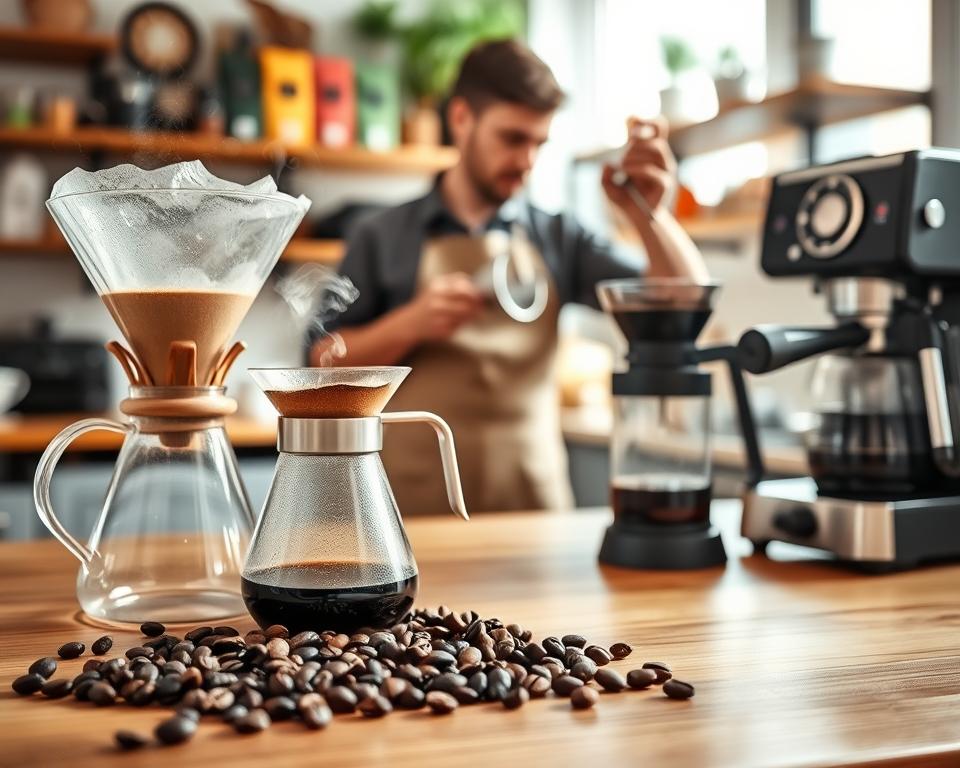
Immersion brewing, like French press and cold brew, needs the right timing. Wrong times can mess up the flavor. For example, too long in a French press makes the coffee taste muddy.
To get it right, try different times to see what you like. A French press usually needs about 4 minutes. But this can change based on the coffee-to-water ratio and bean grind.
“The art of coffee brewing is not just about following a recipe; it’s about understanding the nuances that make a difference in the flavor.” –
Knowing these mistakes and adjusting your brewing can make your coffee much better. Whether you’re using agitation or immersion, finding the right balance is key.
Tips for Perfecting Agitation Brewing
To master agitation brewing, knowing the right techniques is key. It involves using the right equipment and methods for the perfect coffee.
Techniques for Consistent Results
Consistency is key in agitation brewing. Here are some top techniques for brewing coffee at home:
- Use a consistent grind size to ensure even extraction.
- Maintain the optimal water temperature between 195°F and 205°F.
- Experiment with different coffee-to-water ratios to find your ideal balance.
- Agitate the coffee grounds gently but thoroughly to prevent channeling.
By following these specialty coffee brewing techniques, you can achieve a more balanced flavor in your coffee. It’s also important to monitor the brewing time to ensure it’s within the optimal range.
Troubleshooting Common Issues
Even with the right techniques, issues can arise in agitation brewing. Here are some common problems and their solutions:
- Over-extraction: If your coffee tastes bitter, it may be over-extracted. Try reducing the brewing time or adjusting the grind size.
- Under-extraction: If your coffee tastes sour, it may be under-extracted. Try increasing the brewing time or agitating the grounds more thoroughly.
- Channeling: If you notice channeling, adjust your agitation technique to ensure all grounds are saturated evenly.
By understanding the differences between agitation vs immersion coffee brewing, you can better troubleshoot issues and refine your brewing technique. With practice and patience, you’ll be able to perfect your agitation brewing skills and enjoy a superior cup of coffee.
Mastering Immersion Brewing Techniques
Getting the perfect cup of coffee with immersion brewing is more than just steeping grounds in water. It’s about understanding the brewing process to bring out the best flavors.
Immersion brewing fully saturates coffee grounds in water, creating a unique flavor extraction. This method is used in brewing methods like French press and cold brew.
Achieving the Right Balance
The secret to a great immersion brew is finding the right coffee-to-water ratio. Too much coffee makes it bitter, while too little makes it weak.
Experimenting with ratios is key. Start with a 1:15 coffee-to-water ratio. But, adjust it based on your taste and the coffee beans.
| Coffee-to-Water Ratio | Flavor Profile |
|---|---|
| 1:12 | Strong, rich flavor |
| 1:15 | Balanced, smooth flavor |
| 1:18 | Light, nuanced flavor |
Experimenting with Brew Times
Brew time greatly affects coffee flavor. Longer times make it stronger and more bitter. Shorter times make it lighter.
Adjusting brew times based on coffee bean origin and roast level is important. For example, a darker roast might need a shorter brew time to avoid bitterness.
Mastering immersion brewing techniques lets coffee lovers explore many flavors. They can find their perfect cup.
Conclusion: Finding Your Brew Preference
Exploring coffee brewing shows us that it’s all about what you like. Agitation and immersion methods have their own ways of making coffee. By trying them out, you can find the perfect cup for you.
The Brewing Method That Suits You
Looking at coffee brewing methods, agitation and immersion stand out. Agitation, like pour-over and AeroPress, gives a clean taste. On the other hand, immersion, such as French press and cold brew, offers a richer flavor.
Exploring Specialty Coffee Brewing Techniques
Keep exploring specialty coffee brewing techniques. The secret to your perfect brew is in trying new things. Use different tools, like pour-over drippers or French press, to see what you like best. Whether you’re into the bright taste of agitation or the deep flavor of immersion, there’s a brewing method for you.