

Did you know the secret to a perfect cup of coffee is the coffee brew ratio? It can take your brewing to the next level. Finding the right balance between coffee and water is key. It affects the taste and quality of your coffee.
Knowing and using the perfect coffee ratio can change everything. It doesn’t matter if you’re a coffee expert or just starting out. Learning the brew ratio is a simple way to improve your coffee-making skills.
Key Takeaways
- Understanding the importance of coffee brew ratios.
- Learning how to apply the perfect coffee ratio.
- Enhancing your brewing skills with simple adjustments.
- Exploring different brewing methods and their ideal ratios.
- Discovering how to customize your brew ratio for the perfect cup.
Understanding Coffee Brew Ratios
Coffee brew ratios are key to making the perfect cup. They affect both taste and quality. The coffee to water ratio is critical for flavor and strength.
What is a Brew Ratio?
A brew ratio is the coffee to water mix during brewing. It’s usually shown as a ratio, like 1:15. This means one gram of coffee for every 15 grams of water. This ratio greatly affects the coffee’s taste.
Why Brew Ratios Matter
Brew ratios matter because they control how much coffee is extracted into the water. The right ratio leads to a balanced extraction, making the coffee flavorful. Too little coffee makes it weak, while too much makes it bitter.
The Science Behind Brewing
The science of brewing coffee is about extracting compounds from beans into water. The brew ratio is vital in this process. The right ratio extracts the right flavors and oils from the beans. Knowing this science helps adjust the ratio for the perfect cup.
Learning about coffee brew ratios helps coffee lovers find their perfect cup. Whether you’re new or experienced, understanding ratios is essential for better coffee.
Coffee-to-Water Ratio Basics
Finding the right coffee-to-water ratio is key to enjoying your coffee. This ratio affects the flavor and quality of your coffee.
The coffee-to-water ratio is the coffee to water used in brewing. It’s a simple yet important factor. Different brewing methods need different ratios.
Common Ratios for Different Brews
Each brewing method has its own ratio. For example, pour-over uses a ratio of 1:15 to 1:17. French press uses a stronger ratio of 1:12 to 1:15. Knowing these ratios helps you experiment with your brew.
| Brewing Method | Recommended Ratio |
|---|---|
| Pour-Over | 1:15 to 1:17 |
| French Press | 1:12 to 1:15 |
| AeroPress | 1:10 to 1:13 |
| Espresso | 1:2 to 1:3 |
Experimenting with Ratios
Try different coffee-to-water ratios to find your perfect cup. Start with the recommended ratio for your method. Then, adjust it to your taste.
If your coffee is too weak, add more coffee. If it’s too strong, add more water.
Adjusting for Taste Preference
Everyone’s taste is different. What you like might not be the same for others. Adjusting the ratio is a personal journey.
By understanding and experimenting with ratios, you can make your coffee just right for you.
Popular Brewing Methods and Their Ratios
Different brewing methods need specific coffee-to-water ratios to highlight the best in your coffee beans. Knowing these ratios is essential for mastering your favorite brewing technique.
Pour-Over
The pour-over method lets you control brewing parameters, including the coffee-to-water ratio. A common ratio is 1:15 to 1:17, or 1 gram of coffee for every 15 to 17 grams of water. You can adjust this ratio based on taste and the coffee beans you use.
French Press
French press, or cafetière, involves steeping coarse coffee grounds in hot water. Then, you press the grounds to the bottom to separate them from the liquid. The usual ratio is between 1:12 and 1:15. A coffee ratio calculator can help you get the perfect French press coffee.
AeroPress
The AeroPress is a hand-powered brewing method that offers a clean and full-bodied extraction. The recommended ratio is between 1:5 and 1:7. Some prefer a stronger or weaker brew. Try different ratios to find your ideal AeroPress coffee.
Espresso
Espresso is a strong coffee made by forcing hot water through finely ground beans. The traditional ratio is about 1:2, but it can vary based on roast level and desired strength. Getting precise coffee measurements is key for high-quality espresso.
Understanding the typical brew ratios for these popular methods can improve your brewing skills. Whether you’re a coffee expert or new to it, trying different ratios and methods can help you find your perfect cup.
How to Use a Coffee Brew Ratio Chart
Using a coffee brew ratio chart can improve your coffee brewing skills. It gives you a clear guide to the ideal coffee strength ratio. This chart helps you understand the coffee-to-water ratio, making your coffee just right for you.
To use a coffee brew ratio chart well, first learn how to read it. These charts show the coffee-to-water ratio on one side and the brew strength on the other. By using this chart, you can find the perfect balance for your taste.
Reading the Chart
When you read a coffee brew ratio chart, pay attention to the units. Most charts use grams for both coffee and water. This gives the most accurate measurement. The chart will show the coffee weight on one side and the water weight on the other, with the brew strength shown.
Finding Your Ideal Ratio
Finding your ideal coffee-to-water ratio takes some trial and error. Start by picking a ratio from the chart that matches your desired brew strength. For example, if you like a strong brew, try a ratio of 1:12 (coffee:water). Then, adjust the ratio based on your taste preferences.
Here’s a table to help you with common coffee-to-water ratios and their brew strengths:
| Coffee-to-Water Ratio | Brew Strength |
|---|---|
| 1:15 | Light |
| 1:12 | Medium |
| 1:10 | Strong |
Making Adjustments Based on Strength
After finding a starting point, you can adjust the ratio based on the brew strength. If the coffee is too weak, use more coffee. If it’s too strong, use less. This way, you can fine-tune your brewing to get the perfect cup every time.
By following these steps and using a coffee brew ratio chart, you can make high-quality coffee that suits your taste. This will help you consistently brew great coffee.
Tips for Measuring Coffee and Water
Getting the perfect cup of coffee starts with precise coffee measurements. To make coffee just right, knowing how to measure accurately is key.
Using a Scale for Precision
Using a scale is a great way to get precise coffee. A digital scale lets you measure coffee and water accurately. Look for a scale that can measure in small increments, like 0.1 grams.
With a scale, measuring coffee and water is easy. You don’t have to guess or convert. This is helpful when you’re trying out different coffee ratios.
Volume vs. Weight Measurements
There are two ways to measure coffee and water: by volume or weight. Volume, like tablespoons or milliliters, can be less accurate. Weight measurements, like grams, are more reliable.
The density of coffee can change a lot, depending on how it’s roasted or ground. Using weight measurements helps you get the right amount of coffee. This is important for a balanced flavor.
Alternatives to a Coffee Scale
If you don’t have a coffee scale, you can use a measuring spoon. It’s not as precise as a scale but can give a good estimate. But, the accuracy can depend on how you scoop the coffee.
You can also use pre-measured coffee packets. They make measuring easy but might not let you try different coffee ratios.
In conclusion, precise measurements are key for the perfect coffee. Using a scale or other methods can help you get the flavor you want.
Maintaining Consistency in Brewing
Consistency is key to mastering the art of coffee brewing. Achieving a perfect cup every time requires attention to detail and a consistent approach. We’ll explore the importance of consistency, how to keep records of your brew ratios, and tips for troubleshooting common brewing issues.
Importance of Consistency
Consistency in brewing ensures that you can replicate your favorite cup of coffee whenever you want. It’s about understanding the variables that affect your brew and keeping them constant. This includes the coffee-to-water ratio, brewing time, and the grind size of your coffee beans. By maintaining consistency, you can refine your brewing technique and enjoy a perfect cup every time.
Using a coffee brewing guide can help you achieve consistency by providing a framework for your brewing experiments. It allows you to track changes and their effects on the final product. For more detailed information on coffee-to-water ratios, you can refer to guides like the one found on Methodical Coffee.
Keeping Records of Brew Ratios
Keeping a record of your brew ratios and the resulting flavor profiles is key for consistency. It helps you identify patterns and make adjustments. You can use a simple notebook or a brewing app to log your brews. The key is to be consistent in what you record, so you can refer back to it later.
Here’s an example of how you can structure your records in a table format:
| Coffee (g) | Water (g) | Ratio | Flavor Profile |
|---|---|---|---|
| 30 | 500 | 1:16.7 | Balanced, slightly sweet |
| 30 | 450 | 1:15 | Strong, bold |
| 30 | 550 | 1:18.3 | Light, nuanced |
Troubleshooting Brewing Variations
Even with a consistent approach, variations can occur. Factors such as water temperature, coffee bean origin, and even the humidity in your brewing environment can affect your brew. When you notice a variation, refer to your brewing records to identify possible causes.
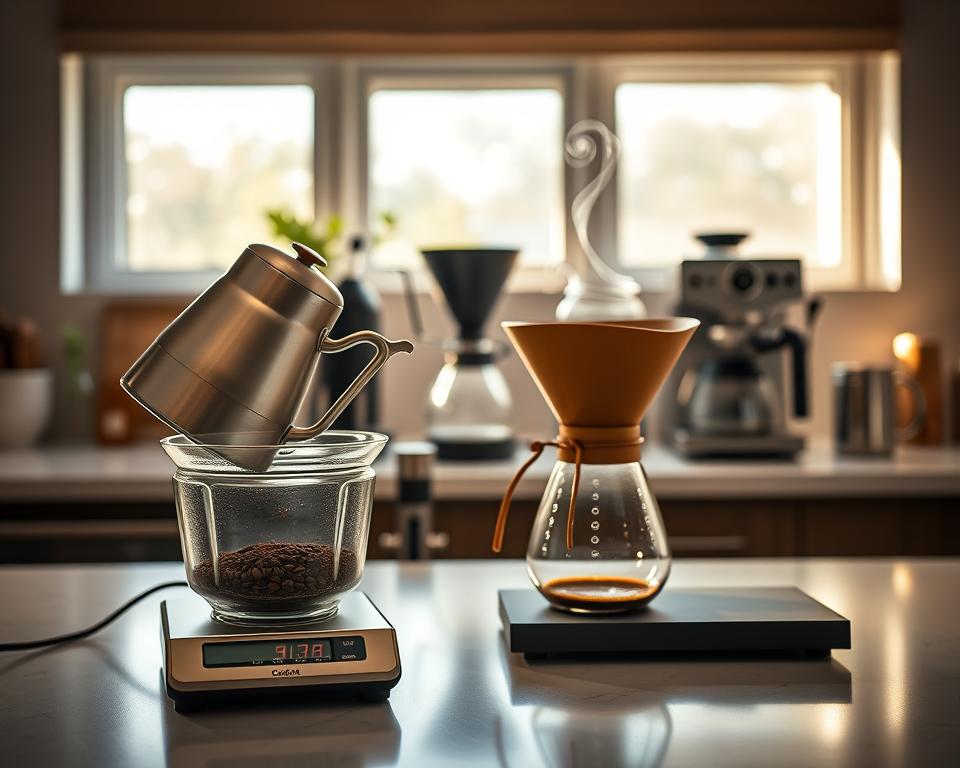
For instance, if your coffee tastes too weak, check if you’ve deviated from your usual coffee-to-water ratio. Adjusting your ratio or brewing time can help you get back on track. The key is to make one change at a time and observe its effect on the brew.
By following these guidelines and maintaining a consistent brewing practice, you’ll be well on your way to brewing coffee that meets your expectations every time.
Flavor Profiles and Brew Ratios
Knowing how brew ratios affect flavor is key to perfect coffee. The coffee-to-water ratio greatly influences taste, aroma, and quality.
How Ratios Impact Flavor
The brew ratio changes how flavors are extracted from coffee grounds. A higher ratio of coffee to water makes a stronger brew. A lower ratio makes it milder. For example, a 1:15 ratio is strong, while 1:17 is balanced.
Try different ratios to find your perfect flavor. For more info, check out this ultimate guide on coffee-to-water ratios.
Balancing Boldness and Smoothness
Finding the right balance between boldness and smoothness is key. Boldness comes from more coffee solids, while smoothness is about mouthfeel and less bitterness.
- A 1:12 ratio makes a bold, rich coffee.
- A 1:15 ratio balances strength and smoothness.
- A 1:17 or 1:18 ratio makes a smoother, nuanced coffee.
Tasting Different Ratios
Tasting coffee at different ratios helps you find what you like. You can see if you prefer strong or smooth coffee.
To taste different ratios, brew several cups at various ratios. Compare them side-by-side. Note the flavor, aroma, and enjoyment differences. This will help you find your ideal ratio.
By understanding brew ratios and experimenting, you’ll appreciate coffee brewing more. You’ll make high-quality coffee that you love.
My Personal Brewing Experience
Reflecting on my coffee brewing journey, I’ve learned the key to great coffee is the perfect ratio. It’s not just about following a recipe. It’s about understanding the unique ratios for each brewing method.
Learning from Mistakes
My early coffee brewing attempts were mixed. I once made a bitter cup that was almost like a coffee concentrate. It taught me the importance of measuring coffee and water correctly.
- Too much coffee can lead to bitterness.
- Too little coffee can result in a weak brew.
- The ratio of coffee to water is key for balanced flavor.
Discovering My Perfect Ratio
Through trial and error, I found my ideal coffee-to-water ratio. For pour-over, it’s 1:15, and for French Press, 1:12. Trying different ratios helped me find my perfect coffee ratio.

Sharing with Friends and Family
Brewing coffee is more than just for myself; it’s a way to connect with others. Sharing my coffee with friends and family has been enlightening. It shows how different people enjoy the same coffee brewed differently.
In conclusion, my quest for the perfect coffee ratio has been rewarding. It’s a journey of experimentation and learning from mistakes.
Final Thoughts on Coffee Brew Ratios
Exploring the perfect coffee brew ratio is a personal journey. A coffee brew ratio chart can be very helpful. It helps you find your ideal coffee strength ratio.
Discovering Your Ideal Cup
Experimentation is key to finding the perfect cup. Adjusting the coffee-to-water ratio changes the flavor. Keep trying different ratios to find what you like best.
Experimentation is Key
Don’t be afraid to try new things and adjust based on taste. Whether you like strong or smooth flavors, there’s a ratio for you.
Let Your Taste Guide You
The best coffee brew ratio is one that you enjoy. Use a chart and experiment to brew the perfect cup every time.