

I love coffee and the amazing flavors it can have. Did you know some coffee tastes like jasmine or rose? This is called floral coffee notes. It makes drinking coffee a special experience.
We’re going to explore floral coffee flavor profiles together. We’ll find out what makes these flavors unique and how to spot them. Knowing about floral coffee notes will help you enjoy your coffee even more.
Key Takeaways
- Understanding the characteristics of floral coffee notes
- Identifying floral flavors in coffee
- Exploring the sensory experience of floral coffee
- Tips for appreciating floral coffee notes
- Enhancing your coffee experience with floral notes
What Are Floral Coffee Notes?
Floral notes in coffee turn drinking coffee into an art. Exploring coffee’s world, we find these flavors fascinating.
To enjoy floral coffee notes, we must understand flavor profiles and the science behind them. Floral notes have delicate flavors, like jasmine or rose.
Understanding the Essence of Flavor Profiles
Coffee’s flavor comes from its bean’s origin, processing, and roast level. Floral undertones in coffee come from these factors, making each taste unique.
Getting to know flavor profiles means looking at how different elements affect taste. For example, coffee beans from certain places have more floral notes because of the local climate and soil.
The Science Behind Floral Aromas
The science of floral aromas in coffee is about the biochemical compounds in beans. These compounds create the floral notes we smell. Studies show that volatile organic compounds (VOCs) are key in forming these aromas.
When coffee beans are processed and roasted, VOCs change, affecting the floral notes. This is both an art and a science, as roasters must balance conditions to get the right floral flavors.
How Floral Coffee Notes are Discovered
To find floral notes in coffee, you need to know about coffee beans. The journey to find these flavors is about choosing the right beans and how they’re processed.
Sourcing Coffee Beans with Unique Aromas
Coffee beans with special smells come from places with unique climates and soils. For example, Ethiopian coffee is known for its floral and fruity tastes. This is because of the country’s high altitudes and rich soil.
James Hoffmann, a coffee expert, says, “The terroir of the coffee, including soil, climate, and altitude, plays a big role in floral notes.”
“The best coffees are those that are grown in environments that challenge the coffee plants, resulting in complex flavor profiles.”
The Role of Coffee Processing Methods
How coffee is processed affects its floral notes. The washed method, for instance, makes coffee taste cleaner and more floral.
| Processing Method | Impact on Floral Notes |
|---|---|
| Washed | Enhances floral notes, resulting in a cleaner flavor |
| Natural | Produces fruitier flavors, with possible floral notes |
| Honey | Balances between washed and natural, with nuanced floral hints |
Knowing about sourcing and processing helps coffee lovers enjoy floral notes more. Trying different methods and places can also reveal unique floral tastes.
Popular Floral Coffee Varietals
Some coffee varietals are known for their floral notes, a true delight for the senses. As a coffee lover, I’ve explored these and found their unique traits.
Floral coffee notes are a key feature of certain coffee types. They make the coffee tasting experience richer. The difference between floral and fruity notes is fascinating. It lets coffee lovers appreciate the complexity of coffee flavors.
Ethiopian Coffee: A Floral Paradise
Ethiopian coffee is famous for its delicate floral tastes, like jasmine or rose. It shows off Ethiopia’s rich coffee history and unique land, which adds to its flavor.
The way Ethiopian coffee is processed, like washed or dry, makes its floral notes even stronger. So, Ethiopian coffee is a top pick for those who love floral tasting notes in their coffee.
Colombian Coffees: Balancing Floral and Fruit Notes
Colombian coffee, by contrast, blends floral and fruit notes for a complex yet balanced taste. The country’s varied regions, with their different climates and soils, shape the coffee’s flavor. This makes Colombian coffee a showcase of balanced flavors.
Knowing the differences between these coffee types helps in differentiating floral and fruity coffee profiles. Whether you’re an expert or new to coffee, trying these varietals is a rewarding adventure.
My Favorite Floral Coffee Brewing Methods
As a coffee lover, I’ve found that brewing methods greatly affect the taste of floral coffee. The right way to brew can really bring out the unique scents of these beans.
For me, pour-over and French press are the top methods for enjoying floral coffee. Each method offers a special way to experience the delicate flavors and scents that make floral coffee so special.
Pour Over Techniques for Highlighting Aromas
Pour-over brewing lets you control every step of the process. You can adjust the water temperature, coffee-to-water ratio, and brewing time. This way, you can make sure the floral notes in the coffee come through.
Coffee experts say pour-over is great for showing off the complex flavors of specialty coffee, including floral notes.
Tips for pour-over:
- Use a medium to fine grind to optimize extraction.
- Maintain a water temperature between 195°F and 205°F.
- Experiment with brewing times to find the optimal balance for your coffee.
French Press: Unlocking Floral Characteristics
French press involves steeping coarse coffee grounds in hot water and then pressing the grounds to the bottom. This method makes the coffee richer and brings out the floral notes.
The beauty of French press lies in its simplicity and the depth of flavor it produces. By adjusting the steeping time, you can control the intensity of the floral notes and the overall flavor.
Tips for French press:
- Use a coarse grind to prevent over-extraction.
- Steep the coffee for around 4 minutes to achieve a balanced flavor.
- Experiment with different coffee-to-water ratios to find your preferred strength.
The Influence of Terroir on Floral Notes
As a coffee lover, I’ve learned that terroir is key to coffee’s floral notes. Terroir is the environment where coffee grows. It greatly affects the taste of coffee beans.
Climate and Its Impact on Flavor
The climate where coffee grows shapes its flavor. Different climates lead to unique coffee tastes. For example, coffee from high-altitude, cooler places matures slower. This results in coffee with deeper flavors and more floral notes.
Climate Factors Affecting Floral Notes:
- Temperature: Cooler temperatures help floral notes develop.
- Altitude: Higher altitudes mean slower maturation and more complex tastes.
- Sunlight: Enough sunlight helps sugars and flavors grow.
Soil Composition and Aroma Development
The soil where coffee grows also affects its floral aromas. Soils full of minerals and organic matter give coffee special tastes. For instance, coffee from volcanic soils often has a unique mineral taste that goes well with its floral notes.
| Soil Type | Impact on Floral Notes |
|---|---|
| Volcanic Soil | Imparts mineral undertones that complement floral notes |
| Clay Soil | Retains moisture, potentially making coffee sweeter and fuller |
| Sandy Soil | Drains well, leading to a cleaner, brighter taste |
Knowing how terroir affects coffee’s floral notes helps us enjoy coffee’s complexity. By looking at climate and soil, we can see how to grow and enjoy coffee with special floral tastes.
“The terroir of a coffee-producing region is akin to the fingerprint of its coffee – unique and telling of its origin.”
Tasting Floral Coffee: What to Look For
To enjoy floral coffee, you need to know how to spot its unique flavors. It’s not just about the taste; it’s about finding the subtle notes that make it special.
Identifying and Defining Floral Notes
Spotting floral notes in coffee takes some thought. Begin by smelling the coffee, as the aroma hints at the flavor. Notice the coffee’s acidity, body, and aftertaste. Floral notes might taste like jasmine, rose, or orange blossom.
Using a flavor wheel can help identify these notes. This tool groups flavors, making it easier to find specific notes. For floral coffee, look for notes in the floral category.
“The best way to understand the flavor profile of a coffee is to taste it with an open mind and a willingness to explore its nuances.” –
Pairing Floral Coffee with Food
Pairing floral coffee with food can make the experience better. Floral coffees go well with many dishes. For example, a floral Ethiopian coffee pairs well with light pastries or fruit desserts.
| Floral Coffee Type | Recommended Food Pairing |
|---|---|
| Ethiopian Floral Coffee | Light pastries, fruit desserts |
| Colombian Floral Coffee | Nut-based desserts, creamy cheeses |
Trying different pairings can reveal new favorites. The brewing method also affects the flavor. So, experiment with brewing techniques to enhance the floral notes.
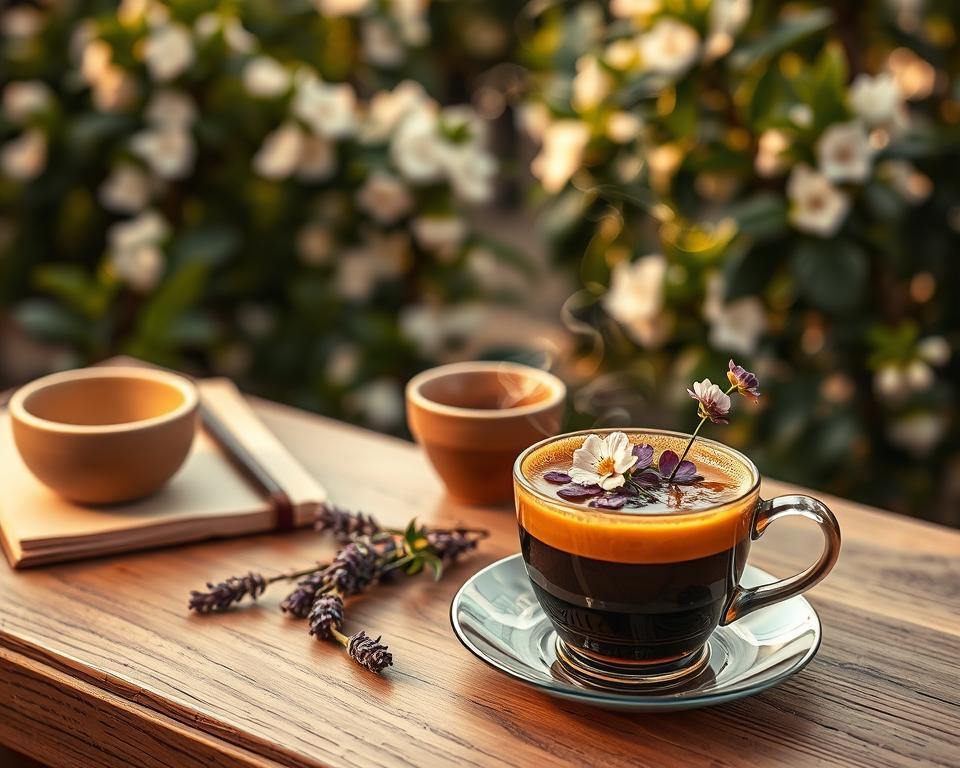
Comparing Floral Notes to Other Flavor Profiles
In the world of specialty coffee, knowing the difference between floral and other flavors is key. It’s a skill that can make you enjoy coffee even more.
Floral vs. Fruity: Distinctions Explained
When we talk about coffee flavors, floral and fruity notes are often compared. Floral notes are soft and remind you of flowers like jasmine or rose. Fruity notes are lively and can taste like citrus or berries.
Here’s a table to show the differences:
| Characteristics | Floral Notes | |
|---|---|---|
| Description | Delicate, subtle, floral | Vibrant, fruity, diverse |
| Examples | Jasmine, rose, lavender | Citrus, berries, stone fruits |
| Intensity | Generally subtle | Can range from subtle to intense |
Why Floral Notes Matter in Coffee Tasting
Floral notes are important in coffee tasting because they add depth and complexity. They make the coffee more interesting and nuanced. Also, floral notes can make certain coffee varietals stand out, attracting coffee lovers.
By understanding floral notes, coffee lovers can explore more flavors and enjoy a richer coffee experience.
Enhancing Floral Notes in Coffee at Home
To enjoy coffee’s floral notes, try different brewing methods at home. Changing how you brew can highlight your coffee’s floral flavors. For more on coffee’s floral notes, check out this guide.
Experimenting with Brewing Techniques
Each brewing method changes your coffee’s taste. Pour-over and French press methods, for example, bring out floral notes. Try these methods to find your favorite.
Here’s a look at how different brewing methods affect floral notes:
| Brewing Method | Effect on Floral Notes |
|---|---|
| Pour-over | Highlights delicate floral notes |
| French Press | Brings out bold, rich floral flavors |
| Cold Brew | Results in smoother, less pronounced floral notes |
Using Additives to Complement Floral Flavors
Adding ingredients can also enhance floral flavors in your coffee. Vanilla, honey, and citrus are great choices. They add depth and enjoyment to your coffee.
Here are some additives to try:
- Vanilla: Adds a creamy sweetness that complements floral notes
- Honey: Provides a floral sweetness that enhances the coffee’s aroma
- Citrus: Adds a bright, zesty flavor that balances floral notes
By trying different brewing methods and additives, you can make your coffee’s floral notes shine. Enjoy a more delightful coffee experience.
Coffee’s Floral Legacy in Culture
Floral coffee is more than just a taste; it’s a cultural treasure. As we dive into the world of coffee, we see how floral notes have shaped coffee cultures globally.

Historical Significance of Floral Notes
Floral coffee has a long history, starting in ancient times. In Ethiopia, where coffee began, floral notes are key in traditional coffee ceremonies. These floral aromas are a big part of coffee’s cultural identity.
In many places, enjoying floral coffee shows hospitality and respect. For example, in the Middle East, coffee is flavored with cardamom and rose water. This isn’t just about taste; it’s a way to welcome guests and show respect.
Cultural Preferences for Floral Coffee Around the World
Floral coffee tastes vary worldwide. In some areas, it’s loved for its unique flavor. In others, it’s valued for its cultural importance.
- In Ethiopia, floral coffee is a favorite, with jasmine and rose notes being popular.
- In Scandinavian countries, there’s a growing love for coffee with floral hints, often mixed with local botanicals.
- In the Middle East, floral coffee is flavored with rose water or orange blossom water, making it unique.
Knowing these cultural tastes helps us appreciate floral coffee more. Whether through traditional ceremonies or modern brewing, floral coffee’s legacy keeps growing, making coffee culture richer everywhere.
Challenges in Capturing Floral Coffee Notes
Getting a consistent floral flavor in coffee is tough. Coffee lovers seek out the unique tastes of floral notes. But, it’s hard to get these notes right because many things can change the flavor.
Maintaining Consistency in Flavor
Keeping the floral flavor the same is key for a great taste. Several things help make this happen, including:
- Quality of Coffee Beans: Better beans often have clearer floral notes.
- Processing Methods: How beans are processed can really affect their taste.
- Roasting Techniques: Roasting well can bring out floral notes.
To find floral notes in coffee, you need to focus on these areas and tweak them as needed.
Over-roasting: A Common Pitfall
Over-roasting can ruin the delicate floral tastes. Too much heat can damage the compounds that give coffee its floral notes. This makes the coffee less tasty.
To prevent over-roasting, roasters must watch the roasting closely. Here are some tips:
- Monitor Roasting Time: Watch the time to stop beans from getting too dark.
- Check Bean Temperature: Make sure the bean temperature is just right for roasting.
- Listen for the ‘Crack’: The “crack” sound tells you when to stop roasting.
In summary, getting floral coffee notes right takes careful attention and knowing what affects flavor. By keeping the flavor consistent and avoiding mistakes like over-roasting, coffee lovers can enjoy a more vibrant and satisfying cup.
My Personal Journey with Floral Coffee
My first taste of floral coffee was a turning point. It opened up a new world of flavors and deepened my respect for coffee makers.
Discovering My First Floral Coffee
The first floral coffee I tried was unforgettable. It came from Ethiopia and had jasmine and rose notes. This experience made me curious to try more and learn about the process.
Exploring further, I grew to love the complexity of floral coffees. The floral coffee tasting guide helped me notice the subtle flavors. From sweet floral hints to tea-like undertones, each sip was a discovery.
Recommendations from My Favorite Roasters
I’ve tried coffees from many roasters, each with their own floral twist. Intelligentsia Coffee and Blue Bottle Coffee stand out. They offer high-quality, small-batch roasts that bring out the floral in their beans.
| Roaster | Coffee Origin | Floral Notes |
|---|---|---|
| Intelligentsia Coffee | Ethiopia, Yirgacheffe | Jasmine, Rose |
| Blue Bottle Coffee | Kenya, Kiambu | Orange Blossom, Bergamot |
These roasters have introduced me to a wide range of coffee tasting notes floral. They’ve also taught me about the art of roasting and how it affects flavors.
In conclusion, my journey with floral coffee has been enriching. It’s a world full of diversity and complexity. I’m eager to keep exploring.
Conclusion: Embracing Floral Coffee in My Daily Routine
Exploring floral coffee has made me appreciate its unique tastes. This article has shown that coffee is more than just a morning boost. It’s a journey of flavors.
The Allure of Floral Flavors
Floral notes in coffee bring a new level to the taste. From Ethiopian coffee’s jasmine aroma to Colombian coffee’s rose-petal notes, floral coffee takes me on a trip. It’s a world of flavors.
Exploring Floral Coffee Further
I invite you to explore floral coffee with me. By diving into floral coffee notes, we can grow our love for coffee. Let’s keep discovering the unique flavors of floral coffee.