

Did you know that blooming coffee can make your daily coffee better? It lets coffee grounds release CO2. This makes your coffee taste richer and more balanced.
If you love coffee, you’ll want to know about blooming. It’s key for making great coffee, whether you’re a pro or just starting. I’m here to share my knowledge on the coffee brewing process.
We’ll cover the basics of blooming coffee and more. You’ll learn how to bloom coffee like a pro. Get ready to improve your coffee game.
Key Takeaways
- Understand the importance of blooming in the coffee brewing process
- Learn the step-by-step process of blooming coffee
- Discover how to achieve a more balanced extraction
- Explore advanced techniques for perfecting your cup
- Enhance your overall coffee brewing experience
Understanding the Blooming Process
Exploring coffee blooming can change how you enjoy coffee. It’s key to know how it works. Coffee blooming is the first step in brewing. It happens when hot water meets ground coffee beans, freeing trapped CO2.
What is Coffee Blooming?
Coffee blooming is a vital part of brewing. When hot water hits ground coffee, it lets out CO2 gas. This gas was stuck in the coffee’s cells. This step lets the coffee “breathe,” making flavors extract more evenly.
The importance of coffee blooming lies in its ability to enhance the overall flavor profile of your coffee. By letting the coffee release its CO2, you avoid sour or unbalanced tastes.
Why is Blooming Important?
Blooming greatly affects your coffee’s quality. A good bloom means the coffee grounds soak up water evenly. This leads to a more balanced and flavorful coffee.
| Blooming Technique | Impact on Flavor | Brewing Outcome |
|---|---|---|
| Proper Blooming | Enhanced flavor profile | Balanced extraction, richer flavor |
| Insufficient Blooming | Uneven extraction | Sour or unbalanced taste |
To achieve the perfect bloom, it’s vital to understand CO2’s role in coffee. CO2’s release during blooming is key to good extraction. Mastering blooming can greatly enhance your coffee brewing.
The Science Behind Coffee Blooming
To master coffee brewing, you need to understand the science of coffee blooming. This process is complex, involving coffee grounds, water, and trapped gases.
The release of CO2 is key in blooming. It affects how flavors are extracted from the coffee. When hot water hits freshly ground coffee, CO2 is released. This creates a visible and audible “blooming” effect.
How Gasses Affect Extraction
CO2 plays a big role in coffee extraction. It can block water from reaching the coffee grounds. But, CO2 release shows coffee freshness, as it’s more in fresh beans. For more info, check Serious Eats’ detailed explanation on coffee.
Knowing how gasses affect extraction helps improve brewing. Allowing coffee to bloom ensures even extraction. This is because CO2 escapes, allowing water to interact evenly with coffee.
The Role of Freshness in Blooming
Freshness is critical in blooming. Freshly roasted beans have more CO2. This CO2 is released over time, so older beans bloom less. So, using fresh coffee beans is key for a strong bloom and flavor.
In specialty coffee brewing, bean quality and equipment matter a lot. Good coffee brewing equipment can greatly enhance flavor and aroma.
Tools and Equipment You’ll Need
To get the perfect bloom in your pour-over coffee, you need the right tools. The coffee beans, brewing device, and measuring tools are all important. They all help make the perfect bloom.
Coffee Beans for the Perfect Bloom
Choosing the right coffee beans is the first step. Fresh, high-quality beans roasted recently make a better bloom. Look for beans roasted in the past week or two for the best flavor.
Think about the origin, roast level, and processing method of the beans. Ethiopian beans have floral notes, while Brazilian beans taste nuttier. Try different beans to find your favorite flavor.
- Consider the origin of the beans: Beans from different regions have unique flavor profiles.
- Choose the right roast level: Lighter roasts tend to have more pronounced acidity, while darker roasts are richer and bolder.
- Processing method matters: Beans processed using different methods can have distinct flavors.
Brewing Devices for Pour-Over Coffee
Choosing the right brewing device is key for pour-over coffee. Popular options include the Chemex, Hario V60, and Kalita Wave. Each device can change the flavor of your coffee.
When picking a brewing device, think about the material, filter type, and design. Glass and ceramic devices have a neutral flavor. Metal devices might taste slightly different.
Precision Measuring Tools
Measuring tools are vital for precise coffee brewing. A digital scale is essential for measuring coffee and water accurately. This ensures the coffee-to-water ratio is just right for a perfect bloom.
A thermometer is also useful for checking water temperature. This is important for the best extraction.
Key measuring tools include:
- A digital scale for precise measurement of coffee and water.
- A thermometer for monitoring water temperature.
Prepping Your Coffee and Water
Getting your coffee and water ready is key to making a great cup. It’s the base of a perfect coffee. Let’s dive into how to do it right.
Grinding Your Beans to the Right Consistency
The size of your coffee grind matters a lot. Too fine and it tastes bitter. Too coarse and it’s sour. Choose a grind that fits your brewing method. French press needs coarse, espresso needs fine.
A good burr grinder is a must for the right grind. Blade grinders can heat up your beans, ruining the taste. As coffee expert James Hoffmann said, “The grinder is the most important piece of equipment in your coffee setup.”
Choosing the Right Water Temperature
Water temperature is also very important. It should be between 195°F and 205°F. Too hot water burns the coffee, too cold makes it weak. Use a thermometer to get it just right.
“The temperature of the water is critical. It affects how much flavor and oil the coffee releases. Too hot water extracts too much, making it bitter.”
By focusing on grind size and water temperature, you’ll make a perfect cup of coffee. It’s all about the details.
The Coffee Blooming Technique Explained
Learning the coffee blooming technique is key to a perfect cup of coffee. It involves a few easy steps that boost your coffee’s taste and smell.
Step 1: Measuring Your Coffee
Start by accurately measuring your coffee. A digital scale helps get the right coffee-to-water ratio. Aim for 1 gram of coffee for every 15-17 grams of water. Adjust this based on your taste.
Step 2: Adding Water for Bloom
After measuring, add water for the bloom. Heat the water to 195°F to 205°F. Pour it over the coffee in a circular motion, covering all grounds. Pour about twice the coffee’s weight in water. For 30 grams of coffee, use 60 grams of water.
Step 3: Timing the Bloom Period
The bloom period is vital. Let the coffee bloom for 45 seconds to 1 minute. You’ll see it expand as it releases CO2. After, proceed with your brewing. The brewing time varies by method, but the bloom is essential for balance.
By following these steps, you can enhance your coffee’s flavor and quality. Remember, great coffee isn’t just about the beans. It’s also about how you brew them.
Observing the Bloom in Action
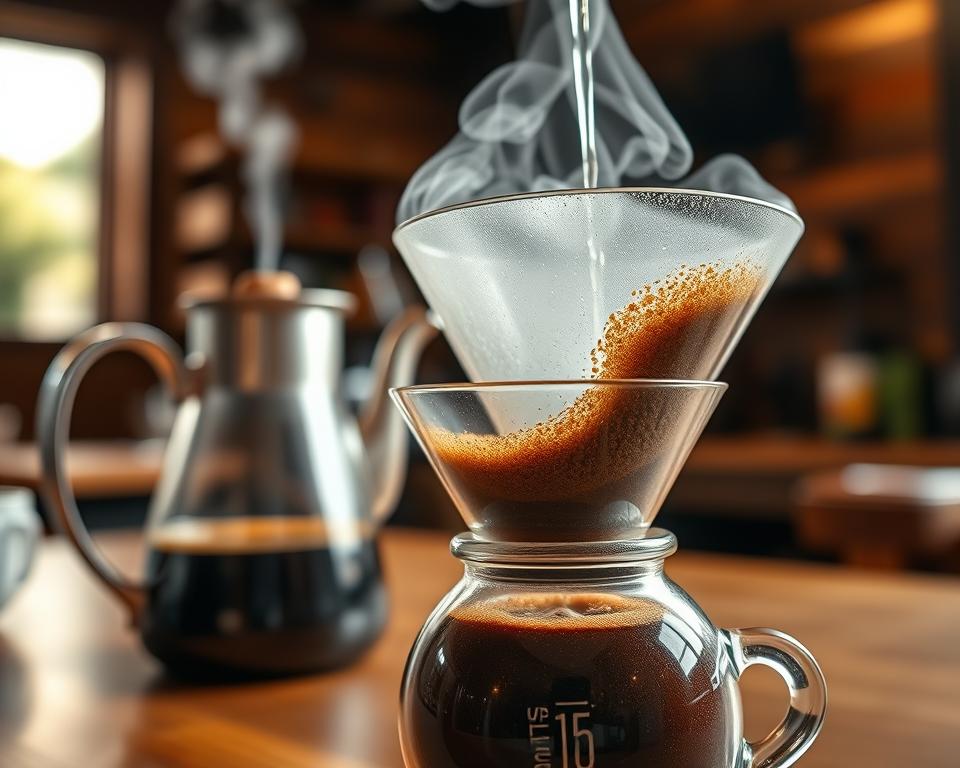
The coffee blooming process is a sight to see, showing the details of specialty coffee brewing. Watching the bloom helps me understand the coffee’s quality and freshness.
What to Look for During the Bloom
During the bloom, coffee grounds release CO2, creating a cool display. I look for the coffee to swell and give off a rich aroma. This shows the coffee is fresh and of high quality. As James Hoffmann, a famous coffee expert, said, “A good bloom is a sign of a well-roasted coffee.”
“The bloom is a critical moment in the brewing process, as it sets the stage for the extraction that follows.”
Adjusting for Different Coffee Varieties
Different coffee varieties need different blooming times. For example, some coffees need a longer or shorter bloom. I adjust my coffee brewing equipment to get the best extraction. Here are some important points:
- Light roasts need a longer bloom time because they have more CO2.
- Dark roasts might need a shorter bloom time because they have less CO2.
- Trying different bloom times can help find the perfect balance for various coffee profiles.
By focusing on these details and adjusting my method, I can improve the taste and quality of my coffee. As I keep trying different coffee varieties, I get better at understanding the blooming process and how it affects the final coffee.
Troubleshooting Common Issues
Not every coffee bloom is successful, but knowing why can help. Even with the best techniques, problems can happen during the coffee blooming process. Here, I’ll talk about common issues, like coffee that doesn’t bloom. I’ll also share tips on adjusting your technique for different roasts.
If Your Coffee Doesn’t Bloom
If your coffee doesn’t bloom, there could be a few reasons. First, check if your coffee beans are fresh. Stale coffee beans might not release CO2 well, which stops the blooming. Also, the grind size matters; if it’s too fine or too coarse, it can mess with extraction and blooming.
Make sure your water is at the right temperature (around 200°F). Also, use the correct amount of water for the bloom.
Adjustments for Different Roasts
Different coffee roasts need different approaches to blooming. For example, lighter roasts have more CO2 and might need a longer bloom. On the other hand, darker roasts have less CO2 and could bloom faster. Try adjusting bloom times based on the roast to get better extraction and flavor.
By tackling these common problems, you can improve your coffee brewing skills. This will help you get a perfect bloom and make your coffee experience even better.
Enhancing Your Coffee Experience
Now that you know the basics of coffee blooming, you can try new things. You can play with different ratios and flavors to make your pour-over coffee even better.
Trying out different coffee-to-water ratios is key to finding your ideal cup. The pour-over coffee technique lets you customize your coffee. You can adjust the ratio to match your taste preferences. See how changing the ratio changes the flavor.
Experimenting with Different Ratios
It’s important to keep track of your ratio experiments. This helps you spot patterns and what you like best. For example, a stronger ratio might make the coffee taste more bitter. A weaker ratio might make it taste more acidic. The goal is to find a ratio that tastes just right to you.
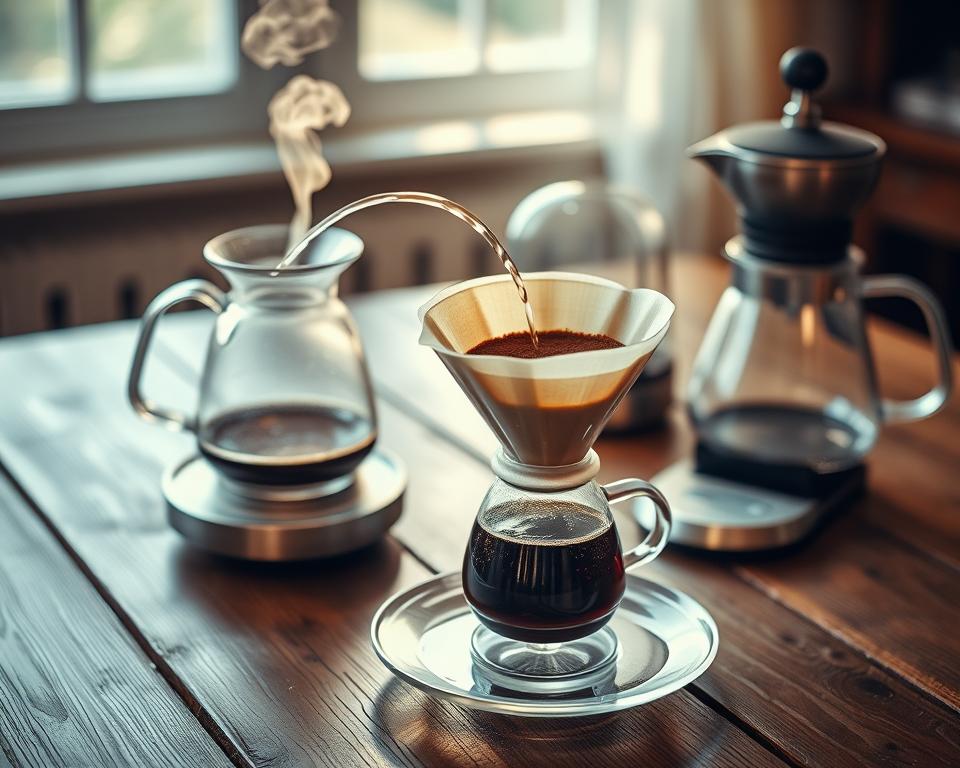
As you get better at making coffee, think about water temperature and brewing time too. These, along with the right ratio, greatly affect the taste of your coffee.
Flavor Profiles and Their Impact
Different coffee beans have unique tastes, like fruity, floral, chocolatey, or nutty. Knowing what your coffee beans taste like helps you brew them better. For instance, if your beans are fruity, you might brew them a bit longer to bring out those flavors.
To make your coffee even more enjoyable, try new coffee preparation tips and techniques. You could try different brewing devices or coffee beans from different places. Each change can introduce new tastes and smells, making your coffee experience richer.
Conclusion: Mastering the Blooming Technique
Learning the coffee blooming technique takes time, patience, and practice. It’s about understanding the science and using the right tools. This way, you can make your specialty coffee brewing better.
Key Takeaways
The blooming process starts with measuring your coffee and adding water. Then, you wait for the right amount of time. Adjusting for different coffee types and roasts helps you get it just right.
Continuing Your Coffee Journey
Keep trying new things with the blooming technique. Experiment with ratios, flavors, and brewing methods. With time, you’ll get better at making the perfect cup of coffee.