

As a coffee lover, I’ve always been curious about what makes a cup of coffee stand out. The secret lies in its coffee flavor profiling. This complex process helps us understand the different qualities that shape the taste.
The coffee body is key. It’s the feeling you get when you drink coffee. Whether you’re a coffee expert or new to it, knowing about coffee taste characteristics can make your coffee experience better.
Key Takeaways
- Understanding the basics of coffee flavor profiling
- Learning to identify the characteristics of coffee body
- Discovering how coffee taste characteristics vary across different coffee types
- Enhancing your coffee appreciation through knowledge of coffee body
- Developing your skills in coffee tasting and profiling
What is Coffee Body?
The texture and weight of coffee in the mouth is called coffee body. It’s a key part of the coffee experience. It greatly affects how we taste the flavor.
Definition and Importance
Coffee body is the feeling coffee leaves in your mouth. It’s about the coffee sensory attributes that make it feel heavy or light. Knowing about coffee body is important because it adds to the taste and smell of coffee. For more on coffee body, check out this guide.
How It Affects Flavor
The coffee body greatly changes how we taste coffee. A coffee with a full body tastes more intense than one with a light body. The coffee aroma analysis also matters, as it combines with the body for a rich experience. In short, the body carries the flavors, making it a key part of tasting coffee.
Common Misconceptions
Many think coffee body is the same as flavor. But they’re different. Flavor is the taste, while body is the texture and weight. Some also think coffee body measurement isn’t important. But knowing and measuring it helps make the perfect cup of coffee.
Factors Influencing Coffee Body
Understanding coffee body requires looking at what affects it. The body of coffee is complex, shaped by many things. This includes where the beans come from and how they’re brewed.
Bean Origin
The origin of coffee beans is key in determining their body. Beans from different places have unique traits. This is because of soil, climate, and altitude.
For example, beans from Ethiopia are known for their bright acidity and light body. On the other hand, beans from Brazil tend to have a heavier body.
Roast Level
The roast level also greatly affects coffee body. Lighter roasts have a lighter body, while darker roasts are fuller. But, the roast level can also change the coffee flavor assessment.
Some roasts bring out more flavors than others.
Brewing Method
The brewing method is very important in how we experience coffee body. Methods like French press and espresso make the body fuller. This is because they steep coarse coffee grounds in hot water or force pressurized hot water through finely ground coffee.
In contrast, drip brewing makes a cleaner, lighter body.
When we assess coffee body, we must look at coffee cupping notes. We also need to see how brewing methods change the coffee body scale. Trying different brewing techniques can help you find what you like best.
Describing Coffee Body
Describing coffee body can be tricky. It’s about noticing the tiny details of texture and weight. Coffee bodies are usually light, medium, or full, each with its own feel. Knowing these types helps you enjoy coffee more.
Light Body
Coffee with a light body feels like tea. It’s light and has a clean taste. People like it for its bright taste and come from high places.
Medium Body
Medium-bodied coffee is balanced. It’s not too heavy or too light. It’s smooth and easy to drink, with or without milk and sugar.
Full Body
Full-bodied coffees are rich and heavy. They feel velvety and intense. They’re often darker roasts, loved by those who want a strong coffee.
Knowing about coffee bodies is key to enjoying coffee. It helps you understand the differences in taste. This way, you can pick the perfect coffee for you.
Tasting Techniques for Coffee Body
Tasting coffee is more than just drinking. It’s about feeling the coffee’s full sensory qualities. To really get the coffee’s body, you need a careful and multi-sensory way.

Sipping and Swirling
The first step is to sip and swirl the coffee. This spreads the coffee on your tongue, letting you feel its texture and weight. Swirling helps you see how the coffee feels on your tongue and the roof of your mouth. This simple move can tell you a lot about the coffee’s body.
The Role of Temperature
The coffee’s temperature changes how you feel its body. Hotter coffee feels more solid and full, while cooler coffee feels lighter. Trying different temperatures can show you how temperature changes your coffee body feeling.
Using Your Senses
Coffee tasting is a mix of senses, not just taste. To really get the coffee’s body, use all your senses:
- Visual: Look at the coffee’s color and how thick it is.
- Olfactory: Smell the coffee before and after drinking to enjoy its scent.
- Tactile: Feel the coffee’s texture as you swirl it in your mouth.
- Gustatory: Taste the coffee to see its flavor.
By mixing these senses, you can understand the coffee’s body and character better.
The Relationship Between Acidity and Body
Understanding how acidity and body work together is key to enjoying coffee. Both play big roles in the coffee’s taste.
Acidity brings out bright, lively flavors like citrus and fruit. Body, on the other hand, is about the coffee’s texture and feel in your mouth. Together, they shape your coffee experience.
How Acidity Impacts Perception
Acidity greatly affects how we feel the body of coffee. High acidity makes coffee feel light and refreshing. Low acidity makes it feel heavy and rich. This balance is what makes coffee taste good.
When tasting coffee, think about how acidity changes the body’s feel. For example, a coffee with lots of acidity might taste bright and lively. A coffee with less acidity might feel rich and heavy.
Balancing Acidity and Body
Finding the right balance between acidity and body is important. Coffee lovers aim for a mix that makes flavors work well together. Coffee cupping notes often talk about this balance, saying if a coffee is well-rounded or not.
- A good coffee balances acidity and body well.
- The body should feel satisfying and match the acidity.
- Changing how you brew coffee can help find this balance. Different methods can show off or hide acidity and body.
By understanding acidity and body, coffee lovers can enjoy coffee more. Whether you’re new to coffee or have been drinking it for years, knowing how these elements work together can make your coffee better.
Popular Coffee Varietals and Their Bodies
Knowing about the body of different coffee types is important. It shows how complex and rich coffee can be. The type of coffee varietal greatly affects its body.
Arabica and Robusta are two main types of coffee. Each has its own unique traits that shape the coffee’s body. Let’s look at how these two differ and explore some single-origin examples.
Arabica vs. Robusta
Arabica is loved for its subtle flavors and light body. It’s a hit among coffee lovers. On the other hand, Robusta has a heavier body and a bitter taste. It’s often found in instant coffee.
The body of Arabica and Robusta varies due to their genetics and growing conditions. Arabica’s light body lets it have a delicate and complex taste. Robusta’s fuller body gives it a bolder, simpler taste. This difference is key to understanding coffee body.
Single-Origin Examples
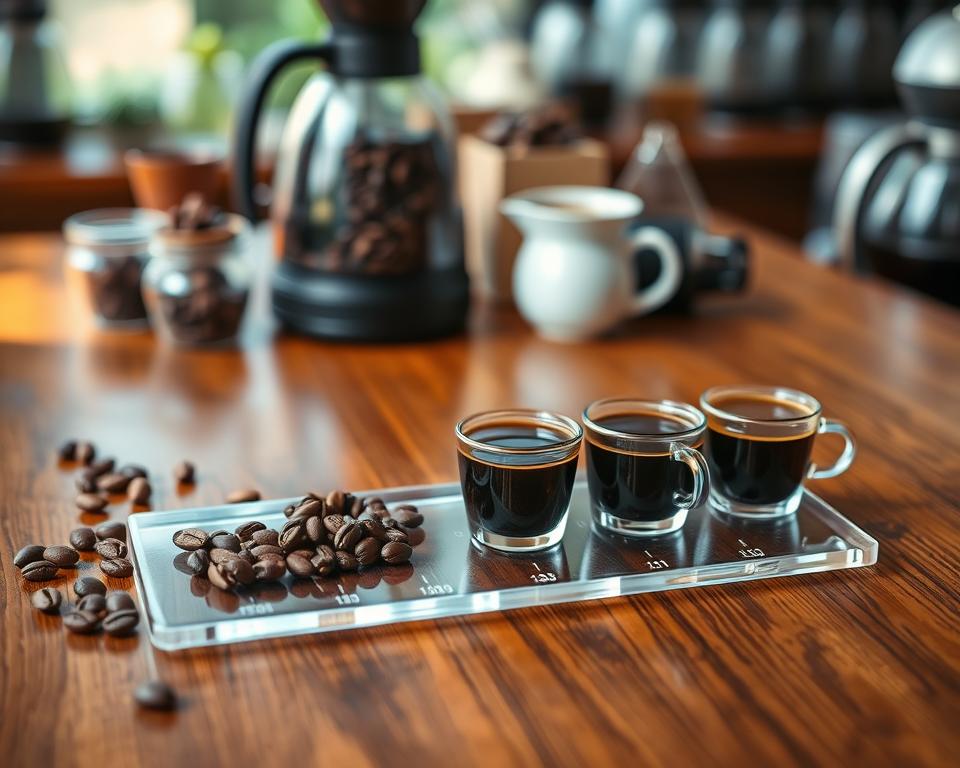
Single-origin coffees let you taste the unique qualities of a specific area. For example, Ethiopian Yirgacheffe has a light body and floral notes. Colombian Gesha has a medium body with caramel and fruit hints.
Exploring single-origin coffees is an exciting journey. Each region’s terroir and processing methods shape the coffee’s body. This makes every cup a reflection of its origin. Coffee lovers can use this knowledge to find their favorite body type.
Whether you’re a coffee expert or just starting, learning about coffee varietals and their bodies can make your coffee experience better.
Brewing Methods That Enhance Body
The body of your coffee changes with the brewing method. Some methods make your coffee richer and more satisfying.
Let’s look at three popular methods: French Press, Espresso, and Cold Brew. They’re great for a fuller coffee experience.
French Press
French Press, also known as a cafetière, steep coarse coffee grounds in hot water. Then, you press the grounds to the bottom to separate them from the liquid. This method makes the coffee richer and fuller.
Key characteristics of French Press coffee:
- Rich and full-bodied
- Deep flavor profile
- Texture is heavier due to the presence of coffee grounds’ oils and sediment
Espresso
Espresso is a concentrated coffee made by forcing hot water through finely ground beans. This method creates a rich and intense body.
Key characteristics of Espresso:
- Thick and creamy texture
- Concentrated flavor
- Forms the base for many coffee drinks, such as lattes and cappuccinos
Coffee expert James Hoffmann says, “Espresso is not just brewing coffee. It’s experiencing coffee’s full flavor profile.”
“The art of making espresso lies in its ability to balance the flavors and textures, creating a harmonious and rich coffee experience.” –
Cold Brew
Cold Brew coffee is made by steeping coarse-ground beans in cold water for 12-24 hours. This method creates a smooth, full-bodied coffee with low acidity.
Key characteristics of Cold Brew:
- Smooth and low in acidity
- Full-bodied flavor
- Ideal for hot summer days
| Brewing Method | Body Characteristics | Flavor Profile |
|---|---|---|
| French Press | Rich, full-bodied | Deep, with texture |
| Espresso | Thick, creamy | Concentrated, intense |
| Cold Brew | Smooth, full-bodied | Low acidity, sweet |
In conclusion, the brewing method greatly affects your coffee’s body. Try French Press, Espresso, and Cold Brew to find your favorite.
The Impact of Grind Size on Body
Coffee lovers know that grind size is key to a great cup. But how does it affect the coffee’s body? The size of your coffee beans’ grind changes how much flavor is extracted during brewing. This, in turn, changes the coffee’s body.
A coarser grind means slower extraction, leading to a lighter body. On the other hand, a finer grind results in faster extraction, making the coffee heavier and more full-bodied.
Coarse vs. Fine Grind
Choosing between coarse and fine grinds depends on your brewing method. For French press, a coarse grind is best. It allows for the right amount of extraction during immersion. Espresso, with its high pressure, needs a fine grind.
Trying different grind sizes can help you find your favorite. Remember, grind size also changes the coffee’s flavor. Coarser grinds give a cleaner taste, while finer grinds make the flavor richer and more intense.
Adjusting Grind for Different Brews
Changing the grind size is key for the right body in your coffee. For pour-over or drip brewing, a medium grind works best. It offers a balanced extraction. Cold brew, on the other hand, needs a very coarse grind to prevent over-extraction during the long steeping time.
Here are some grind size tips for different brewing methods:
- French Press: Coarse grind for a full-bodied, rich coffee.
- Espresso: Fine grind for a concentrated, intense shot.
- Cold Brew: Very coarse grind to avoid over-extraction.
- Pour-over/Drip: Medium grind for a balanced extraction.
Understanding how grind size affects your coffee’s body can greatly improve your brewing. Adjusting the grind size can make your coffee more enjoyable.
Common Coffee Body Myths
The world of coffee is full of myths, and one big area of confusion is coffee body. As coffee lovers, it’s key to know the truth behind these myths. This way, we can truly enjoy our daily coffee.
One common myth is that darker roasts always have a full body. Let’s explore these myths and find out what’s real.
Darker Roasts Always Have Full Body
Many think darker roasts always mean a fuller-bodied coffee. But, the link between roast level and body is more complex. While darker roasts can have a fuller body, it’s not always true.
Bean origin and brewing method also play big roles in coffee body. Coffee expert James Hoffmann says, “The roast level can affect the body, but it’s not the only factor.” This shows why we must look at other things when judging coffee body.
“The roast level can affect the body, but it’s not the sole determinant.” – James Hoffmann
For example, a dark roast coffee from certain beans might have a lighter body. This is because of how it’s brewed. Knowing this is important for coffee lovers.
Body is the Same as Flavor
Another myth is that coffee body and flavor are the same. But, they’re not. Body is about the coffee’s texture or mouthfeel, while flavor is about taste notes and overall taste.
A coffee can have a rich flavor but a light body, or the other way around. Knowing this helps us understand coffee better. It’s key to coffee flavor profiling and enjoying different coffees.
By seeing body and flavor as different, we can better describe and enjoy our coffee. This is important for coffee sensory attributes evaluation.
In short, knowing the myths about coffee body helps us appreciate coffee more. By understanding what affects body and knowing it’s different from flavor, we can become better coffee lovers.
Experimenting with Body in Home Brewing
Trying out different coffee body at home lets you make your coffee just right. You can change how you brew it to get the body you like.
Adjusting Your Approach
To play with coffee body, tweak your grind size, brewing method, and roast level. For example, switching to a coarser grind can change your coffee’s body a lot. You can also try different brewing methods, like French press or cold brew, for a richer body.
Tracking Your Progress
Keeping a brewing journal helps you track your experiments. Note down your coffee body observations, the brewing techniques you used, and the body you got. This way, you can improve your coffee body skills and find your favorite flavor.
With these tips, you can learn more about coffee body and make your home brewing better.