
Did you know the average person can detect over 1,000 different flavors? Developing your taste perception can make your dining experiences better. It makes you a more discerning foodie.
I remember my first wine tasting experience. It was a big change. As I refined my senses, I started to notice the small differences in flavors and textures. I want to share this journey with you.
By improving your taste perception, you open up a world of flavors. This guide will teach you the basics of palate training. It will help you understand the complex world of taste and smell.
Key Takeaways
- Understand the basics of taste perception development
- Learn how to enhance your senses for a better dining experience
- Discover the benefits of refining your palate
- Start your journey to becoming a more discerning foodie
- Explore the world of flavors with confidence
What is Palate Training?
Exploring palate training starts with understanding our sense of taste. It’s a way to improve how we enjoy the flavors in our food and drinks. This process is also known as taste bud education.
Our sense of taste comes from taste buds on the tongue and in the mouth. These buds have cells that pick up on five basic tastes: sweet, sour, salty, bitter, and umami. Knowing these tastes is key to flavor sensitivity enhancement.
Understanding the Concept of Taste
Taste is more than just the five basic tastes. It’s about how our tongue, nose, and mouth work together. This mix lets us enjoy a wide range of flavors.
For example, when we eat, food’s smells go up our throat and into our nose. This is called retronasal olfaction. It’s a big part of how we taste flavors. So, taste bud education is not just about the basic tastes. It’s also about how smell and texture add to our taste experience.
Importance of Developing Your Palate
Developing your palate is important for many reasons. It makes enjoying food and drinks more fun. It also helps you cook better by understanding flavors and how ingredients work together.
Having a good palate makes dining better, whether you’re cooking at home or eating out. It lets you see the skill in making complex dishes. And it helps you notice the quality of the ingredients used.
| Benefits of Palate Training | Description |
|---|---|
| Enhanced Flavor Perception | Improved ability to detect subtle flavors |
| Better Cooking Skills | Understanding flavor profiles and ingredient interactions |
| Elevated Dining Experiences | Appreciation for culinary craftsmanship and ingredient quality |
Learning about taste and improving your palate can greatly enhance your food journey. Whether you love food, are a chef, or just enjoy good meals, palate training has many benefits. It can make your food experiences even better.
Benefits of Palate Training
Through sensory evaluation and palate refinement, I’ve learned a lot about taste. My journey has shown me many benefits that have changed how I enjoy food.
Enhances Cooking Skills
Palate training has greatly improved my cooking. It lets me make dishes with better flavors and textures. This skill is key when trying new recipes or ingredients.
Learning about umami flavor has made my dishes stand out. It’s given me the confidence to keep improving my cooking.
Improves Food and Wine Pairing Knowledge
Palate training has also boosted my food and wine pairing skills. I can now match dishes with wines that bring out their best flavors. This has made my dining experiences better and allowed me to host more elegant dinner parties.
For example, I know to pair rich dishes with crisp, acidic wines. This combination has made my meals more enjoyable and interesting.
How to Get Started with Palate Training
To start your palate training, you’ll need a few simple tools and a willingness to explore new tastes. The journey to developing your palate begins with understanding the basics and being open to new experiences.
Essential Tools and Materials
Before diving into palate training, it’s essential to have the right tools and materials. Here are some of the key items you’ll need:
- Wine and spirits: Having a variety of wines and spirits on hand can help you explore different flavor profiles.
- Tasting sheets: These sheets can help you organize your thoughts and notes while tasting.
- Flavor references: Keeping a collection of ingredients with distinct flavors (e.g., citrus, spices) can serve as useful references.
- A quiet, distraction-free space: Creating an environment conducive to focused tasting is important.
https://www.youtube.com/watch?v=44HquH6QyXc
Steps to Begin Your Training Journey
Once you have your tools and materials ready, you can start your palate training journey. Here are some steps to follow:
- Start with the basics: Understand the fundamental tastes – sweet, sour, salty, bitter, and umami.
- Practice regularly: Regular tasting sessions will help you develop your palate more quickly.
- Keep a tasting journal: Documenting your experiences can help you track your progress and identify areas for improvement.
- Explore different cuisines: Trying foods from various cultures can expose you to a wide range of flavors and ingredients.
By following these steps and using the right tools, you’ll be well on your way to developing your palate and improving your culinary experiences.
Tasting Techniques for Beginners
Starting out in tasting can feel overwhelming, but with effort, you can get better. Tasting is more than just eating or drinking. It’s an adventure that uses all your senses.
Understanding that tasting is not just about taste is key. Flavor recognition techniques are vital for a better tasting experience. Learning to spot different flavors and smells helps you enjoy food and drinks more.
The Art of Blind Tasting
Blind tasting is great for improving your taste. It means tasting without knowing what you’re having. This way, you focus more on what you’re tasting.
To try blind tasting, cover the labels on drinks or foods. Then, see if you can guess what they are based on taste.
Here are some steps for blind tasting:
- Take a small sip or taste
- Notice the color, clarity, and thickness of the liquid
- Find the main flavors and smells
- See how the tastes change over time
Identifying Flavors and Aromas
Knowing how to spot flavors and smells is important. Start by learning the basic tastes: sweet, sour, salty, bitter, and umami. Taste different foods to get a feel for these tastes.
Here are some tips for spotting flavors and smells:
- Focus on how strong and complex the tastes are
- Notice the smells before and after tasting
- Think about the aftertaste, or what stays with you after swallowing
Keep practicing these methods and be patient. With time, you’ll get better at flavor recognition skills and enjoy tasting more.
Creating a Tasting Journal
A tasting journal is more than just a log. It’s a tool that helps you improve your taste skills. By writing down your tasting experiences, you can see how you’ve grown. You’ll also learn to understand different flavors better.
Why Documenting Your Journey Matters
Keeping a tasting journal is key for several reasons. It lets you track your progress over time. You’ll notice how your taste skills get better.
It also helps you identify patterns in what you like and dislike. This is super helpful in fine-tuning your taste.
Plus, a tasting journal is a reference point for future tastings. It lets you compare your thoughts over time. This helps you adjust your approach as needed.
Tips for Effective Note-taking
To make the most of your tasting journal, you need good note-taking skills. Here are some tips:
- Write down your thoughts right after tasting to catch your first impressions.
- Use detailed language to describe the flavors, smells, and textures you notice.
- Include the setting and any foods or drinks you had with the tasting.
- Go back and review your notes often to see how you’ve improved and what you can work on.
By following these tips and keeping up with your journal, you’ll really boost your palate training for beginners journey. You’ll be well on your way to mastering your taste buds.
Exploring Different Flavor Profiles
Understanding different flavor profiles is key to unlocking a more nuanced and enjoyable culinary experience. We find that there are five basic tastes that form the foundation of all flavor profiles.
Sweet, Sour, Salty, Bitter, and Umami
The five basic tastes are sweet, sour, salty, bitter, and umami. Each taste plays a key role in how we experience flavor. For example, sweetness can balance out sourness, and umami can add depth to a dish.
| Taste | Description | Example |
|---|---|---|
| Sweet | Associated with sugary substances | Ripe mangoes |
| Sour | Characterized by a sharp, acidic taste | Lemons |
| Salty | Related to the presence of salt or salty substances | Sea salt |
| Bitter | Marked by a strong, often unpleasant taste | Dark chocolate |
| Umami | Describes a savory, meaty, or brothy flavor | Mushrooms |
Combining Flavors for Enhanced Tasting
Combining different flavors can make our dining experiences more complex and interesting. For example, mixing sweet and sour flavors can create a balanced taste, like in sweet and sour chicken.
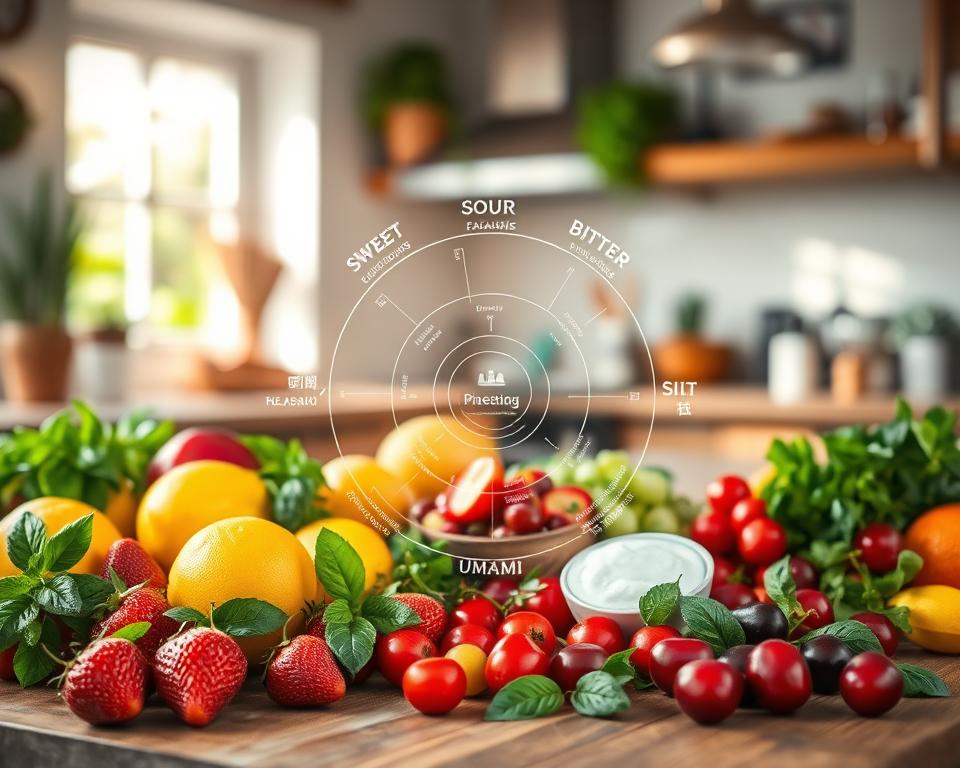
To improve your flavor sensitivity, try mixing the five basic tastes in new ways. This can mean cooking with new ingredients, trying new recipes, or paying more attention to the flavors in your food.
By understanding and exploring different flavor profiles, you can greatly improve your taste perception development. This can make your culinary experiences more enjoyable and nuanced.
Pairing Foods with Beverages
The art of pairing foods with beverages is a skill that not only enhances flavor profiles but also enriches our sensory evaluation initiation. As we explore this topic, we’ll discover how the right beverage can complement food in surprising ways.
When it comes to beverage pairing, wine is often the first choice that comes to mind. Understanding the basics of wine pairing can significantly enhance your dining experience.
Wine Pairing Basics
Wine pairing involves matching the characteristics of wine with the flavors and textures of food. A good starting point is to consider the weight and flavor intensity of both the wine and the dish. For example, a light, crisp white wine like Sauvignon Blanc pairs well with delicate fish or salads, while a rich, full-bodied red wine like Cabernet Sauvignon complements robust meats.
Some classic wine pairing combinations include:
- Chardonnay with roasted chicken
- Pinot Noir with salmon
- Merlot with pasta in tomato sauce
Exploring Tea and Coffee Pairings
Beyond wine, tea and coffee offer a wide range of pairing possibilities. The key to successful tea or coffee pairing is to balance the flavors so that neither the beverage nor the food overpowers the other.
For instance, a strong, bold coffee can stand up to sweet treats like chocolate, while a delicate tea might be better paired with lighter fare such as scones or fruit.
Some popular tea and coffee pairings include:
- Earl Grey tea with lemon bars
- Espresso with biscotti
- Green tea with sushi
By experimenting with different beverage pairings, you can develop your palate and discover new favorite combinations. Whether it’s wine, tea, or coffee, the right pairing can elevate your dining experience and enhance your appreciation of the flavors involved.
Developing Sensory Awareness
Improving my sensory awareness is key to bettering my palate and dining experiences. It’s not just about taste; it’s about using all my senses to enjoy the complexity of food.
Engaging All Your Senses
When I eat, I try to use all my senses. I don’t just focus on taste. I also notice the aroma, texture, and look of the dish. For example, the smell of fresh bread can really get me excited for my meal.
To fully engage my senses, I eat mindfully. I take small bites and really enjoy the flavors and textures. I also look at how the dish is presented, noticing the colors and how the ingredients are arranged. This mindful eating makes me appreciate the meal more and enhances my sensory experience.
Exercises to Heighten Sensory Perception
To improve my sensory awareness, I do certain exercises every day. One exercise is to guess the ingredients in a dish just by taste and smell. I also practice telling different textures apart, like crunchy or smooth. This helps me notice more details about my food.
Here are some exercises I find helpful:
- Blindfolded tasting to focus on texture and flavor
- Identifying herbs and spices by smell
- Noting the color and presentation of dishes before tasting
Another exercise is to make a sensory map of my dining experience. I write down what I sense, taste, and smell. This not only sharpens my senses but also helps me understand food better.
To show how sensory awareness improves my palate, I’ve made a comparison table. It shows how my perception has changed after doing these exercises.
| Sensory Aspect | Before Sensory Awareness | After Sensory Awareness |
|---|---|---|
| Taste | Limited to basic flavors | Able to distinguish complex flavor profiles |
| Aroma | Often overlooked | Noticed and appreciated for enriching flavor |
| Texture | Rarely considered | Appreciated for adding depth to the dining experience |
| Visual Appeal | Not a priority | Recognized as improving the overall experience |
By improving my sensory awareness, I’ve greatly enhanced my palate and dining experiences. I keep practicing and exploring new ways to enjoy the richness of food.
Common Mistakes in Palate Training
Starting your palate training journey can lead to common mistakes. These mistakes can slow down your progress. Knowing what beginners often do wrong can help you avoid these issues.
Rushing the Process
One big mistake is rushing through palate training. It takes time, patience, and regular practice to improve your palate. Give yourself time to explore different tastes and smells without feeling rushed.
A coffee tasting expert says, “The key to successful palate training is gradual exposure to a variety of flavors and regular practice.” Training your palate is a journey, not a race. It needs dedication and persistence.
Ignoring Personal Preferences
Another mistake is ignoring your own taste preferences. Remember, your taste preferences are unique. What works for someone else might not work for you. Focus on developing your palate based on what you like.
| Mistake | Impact | Correction |
|---|---|---|
| Rushing the Process | Hinders flavor recognition and palate development | Practice patience and consistent training |
| Ignoring Personal Preferences | Leads to frustration and less effective training | Tailor your training to your taste preferences |
To avoid these mistakes, include beginner taste training exercises in your daily routine. Try tasting different foods and drinks, keep a tasting journal, and explore various flavors.

In conclusion, knowing common mistakes in palate training can greatly improve your experience. By avoiding these pitfalls and focusing on your personal preferences, you can develop a more refined palate.
Taste Challenges and Tastings
Trying taste challenges can really boost your flavor recognition techniques. Tastings help you sharpen your taste and learn about different flavors. It’s great for improving your cooking skills or just enjoying food more.
Hosting Your Own Tasting Events
Setting up a tasting event can be a blast. Here’s what to do:
- Pick a theme, like wines from a certain area or different coffee types.
- Choose a variety of items to taste, making sure they match your theme.
- Make tasting notes or a scorecard for guests to jot down their thoughts.
- Make sure the tasting area is comfy and free from distractions.
Hosting your own tastings lets you try out different flavor profiles and hear what others think.
Finding Local Tasting Opportunities
If you can’t host your own, look for local tastings. Many cities have:
- Wine and cheese tastings
- Coffee and chocolate pairing events
- Food festivals with samples from all over
These events are fun and a great way to meet others who love food. Remember to take notes to track your progress and find areas to improve.
In summary, joining taste challenges and tastings is a fantastic way to improve your flavor recognition techniques. Whether you host your own or go to local ones, it’s a fun and social way to grow your taste buds and enjoy the world of flavors.
Resources for Ongoing Palate Development
Continuing your journey in palate development needs the right resources. As you grow, having the right tools and info is key for improving your taste bud education.
I’ve found important resources to help you. These include books, guides, online courses, and workshops. They’re all designed to boost your sensory evaluation initiation.
Recommended Books and Guides
Many books and guides offer insights into taste and flavor. For example, “The Science of Wine Tasting” dives deep into wine tasting. Other great texts cover flavor profiling and sensory evaluation.
“The art of tasting is not just about the senses, but about understanding the complexity of flavors and how they interact.” –
Some top books to check out are:
- Books on flavor profiling
- Guides to sensory evaluation
- Publications on wine and food pairing
Online Courses and Workshops
Online courses and workshops are also great for learning. Sites like Coursera, Udemy, and culinary schools offer courses on taste and sensory evaluation.
- Flexibility in learning schedules
- Access to expert instructors
- Interactive learning experiences
Using these resources, you can keep improving your palate and sensory skills. Whether through books, online courses, or workshops, staying committed to your taste bud education is the key.
Sharing Your Journey with Others
As you get better at palate training, sharing your story with others can really help. It keeps you motivated and lets you learn from others. You’ll get new ideas about flavors and how to enjoy them.
Joining Taste Testing Groups
Joining taste testing groups is a great way to share your journey. These groups do blind tastings and talks. It’s a chance to try new flavors and smells.
You can look online for groups near you. Or, join groups that love food and wine.
Social Media and Community Involvement
Social media is also a good place to meet people who like palate training. Look for online forums, follow food bloggers, or join challenges. Sharing your experiences and learning from others will keep you excited about improving your palate.