

Did you know the world’s most distinct coffee flavor profiles come from where they’re grown? Kenyan coffee is known for its bright acidity, while Colombian coffee is smooth and balanced. This diversity in coffee flavors is truly amazing.
As a coffee lover, I’m thrilled to share with you the world of regional coffee flavor profiles. We’ll explore what makes each coffee unique.
Learning about the factors that shape these coffee tasting notes is key. Things like how it’s grown, processed, and the region it comes from matter a lot. Whether you’re a coffee expert or new to it, this journey will make you appreciate the wide range of flavors out there.
Key Takeaways
- Different regions produce coffee with unique flavor profiles.
- Cultivation methods and processing techniques significantly impact coffee flavors.
- Understanding regional contexts can enhance your coffee experience.
- Coffee flavor profiles range from bright acidity to smooth, balanced bodies.
- Exploring diverse coffee flavors can elevate your appreciation for coffee.
Understanding Coffee Flavor Profiles
For coffee lovers, knowing about coffee flavor profiles is key. These profiles describe a coffee’s taste, shaped by where it’s from, how it’s made, and its roast level. It’s all about the mix of tastes that make each cup special.
What Are Flavor Profiles?
Coffee flavor profiles mix up sensory experiences like fruit, chocolate, nuts, and spices. The coffee flavor wheel helps us understand these flavors. It groups them into notes, showing what makes each coffee unique.
For example, Ethiopian coffee might taste floral and citrusy. Brazilian coffee often has nutty and chocolatey notes. The variety in flavors makes coffee a fascinating journey.
The Importance of Terroir
Terroir, like in wine, refers to where coffee grows. It includes soil, climate, altitude, and more. Terroir greatly affects coffee’s taste, making each bean unique.
Coffees grown high up mature slower, leading to deeper flavors. Soil type also changes coffee’s taste, adding minerals. Knowing a coffee’s terroir helps us appreciate its taste even more.
“The terroir of a coffee’s origin is akin to its fingerprint, making each coffee distinct and reflective of its environment.”
Exploring coffee, we learn how terroir and other factors shape flavors. This deepens our love for this amazing drink.
The Role of Coffee Cultivation
Learning about coffee cultivation helps us understand the wide range of flavors in specialty coffee. It shows how growing practices shape the coffee we drink.
Factors Influencing Flavor
Many things affect the taste of coffee beans. These include altitude, soil type, and climate. For example, coffee grown high up matures slower, leading to deeper flavors.
Here’s a table showing how these factors impact flavor:
| Factor | Influence on Flavor |
|---|---|
| Altitude | Higher altitudes result in slower maturation, contributing to complexity. |
| Soil Type | Different soils impart unique mineral profiles to the coffee. |
| Climate | Weather conditions affect the coffee’s acidity and body. |
To learn more about how coffee origin affects taste, check out Achilles Coffee Roasters. They dive deep into regional flavors.
The Impact of Processing Methods
How coffee is processed greatly changes its taste. Methods like washed, natural, and honey processing create different flavors. For instance, washed processing makes coffee taste brighter and cleaner. On the other hand, natural processing gives coffee a fruitier and sweeter taste.
Knowing about these factors and methods helps coffee lovers appreciate the skill behind specialty coffee. The variety of flavors shows how complex and rich coffee can be.
Coffee Regions: An Overview
Exploring the world of coffee reveals a variety of flavors from different regions. Coffee grows in many parts of the world. Knowing these regional differences helps us appreciate each coffee’s unique traits.
Coffee-producing regions fall into several main areas: Central America, South America, and Africa. Each region has its own flavor profiles. These are shaped by climate, soil, and how the coffee is processed.
Central America
Central America is famous for its balanced acidity and varied flavors. Countries like Costa Rica, Guatemala, and Honduras are known for their bright and citrusy coffees.
- Costa Rica: Known for its high-quality Arabica, with flavors of citrus and berries.
- Guatemala: Offers a diverse range of flavors, including chocolate and spices.
- Honduras: Produces coffees with a balanced acidity and notes of fruit.
South America
South America is known for its chocolatey and nutty coffee flavors. Brazil and Colombia are among the biggest coffee producers in the world.
- Brazil: Known for its smooth, sweet coffees with low acidity.
- Colombia: Offers coffees with a balanced acidity and flavors of caramel and fruit.
Africa
African coffees are celebrated for their fruity and floral flavor profiles. Ethiopia, Kenya, and Tanzania are notable producers in this region.
- Ethiopia: Known for its distinctive fruity and floral notes, with hints of wine.
- Kenya: Offers coffees with bright acidity and complex flavor profiles, including blackcurrant and citrus.
- Tanzania: Produces coffees with a balanced acidity and flavors of fruit and nuts.
In conclusion, the world’s coffee regions offer a wide range of unique flavors. Understanding these regional characteristics can make your coffee tasting experience better. It helps you appreciate the complexity of coffee flavors.
Flavor Profiles in Central America
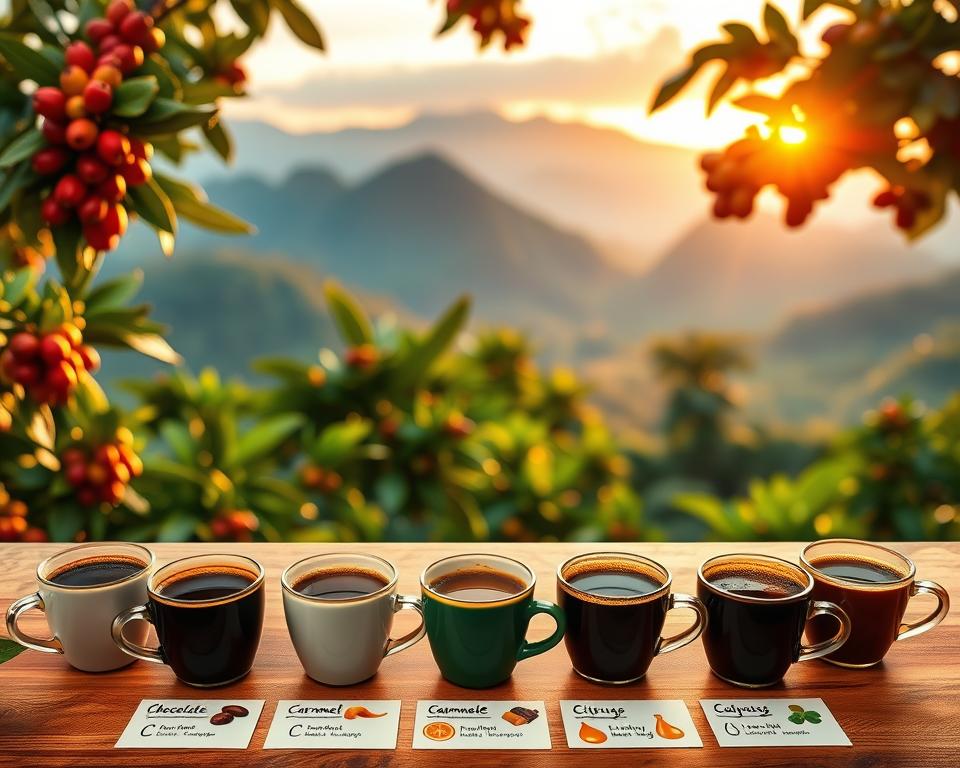
Central America is a haven for coffee lovers. It boasts a variety of flavors, from Costa Rica’s bright acidity to Guatemalan beans’ rich taste. The region’s unique geography, with volcanic soils and different climates, creates a wide range of coffee flavors.
Notes of Brightness and Citrus
Central American coffees are known for their bright acidity and citrus notes. These qualities come from the high altitudes and the careful processing by local farmers. For example, Costa Rican coffees are loved for their citrus and floral hints.
Varietals Unique to the Region
Central America has many coffee varietals, each with its own flavor. Bourbon and Gesha are two popular ones. Bourbon coffees have balanced acidity and rich, chocolatey tastes. Gesha coffees are known for their complex flavors, often with fruity and floral notes.
| Coffee Varietal | Flavor Profile | Region |
|---|---|---|
| Bourbon | Balanced acidity, chocolatey flavors | Costa Rica, Guatemala |
| Gesha | Fruity, floral notes | Panama, Costa Rica |
| Caturra | Bright acidity, citrus notes | Honduras, Nicaragua |
The variety in coffee varietals and flavors in Central America highlights the region’s rich coffee culture. It offers coffee lovers a wide range of choices to discover and enjoy.
Exploring South American Flavors
South America’s coffee is special, known for its balanced taste and rich feel. Coffee lovers enjoy it a lot. The region’s varied landscapes, from the Amazon to the Andes, add to its coffee’s complex tastes.
Chocolatey and Nutty Profiles
Coffees from South America, like those from Colombia and Brazil, taste like chocolate and nuts. This is due to the soil, climate, and how the beans are processed. The beans grow slowly in high places, which brings out these deep flavors.
Some common tastes in South American coffee are:
- Cocoa and chocolate
- Nuts such as almonds and hazelnuts
- Caramel and sweetness
The Influence of Altitude
The height where coffee grows in South America affects its taste. Coffees from high places have more complex and nuanced flavors. For example, coffee from Colombia’s Andes is known for its bright taste and fruit notes, along with chocolate and nut flavors.
High-altitude areas are perfect for growing coffee. The cooler temperatures slow down ripening. This leads to a more developed taste. Here are some key factors influenced by altitude:
- Slower maturation process
- Cooler temperatures
- Higher quality coffee beans
The coffee flavor wheel helps us understand South American coffee’s diverse tastes. It’s a great tool for coffee lovers to discover and enjoy their favorite flavors.
African Coffee Profiles
African coffee is a world of flavors, with each area bringing its own taste. It’s known for its bright acidity and complex flavors. This makes it a hit among coffee lovers.
Fruity and Floral Characteristics
African coffees have fruity and floral notes. You might taste berries, citrus, or floral scents like jasmine or rose. These tastes come from the climate, soil, and how the coffee is processed.
The flavor profile of African coffee is lively and detailed. It has a clean taste that shows off the coffee’s natural flavors. This is true for coffees from Kenya and Ethiopia, thanks to their high altitude and rich soil.

Highlights from Ethiopian Beans
Ethiopian coffee is famous for its unique flavor profiles. You might taste berries, citrus, and honey. The country’s heirloom varieties are loved for their complex flavors, which are fruity, floral, and slightly acidic.
| Coffee Region | Flavor Profile | Notable Characteristics |
|---|---|---|
| Ethiopia | Fruity, Floral | Notes of berries, citrus, and honey |
| Kenya | Bright Acidity, Complex | Flavors of blackcurrant and wine-like notes |
| Tanzania | Balanced, Medium Body | Nutty and chocolatey undertones |
In conclusion, African coffee offers a wide range of flavors for coffee lovers. From Ethiopian’s fruity and floral notes to Kenya’s bright acidity, each region has its own taste journey. Whether you’re into specialty coffee profiles or just want to try something new, African coffee will impress you.
Asian Coffee Varieties
Asian coffee varieties take us on a journey through unique flavors. These flavors come from the terroir and processing methods. Asia’s rich diversity shines in the world of coffee.
Earthy and Spicy Flavors
Coffees from Asia are known for their earthy and spicy tastes. This is due to the region’s terroir and traditional processing. For example, Sumatran coffee is famous for its earthy and herbal notes.
The earthy taste in Asian coffees comes from several factors. Soil quality, climate, and processing methods all play a role. The wet-hulling process in Indonesia, for instance, gives coffee a unique earthy flavor.
The Unique Taste of Indonesian Coffees
Indonesian coffees, like those from Sumatra, Sulawesi, and Java, have distinct tastes. Mandheling coffee from Sumatra is known for its full body and low acidity. It tastes earthy, herbal, and sometimes spicy.
| Coffee Variety | Region | Flavor Profile |
|---|---|---|
| Mandheling | Sumatra, Indonesia | Earthy, Herbal, Spicy |
| Sulawesi | Sulawesi, Indonesia | Balanced, with notes of spice and herbs |
| Java | Java, Indonesia | Smooth, with a hint of sweetness and a mild flavor |
Indonesian coffees are more than just earthy flavors. They offer a complex taste that coffee lovers worldwide enjoy. The unique taste of Indonesian coffees shows the country’s rich coffee culture and history.
As we explore more coffee, it’s clear that Asian varieties add something special to the global coffee scene. Their earthy and spicy flavors, shaped by traditional methods and terroir, provide a unique experience for coffee lovers.
How Brewing Methods Affect Taste
Brewing methods are key to unlocking coffee’s diverse flavors. The method used can either boost or reduce the coffee’s natural qualities. As a coffee lover, knowing these methods can make your coffee experience better.
Pour Over vs. French Press
The pour-over and French press brewing methods give different tastes. Pour-over involves slowly pouring hot water over coffee beans in a filter. This method extracts flavors cleanly and nuancedly.
French press, on the other hand, steep coarse coffee grounds in hot water. Then, you press the grounds to the bottom, making a richer, fuller coffee with a heavier feel.
Choose pour-over for a brighter, more acidic coffee with clear fruit or floral notes. Go for French press if you prefer a deeper, more robust coffee with a richer body.
Espresso Extraction Techniques
Espresso is a strong coffee made by forcing hot water through ground coffee beans. The extraction technique greatly affects the taste. Grind size, tamping pressure, and brewing temperature are all important.
For the best espresso, try different grind settings and tamping techniques. The grind should be fine for the right resistance during brewing. Tamping ensures even extraction. Adjusting the brewing temperature can also improve your espresso.
By mastering various brewing methods, you can discover a wide range of coffee tastes. This enhances your coffee experience.
Creating Your Own Flavor Journey
Exploring coffee is more than just tasting different brews. It’s about understanding the unique flavors and the best regional ones. As I dive into this world, I’m excited to share how to deepen your coffee appreciation.
Tasting Workshops and Experiences
Tasting workshops and experiences are great for exploring coffee flavors. These events let you taste various coffees and learn about their origins and flavors. I remember a workshop where we tasted coffees from different places, noticing their unique traits.
Here are some tips to get the most from these experiences:
- Focus on the flavor notes and acidity of each coffee.
- Ask about the coffee’s origin and how it’s processed.
- Take notes to remember your thoughts.
Pairing Coffee with Food
Pairing coffee with food can enhance your coffee experience. The goal is to match flavors between the coffee and food. For example, a coffee with chocolate notes goes well with sweet treats. A coffee with fruity notes pairs well with fruit-based desserts.
| Coffee Region | Flavor Profile | Recommended Pairing |
|---|---|---|
| Central America | Bright, citrusy | Pastries, citrus desserts |
| South America | Nutty, chocolatey | Chocolate desserts, nuts |
| Africa | Fruity, floral | Fruit salads, floral desserts |
Resources for Coffee Enthuisiasts
We’ve explored the wide world of coffee flavors, from Central America’s bright notes to Asia’s earthy tones. There’s always more to learn. For those eager to continue their coffee journey, I’ve gathered some valuable resources.
Recommended Reading
For a deeper dive into coffee, check out “The Coffee Roaster’s Companion” and “Coffee: A Guide to Buying, Brewing, and Enjoying.” These books dive into the coffee flavor wheel. They help you understand the nuances of your favorite brews.
Online Communities and Resources
Websites like CoffeeGeek and forums like Reddit’s r/coffee offer a wealth of info. Joining these communities connects you with fellow coffee lovers. It keeps you updated on the latest coffee trends.